Last updated: 2026-08-01 by Ted Sellers, Owner
Usually, you shouldn’t wait more than a few days to repair wind-damaged shingles. If shingles are missing, creased, loose, or rain is coming, take same-day action and install temporary protection at once. Only minor damage on a dry, still-watertight roof can sometimes wait up to one to two weeks, but only after a professional inspection.
When This Applies
If your commercial building has shingle roof areas
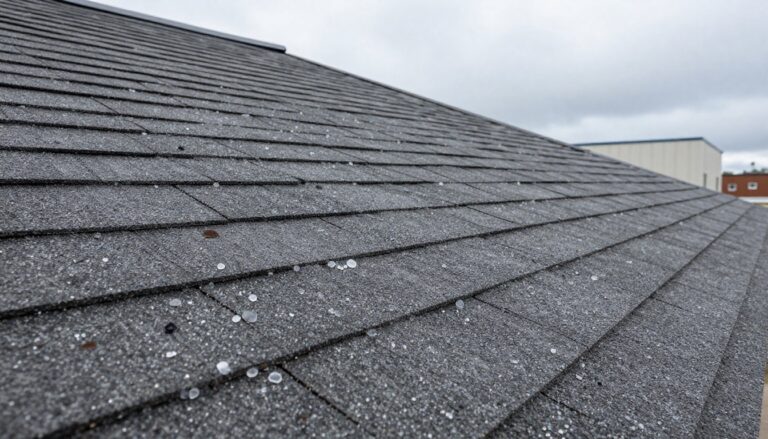
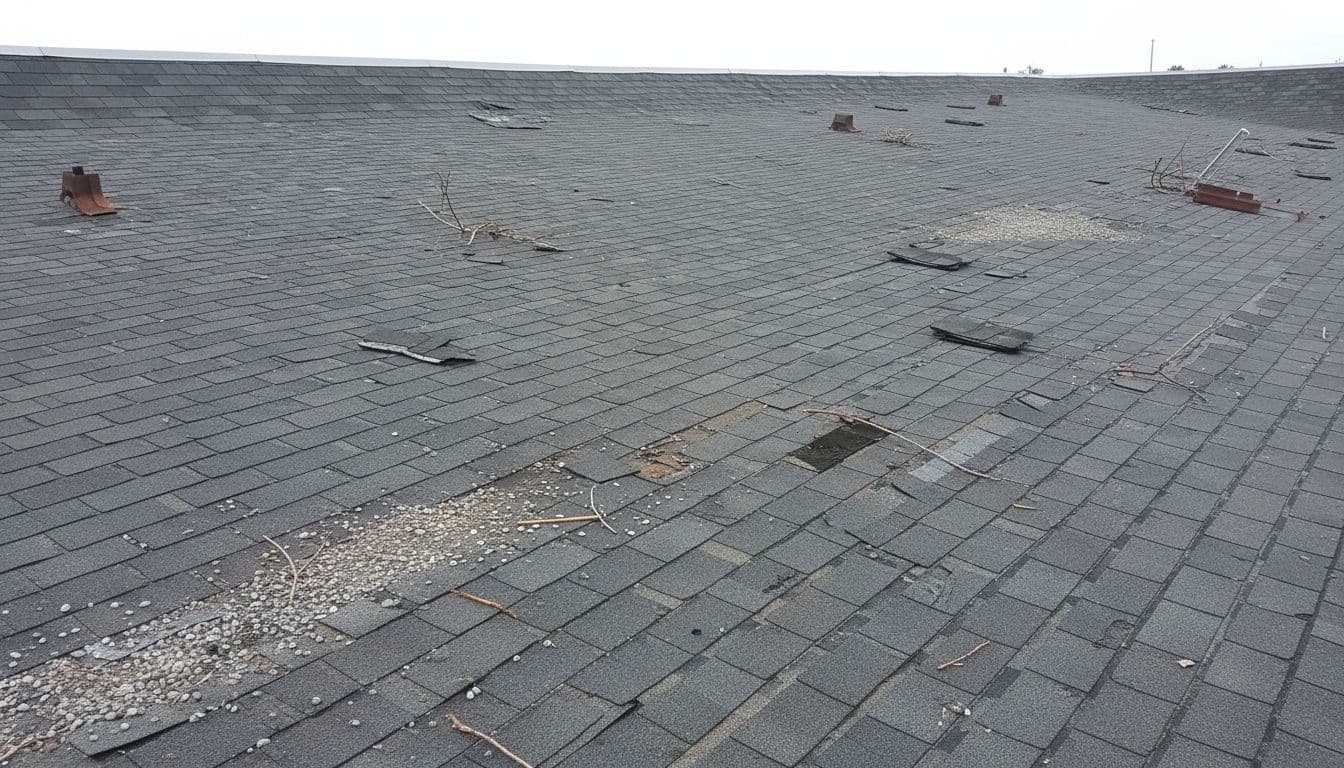
This advice fits offices, churches, retail buildings, apartment properties, and mixed-use sites with asphalt shingles on steep-slope sections. Wind damage is more than a missing tab. It can include lifted edges, broken seal strips, creases, exposed nails, and loose ridge pieces. A roof can look mostly intact and still have tabs that lift again in the next strong gust.
As the National Roofing Authority’s repair criteria explains, wind can reduce a roof’s intended weather resistance even when damage looks small from the ground. For business owners, the safe wait time is shorter because one leak can damage ceiling tile, stock, wiring, or tenant space.
When it doesn’t, and the main exceptions
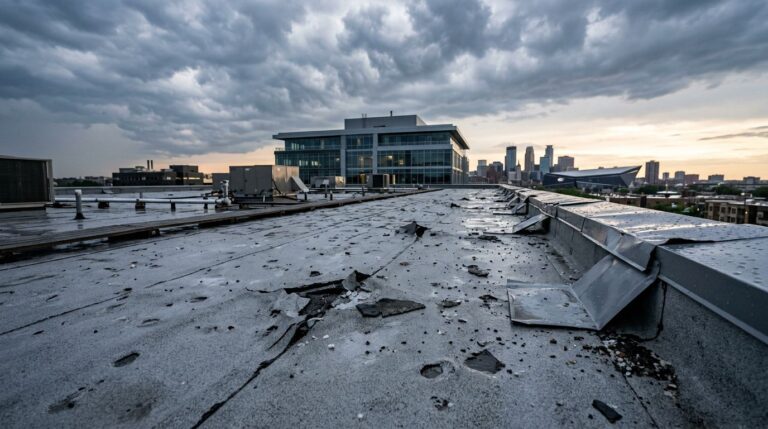
If your building has TPO, EPDM, PVC, or modified bitumen, this is a different issue. That falls under commercial flat roof repair, not shingle repair. Wind still matters, but crews look for seam lift, punctures, and flashing failure instead. The timing is still urgent, but the repair method changes.
Minor damage can sometimes wait a few extra days if the roof stays dry and an inspection confirms the deck is sound. Cosmetic scuffing alone is not the same as active failure. Still, if stains show up inside or you suspect hidden moisture, arrange commercial roof leak detection after wind damage before the next storm. Waiting until the next budget cycle is usually too long.
Step-by-Step
1. Stop water entry and secure the site
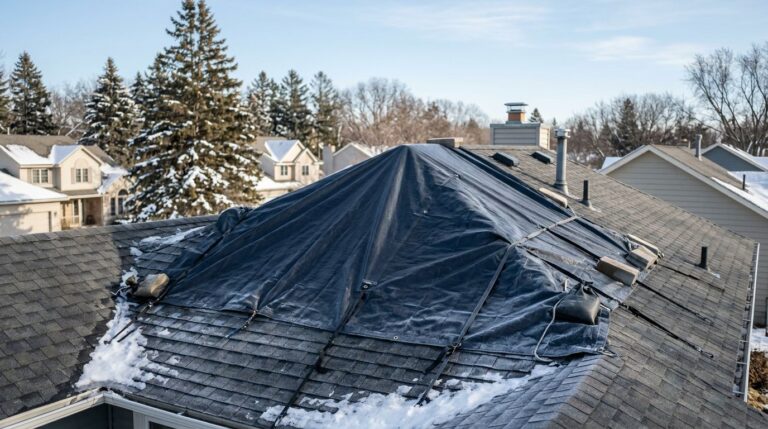
Start with risk control. If shingles blew off, cover exposed areas with a tarp and keep people away from loose metal, branches, or falling debris. Inside the building, move stock away from drips, protect electronics, and note where water entered. Temporary protection buys time, but it doesn’t replace repair.
If rain is due within 72 hours
Move this step to the top of the list. A small opening can turn into soaked insulation after one hard storm.
2. Photograph the roof and the inside of the building
Take wide shots and close-ups. Include roof edges, gutters, downspouts, fallen shingles, wet ceiling spots, and any damaged equipment below. Save the storm date and local weather alerts too. Time-stamped photos help your insurer and contractor separate wind damage from old wear.
3. Get a roof inspection within 24 to 72 hours
Don’t rely on a parking lot view. A roofer needs to check for creases, broken seal lines, soft decking, and wet insulation. Quick inspection matters because a second wind event can turn loosened tabs into full blow-off. If you operate locally, a Saint Paul commercial storm repair team can help you move from emergency protection to a written scope fast.
If your building has mixed roof types
Many commercial properties have shingles on one section and membrane on another. Inspect both, because wind often damages edge details first.
4. Decide whether a repair will hold
A small repair makes sense when the damage is limited, matching shingles are available, and the surrounding roof is still in good shape. On an older roof, that math changes fast. A GAF bulletin on extraordinary wind events notes that even small wind damage can shorten shingle life over time.
If several areas lifted, tabs are creased, or matching shingles are gone, commercial roof replacement may cost less than repeated service calls. On buildings with low-slope sections, the plan may include shingle work plus commercial flat roof repair. If repairs would leave a patchwork of brittle and new materials, replacement often gives a cleaner long-term result.
If shingles are creased or their seal strip broke, they won’t flatten back into a reliable roof.
5. Finish permanent work before the next storm cycle
For most commercial sites, that means the same week if damage is clear, or within one to two weeks if the inspection shows only minor issues. After a regional storm, contractor schedules fill quickly, so getting on the calendar early matters. Once your commercial roof needs repair, delay raises the odds of deck rot, interior damage, tenant complaints, and higher final cost.
Final Thoughts
The key takeaway
The clock starts when the wind damage happens, not when the leak shows up. The practical answer is a few days, not a season.
If the roof is missing shingles, taking on water, or facing more rain, act the same day. If damage looks minor, get it inspected first and finish repairs before the next weather swing.
FAQs
Can I wait if only one or two shingles blew off?
Maybe, but only for a short window. One or two missing shingles can still expose underlayment and fasteners. If the forecast is dry and the surrounding shingles are secure, you may have a few days. Past that, the risk climbs quickly.
What if I wait for the insurance adjuster before fixing anything?
Don’t wait on protection. Tarp first, document everything, then let the claim process continue. If water gets in while you wait, the added damage can complicate the claim because it’s harder to separate storm damage from delay-related loss.
Are lifted shingles always replaced?
When hand-sealing may work
Not always. If the shingles aren’t torn, creased, or brittle, a roofer may be able to re-seal some tabs. If the shingle bent hard enough to crease, replacement is the safer option because the mat has likely weakened.
Does cold weather change the repair timeline?
Yes, but it doesn’t give you room to wait. Cold weather can limit how crews install or seal shingles, so temporary protection matters more. The roof should still be inspected quickly, then repaired as soon as conditions allow safe, lasting work.
What if the roof looks fine but a leak appears days later?
That often means wind broke seals or flashing in a spot you can’t see from the ground. Water may travel before it shows inside. Treat a new leak as active storm damage, even if the roof doesn’t look dramatic from the parking lot.
Need a roof inspection in Saint Paul or the Twin Cities? Call Sellers Roofing Company at +1-651-703-2336 or schedule a free estimate. We are a black-owned, NMSDC-certified MBE roofing contractor with 9+ years experience.