Last updated: 2026-08-01 by Ted Sellers, Owner
Yes, sometimes. Some Minnesota insurers offer a premium credit for impact-resistant shingles, but the discount depends on the carrier, the policy form, and the proof you can provide. The roof also has to qualify. That usually means a steep-slope shingle roof, not a flat commercial system. If your commercial roof needs repair, the savings question may belong to commercial flat roof repair or a full commercial roof replacement instead.
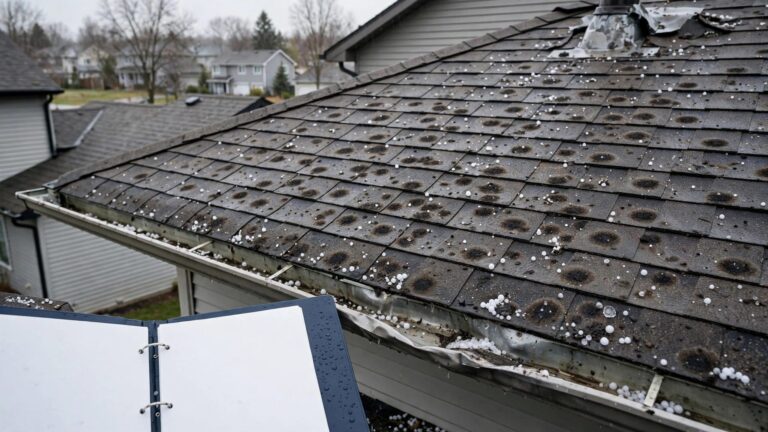
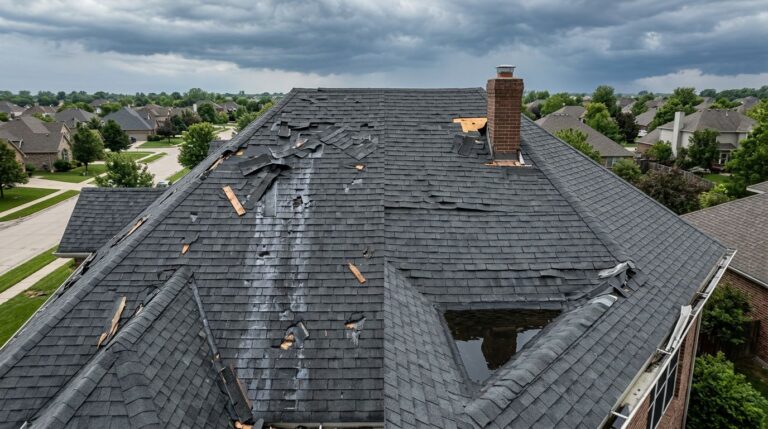
Minnesota weather gives owners a real reason to ask. Hail, wind, and freeze-thaw cycles put roofs to work hard. Still, the upgrade only pays when the roof type, rating, and paperwork line up.
When This Applies
If your roof is steep-slope and shingled
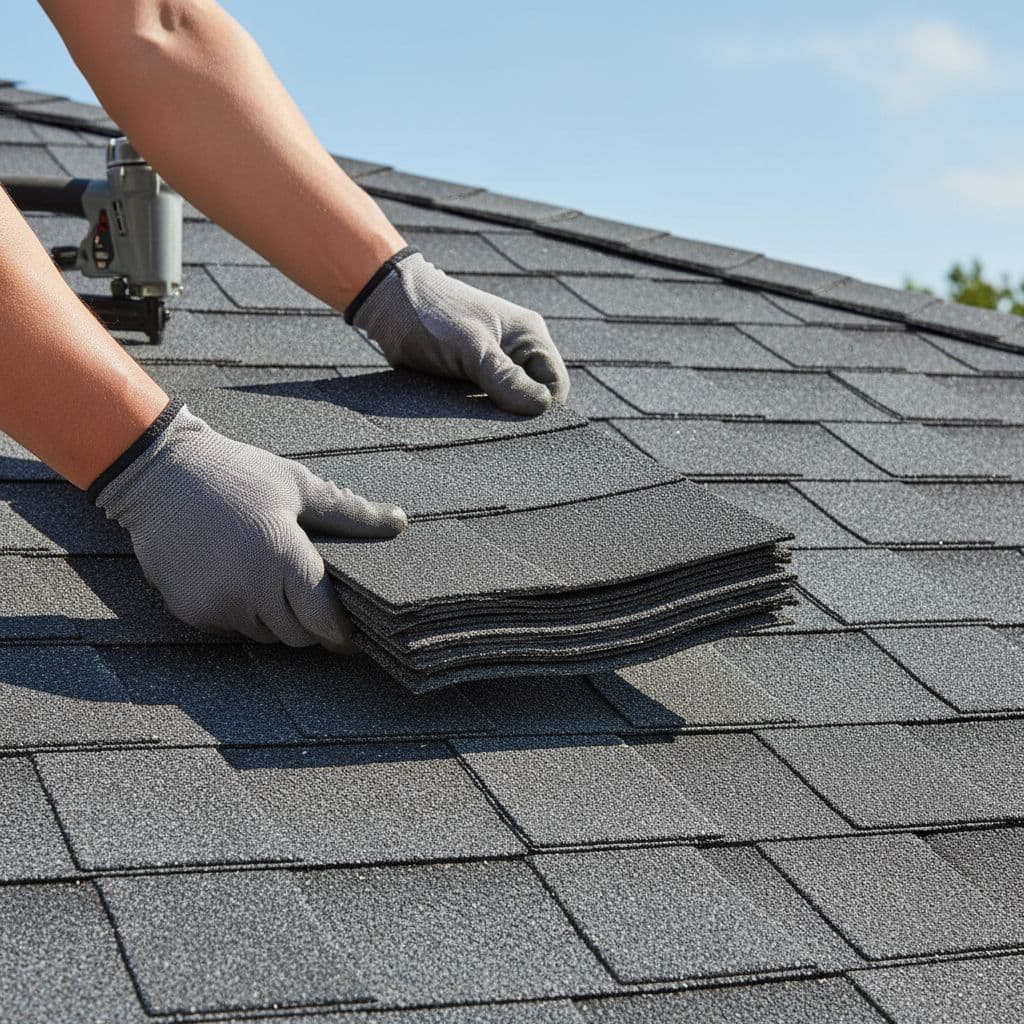
Impact-resistant shingles make the most sense on roofs that can actually use them. That means asphalt shingle roofs on homes, apartments, or mixed-use buildings with sloped sections.
For a business owner, this comes up on office condos, small mixed-use properties, and buildings with residential-style roof areas. In those cases, the question is whether the product qualifies and whether the insurer gives a roof credit for it. A local review of commercial roofing in Saint Paul can help sort out which roof sections are shingled and which are not.
When the discount usually does not apply
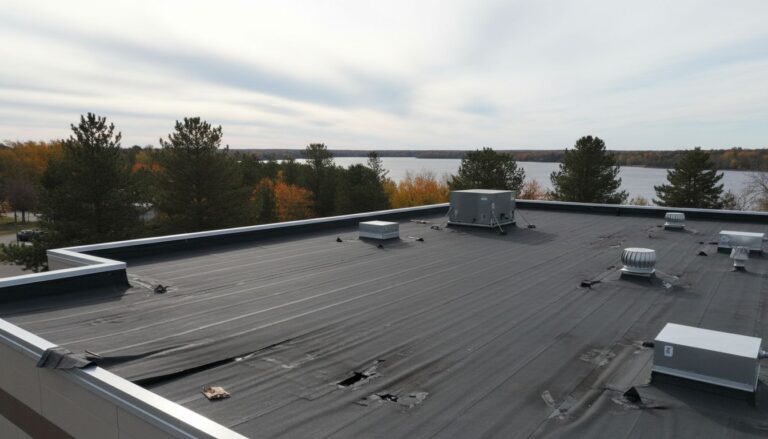
Most flat commercial roofs do not use shingles at all. If the building has TPO, EPDM, modified bitumen, or metal, the discount for impact-resistant shingles usually does nothing.
That matters when a building owner is trying to connect a roof upgrade to the wrong problem. If your commercial roof needs repair and the issue is a leak in a membrane system, the better path may be commercial roof leak detection services, followed by commercial flat roof repair or commercial roof replacement. Shingle credits do not fix a saturated deck or split seam.
What insurers want to see
A carrier usually wants proof that the roof meets the impact rating it recognizes. That often means a Class 4 product, plus an invoice, product data sheet, and install record.
A roof discount is a paperwork decision as much as a product decision. If the rating or install proof is missing, the credit can disappear.
A Minnesota-specific overview of Class 4 shingles makes the same point, rating and documentation matter more than marketing language. See this Minnesota Class 4 shingles FAQ for a simple example of how insurers think about the upgrade.
Step-by-Step
1. Ask the carrier before you buy the roof
Do this before the contract is signed. Some insurers offer a discount only on certain policy forms, roof ages, or materials. Others may not offer one at all.
Ask your agent or underwriter three direct questions. Does the policy reward impact-resistant shingles, what proof is needed, and when does the credit start. A roof that qualifies on paper can still miss the discount if you skip the pre-approval step.
2. Choose a rated product and keep the spec sheet
Do not rely on a sales pitch alone. Ask for the exact product name, the impact rating, and the manufacturer’s data sheet.
Class 4 is the label many carriers know best. That said, the policy controls the credit, not the sales brochure. Keep the packaging, warranty, and product sheet with your roof file. A local overview of how Minnesota Class 4 shingles are handled can help you understand why the rating needs to be easy to prove later.
3. Save the install record
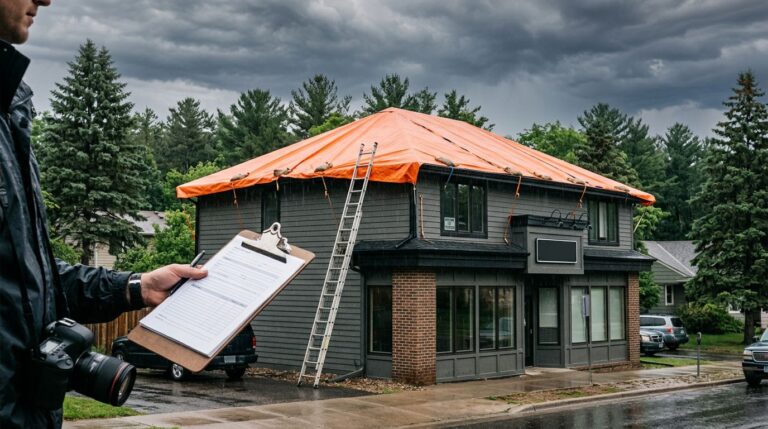
The installation record should show who did the work, when it happened, and where the roof sits on the property. Photos help too, especially wide shots that show the finished roof and close-ups that show the product details.
If the project followed an active leak or storm claim, keep the old damage on file before anything gets torn off. That matters when a later claim question comes up. If you need a clean record of leaks, moisture paths, or missed damage, commercial roof leak detection services can help document the condition before work starts.
4. Submit proof and ask for the credit
Send the insurer the documents in one clean packet. Include the invoice, the product sheet, and any photos that show the roof was installed correctly.
Ask whether the discount appears immediately or at the next renewal. Some credits show up only after the carrier updates the policy file. Others are applied after an inspection or a review by the underwriting team. Keep the email trail. If the discount does not appear, you want a record of what you sent.
5. Compare the savings with the real roof job
The premium credit should be part of the math, not the whole math. A strong roof in Minnesota can reduce storm risk, but the best choice still depends on the building.
If the roof is steep-slope and due for replacement, impact-resistant shingles may be a smart fit. If the building has a membrane roof, the money may be better spent on commercial flat roof repair, drainage fixes, or a planned commercial roof replacement. On a roof that already has water intrusion, the roof type matters more than the discount.
What affects the premium credit
Carrier rules vary
Two insurers can look at the same roof and give different answers. One may offer a small credit, another may offer nothing, and a third may only apply the discount on certain homeowner or dwelling policies.
That is why a one-size answer does not work. The roof can be eligible, yet the policy can still say no. A general discount page, like State Farm’s homeowners discounts, shows how broad these programs can be, but the exact rules still depend on the carrier and the policy.
Roof age and loss history matter
Older roofs with prior hail damage can complicate the conversation. Insurers may care less about the new shingles and more about the roof file they already have.
If the roof has soft spots, repeated leaks, or past storm damage, the upgrade may still be worth it, but the savings may be smaller than expected. That is especially true when the building already needs replacement work. In those cases, a policy review should happen alongside the roof scope, not after the fact.
FAQ
Do impact-resistant shingles lower commercial premiums too?
Only if the commercial property has a roof section that uses shingles. Most low-slope commercial roofs do not, so the premium credit usually does not apply. For those buildings, the right question is whether you need commercial flat roof repair or commercial roof replacement.
How do I prove the shingles qualify?
Keep the invoice, the product data sheet, the manufacturer rating, and clear install photos. If the carrier asks for more, give it in writing. The cleaner the file, the faster the credit is reviewed.
Can I get the discount after installation?
Often, yes. Many carriers will still apply the credit after the work is done, as long as you can prove the product and the install. The discount may start at renewal or after the policy is updated.
Do all Minnesota insurers offer it?
No. Some do, some do not, and some only do it under certain policy types. That is why it pays to ask before you buy the roof. A product that helps one policy may do nothing on another.
Is the discount enough to pay for the upgrade?
Sometimes it helps a lot, sometimes it barely moves the bill. The answer depends on roof size, carrier rules, and how long you expect to keep the property. The premium savings should be part of the decision, not the only reason for the upgrade.
Conclusion
Impact-resistant shingles can lower insurance premiums in Minnesota, but only when the roof qualifies and the insurer offers the credit. The material matters, yet the paperwork matters just as much.
For commercial business owners, the roof type is the first filter. If the building has a flat membrane roof, the better conversation is usually commercial flat roof repair or commercial roof replacement, not shingle discounts. If the building does have a steep-slope shingle roof, ask the carrier first, keep the proof, and make the upgrade count.
Need a roof inspection in Saint Paul or the Twin Cities? Call Sellers Roofing Company at +1-651-703-2336 or schedule a free estimate. We are a black-owned, NMSDC-certified MBE roofing contractor with 9+ years experience.