Last updated: 2026-08-01 by Ted Sellers, Owner
If the leak shows up near chimneys, vent pipes, roof-to-wall lines, or valleys, it’s often a roof leak flashing problem (gaps, failed sealant, loose metal). If it shows up under open roof field, especially after wind, hail, or freeze-thaw, shingles are the usual culprit (cracks, missing tabs, nail pops). Photos from inside and the attic usually tell you which path water took.
When This Applies
This guide fits Saint Paul buildings with shingle-slope sections
This is for commercial owners with any shingled areas (entry canopies, steep-slope additions, pitched mechanical-screen roofs) where the interior leak looks like a “spot” and you’re trying to decide between flashing failure and shingle damage.
It also helps if you’ve had recent Saint Paul weather that pushes water sideways: wind-driven rain off the river bluffs, fast thaw after a deep freeze, or late-winter ice buildup that forces water under overlaps.
When it won’t give a clean answer
If your building is mostly membrane (TPO, EPDM, PVC) and the “leak” is far from any slope, this flashing-vs-shingle test can mislead you. Low-slope leaks often travel 20 to 50 feet before they show inside, so the first ceiling stain may be nowhere near the entry point.
Water can travel, especially with Minnesota freeze-thaw
The reason leaks feel like mysteries is simple: water follows gravity, but it also follows framing, ducts, and insulation seams. A drip over a tenant space can start at a vent boot, then run along a rafter bay and drop at the first low point.
A key Saint Paul edge case: ice backup
In late winter, an ice ridge at the eave can push meltwater up under shingles. That can mimic a shingle failure even when the shingle field looks “fine” from the ground.
Step-by-Step
10-photo guide to tell flashing leaks from shingle leaks
- Photo 1: Capture the ceiling stain shape and the drip point.
A tight, circular stain with a centered drip often points to a single entry like flashing at a penetration. A long stain line that follows a ceiling grid can hint at water traveling before it drops.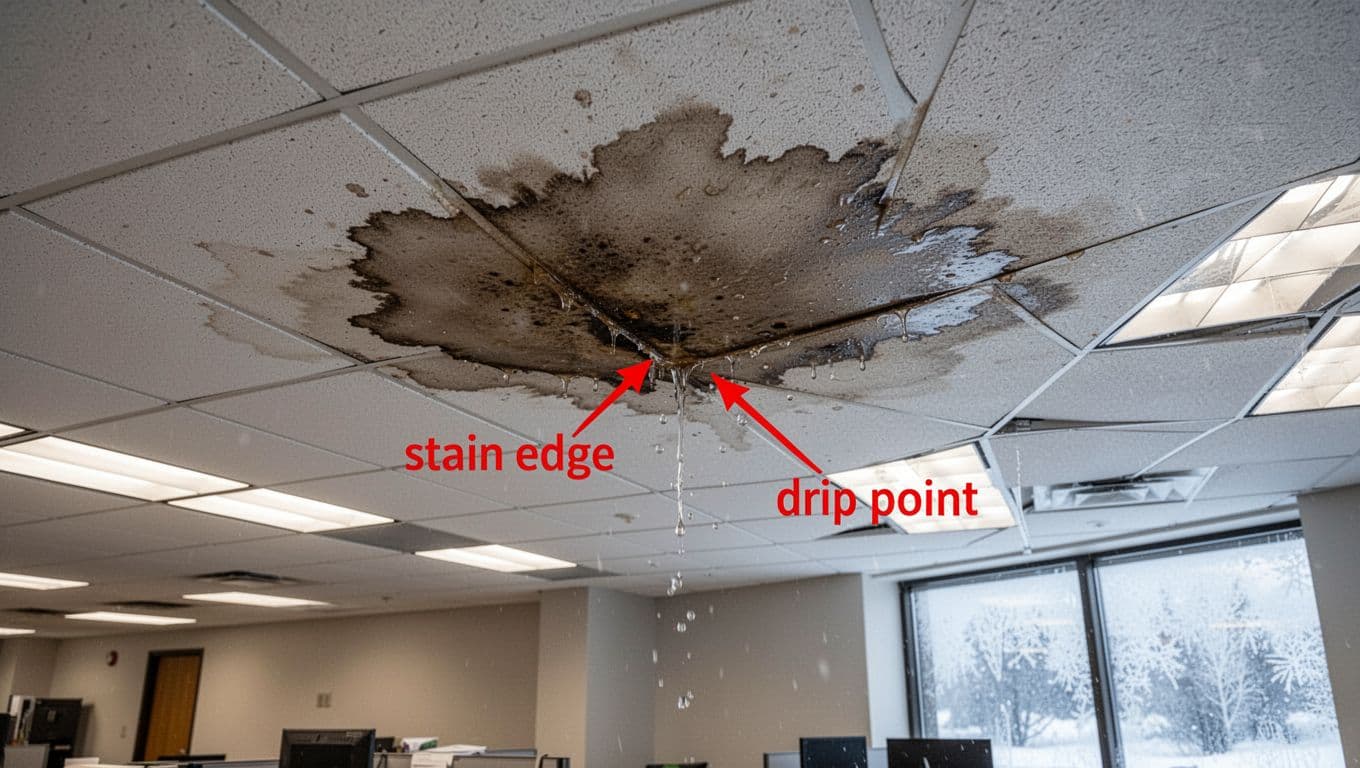
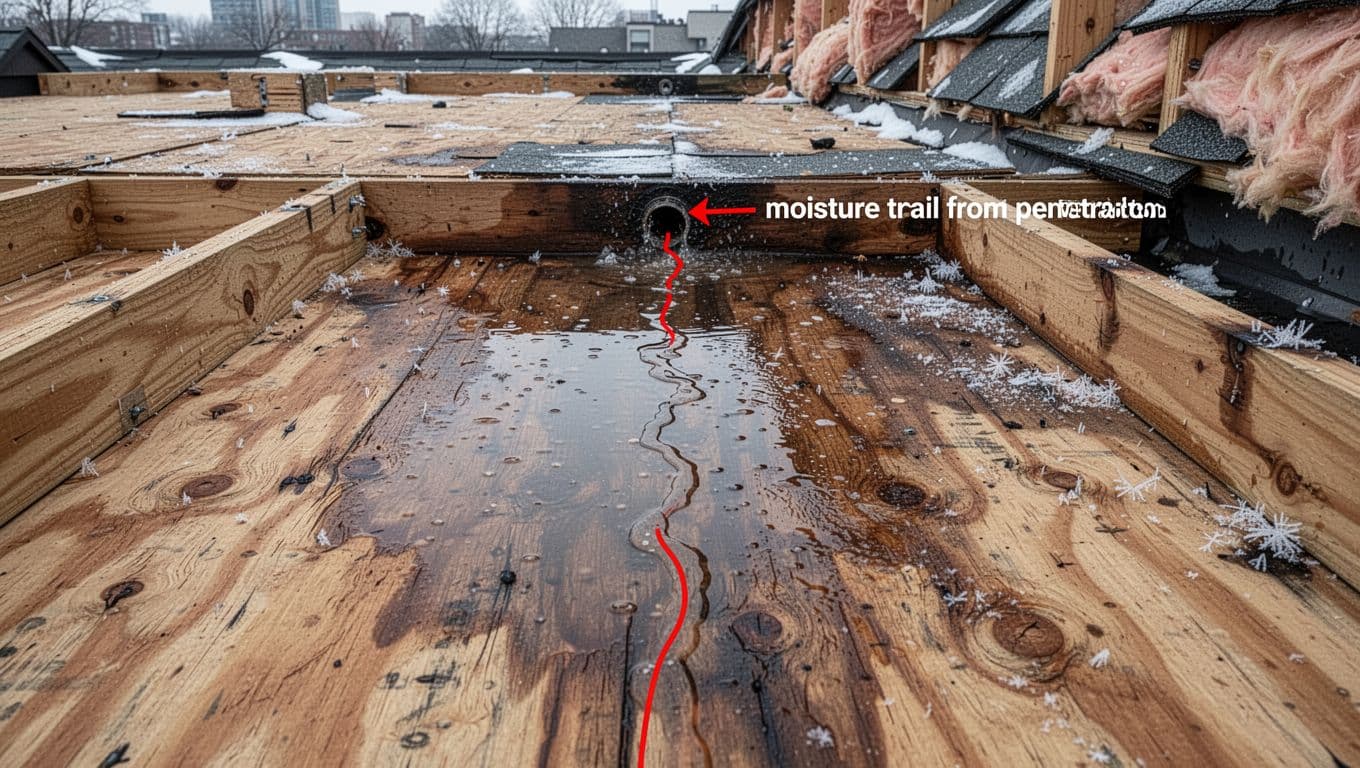
Ceiling stain clues (edge shape and drip point. - Photo 2: In the attic or plenum, photograph the moisture trail on wood or metal.
Follow staining “uphill” to the highest wet mark you can see. If the trail aims at a pipe, curb, or wall line, you’re likely dealing with flashing, not shingles.
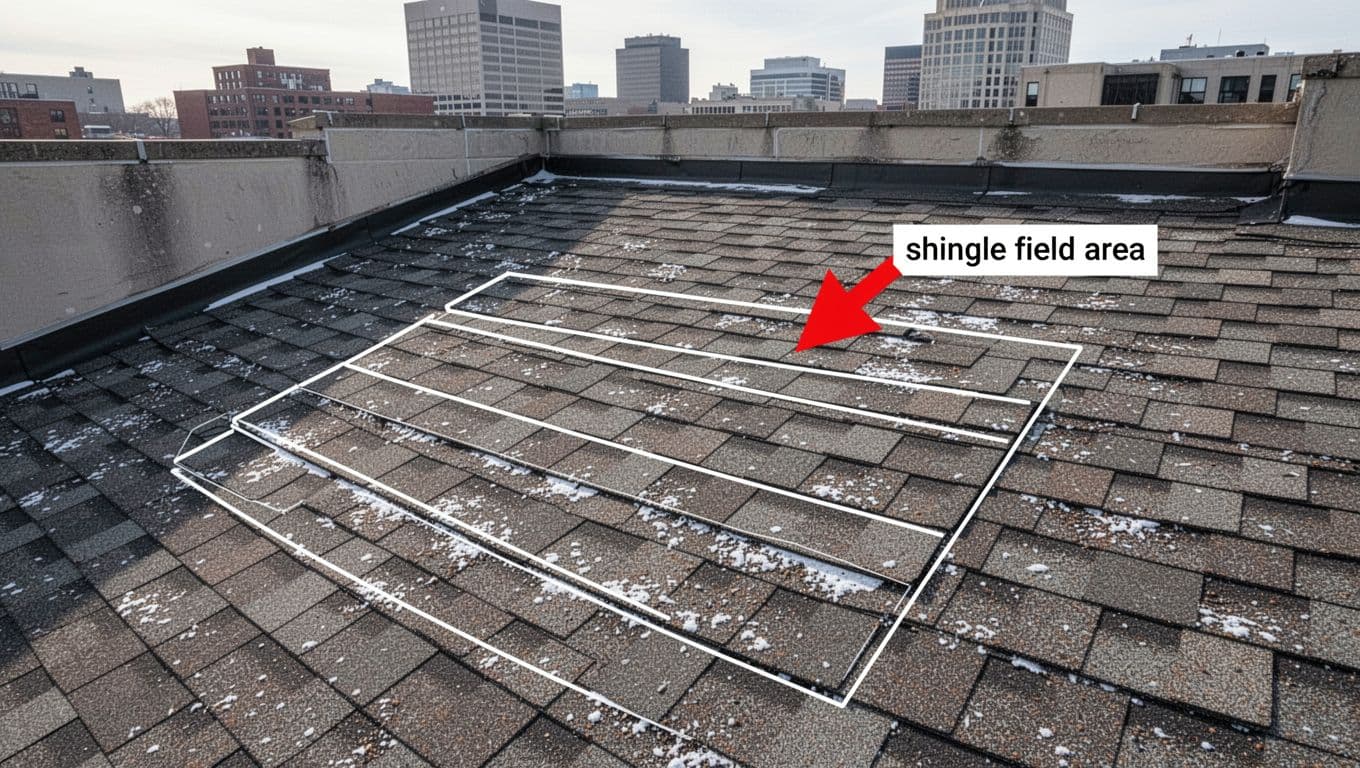
Moisture trail pointing back toward an entry point. - Photo 3: Take a roof overview shot of the shingle field near the leak.
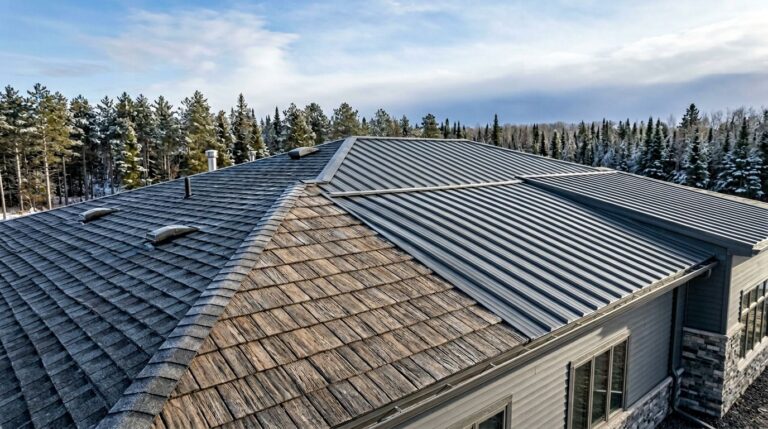
You’re looking for obvious shingle-field problems: missing pieces, disturbed pattern lines, or bare spots. If the field looks consistent but the leak persists, shift your attention to flashings and joints.
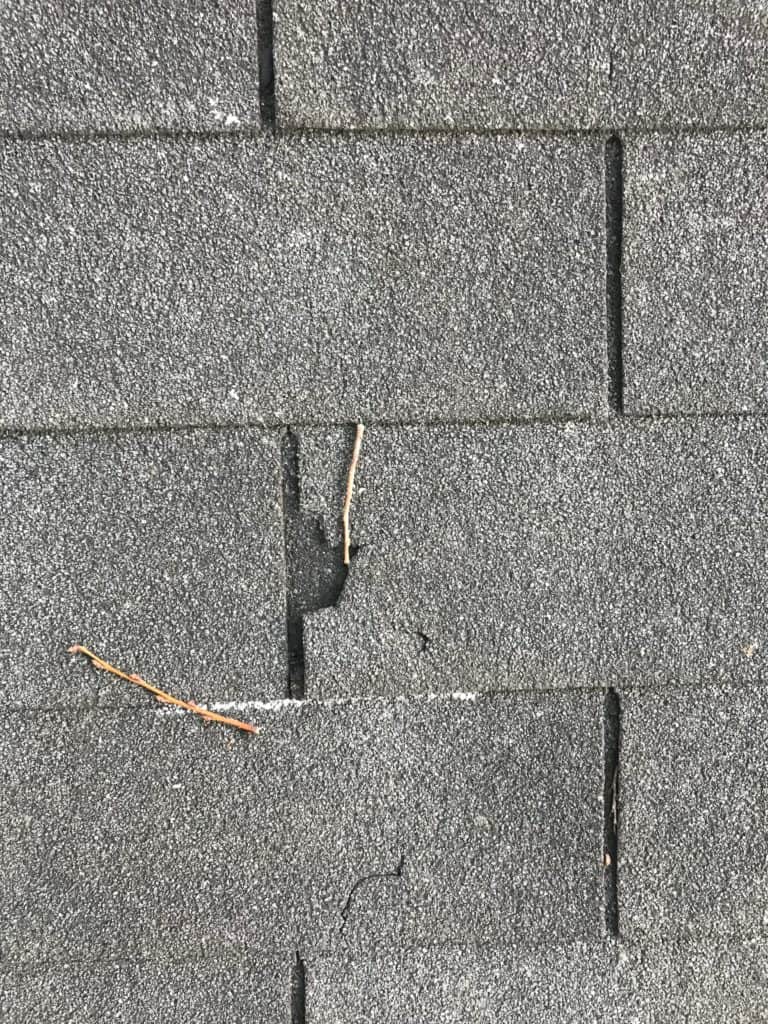
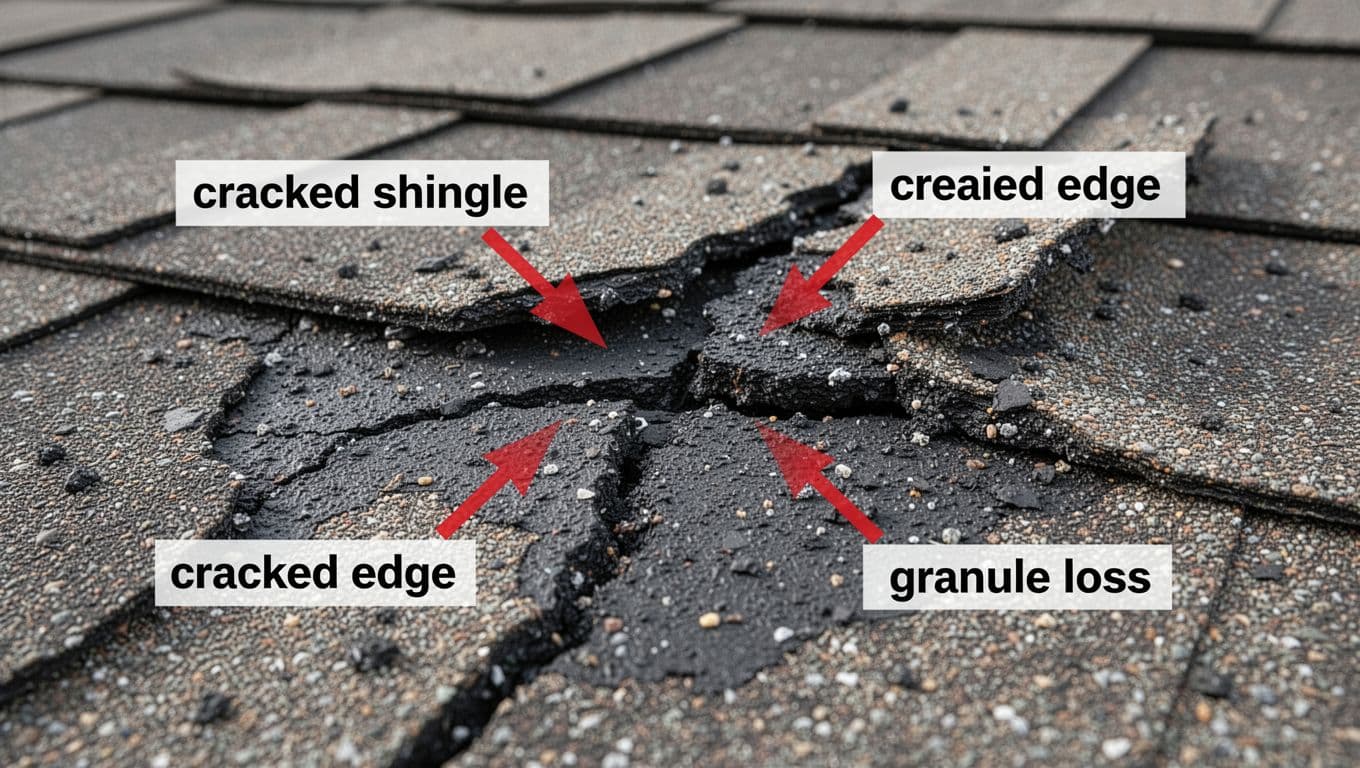
A shingle-field overview shot that helps rule in or rule out broad shingle damage. - Photo 4: Get a close-up of any cracked, creased, or “bald” shingle.
In Saint Paul, freeze-thaw can open hairline cracks that don’t show from the ground. Granule loss and exposed asphalt are strong signs the shingle itself is the leak path.
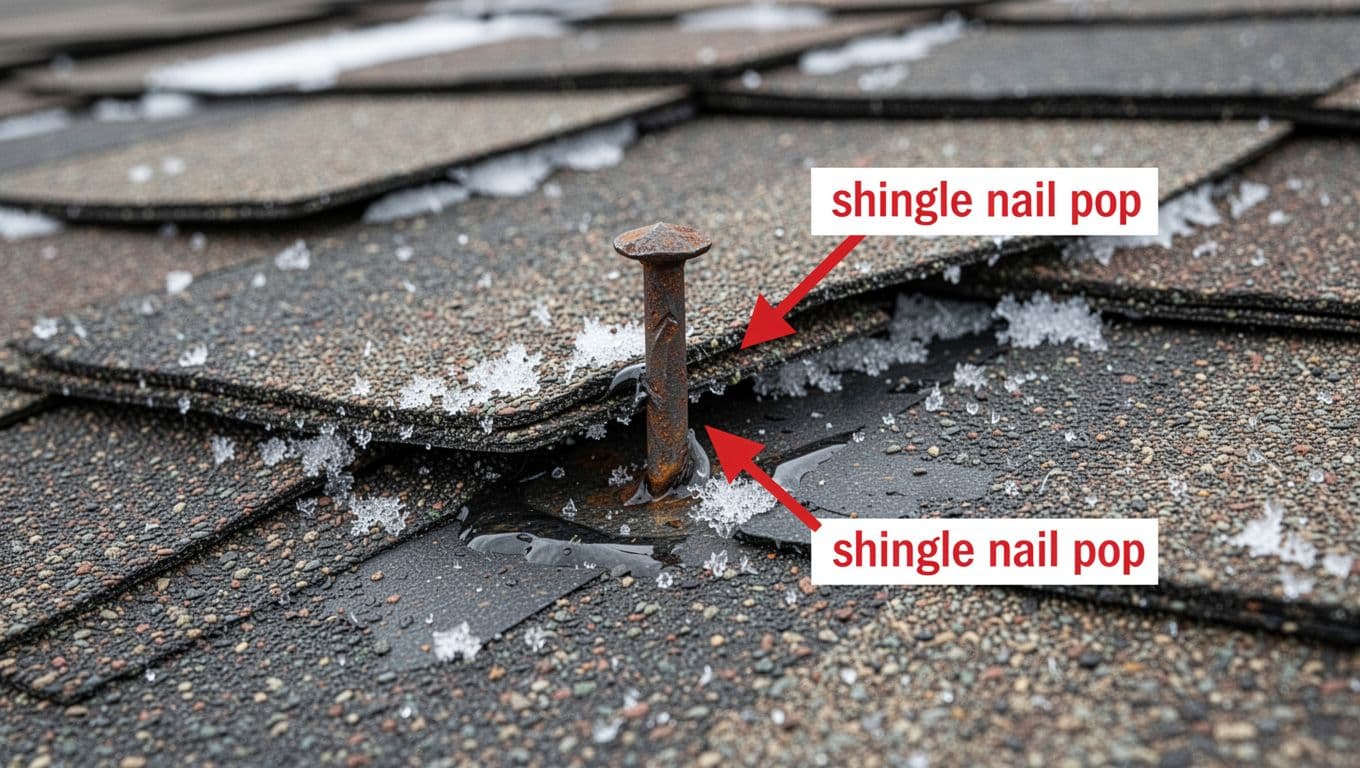
Cracks and granule loss are classic shingle leak clues. - Photo 5: Photograph nail pops and lifted tabs.
A nail pop creates a tiny “tent” that catches water. If you see repeated pops in a zone, it can turn into ongoing commercial flat roof repair calls on adjacent low-slope areas too, because water finds the easiest route into the assembly.
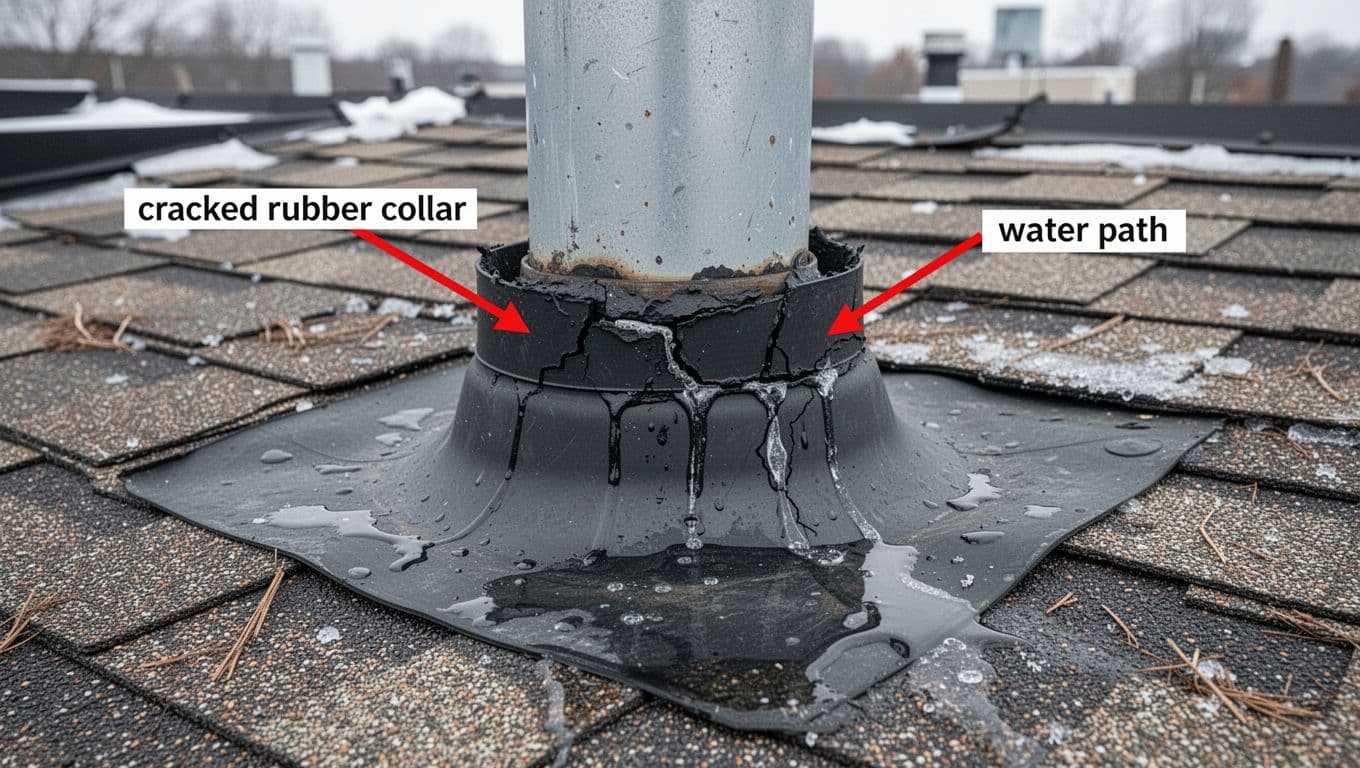
A nail pop can open a direct water entry point. - Photo 6: Inspect and photograph vent boot flashing (pipe collar cracks).
A split rubber collar, loose flange, or dried sealant is a flashing-type failure. If your leak shows up after wind-driven rain (common in open Saint Paul corridors), this is a prime suspect.
Cracked boot flashing and a visible water path - Photo 7: Check chimney or wall step flashing lines (if you have them).
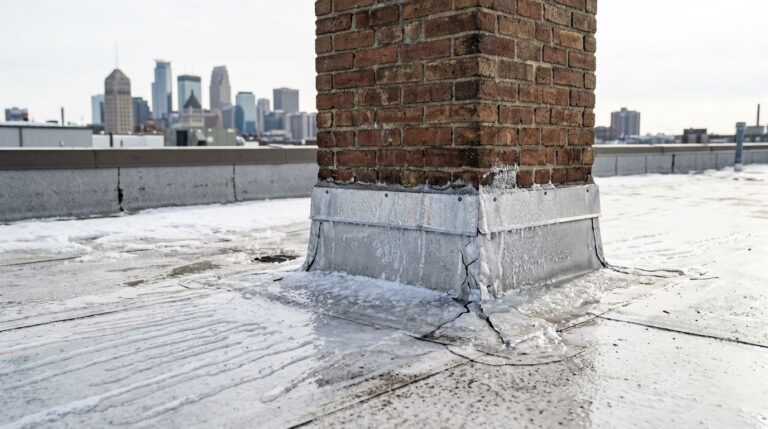
Photograph the joint where roof meets brick, siding, or parapet. If you spot a gap at laps, lifted counterflashing, or failed sealant, you’ve likely found the source of a roof leak flashing issue. - Photo 8: Photograph valleys and debris lines.
Valleys act like roof gutters. In spring melt, packed debris can dam water and push it sideways under shingles. If the valley shows a “dirty water line” or granule piles, assume overflow risk. - Photo 9: Document eave edges and any ice backup evidence.
In late winter, take a photo where snow meets the roof edge. Look for stain lines on the underside of the sheathing near the eave, that pattern often screams ice backup rather than a random shingle defect. For a good refresher on how leak tracing works when water migrates, compare your findings to this roof leak inspection walkthrough. - Photo 10: Make a side-by-side “clue board” for your contractor.
Put one photo of flashing details (rust, gaps, loose metal) next to one shingle photo (cracks, missing tabs, nail pops). This speeds up triage, which matters if your commercial roof needs repair during tenant hours. If you want a professional confirmation before repairs start, schedule commercial roof leak detection in Saint Paul.
How to decide fast: flashing problem or shingle problem?
A simple rule Saint Paul owners can use on-site
If the damage is at an interruption, treat it like flashing first. Interruptions include pipes, chimneys, roof-to-wall transitions, skylights, and valleys. Flashing failures often leak during specific conditions (hard rain from one direction, thaw days, or gusty storms).
If the damage is in open field, treat it like shingles. Field failures often show as repeated small leaks after wind events, hail bruising, or widespread aging, and they usually come with visible shingle wear if you get close enough to inspect safely.
Where commercial decisions change the math
If photos show wide shingle wear plus repeated leak points, patching can turn into a monthly distraction. That’s when planning a commercial roof replacement becomes a business decision, not just a building decision. If you need a broader evaluation of options and timing, start with Sellers Roofing Company’s Saint Paul commercial roofing services. For long-term leak prevention planning, this guide on regular commercial roof inspections lines up well with what facility teams see in real life.
FAQ
Can a flashing leak look like a shingle leak inside the building?
Yes. Water entering at flashing can run along decking or framing and drop in the middle of a room. That’s why the attic or plenum photo matters more than the ceiling tile alone.
What makes it more common in Saint Paul?
Freeze-thaw loosens sealant and opens tiny joints, then a thaw day supplies water.
What if I only see leaking during snow melt, not rain?
That pattern often points to ice backup at the eaves, or water entering at a penetration surrounded by snow. Take eave photos and attic-edge photos before anything dries.
Is it safe for my maintenance staff to check flashing on the roof?
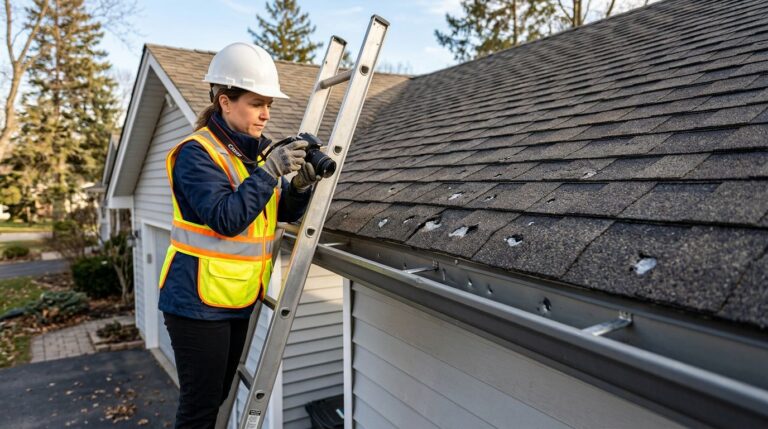
Only if they’re trained and using proper fall protection. Many steep-slope sections and icy edges in February are not safe. A short delay is cheaper than an injury.
Will caulk fix a roof leak flashing problem?
Caulk is a temporary stop at best. Proper flashing work usually means re-securing, re-lapping, or replacing metal, and sealing where the system calls for it.
How do I know it’s time to stop repairing and plan replacement?
If leaks repeat in different spots, insulation is wet, or repairs keep moving around the building, you’re past “simple patch” territory. At that point, a documented plan and timeline beats another round of emergency calls.
Bottom line for Saint Paul business owners
Your photos can narrow the cause fast: flashings fail at joints and penetrations, shingles fail in the open field. Take the 10 shots, then match the clues to the likely path before anyone starts tearing into the wrong area. If the signs point to broader wear, treat it as a planning moment, not just a patch, and get a clear scope while the damage is still contained.
Need a roof inspection in Saint Paul or the Twin Cities? Call Sellers Roofing Company at +1-651-703-2336 or schedule a free estimate. We are a black-owned, NMSDC-certified MBE roofing contractor with 9+ years experience.