Last updated: 2026-08-01 by Ted Sellers, Owner
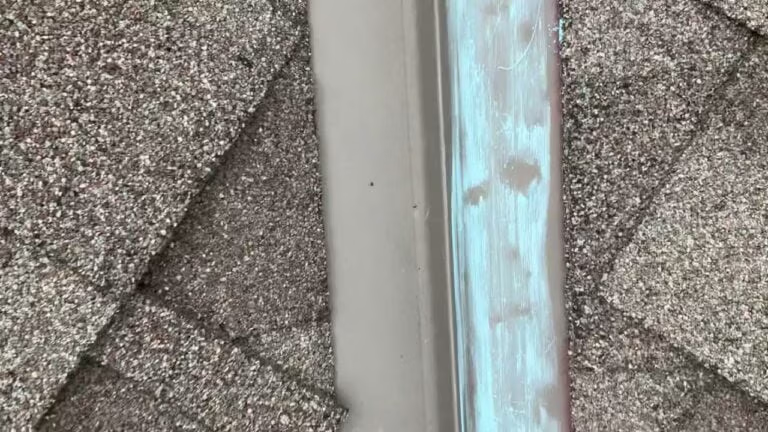
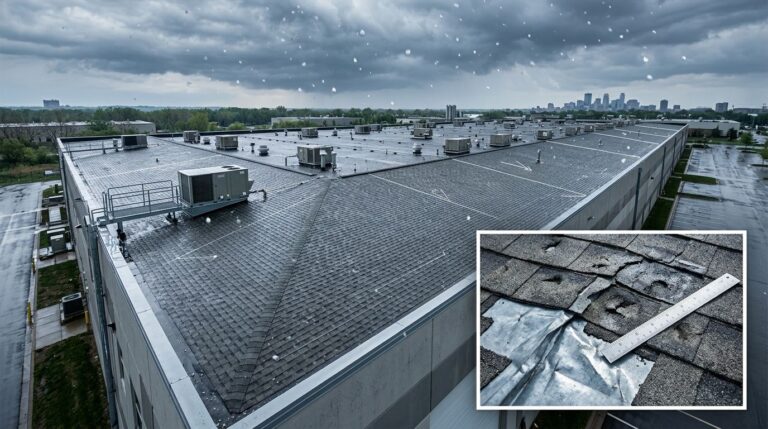
Yes. Hail can dent, crease, or split valley metal on shingle roofs, and those hits can let water move under the shingles. Cosmetic dents are not always a failure, but bent seams, loose edges, torn shingles, or wet decking are real problems. On a commercial roof, that kind of damage deserves a fast inspection.
When This Applies
Which roofs are at risk
This question matters most on shingle roofs with steep or broken slopes, such as office additions, churches, multifamily buildings, and other commercial properties with shingle sections. Valleys collect runoff, so even a small hit there can matter more than the same dent on a broad field of shingles.
Some roofs use exposed valley metal. Others hide it under cut shingles. Either way, hail can bruise the metal and disturb the seal around it. A focused professional commercial roof leak detection visit helps separate valley damage from a leak higher on the slope.
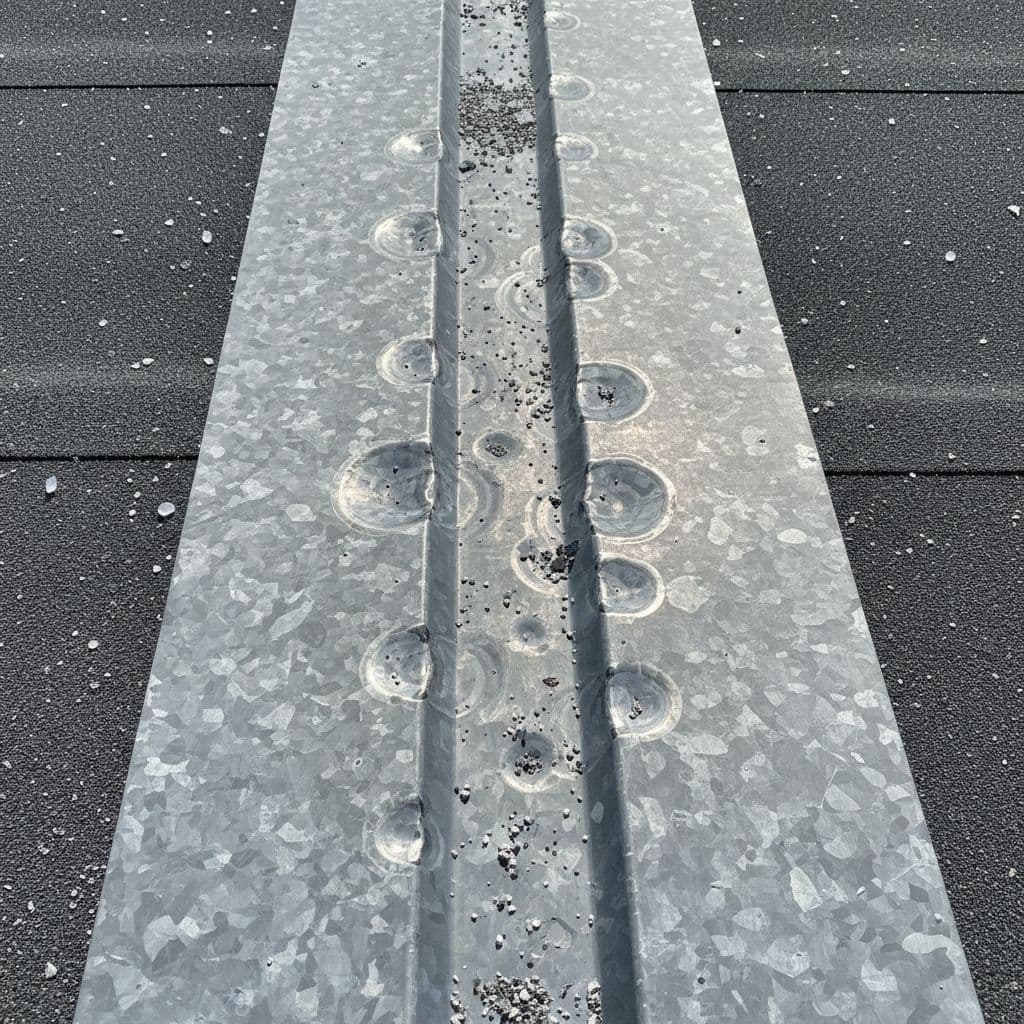
A dented valley is not the same as a failed valley. Water control is the real test.
When the marks are only cosmetic
Shallow dents with tight seams and sound shingles around them may not need more than monitoring. The roof still needs a close look, because water can travel along the valley before it appears inside.
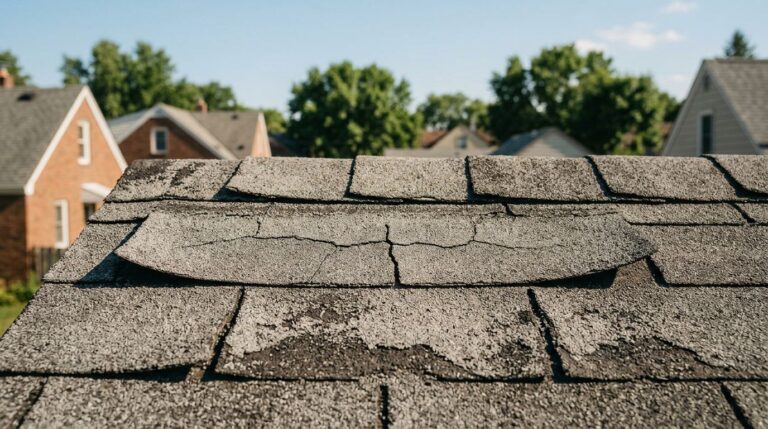
That is why the outside damage and the inside staining often do not match up. A few dents may look minor, but once you see split shingles, lifted metal, or damp underlayment, the issue is no longer cosmetic.
If the rest of the system is aging too, the question becomes whether the commercial roof needs repair in one area or whether the whole section is near the end of its service life.
Step-by-Step
1. Inspect the valley from ridge to eave
Start at both ends of the valley and work across every inch. Look for dents, creases, lifted edges, loose nails, cracked sealant, and shingles that shifted out of line.
Hail may leave repeated strike marks that are easy to miss from the ground. Check the center of the valley, the edges where shingles overlap, and any spots where water changes direction.
Look for movement, not only dents
A dent is a clue. Movement is the problem. If the metal no longer lies flat, or the shingle edges no longer overlap cleanly, water can take the easiest path under the roof cover.
If the roof is steep or slick, don’t guess. Use a roofer who can inspect it safely and write down what changed.
2. Document the hidden parts before anyone seals them
Photos should show the whole valley, the close-up damage, and any interior signs. Add dates, storm timing, ceiling spots, and damp insulation.
If the roofer recommends a test cut, photograph the area before and after. That matters if the carrier later questions what was hidden. Moisture readings also help show whether the damage reached the deck.
Use moisture data to back up the scope
Readings matter more than guesses. Wet insulation, saturated cover board, or stained decking can turn a patch into a larger repair. Water often travels farther than the first stain suggests, so the visible leak is rarely the full story.
This is where a second opinion can help when the cause or extent is still unclear. If you need a broader read on the roof system, commercial roofing services in Saint Paul can help compare the damage against the repair path.
3. Compare repair, section replacement, and full replacement
An isolated valley dent with dry wood around it often points to targeted repair. A few damaged shingles and a clean seam may be enough to restore the slope.
The picture changes when multiple valleys split, flashing lifts, or wet insulation spreads beyond the entry point. Then the roof may need more than a patch. If the damage is broad, repeated, or tied to aging materials, commercial roof replacement may cost less than repeated service calls.
When replacement wins
Replacement makes sense when the valley metal has moved, the surrounding shingles can’t seal again, or the roof has code-related issues that push the scope higher. It also makes sense when the building has mixed roof systems.
If the property includes a low-slope section, keep that scope separate. A membrane area may need commercial flat roof repair even if the shingle valley only needs spot work.
4. Close the claim with proof, not guesswork
If you are filing a claim, compare the carrier’s scope line by line with your roofer’s notes. Ask what was left out, because missing items often explain a low check.
Before you argue about the amount, confirm the deductible, policy limit, and any ordinance or law coverage. Some first payments are actual cash value, so more money can follow after the work is done and documented.
If the carrier misses wet materials or code items, send a supplement with photos, measurements, and written notes. Keep temporary dry-in work, but keep it temporary. Save receipts, because the closeout file matters later.
Conclusion
Hail can damage valley metal on shingle roofs, and the damage is not always easy to see from the ground. Dents matter less than what they do to water flow. When the metal shifts, seams split, or the wood below turns wet, the problem has moved past a cosmetic hit.
The right response is simple. Inspect early, document well, and decide whether the fix is a localized repair, a broader section scope, or commercial roof replacement. On a commercial property, that clear read keeps a small strike from turning into a bigger roof problem.
FAQ
Can hail damage valley metal without an obvious leak?
Yes. Water may stay out until wind lifts a shingle edge or the next storm pushes runoff harder through the valley. That is why hidden moisture checks matter even when the ceiling looks fine.
How do I know if the valley needs repair or replacement?
If the damage is limited and the surrounding shingles still hold, repair can work. If the metal is creased, the seams are split, or the deck is wet, the scope is bigger. Wide damage can point to commercial roof replacement.
Will insurance pay for dented valley metal?
Often, if the damage came from a covered storm and it affects function. Purely cosmetic dents are more disputed. The better the photos, measurements, and moisture evidence, the stronger the file.
Can hail damage spread beyond the valley?
Yes. Water can travel under shingles and soak the underlayment or deck before it shows inside. That is why a small roof mark can become a larger repair once the roof is opened.
What if the building also has flat roof sections?
Treat each system separately. The shingle valley and the low-slope roof do not fail the same way, and they should not share the same scope. The flat section may need commercial flat roof repair while the shingle section gets valley work.
Need a roof inspection in Saint Paul or the Twin Cities? Call Sellers Roofing Company at +1-651-703-2336 or schedule a free estimate. We are a black-owned, NMSDC-certified MBE roofing contractor with 9+ years experience.