Last updated: 2026-05-26 by Ted Sellers, Owner
No. Hail can bruise, crack, or weaken shingles without causing instant granule loss. Some impacts leave soft spots, fractured mat, or slight surface displacement that sheds granules later. On older roofs, the opposite can happen too, granules may come off from age or defects rather than hail alone. A close inspection matters more than one visible sign.
When This Applies
For shingle-surfaced commercial roofs
This applies to commercial buildings with asphalt shingles on sloped sections, entry canopies, mansards, or mixed-roof designs. Many offices, churches, multifamily properties, and retail sites have these areas even when most of the roof is flat.
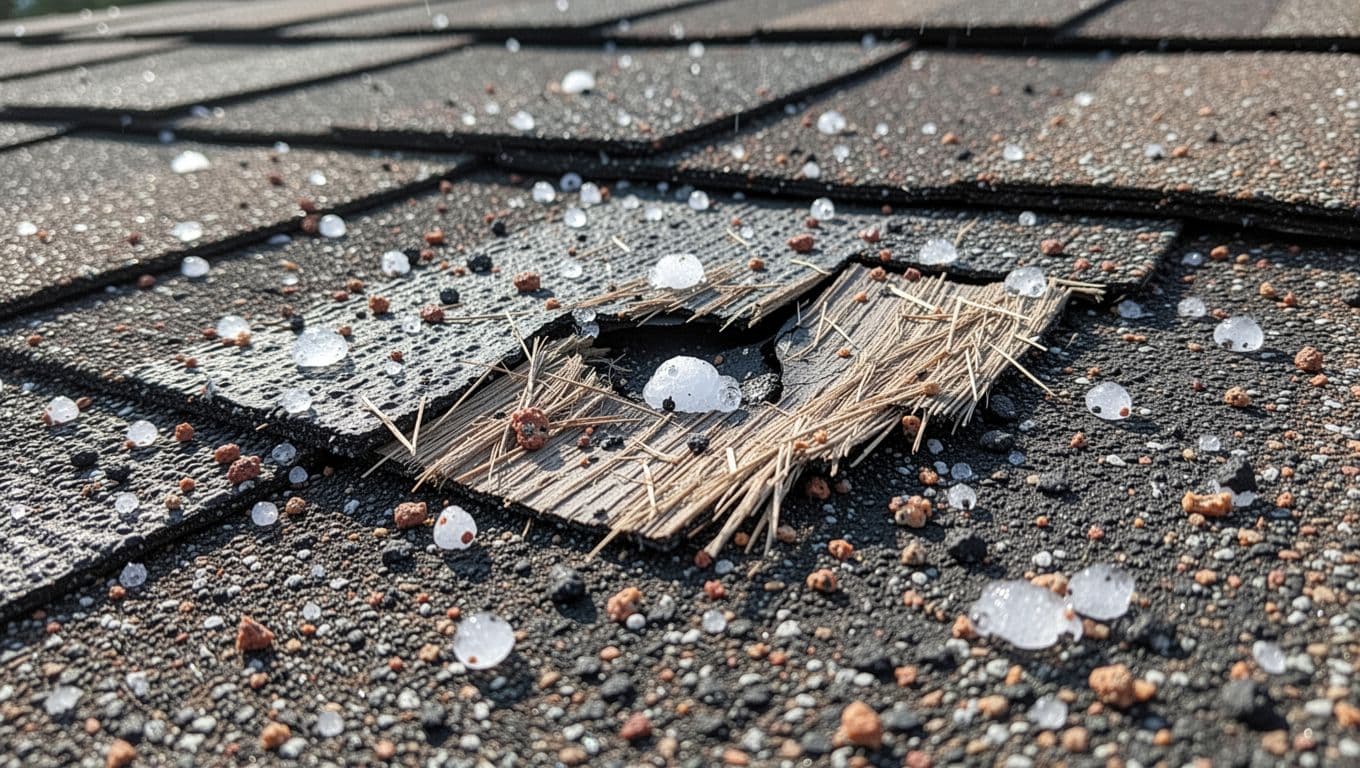
The phrase hail damage shingles usually makes owners picture obvious bald spots. However, fresh hail damage doesn’t always look that clean. A hailstone can compress the shingle, bruise the mat, or loosen granules without stripping them off right away. Later, sun, rain, and foot traffic may finish the job.
When hail damage shows up without clear granule loss
Newer shingles may hide impact damage better at first. Thicker granule coverage can mask a bruise. Colder weather can also change how shingles react, because brittle surfaces may crack while still holding granules in place for a while. That’s why a post-storm inspection should look for texture changes, soft spots, and collateral marks, not only missing granules.
When granule loss points somewhere else
Granule loss alone doesn’t prove hail. Age, blistering, foot traffic, poor installation, and manufacturing issues can all cause similar wear. IIBEC’s discussion of shingle damage and defects explains why separating hail impact from normal deterioration takes care and context.
Fresh hail damage can bruise a shingle today and shed granules weeks later.
This also does not apply the same way to membrane roofs, metal roofs, or coatings. If your building has a flat system, the storm may have damaged more than the shingles. On mixed buildings, smaller storms can still matter, as shown in this research on sub-severe hail and asphalt shingle risk.
Step-by-Step
1. Match the marks to the storm date
Start with timing. Pull weather records, tenant reports, and maintenance logs. If marks appeared long before the storm, hail is less likely. If a recent storm hit one exposure hard, that pattern matters.
If you manage several buildings
Compare roofs in the same area. Similar hits on vents, gutters, and AC covers strengthen the case that the storm caused the damage.
2. Look for bruises and impact signs, not color alone
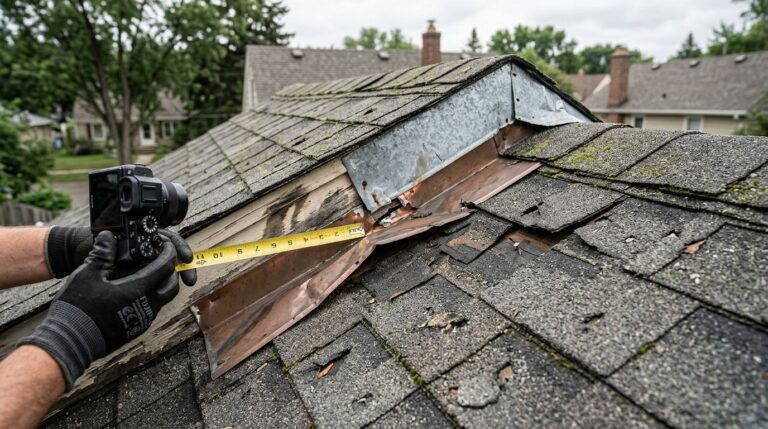
A hail hit often feels soft or spongy when a trained roofer presses gently on it. You may also see a small circular mark, a crack, or displaced granules embedded into the asphalt. Color changes by themselves aren’t enough, because old shingles often fade unevenly.
3. Compare suspect spots with normal wear
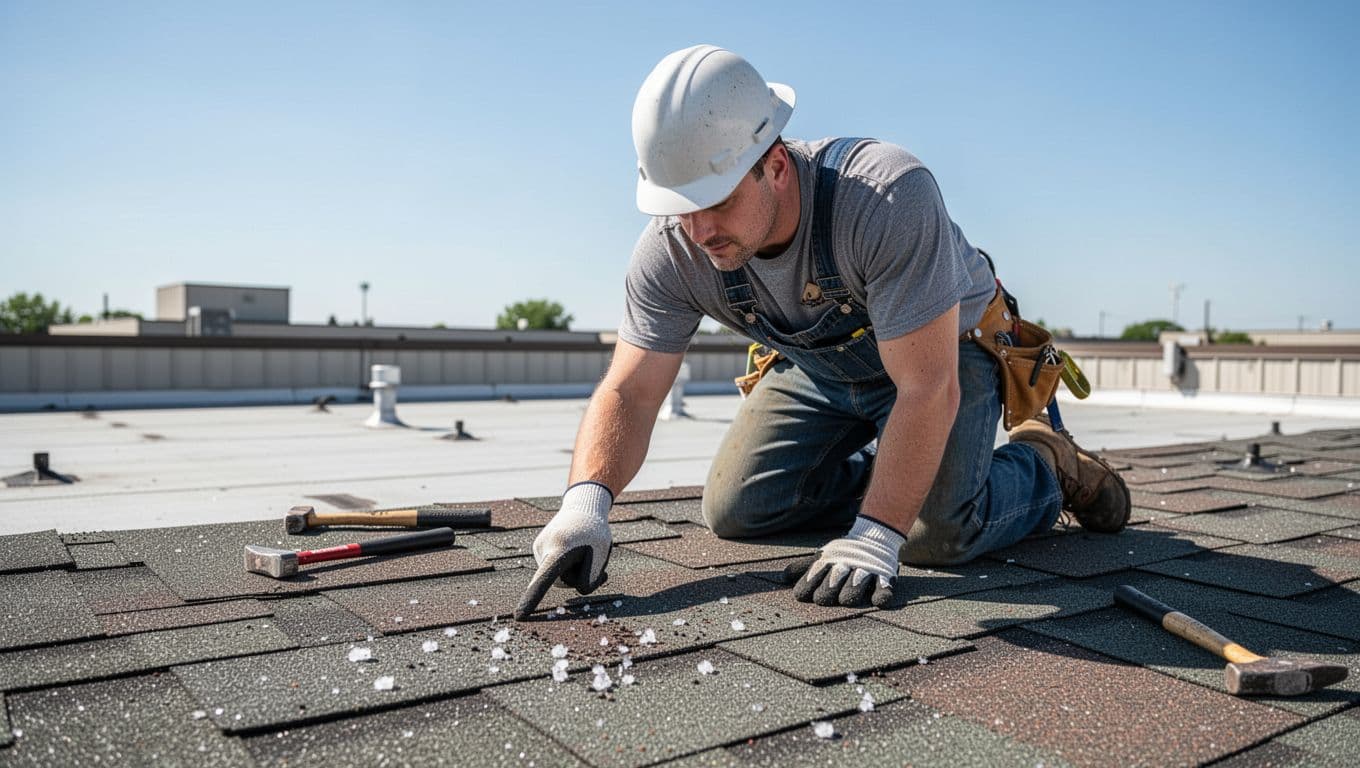
Look at several slopes, not one patch. Normal aging tends to be spread out. Hail damage is often random but storm-related, with more hits on one side of the building. This guide to hail spatter versus true granule loss shows why surface appearance can fool you.
4. Check metal, rooftop units, and soft surfaces nearby
Shingles rarely tell the whole story. Dents on metal flashing, vent caps, gutters, and condenser fins help confirm storm direction and size. Broken window screens or marked downspouts also support the inspection.
Why this matters for repair planning
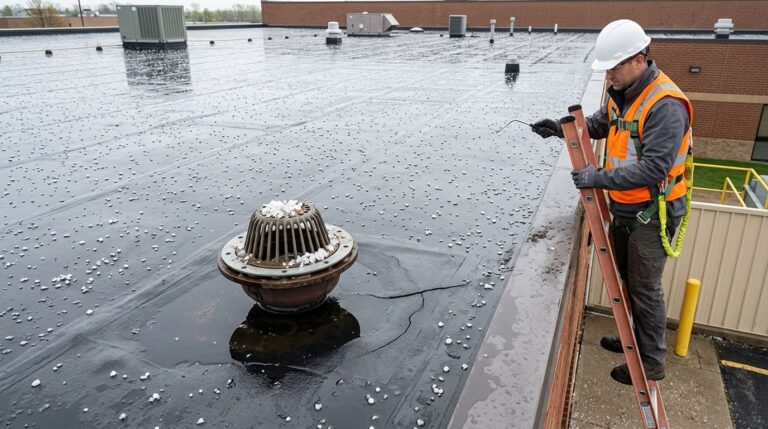
On a mixed system, the same storm that bruises shingles may also damage seams, flashing, or drains. That can lead to commercial flat roof repair even when the shingle section shows only light granule loss.
5. Decide between repair, monitoring, or replacement
If damage is isolated and the shingles still have life left, targeted repair may be enough. If many slopes are brittle, bruised, or leaking, a commercial roof replacement may save money over repeated patching. Once moisture reaches insulation or interior finishes, the commercial roof needs repair right away, even if the granule loss still looks minor.
FAQs commercial owners still ask
Can hail-damaged shingles pass a quick visual check?
Yes. A fast ground-level look can miss bruising, mat fractures, and subtle impact zones. That’s common on darker shingles and older roofs with uneven wear.
Should you wait for granules to fall off before acting?
No. Waiting can turn hidden impact damage into leaks or larger repairs. Document the storm, photograph the roof, and schedule an inspection while the evidence is still fresh.
Can older shingles lose granules more easily after hail?
Yes, and that makes diagnosis harder.
Age changes the result
Older shingles are brittle. Hail may knock off granules faster, but age may already be doing part of the damage.
What if only one slope shows damage?
That can still fit a hail claim. Storm direction, wind speed, and building height often make one slope take the worst hits while other areas show little change.
Does an interior leak prove hail caused the problem?
No. A leak proves water got in, not why it got in.
Leaks need proof, not guesses
Poor flashing, old seams, and past repairs can fail during a storm. A roofer should connect interior signs with roof-level impact evidence.
Granule loss is one clue, not the whole case. Hail can damage shingles before the surface starts shedding, and worn shingles can lose granules without a hail strike at all.
If your property took a recent storm hit, don’t wait for obvious bald spots. Get the roof documented early, then decide whether repair, monitoring, or replacement makes the most sense for your building.
Need a roof inspection in Saint Paul or the Twin Cities? Call Sellers Roofing Company at +1-651-703-2336 or schedule a free estimate. We are a black-owned, NMSDC-certified MBE roofing contractor with 9+ years experience.