Last updated: 2026-08-01 by Ted Sellers, Owner
Most commercial roofs in Minnesota can handle routine winter snow, but roof snow load becomes risky when snow turns wet, drifts pile up in one area, drains freeze, or storms stack up before melting happens.
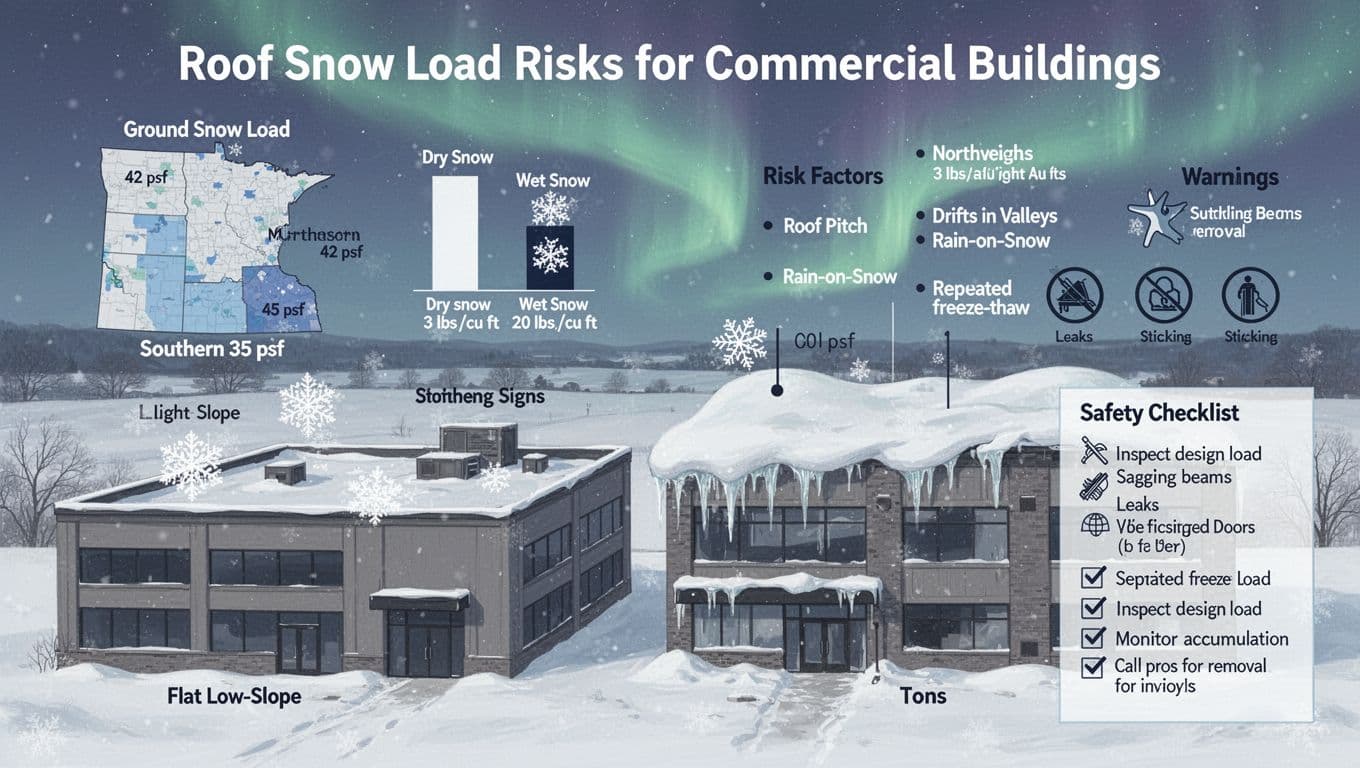
In Minnesota, code-based roof design loads are often tied to regional ground snow loads (commonly 35 psf south, 42 psf north), but your actual safe limit depends on your building’s structure and roof condition.
When This Applies
Who this is for (and who it’s not)
If you own or manage a commercial property in Minnesota, especially in the Twin Cities, this applies fast. Flat and low-slope roofs, big open spans, and roofs with many penetrations (HVAC curbs, skylights, vents) are more likely to collect uneven snow and ice.
This is less useful for small, steep-slope roofs that shed snow quickly, unless you’re seeing ice dams or interior movement. It’s also not a substitute for an engineer when you suspect structural distress or you don’t know the building’s design load.
Key exception: older or altered buildings
A roof that was modified over the years (new rooftop units, added insulation, past fire damage, interior remodels) may not behave like the original design. Materials like metal roofing and asphalt shingles respond differently to thermal changes, which can affect snow melt patterns. If your building is older or has been changed, treat “normal snow” with more caution.
What “normal snow” looks like in Minnesota
Normal is snow that sits evenly, stays relatively dry, and melts or blows off between storms. The danger isn’t the height of the snowbank by the curb, it’s the weight per square foot and where that weight concentrates.
Minnesota design requirements tie back to the state building code. If you want the technical basis, see the Minnesota Building Code structural design chapter and the state’s snow load rules appendix. In practical terms for owners, it means two important things: loads vary by region, and roofs are designed for a calculated load, not for unlimited buildup.
A quick gut-check on weight: dry snow can be surprisingly light at around 3 pounds per cubic foot, while wet snow can be dramatically heavier up to about 20 pounds per cubic foot, which is why “the same depth” can be harmless one week and dangerous the next.
| Snow on the roof | What it’s like | Why it changes risk |
|---|---|---|
| Dry snow, fluffy snow | Light, powdery | Lower weight from dry snow, but drifting still matters |
| Wet snow or slush | Dense, sticky | Much higher weight for the same depth of wet snow |
| Ice layers | Hard, bonded | Adds dead weight from ice and blocks drainage |
When roof snow load becomes a risk for businesses
Risk usually comes from uneven loading from drifting snow and trapped water in accumulated snow, not from a single calm snowfall.
Drift piles and “load hot spots”
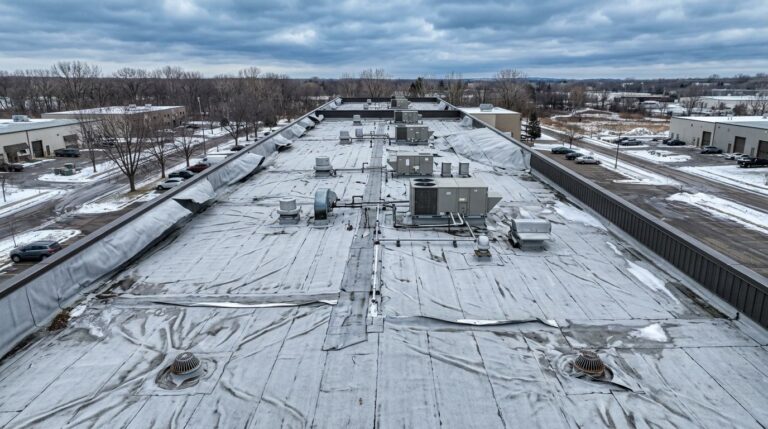
Wind can move snow like sand. Parapet walls, roof steps, penthouses, and tall HVAC screens create drift zones where snow stacks deeper than the rest of the roof. Valleys and transition areas on mixed-slope buildings can do the same.
Rain-on-snow, freeze-thaw, and blocked drains
A warm-up, then rain, then a hard freeze is a classic Minnesota problem. Snow absorbs water, then refreezes; drains and scuppers can ice shut; meltwater ponds and adds weight, leading to structural strain and potential structural damage.
Ice dams exacerbate water backup, especially if poor ventilation or attic insulation contributes in mixed-use buildings. If you run a facility with a low-slope membrane, this is where a small leak can turn into a “commercial roof needs repair” emergency overnight.
If your roof already has weak seams, old flashing, or past leaks, winter loading can expose it. Many mid-winter service calls start as commercial flat roof repair after ponding or ice-backed water finds a path inside.
At that point, you may be weighing repairs against a larger commercial roof replacement, especially if the membrane is near end-of-life. For local help planning those decisions, see this page on Saint Paul commercial roofing for Minnesota winters.
Step-by-Step
Same-day triage for business owners
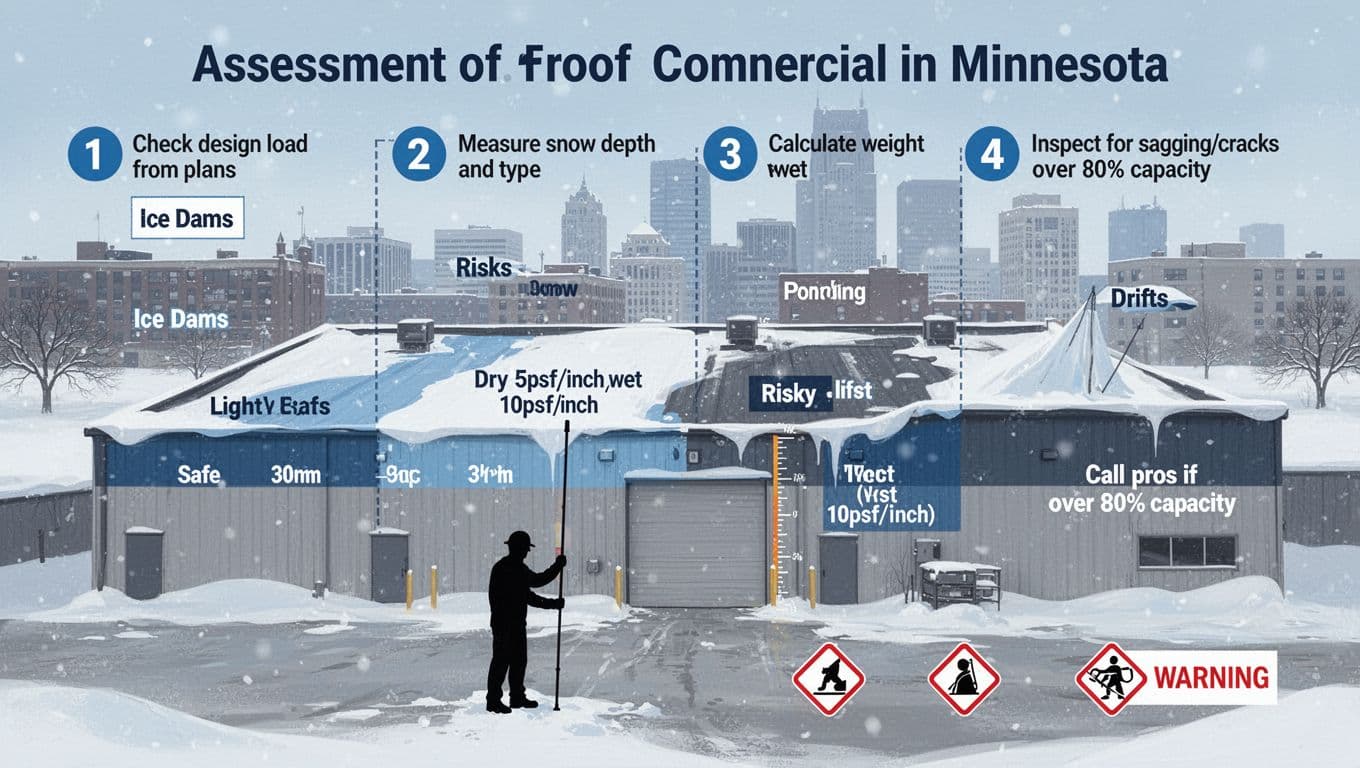
- Identify your roof type (flat, low-slope, steep, metal) and any drift makers (parapets, tall walls, screens, rooftop units).
- Look for uneven snow patterns from the ground: deep drifts, sharp ridges, or one side holding far more snow.
- Check interior warning signs in top-floor areas: new ceiling cracks, doors sticking, ceiling bowing, or popping sounds.
- Confirm drains, scuppers, and downspouts are flowing, ice-blocked drainage raises both weight and leak risk.
- Treat rain-on-snow as a red flag, wet snow and ice can load the roof fast.
- If you see sagging rooflines, active leaking, or rapid changes, keep people out of the area and call a qualified pro or engineer.
If you need a documented plan (for safety, insurance, or vendors)
- Pull your roof drawings and records for structural integrity, find the design snow load or ask your roofer to help locate it.
- Compare your location’s baseline to Minnesota code references, regional ground snow loads and roof load factors are outlined in the state snow load appendix.
- Set a site rule for who monitors conditions and when, include weekends and overnight storms.
- Choose safe inspection methods, such as using a roof rake for clearing from the ground where applicable; avoid putting untrained staff on icy roofs.
- Decide in advance who you’ll call for snow removal or evaluation, the University of Minnesota guidance on preventing roof collapse is written for ag buildings but the warning signs and safety points translate well to commercial sites.
- Schedule a professional roof inspection before the next season to ensure long-term safety.
FAQ
Do I need to know my roof’s design snow load, or is the code number enough?
Code numbers are a starting point, not your building’s guarantee. Your roof’s safe capacity depends on the actual structure, span lengths, roof pitch (which affects snow shedding, especially on steeper roofs compared to flat and low-slope roofs), past modifications, and condition. If you can’t find drawings, an engineer can estimate capacity based on field measurements.
What if I bought the building recently?
Ask the seller for reroof permits, structural drawings, and any past snow-removal contracts. Missing documents are common, plan for a professional evaluation.
Is snow depth a reliable way to judge danger?
Depth alone misleads. Wet snow can weigh many times more than dry snow at the same depth. Drift location matters too, one corner drift can overload a roof even when the rest looks fine.
What special risks do rooftop units and parapets create?
Especially on commercial roofs in Minnesota, they create drifts and block melt paths. Snow piles behind curbs and walls, then freezes, and water can’t escape. That mix raises load and pushes water toward seams and penetrations, which is a common trigger for mid-winter leaks.
Should my staff shovel the roof to reduce snow load?
Not as a default. Roof work in winter has fall risk, electrical hazards near units, and a real chance of damaging membranes with shovels or ice tools. If removal is needed, use trained crews who know how to protect the roof surface and manage where the snow goes.
What if we already have a leak after a snow event?
Treat it as two problems: water entry (often from ice dams preventing proper drainage) and possible overload.
Limit access under the leak, document conditions, and get a roof inspection quickly. If the roof is soft, sagging, or repeatedly leaking, you may be past spot fixes and looking at either a larger repair scope or a planned replacement.
Bottom line for Minnesota business roofs
Snow on a Minnesota roof is normal, but roof snow load turns risky when it gets wet, drifts concentrate weight, or drains freeze and trap water.
Don’t rely on depth alone, watch for uneven loading and interior movement. If you’re seeing leaks, sagging, or repeated trouble spots, act early so a small repair doesn’t become an emergency shutdown or permanent structural damage from unmanaged roof snow load in Minnesota.
Need a roof inspection in Saint Paul or the Twin Cities? Call Sellers Roofing Company at +1-651-703-2336 or schedule a free estimate. We are a black-owned, NMSDC-certified MBE roofing contractor with 9+ years experience.