Last updated: 2026-08-01 by Ted Sellers, Owner
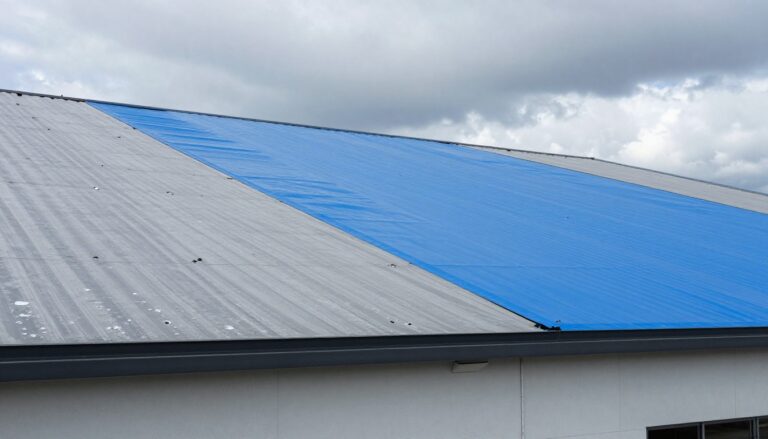
Metal roof hail damage usually shows up as visible dents, chipped paint or coating, loosened flashing, and dings along seams, ribs, and trim. In Minnesota, Minnesota weather’s freeze-thaw cycles can turn small impact marks into rust spots or leaks later. The key is separating cosmetic denting from functional damage that affects water-shedding and fasteners, compromising the structural integrity.
When This Applies
If you own or manage a metal-roofed building in Minnesota
This applies to most commercial buildings with standing seam metal roofs, metal roofing panels like exposed-fastener types, metal wall caps, and metal roof accessories (vents, pipe boots, skylight curbs). It also applies if your site has a mix of roof types, because hail often damages metal edges and transitions even when the main roof is a membrane.
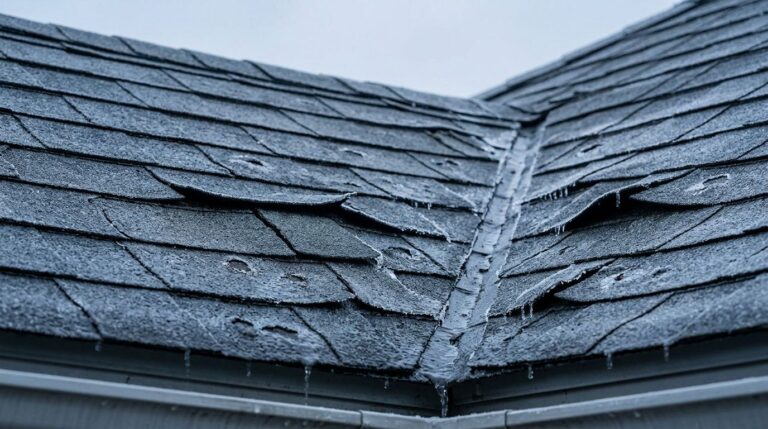
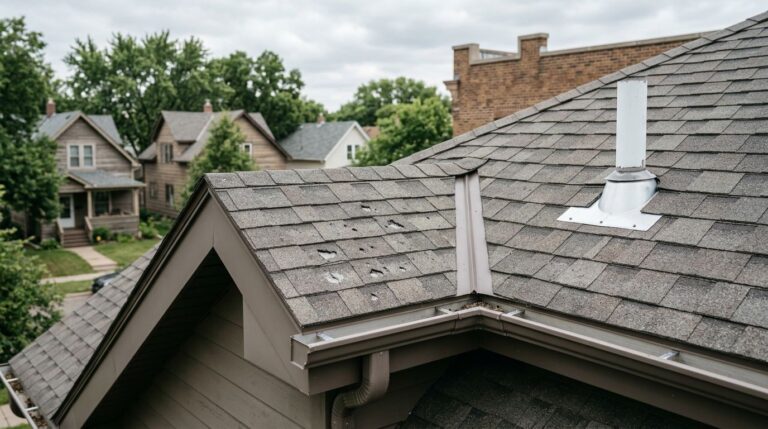
Metal roof hail damage often looks subtle at first. Unlike asphalt shingles which suffer from granule loss, metal roofs show mechanical deformation from hailstones, like the dimples on a car hood after a storm. From the ground, the roof can look “fine,” yet the protective coatings may suffer paint cracking, or a seam detail may be bent just enough to let water in during wind-driven rain.
Pay closer attention if your building has:
- Older painted panels (coatings get brittle with age)
- High rooftop traffic (dent patterns can hide impact points)
- Known drainage or ponding issues near metal transitions
Why commercial roofs are a special case
Many commercial leaks start at details, not in the open field. Hail can deform coping caps, ridge caps, and penetration flashings, then water finds the weak point later. Commercial metal roofs offer varying hail resistance depending on different metal gauges compared to other materials, yet these details remain vulnerable. If your ceiling stains appear weeks after the storm, you can still be dealing with hail, not “mystery moisture.”
A few dents might be cosmetic, but coating breaks and bent details are where small hail events turn into expensive callbacks.
When dents aren’t hail, and why that matters
Not every wave or dimple is storm damage. Mislabeling the cause can send your team chasing the wrong fix, or fighting the wrong claim.
Oil-canning vs. impact dents
Oil canning is a visual waviness in flat metal areas caused by stress in the panel, thermal movement, or installation factors. It tends to look like broad ripples, not sharp, localized hits. Hail dents usually appear as distinct circles or ovals, often clustered on the same roof planes that faced the storm.
Snow, ice, and rooftop equipment scuffs
In Minnesota, sliding snow and ice can scrape finishes near eaves. Service crews can also leave small round marks from dropped tools or ladder feet. Those marks often follow access paths, while hail patterns show up across wide sections, especially on windward sides.
For additional visuals on common patterns, see this reference on signs of hail damage on a metal roof.
Step-by-Step
Start with a safe, high-signal hail damage inspection
- Walk the perimeter and look for dented gutters and downspouts, and metal fascia, because these often confirm impact severity.
- Check rooftop units and nearby metal surfaces (caps, goosenecks, vents), since hail marks show clearly on softer metals.
- Use binoculars to scan for clusters of round dents on the same roof slope, especially near ridges and edges.
- Avoid climbing wet or icy roofs, because a slip costs more than any inspection saves.
Check the metal roof areas hail damages most
- Inspect panel seams and ribs for kinks, separation, or distortion that could change how water sheds.
- Look for chipped paint, exposed bright metal, or hairline cracking in the finish around dents.
- On exposed-fastener roofs, check for loose fasteners, cracked neoprene washers, and “spidered” sealant.
- Examine flashing at penetrations (pipe boots, curbs, counterflashing) for flashing damage, because hail can split sealant lines.
- Review valleys and lower roof sections for impact marks plus debris buildup that can hold moisture.
Document what you see, then choose the right next move
- Photograph dents with a coin for scale, and capture wide shots that show the slope and panel layout.
- Note where damage concentrates, because a consistent pattern supports storm attribution and repair planning.
- If you see wet insulation signs, interior water stains, or recurring drips, schedule commercial roof leak detection in Saint Paul.
- If bent seams, failed flashings, or widespread coating loss appears, treat it as “commercial roof needs repair,” not just cosmetic.
- When damage is extensive, contact a professional roofing contractor for a free roofing estimate from Saint Paul commercial roofing experts to determine if a full roof replacement is necessary.
FAQ: Metal roof hail damage for Minnesota business owners and homeowners
Is a dented metal roof automatically a leak risk?
Not always. Many dents are cosmetic and won’t cause water infiltration right away. However, dents can still matter if they crack the coating, deform seams, loosen fasteners, or damage flashing. In Minnesota, water can sit in micro-low spots, then freeze and widen gaps. If water infiltration shows up later, the original impacts may be the root cause.
How can I tell if hail broke the paint or coating?
Look for chipped edges, fine “checking” lines in the finish, and bright metal showing through. Also watch for early signs of corrosion and rust around a dent, especially where water drains or near panel overlaps. Differentiate between deep scratches and structural panel buckling, as coating failure is a functional concern because it can shorten panel life even when the roof is not leaking today.
What if the panels are galvanized or have a thick finish?
Even tough finishes can fracture at impact points. If you can’t see it clearly, photos in angled light help, and so does a close inspection of the same slope across multiple panels.
What size hail usually causes metal roof hail damage?
Size alone doesn’t decide it. Wind speed, hail density, roof slope, panel thickness, coating age, and prior wear all affect results. Some storms leave shallow dents with no coating breaks, while smaller hail driven by strong wind can batter flashings and exposed fasteners. When in doubt, compare roof dents to hits on softer metals like gutters and vents.
Can hail damage affect roof warranties or insurance claims?
Yes, it can. Warranties often depend on whether damage is cosmetic or functional, and whether repairs follow manufacturer-approved methods. Insurance adjusters also look for documented impact marks and storm timing when reviewing an insurance claim. Keep your inspection photos, maintenance records, and any prior repair invoices together, since that history helps support the right scope.
What if my building also has a flat roof section?
That’s common on commercial sites. Hail that dents metal trim can also puncture membranes, crack edge sealants, damage rooftop equipment, or cause secondary damage to the roof underlayment. In that case, you may need commercial flat roof repair at transitions, curbs, and drains, even if the main metal field looks fine. If both systems are aging or heavily hit, a combined plan may point toward commercial roof replacement to reduce future leak risk.
A metal roof can take a beating unlike asphalt shingles that often crack or granule lose under hail, but it still tells the story if you know where to look. Focus on dents plus coating loss, seam distortion, and flashing damage, because those are the marks that change performance. If you suspect metal roof hail damage on a Minnesota commercial property, document it quickly, prioritize early detection of metal roof hail damage, and get a professional inspection for storm damage restoration before small defects grow into bigger interruptions.
Need a roof inspection in Saint Paul or the Twin Cities? Call Sellers Roofing Company at +1-651-703-2336 or schedule a free estimate. We are a black-owned, NMSDC-certified MBE roofing contractor with 9+ years experience.