Last updated: 2026-08-01 by Ted Sellers, Owner
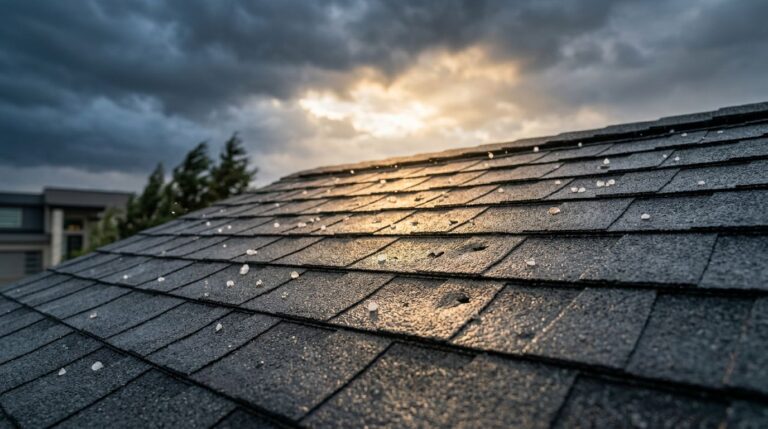
Yes. Hail can cut years off a commercial roof even when no water shows inside.
Impact can bruise membranes, loosen seams, dent metal, crush insulation, and weaken flashing or drains. Often the first sign is faster aging, higher repair cost, or early failure, not an immediate drip.
When This Applies
Which commercial roofs are most exposed
This applies to owners of low-slope and flat roofs, especially TPO, EPDM, modified bitumen, built-up roofing, and metal systems. Warehouses, retail buildings, offices, and multi-tenant sites face more risk because they have more seams, penetrations, and rooftop equipment.
Older roofs have less margin left. Hail doesn’t need to punch a hole to remove that safety buffer. Minnesota weather adds stress, too. A bruise from July can widen after UV exposure, foot traffic, snow load, and freeze-thaw cycles. That’s why hail damage roof life problems often stay hidden at first.
Local Saint Paul commercial roofing experts usually check drains, flashing, edge metal, and rooftop curbs first, because those details often fail before the open field of the roof.
When the risk is lower, and the main exception
If your roof is newer, impact-rated, and inspected right after the storm, the damage may be limited to surface marks. Some dents on metal panels are cosmetic only. In those cases, roof life may not drop much.
Hidden moisture changes the picture
A roof can still look dry indoors while water sits in the assembly. On low-slope systems, moisture can travel sideways before it reaches a ceiling tile. That’s why commercial roof leak detection in Saint Paul matters after hail, even when you don’t see stains.
Why leaks often show up late
Small impacts can create slow failure
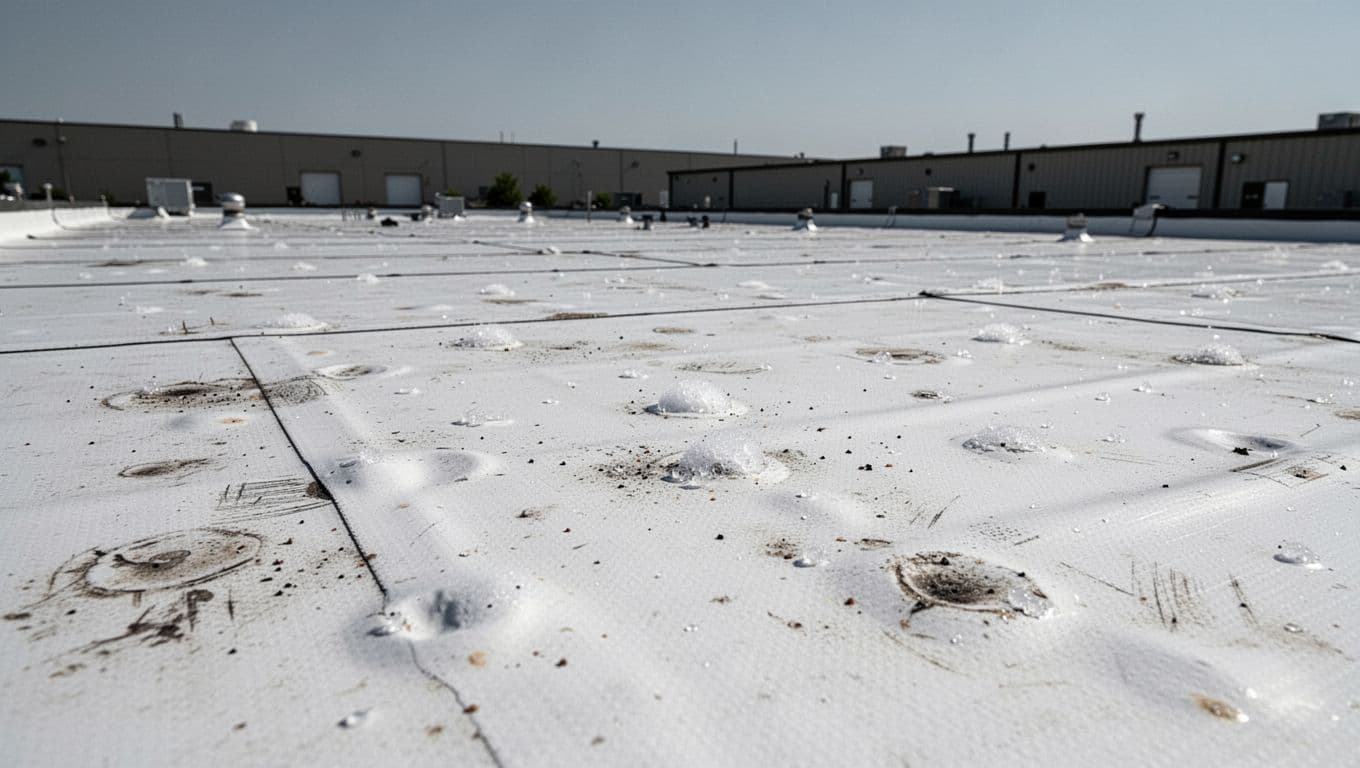
Hail rarely punches straight through a commercial roof. It’s more like denting a can. The can still holds liquid, but it’s weaker. On roofing, that weakness shows up as bruised membrane, cracked coating, loosened seam welds, bent flashing, or compressed insulation.
Those weak spots keep aging after the storm. Heat expands them. Cold tightens them. Ponding water and service traffic keep stressing the same area. As a result, a roof that had years left may now need commercial flat roof repair, or even commercial roof replacement, earlier than planned.
Compressed insulation also matters. It can lose R-value, trap moisture, and raise operating costs while the roof still looks serviceable from inside.
A leak is often the last symptom, not the first.
A broader look at hail risks, costs, and prevention methods shows the same pattern across commercial systems.
Cosmetic damage versus functional damage
Cosmetic damage changes appearance. Functional damage changes performance. If hail affects seams, flashing, drains, locks, fasteners, or membrane thickness, your commercial roof needs repair whether it leaks today or not.
Step-by-Step
-
Match the storm date to the roof’s age and type
Save weather reports, hail size notes, photos, service records, and any tenant complaints from the same day. Older roofs react differently than newer ones, and membrane type matters when you compare damage.
-
Inspect the parts that fail first
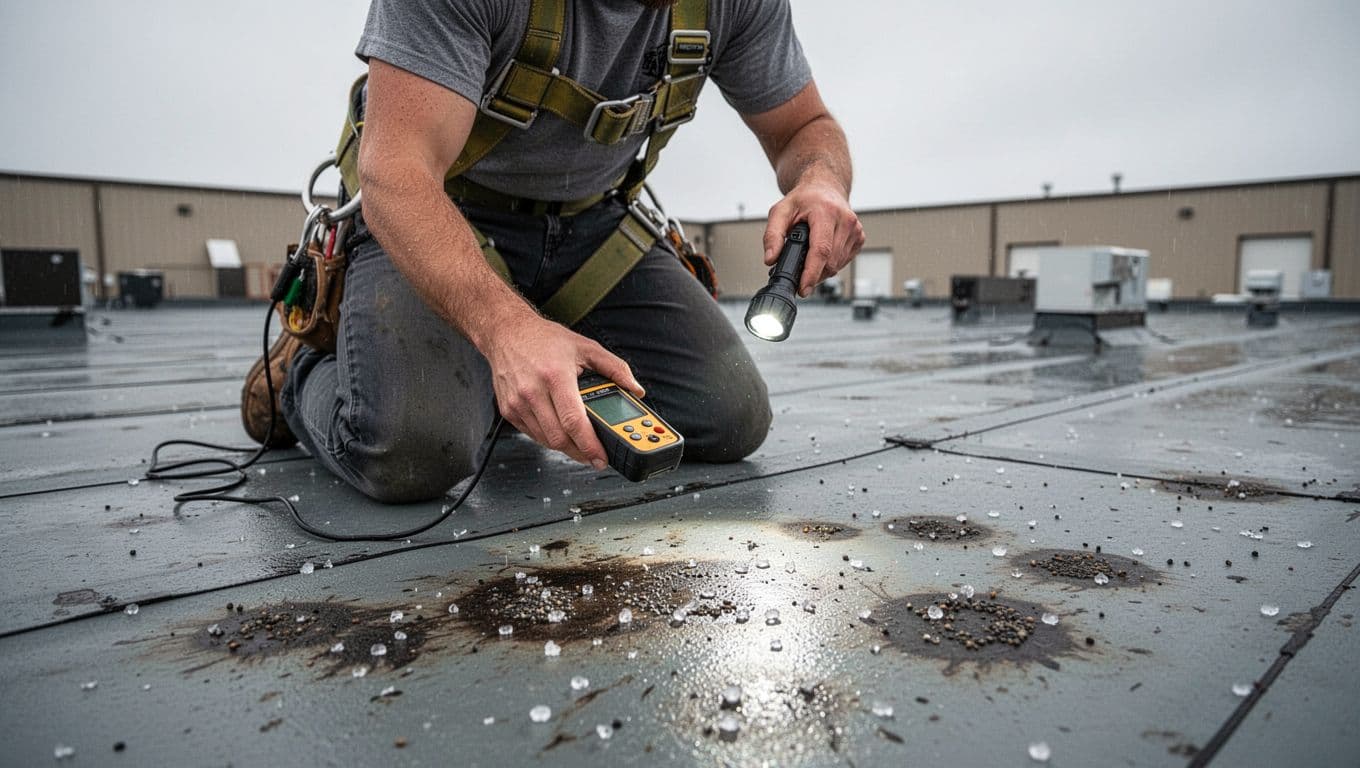
Check seams, penetrations, drains, skylights, curb flashing, edge metal, and rooftop units before you focus on open field areas. On metal roofs, look near locks, fasteners, and panel ribs. Take close photos with a ruler or coin for scale.

Know what counts as real damage
Dents alone may not matter. Split seams, displaced flashing, punctures, coating loss, soft spots, and backed-up drains do matter, because they shorten service life.
-
Test for hidden moisture before choosing a fix
If the roof shows bruising or impact around details, ask for moisture mapping or infrared testing. A dry-looking ceiling doesn’t rule out wet insulation. Finding trapped moisture early can keep a small repair from becoming a full tear-off.
-
Choose repair or replacement based on spread, not hope
Isolated damage on a newer roof often responds well to targeted repair. Wide damage on an aging system usually points toward commercial roof replacement, especially if insulation is wet or seams are failing in several areas. A repair only works if the surrounding assembly is still dry and well attached.
-
Recheck after the first heavy rain or freeze-thaw cycle
Some damage opens slowly. A follow-up inspection catches changes before tenants report stains, odor, or humidity. That timing matters, and many contractors stress post-storm inspection urgency for that reason.
FAQ
Can hail void a roof warranty if there isn’t a leak?
Not always. Still, delaying inspection or repair after known storm damage can create coverage issues. Keep reports, photos, and repair recommendations in your file.
How long after a hailstorm can leaks appear?
Delays are common on low-slope roofs
Leaks may show up days, weeks, or months later. Water often enters only after seams relax, flashing pulls loose, or trapped moisture spreads through insulation.
Should I call for an inspection if tenants only mention humidity or odor?
Yes. Hidden roof moisture can change indoor air conditions before a visible leak appears. That kind of complaint should not wait for a ceiling stain.
If the roof still has years left, should I avoid an insurance claim?
Not by default. If hail caused functional damage, early documentation protects your options. Waiting until the damage grows can make the claim harder to support.
Can rooftop HVAC take hail damage that leads to roof problems?
Penetrations are often the weak link
Yes. Hail can dent curbs, crack sealant, or loosen flashing around equipment. The membrane may hold for now, while the penetration becomes the future leak path.
The real risk isn’t the first drip. It’s lost roof life that quietly turns manageable damage into a larger capital expense.
If hail hit your building, act before the ceiling tells you there’s a problem. A dry interior today doesn’t mean the roof escaped the storm.
Need a roof inspection in Saint Paul or the Twin Cities? Call Sellers Roofing Company at +1-651-703-2336 or schedule a free estimate. We are a black-owned, NMSDC-certified MBE roofing contractor with 9+ years experience.