Last updated: 2026-10-22 by Ted Sellers, Owner
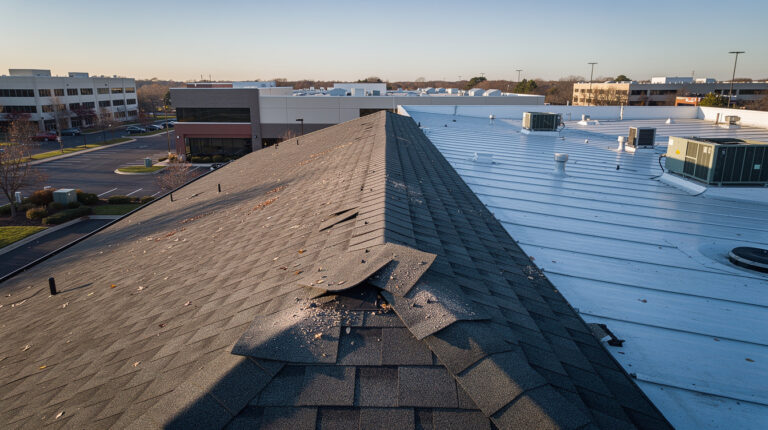
Yes. Ice dams can damage shingles before any indoor leak shows up. Backed-up meltwater can slip under shingle tabs, break the adhesive seal, strip away granules, and wet the roof edge. A commercial building may stay dry for a while because underlayment still blocks water, but the roof covering has already lost protection.
When This Applies
Buildings that fit this problem
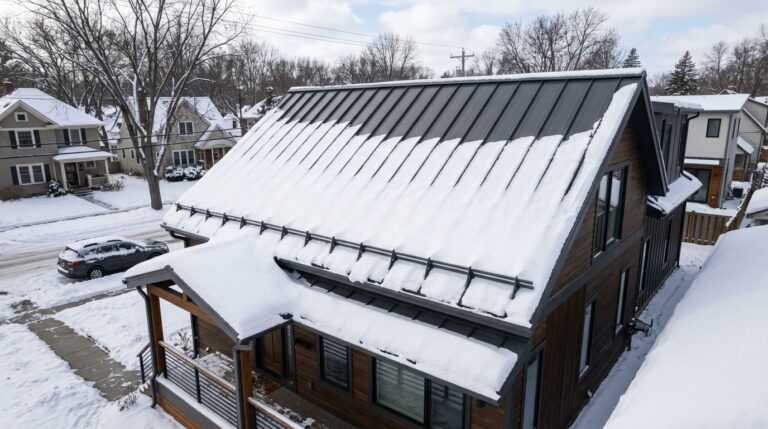
This issue matters most if your commercial property has asphalt shingles on a sloped section. Many offices, churches, retail strips, mixed-use buildings, and apartment-style properties have shingled entry roofs, mansards, dormers, or full pitched areas. In those spots, repeated snow melt and refreeze at the eaves can start damage before tenants ever report a stain.
In Minnesota, the risk goes up after heavy snow, uneven attic heat, clogged gutters, or poor ventilation. Owners who want a clear inspection path often start with Saint Paul commercial roof repair services. A documented inspection helps separate surface wear from active roof distress.
When it does not, and the gray areas
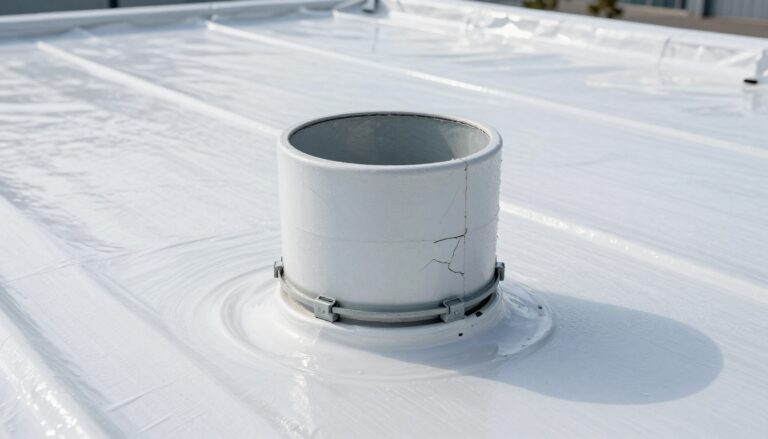
This does not apply in the same way to a true low-slope membrane roof. TPO, EPDM, and PVC systems do not fail like shingles. On those roofs, ice more often causes drainage blockage, seam stress, or flashing problems. That usually points toward commercial flat roof repair, not shingle repair.
There is one common exception. Some commercial buildings have both systems, a flat main roof and a shingled perimeter or entry canopy. In that case, you can have one winter problem showing up in two ways. The membrane may struggle at drains or edges, while the shingled section develops hidden edge damage.
How Ice Dams Damage Shingles Before Leaks Appear
Water backs up before the ceiling gets wet
An ice dam forms when upper roof snow melts, then refreezes at the colder edge. That ridge of ice blocks runoff. Water pools behind it and creeps under the lower shingle courses. Once it gets past the tab edge, it can soften the seal strip, wet the nails, and soak the roof deck near the eaves.
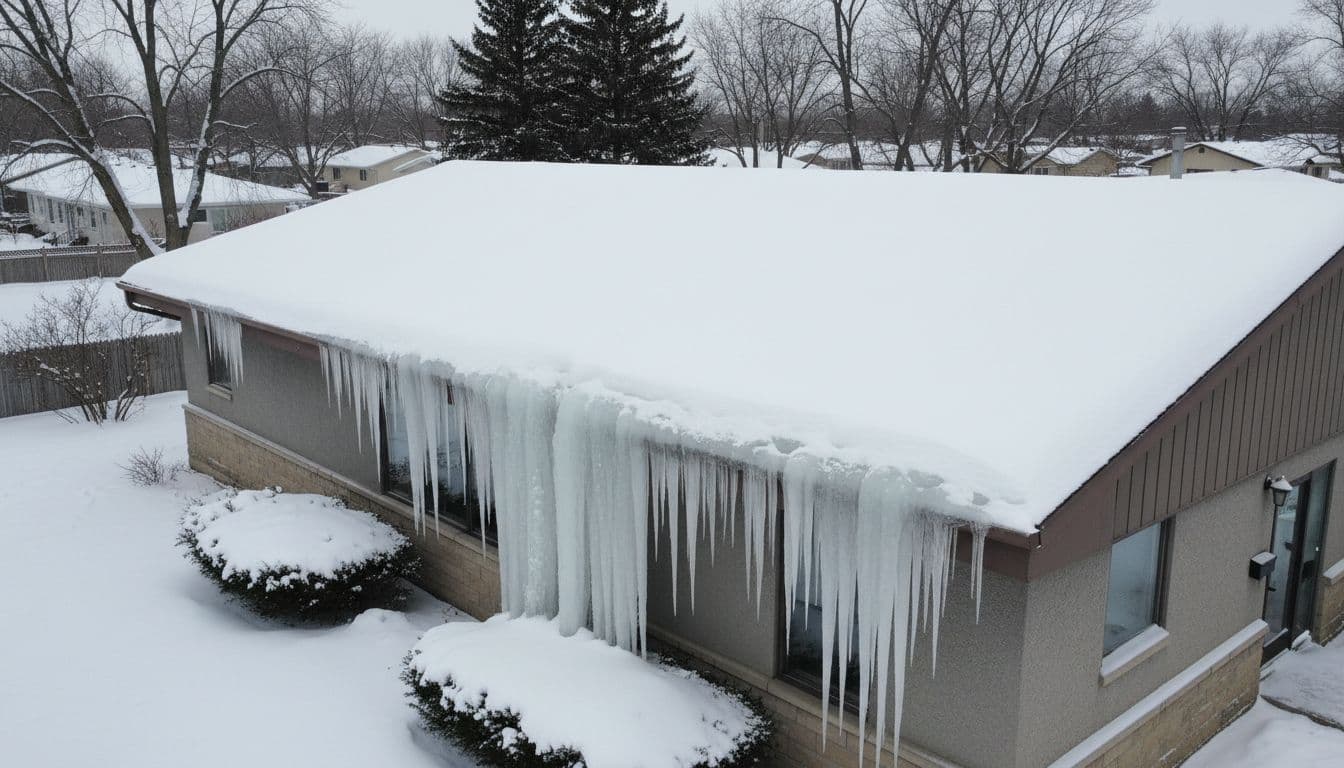
This kind of ice dam shingle damage often stays hidden because the secondary layers still hold. Felt, synthetic underlayment, or ice-and-water membrane can delay the first visible leak. The roof still took a hit.
Freeze-thaw stress keeps working after the dam melts
Trouble does not stop when the weather warms. As trapped water freezes and thaws, it can lift shingle edges, loosen fasteners, and wash granules toward the gutter. Later, wind catches those raised tabs and makes the damage worse.
A dry ceiling does not mean the roof edge is sound.
That is why some owners do not see a leak until spring rain or the next hard thaw. By then, what looked minor at the eaves may involve wet decking, fascia damage, or a wider repair area.
What Early Shingle Damage Looks Like on a Commercial Roof
Small changes near the eaves matter
Early damage usually starts at the lowest courses. You may see curled corners, hairline cracks, bare asphalt spots, or tabs that no longer sit flat. On older shingles, the surface may look sanded down near the gutter line because ice and moving water wore off the granules.
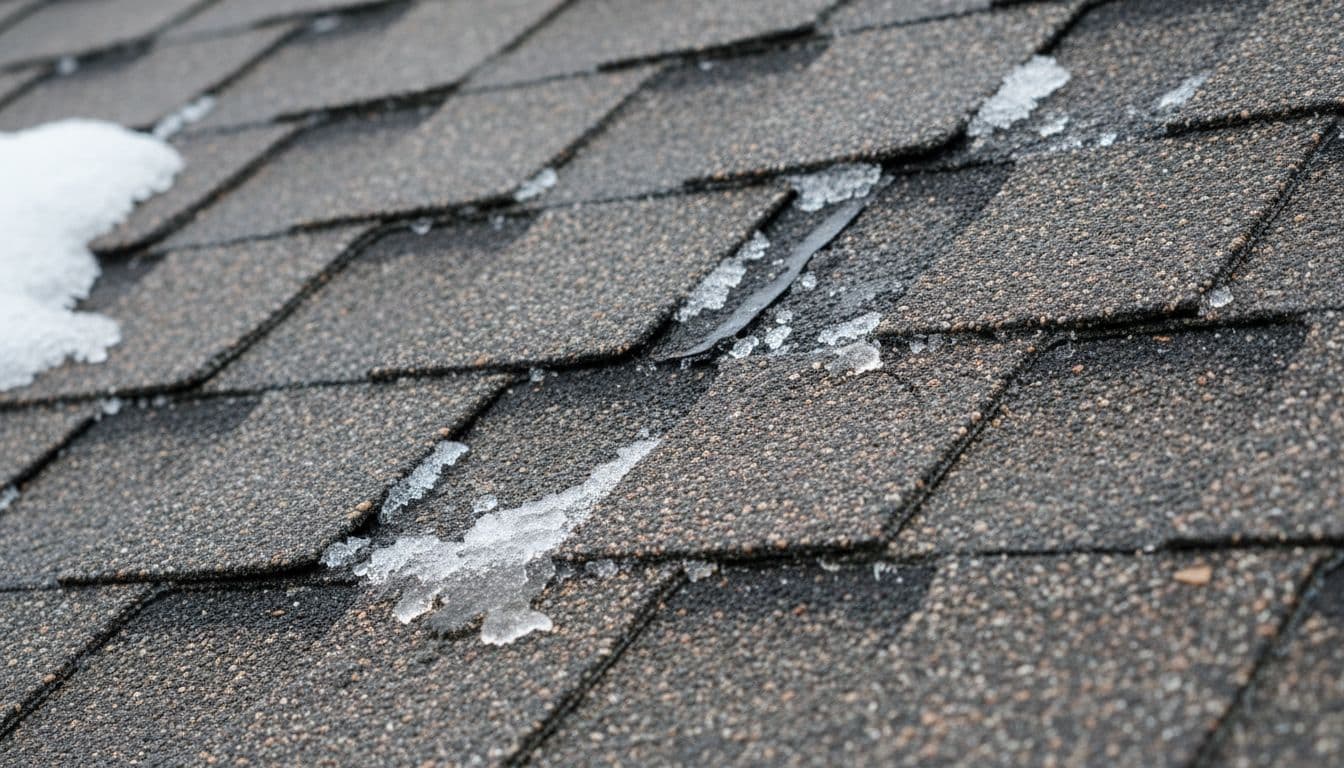
This quick reference helps separate normal aging from winter-related damage:
| Sign | What it often means | Why it matters |
|---|---|---|
| Lifted tab edges | Broken seal strip or trapped moisture | Wind can peel shingles back |
| Granule loss near eaves | Ice abrasion and water flow | UV wear speeds up |
| Fine cracks or creases | Freeze-thaw stress | A leak path can open later |
| Bent gutter edge or fascia stain | Water backed up at the roof edge | Damage may spread below the shingles |
These signs do not always mean an active leak, but they do show the roof edge has been stressed.
Signs a commercial roof needs repair before water appears
Look beyond the shingles themselves. Repeated ice in the same spot, damp soffits, stained edge metal, and granules piling up in downspouts all point to a weak roof edge. If one area holds snow longer than the rest, the deck below may be colder, wetter, or less insulated.
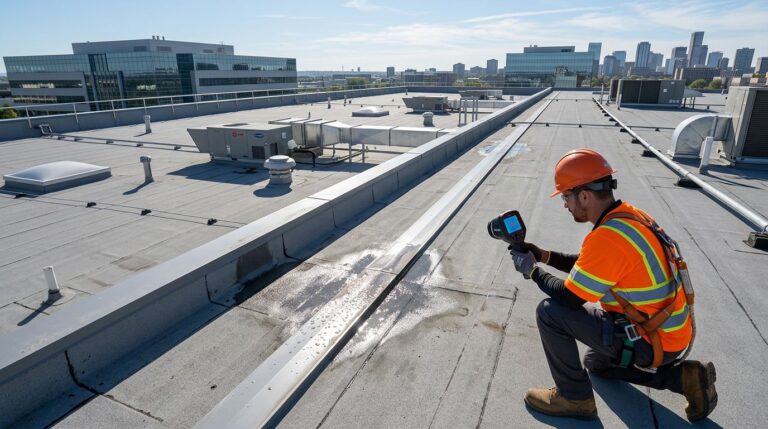
When a commercial roof needs repair, waiting for a ceiling stain usually costs more. A targeted inspection or early leak detection can confirm whether moisture is trapped below the surface. That matters most when the building has finished spaces, inventory, or tenant improvements near the roof line.
Step-by-Step
1. Document the trouble spots after snow or thaw
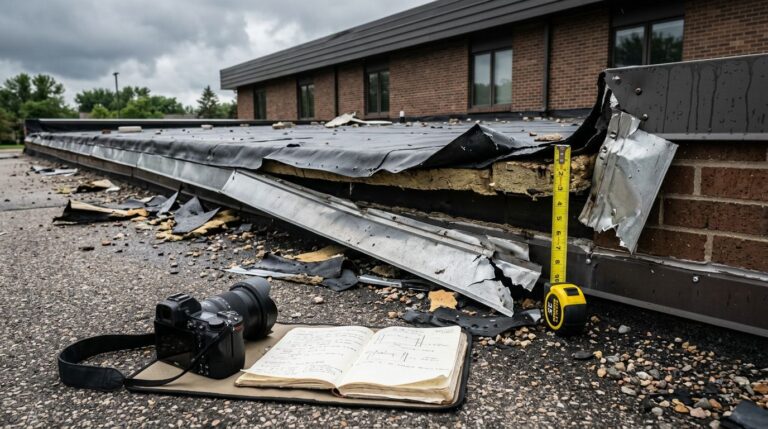
Start with photos from the ground. Note where icicles formed, where gutters overflowed, and which elevations held the thickest ice. Compare sunny and shaded edges. If the same roof section ices over each winter, the cause is rarely random. Good records also help when you review repair scope, warranty questions, or insurance. A commercial roof ice storm preparation plan covers the drainage, snow-load, and documentation checks to complete before the next freeze.
2. Inspect from the ground before anyone climbs
Use binoculars or a zoom lens to look for lifted tabs, missing granules, bowed gutters, or uneven roof lines. On a commercial site, safety comes first. Do not send maintenance staff onto an icy slope to “take a quick look” when the surface is still slick.
If the roof is still frozen
Wait for safer conditions or use a roofer with proper fall protection. Fresh damage is easier to document than an injured employee.
3. Check inside at the roof edge
Next, inspect the attic or top-floor ceiling zone above the ice line. Look for damp insulation, darkened sheathing, rusty fasteners, or cold air moving in near the eaves. Even when drywall looks clean, the edge of the roof deck may already be wet or swollen.
4. Separate shingle problems from membrane problems
Many commercial buildings have mixed roof systems. A shingled entrance canopy can fail at the same time a flat roof section traps water behind snow and ice. Keep those scopes separate. Shingle distress needs shingle repair, while the low-slope area may need commercial flat roof repair, drain work, or flashing repair.
5. Decide whether repair or replacement makes more sense
If damage is limited to a few courses and the roof is otherwise sound, targeted repairs may be enough. If the tabs lost seal across wide areas, the deck is soft, or winter failures keep returning, commercial roof replacement may cost less over time. A contractor such as Sellers Roofing Company can document whether the problem is isolated or system-wide before you commit to major work.
Conclusion
The main takeaway
Shingles can suffer winter damage long before water makes it indoors. The leak is often late evidence, not the first sign.
If your building develops the same ice line every winter, treat it as roof distress and document it early. Hidden damage is still damage, and finding it before spring storms usually keeps the repair scope smaller.
FAQ
Can one bad winter shorten the life of a shingle roof?
Yes. A single heavy season can break seal strips, expose nails, and strip granules at the eaves. The roof may not fail at once, but the damaged section usually ages faster than the rest of the slope.
What if the ice dam formed only over the front entry?
That often means the problem is local, not roof-wide. Still, entry
Need a roof inspection in Saint Paul or the Twin Cities? Call Sellers Roofing Company at +1-651-703-2336 or schedule a free estimate. We are a black-owned, NMSDC-certified MBE roofing contractor with 9+ years experience.