Last updated: 2026-08-01 by Ted Sellers, Owner
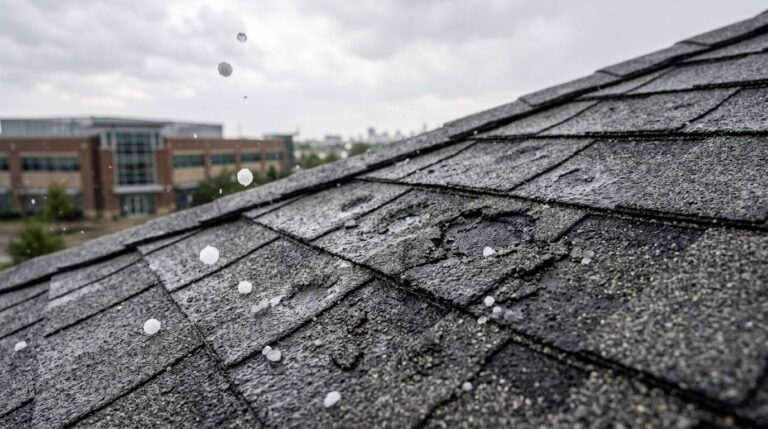
Look for fresh, sharp-edged impact marks along the roof’s highest line. On asphalt shingle ridge caps, that often means round granule-loss spots from impact damage, “bruises” that feel soft when pressed, or cracked corners. On metal ridge caps, watch for dents, scuffed coating, and loosened fasteners. Compare both sides of the ridge, because hail usually hits one slope harder.
When This Applies
Ridge caps that take the first hit
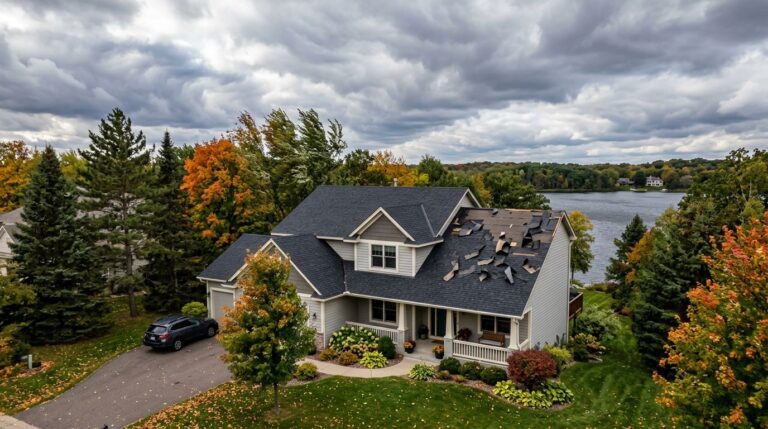
This applies to any Minnesota building with a peaked roof section, even if most of the structure is low-slope. Many commercial properties have ridge cap shingles on entry canopies, mechanical penthouses, mansards, or office wings, while the main roof may be a membrane system.
Ridge caps matter because they sit where wind speeds up and where hail tends to “skip” and strike repeatedly. Think of the ridge like the top of a drum. It catches impact, then it transmits stress to the seams, nails, and sealant lines that keep water out.
If you’re already seeing ceiling stains, musty odors, or wet insulation near the perimeter, don’t assume the leak is directly below the ridge. Water can travel before it shows itself, especially when freeze and thaw cycles open tiny gaps. In those cases, pairing a ridge-cap check with commercial roof leak detection Saint Paul can prevent “fix the wrong spot” repairs.
A ridge cap can look “mostly fine” from the ground, but still be compromised at the fasteners and seams, which is where moisture intrusion does its worst work.
When it’s probably not hail (and what can fool you)
Hail damage on ridge caps, a type of storm damage, usually looks random, but consistent in size and shape across a ridge line. Normal aging looks different. Sun and heat can dry out asphalt caps until they crack in straight lines. Foot traffic often leaves scuffs or flattened areas in predictable paths, near ladders and service points.
Use this quick reference to separate common look-alikes:
| What you see on ridge caps | More likely cause | What to do next |
|---|---|---|
| Round, clean loss of shingle granules with a defined edge | Hail impact | Photograph clusters and check nearby caps for widespread damage requiring roof replacement; consider impact-resistant materials |
| Long, straight splits along the cap fold | Thermal aging or installation stress | Check attic/insulation for moisture, plan repair |
| Scuffs in a line near access points | Foot traffic | Review maintenance routes, inspect for punctures |
| Dents with chipped paint on metal | Hail or debris | Check coating loss for rust risk |
| Loose cap edges with exposed nails | Wind uplift (sometimes after hail) | Treat as urgent to avoid blow-offs |
For extra context on how hail marks can present on roofs and exteriors, see this practical overview on spotting hail damage.
Step-by-Step
Start with safe, ground-level checks
- Confirm the hailstorm event window as part of your roof inspection. Note the storm date, approximate hail size reported locally, and wind direction, then focus your inspection on the windward side first.
- Scan the ridge line with binoculars. Look for uneven shadow lines, lifted cap corners, and spots that look “bald” compared to surrounding caps.
- Check soft metal clues at eye level. Dented gutters and downspouts, rooftop units, or metal wraps often correlate with roof impacts, so they help validate what you’re seeing up top.
Confirm on-roof signs at the ridge cap line
This roof inspection requires strict safety precautions before climbing.
- Use the right access and stop if conditions aren’t safe. Wet frost, snow, and steep pitches are common in Minnesota, so postpone the roof walk if traction is questionable.
- Inspect caps in a pattern, not randomly. Start at one end of the ridge and move cap by cap, because scattered checking misses repeated hits.
- Look for shingle bruising on asphalt ridge caps. A hail bruise often feels soft or spongy at the impact point, even if cracking hasn’t surfaced yet. Check for exposed fiberglass matting under the granules.
- Identify true impact marks. On asphalt, hail often leaves a round mark with granules missing and a defined perimeter. On metal ridge caps or metal flashing, impacts show as dents; use a chalk test to highlight them, plus chipped finish at the center.
- Check the failure points that create leaks. Pay close attention to exposed nail heads, split sealant beads, opened overlaps, and lifted edges, since these turn cosmetic damage into water entry.
- Document like you expect questions later. Take wide shots to show location, then close-ups with a coin or tape measure for scale. Also photograph intact areas for comparison.
If ridge caps are compromised, it can be a sign of hidden hail damage the broader system took too. For properties with multiple roof types, that might mean anything from targeted edge work to commercial flat roof repair on adjacent low-slope sections. When damage is widespread or the roof is already near the end of its service life, a commercial roof replacement can be the most predictable option for budgeting and risk control. A roofing contractor can help you map scope and priorities, starting with Saint Paul commercial roofing services.
If you can’t explain why a mark is hail and not wear, document it anyway, then get a qualified inspection. The pattern across the roof usually tells the story.
FAQ
Can hail-damaged ridge caps cause leaks even if the rest looks fine?
Yes. Ridge caps sit on seams, fasteners, and sometimes ridge vents or other roof vents. A small opening at the ridge can drive water under caps during wind-driven rain, leading to water damage. Later, freeze and thaw can widen that gap. If interior stains appear, treat it as “commercial roof needs repair,” not a wait-and-see.
How quickly should I inspect ridge caps after a Minnesota hailstorm?
Inspect as soon as it’s safe, ideally within days after a hailstorm. Fresh impacts are easier to spot before dust, algae, and normal weathering blend them in. Early documentation also helps if you need to explain timing during a roof inspection. This guide on how to identify hail damage vs. normal wear can help you avoid false alarms.
What photos and notes are most useful for ridge cap hail damage?
Capture three layers: a wide roof-slope photo showing the ridge location, mid-range shots showing the cap run, and close-ups showing each impact with scale. Also check nearby pipe boots and look for excessive shingle granules in gutters as evidence of granule loss. Add notes on which slope faces the prevailing storm wind, plus any matching dents on gutters or metal trim.
Do ridge caps need replacement, or can they be repaired?
It depends on the material and what failed. If impacts only removed granules, a professional roofer may recommend spot repairs or sealing, depending on the roof type and age. However, cracked caps, lifted edges, or exposed nails often justify replacing that ridge run, because it’s a common leak path; consult a roofing contractor to determine if a repair is sufficient.
Are impact-resistant ridge caps worth it for commercial properties?
They can be, especially on prominent peaked sections that take repeated hail and wind, often paired with architectural shingles. The value is less about looks and more about reducing open seams and fastener exposure after storms. Still, installation quality matters as much as the rating, so choose a system that matches the roof design.
How do I handle an insurance claim for hail-damaged ridge caps?
Start with thorough documentation of the damage. An insurance adjuster will evaluate it, but hiring a HAAG-certified inspector can help identify issues like damage to roof decking that might affect your roof warranty. This ensures a fair insurance claim process and protects your coverage.
Final takeaways
Hail damage ridge caps are easiest to spot when you look for patterns, not single marks. Focus on granule loss in asphalt shingles, bruising, cracks, dents, and loosened edges, then document with consistent photos. When you’re unsure, treat the ridge like a “water entry control line,” because small failures there can trigger bigger repairs later. Act early, before minor damage turns into interior disruption.
Need a roof inspection in Saint Paul or the Twin Cities? Call Sellers Roofing Company at +1-651-703-2336 or schedule a free estimate. We are a black-owned, NMSDC-certified MBE roofing contractor with 9+ years experience.