Last updated: 2026-08-01 by Ted Sellers, Owner
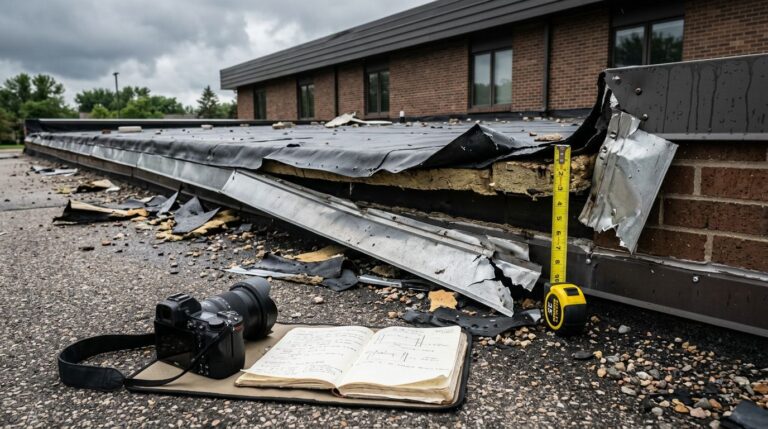
Short Answer: To find a commercial flat roof leak at an expansion joint, start by mapping where water shows up inside and when it happens. Then inspect the joint cover, roof flashing, and roof membrane terminations for splits, loose edges, or failed sealant. If it’s still unclear, use controlled testing (low-pressure water, infrared, or electronic leak detection) to pinpoint the breach at the joint detail.
Expansion joints are the “hinge” points of a building. They accommodate thermal expansion from heat and cold, as well as wind and settling. That movement is exactly why they leak, and why the leak path can be hard to track.
The good news is you can narrow it down fast with a simple, repeatable process, and avoid paying to repair the wrong area.
When This Applies
Expansion joints are a prime suspect when the leak acts “seasonal”
An expansion-joint leak often manifests as water intrusion after big temperature swings, freeze-thaw cycles, or windy rain. In Minnesota, that timing matters because roofs flex more during shoulder seasons.
Look closely at the pattern inside. Water from a joint detail often appears as a long stain line, repeated ceiling tile hits, or dampness that follows a wall intersection rather than one neat drip. If water shows up only during driving rain, the joint cover and end dams move to the top of your suspect list.
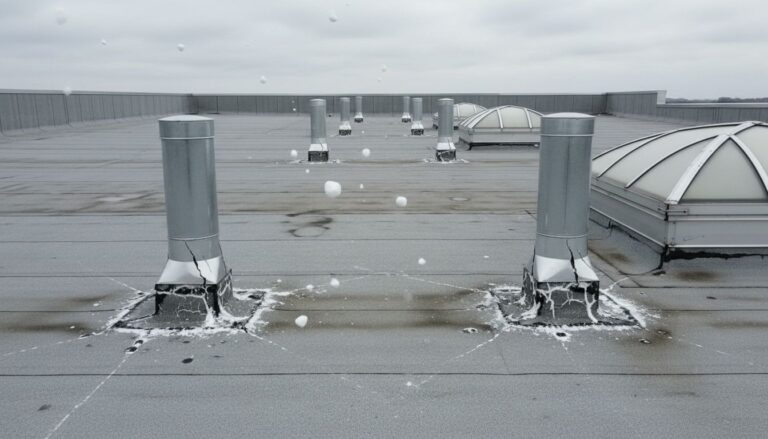
On the roof, the joint itself is a concentrated stress point. Long-term exposure to UV radiation can cause seam separation on a single-ply membrane near the joint. You may see cracking, tenting, split membrane edges, gaps at the metal terminations, or ponding water.
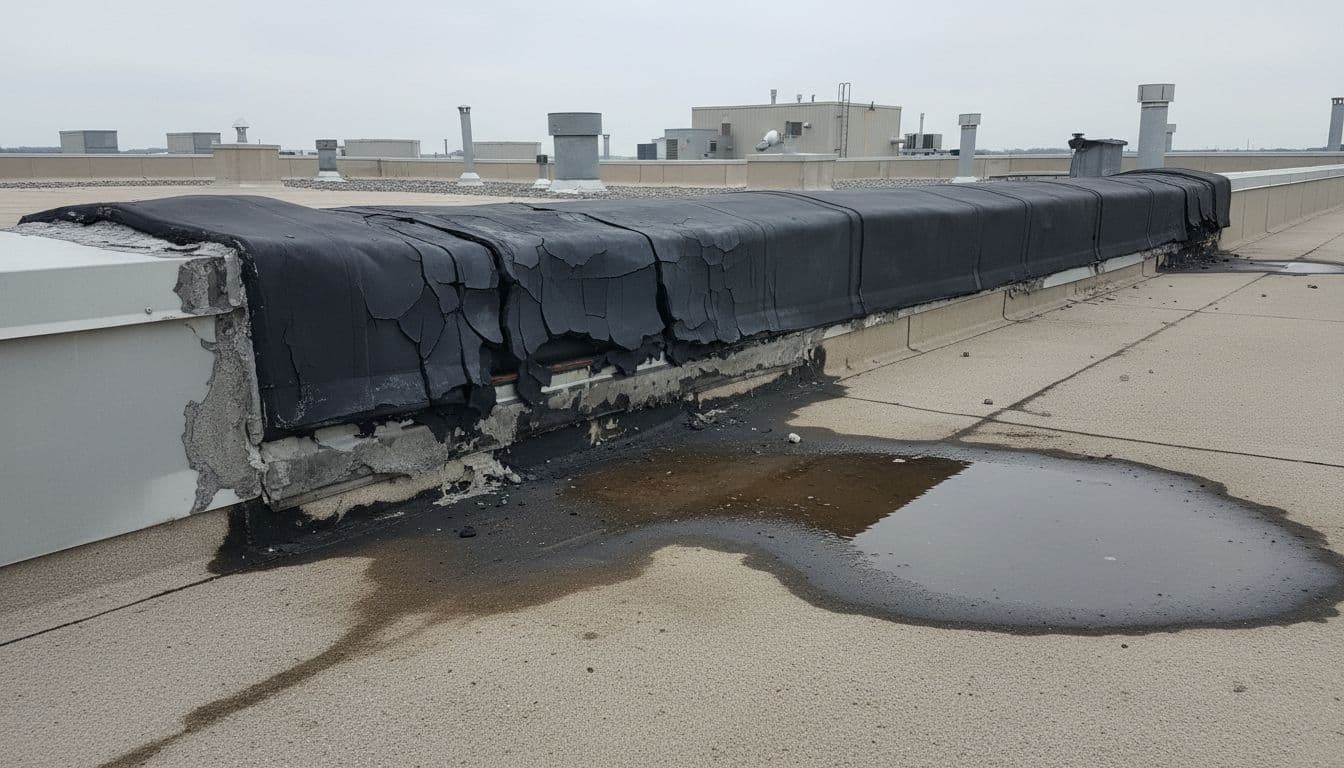
Water rarely drops straight down on flat roofs. It travels like a spill on a countertop, then finds the easiest exit.
If your team is already saying “our commercial roof needs repair” but nobody can agree on the source, expansion joints are worth focused attention because one failed joint can mimic several different leak sources.
For background on why joint details fail (and how movement affects coatings and transitions), see critical expansion joint performance factors.
When it’s probably not the expansion joint (common look-alikes)
Sometimes the joint gets blamed because it’s visible, not because it’s guilty. If the interior leak appears near a joint but the roof surface is dry and clean around it, consider other paths first: clogged drains, HVAC curbs, roof penetrations uphill, a wall flashing leak, or a puncture that feeds water toward the joint line.
If the “leak” is actually condensation
If you see sweating on ductwork, cold pipes, or diffusers during humid days, you may be chasing condensation, not roof water. That can still require building-envelope work, but it changes the plan.
If the building has multiple roof levels
Water can enter on a higher roof and show up at a lower joint line. In that case, treat the joint as a symptom and trace uphill before you authorize commercial flat roof repair.
Step-by-Step
Interior clues first (so you don’t chase shadows)
- Start with a timeline: note whether leaks happen during wind-driven rain, snow melt, or rapid warmups after a deep freeze.
- Mark interior locations precisely (room number, gridline, distance from exterior wall), then photograph stains and wet tiles for comparison after tests.
- Check “uphill” of the stain area for rooftop equipment rooms, parapet transitions, drainage systems, gutters and scuppers, or a higher roof plane that could feed water toward the joint.
Roof-side inspection at the expansion joint
- Move to the roof for roof inspection and identify the full expansion joint run, not just the spot above the leak. Inspect both sides because failure can be on either membrane termination.
- Look for joint cover issues: gaps at laps, loose fasteners, deformed metal, missing end caps, or open seams where wind can drive water in.
- Inspect the flexible bellows or membrane detail at the joint for splits, abrasion, and pulled edges. Pay extra attention where foot traffic crosses the joint.
- Check for ponding near the joint and for debris dams. Standing water raises the odds that a small defect becomes a leak. Use this roof inspection to note any patterns along the entire joint.
Pinpoint the breach with controlled testing (and stop guessing)
- If the source still isn’t obvious, schedule professional testing methods like moisture scanning and document results. Many owners start with commercial roof leak detection in Saint Paul because flat roofs can carry water far from where it appears inside.
- Use a low-pressure, sectional water test only when conditions are right: start at the lowest part of the joint detail and work upward in short zones, waiting long enough between zones to confirm results.
- Pair water testing with moisture mapping or infrared when possible, since wet insulation often outlines the travel path better than the surface does.
- Consider “wet vs. dry” testing options if operations can’t tolerate water on the roof. A practical overview is in wet testing vs. dry testing methods.
- When stakes are high (tenant spaces, critical equipment, repeated leaks), use electronic leak detection to pinpoint membrane breaches at terminations and joint transitions with minimal disruption.
Avoid high-pressure spray. It can force water into places it wouldn’t normally go, which creates false positives.
Decide whether it’s repair, restoration, or replacement
- If the leak is isolated at the joint cover, end dam, or termination, targeted flat roof repair often solves it with a focus on waterproofing, provided the surrounding membrane and insulation are still dry.
- If testing shows widespread wet insulation along the joint line, costs climb quickly. At that point, you may be comparing staged repairs against partial reroofing or full roof replacement.
- If you manage multiple buildings, standardize your response plan and vendor for consistent roof maintenance. A qualified local team can also inspect adjacent details (parapets, drains, curbs) during the same visit. For broader service support, see Saint Paul commercial roofing services.
FAQ
Why do expansion joints leak more than other roof areas?
Because they move. That movement stresses sealants, fasteners, and membrane terminations in TPO roofing, EPDM rubber, PVC membrane, and built-up roofing. Over time, small separations open at laps and corners, and wind-driven rain finds them.
Can we just seal an expansion joint leak with caulk?
Sometimes, but it’s rarely the full fix. If the joint cover is loose, the bellows is torn, or the membrane edge has pulled back, surface sealant becomes a short-lived patch. Use sealant only as part of a detail-correct repair, not as the whole plan.
When a temporary seal makes sense
If you need to stop interior damage before a scheduled repair window, a temporary seal can buy time, as long as you document it and plan the permanent correction.
What if the leak shows up 20 feet away from the joint?
That’s common on low-slope assemblies. Water can travel on the deck, within insulation seams, or along structural members before it drops inside. In that case, follow the travel path with moisture mapping, not ceiling stains alone.
How do I know if our commercial roof needs repair right now?
If you have repeated ceiling stains, wet insulation found in testing, or active dripping during normal rain, don’t wait. Also act quickly with emergency roof repair if you see joint cover gaps, loose metal, or split bellows, since those defects usually get worse fast.
When does an expansion-joint leak point to commercial roof replacement?
If large areas of insulation are saturated, decking shows structural damage from ponding water, or the joint line has multiple failures across long runs, repeated spot fixes stop making sense. Roof replacement (or a major restoration scope) becomes more predictable for budgeting and less risky for operations.
A leak at an expansion joint is frustrating because it can hide in plain sight. Still, once you map the interior symptoms, inspect both sides of the joint, and confirm with controlled testing and regular roof inspections, the source usually becomes clear. Treat the joint detail like a moving part, because that’s what it is. When you fix it correctly, you stop the water and protect the rest of the roof system. Prioritize preventative maintenance and ongoing roof maintenance, where silicone roof coatings or elastomeric coatings can extend life as part of a long-term strategy.
Need a roof inspection in Saint Paul or the Twin Cities? Call Sellers Roofing Company at +1-651-703-2336 or schedule a free estimate. We are a black-owned, NMSDC-certified MBE roofing contractor with 9+ years experience.