Last updated: 2026-08-01 by Ted Sellers, Owner
Use this hail damage roof checklist for documenting roof damage right after a Minnesota hailstorm, as you prepare for storm damage roof repair: make the property safe, photograph damage from wide shots to close-ups, save a few physical samples (when safe), and document dates, weather, and temporary repairs. Avoid risky roof walks, rushed contracts, and “cleanup” that erases evidence before your insurer sees it.

When This Applies
Who should use this checklist in Minnesota
This checklist fits Twin Cities homeowners and property owners who manage a roof on a house, duplex, or small commercial building, especially in hail-prone areas around the Twin Cities. It also works well for low-slope buildings with rooftop equipment, because hail often dents soft metals, damages membrane seams, and chews up accessories long before a leak appears.
Use it when you notice hailstones on the ground, dented gutters, splatter marks on siding, or granules collecting at downspouts. If you’re not sure what qualifies as hail damage, compare your photos against a reputable visual guide like this hail damage roof inspection guide so you know what details matter. Impact marks can signify hidden storm damage that warrants a professional roof inspection.
This is also the right process when you’re trying to prevent a small issue from becoming a bigger operational problem, and it kickstarts the insurance claim process. While this checklist focuses on hail, it also applies to severe wind damage and helps prevent future issues like ice dams in Minnesota. For business owners, identifying water leaks and stains early is critical for large-scale storm damage roof repair planning, since a few dents can turn into recurring leaks that lead to commercial flat roof repair requests later, when the ceiling stains finally show up.
Key exceptions and edge cases
If your roof is steep, wet, icy, or two stories up, don’t climb it for “proof.” You can build a strong file from the ground, from windows, and from accessible flat areas like a lower porch roof (only if it’s dry and safe).
If the storm caused structural damage (tree impact, power lines down, heavy interior collapse risk), switch from documentation to safety and emergency response first.
Step-by-Step
Collect evidence that adjusters actually use
If water is actively coming in right now
- Move inventory, electronics, and valuables away from drips; photograph the wet area before you touch anything.
- Place buckets and plastic sheeting inside, perform emergency tarp installation to mitigate attic and ceiling leaks, then take a quick video showing the leak path (ceiling to floor) and any affected equipment.
- Take a “storm context” photo set outside: the street view, hail in the yard, downspouts, and any obvious dents on mailboxes, vehicles, or HVAC covers. Include one object for scale (coin or ruler) when possible. These photos help document the need for storm damage roof repair.
- Photograph all sides of the building (front, back, left, right). Stand far enough back to show rooflines, gutters, and elevations in one frame to support your storm damage roof repair claim.
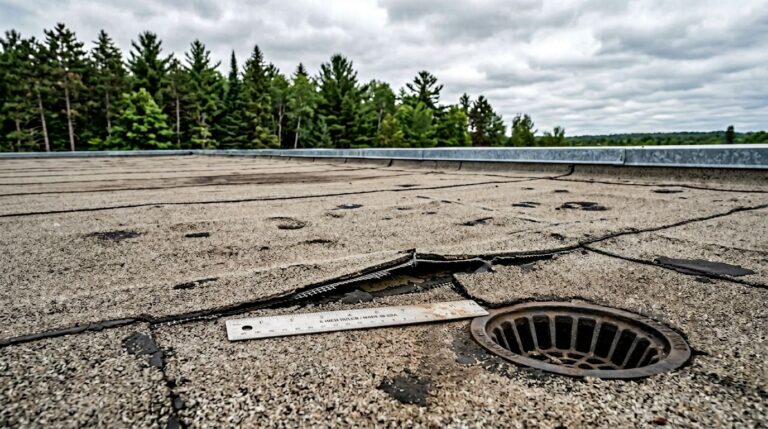
- From the ground, zoom in on each roof slope or roof area. For flat roofs, photograph parapet edges, drains, scuppers, and any rooftop units you can see.
- Capture close-ups of impact evidence:
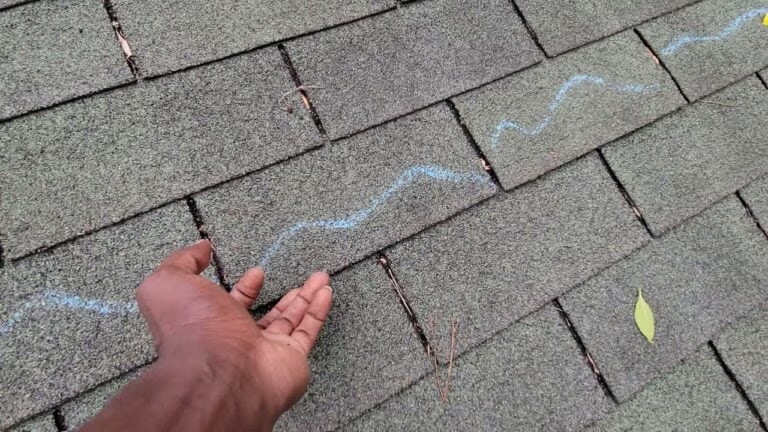
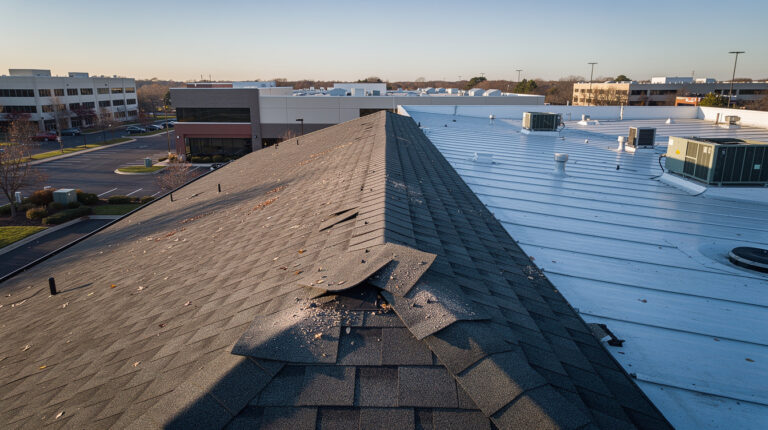
- Asphalt shingles: asphalt shingle damage including dark “bruise” spots, shingle granule loss, missing granules, missing shingles, exposed mat, cracked corners.
- Metal and soft metals: dents in gutters, downspouts, fascia, vents, flashing, and pipe boots.
- Screens and siding: punctures, tears, chips, and paint scuffs.
- Photograph roof-adjacent components that insurers often compare:
- Window screens (hail tears are easy to see in daylight).
- AC condenser fins (hail can flatten fins and reduce efficiency).
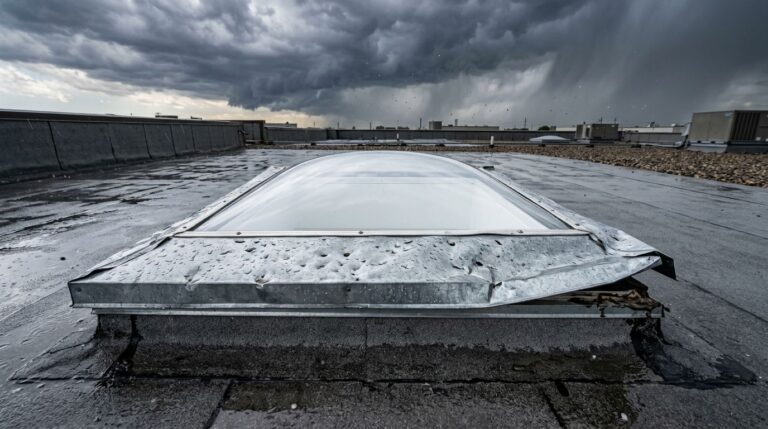
- Skylights, vents, and exterior light covers.
- Save physical evidence only when it’s safe: a small bag of hailstones from a shaded spot (label the date and approximate time), plus a photo of the bag next to a coin for size as part of photo and video documentation. If you find shingle granules washing out near downspouts, save a small sample in a clear container and photograph where it came from.
Protect your claim and avoid mistakes that erase proof
Before the adjuster arrives
- Write down a detailed incident report: storm date, when you noticed damage, when leaking started, and any steps you took to prevent more damage. Pair it with screenshots of any weather alerts you received and property maintenance records. These are vital for your homeowners insurance policy requirements and the insurance adjuster inspection. (For a Minnesota-specific documentation approach, see these tips for documenting roof damage for insurance in Minnesota.)
- Keep every receipt tied to the event, including tarps, dehumidifier rentals, and emergency service calls. Take photos before and after any temporary roof repairs.
- Don’t let anyone “clean up” the roof before it’s documented. Replacing a few caps, swapping a dented vent, or power-washing granules away can make it harder to show what happened.
- Avoid signing anything that hands over your entire claim or has blank pricing. If you need a professional roof inspection for a business property, use a licensed roofing contractor that can document conditions and explain options, including when a storm pushes you toward commercial roof replacement. For Saint Paul support and documentation help, contact the Sellers Roofing Company commercial team in Saint Paul.
FAQ
How do I know if hail damage is “real” if there’s no leak?
Hail damage often shows up first on soft metals, screens, and gutters, including signs like missing shingles. A roof can be compromised while still shedding water for months, hiding hidden storm damage. Visual indicators matter because they support the story of impact, even before interior damage appears. A professional roof inspection can uncover these issues early.
What if the roof is a flat membrane?
Look for dented edge metal, damaged penetrations, and disturbed seams near rooftop units. Those details can explain later leaks.
What photos help the most for insurance?
Adjusters tend to value wide shots that prove location, plus close-ups that prove impact, including photo and video documentation of missing shingles across multiple areas. A strong set includes each building elevation, each roof area from the ground, and repeatable close-ups of the same type of damage in multiple spots. This supports the insurance claim process from the start.
What should I not do after a hailstorm?
Don’t climb on a wet or steep roof, and don’t authorize permanent repairs before documenting. Beware of storm chasing contractors; hire a licensed roofing contractor with local roofing expertise instead. Don’t pay the full job upfront, and don’t let a contractor remove “damaged” items without photographing them first.
What about letting someone tarp the roof?
Temporary roof repairs like tarping are fine when they prevent more damage; photograph everything before and after.
What are Right to Repair laws?
Right to Repair laws, along with Minnesota building codes, give homeowners the right to choose their own contractors for storm damage roof repair. These protections ensure you can select qualified pros without pressure from insurers, helping you comply with local standards while protecting your property.
What about the costs for roof repairs or replacement?
Roof replacement costs can add up quickly, but your homeowners insurance policy often covers much after the insurance policy deductible. Get free contractor estimates from multiple sources to compare options and strengthen your insurance claim process.
What if my commercial roof needs repair but the storm was weeks ago?
Start documenting today anyway. Take current photos of issues like water leaks and stains, gather any earlier storm alerts, and pull maintenance records. Even if timelines vary by policy, delaying longer rarely helps when storm damage affects operations.
Will dents in gutters or AC units matter?
Often, yes. Dents can support hail size and direction, and they show the storm impacted multiple exterior components. Those “side clues” can strengthen the roof portion of your claim, even if shingles or membranes are harder to photograph. Consider impact-resistant roofing materials for future protection.
A hailstorm doesn’t just hit shingles, it tests your documentation habits. Keep your file clean, keep evidence intact, and keep people safe. If the photos suggest widespread impacts or repeated leaks, treat it as a building risk, not a weekend project. A thorough professional roof inspection is the best way to determine if a homeowners insurance policy claim is warranted ahead of the insurance adjuster inspection. Get free contractor estimates and a professional roof inspection today.
Need a roof inspection in Saint Paul or the Twin Cities? Call Sellers Roofing Company at +1-651-703-2336 or schedule a free estimate. We are a black-owned, NMSDC-certified MBE roofing contractor with 9+ years experience.