Last updated: 2026-08-01 by Ted Sellers, Owner
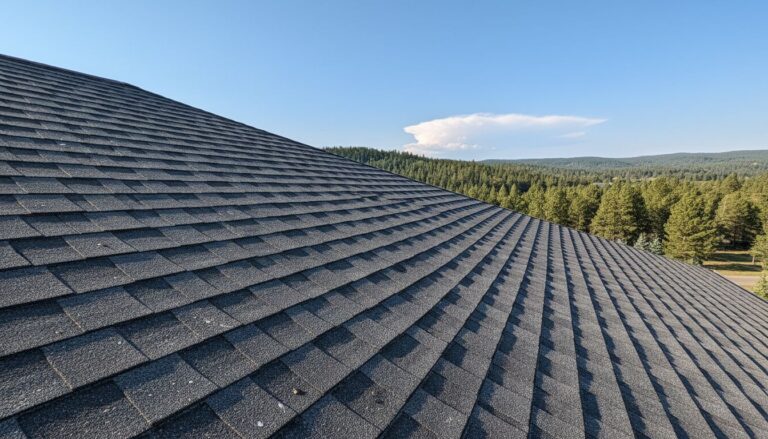
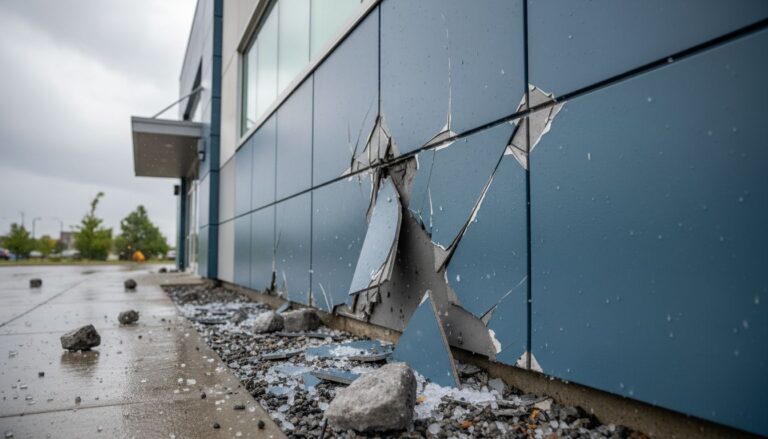
Wind damage on a synthetic slate roof usually shows up as lifted edges, slipped or missing tiles, cracked corners, broken fastening points, bent flashing, and exposed underlayment. On commercial buildings, the first signs often appear along ridges, eaves, hips, and roof perimeters, where gusts hit hardest and wind-driven rain can slip below the surface.
When This Applies
This fits steep-slope commercial roofs with synthetic slate
This applies to offices, churches, retail buildings, condos, and mixed-use properties with synthetic slate on pitched roof sections. It’s most relevant after a windstorm, especially when debris hit the roof or when occupants noticed rattling, leaks, or pieces on the ground.
Synthetic slate wind damage can be direct or indirect. A tile may crack from impact, or it may loosen because wind stressed the fastener below it. InterNACHI’s slate roof inspection notes explain how wind can also trigger failure when nails or attachment points are already weak.
When the signs may point to something else
This does not fully apply to low-slope membrane roofs. If your building has both steep-slope accents and a low-slope section, the membrane area may need commercial flat roof repair, while the synthetic slate area needs tile and flashing work.
Some damage also gets misread. Hail tends to leave chips, star cracks, or surface scuffs. Age-related wear looks more even. Poor installation can cause slipped tiles without a major wind event. In other words, location and pattern matter as much as the damage itself.
What Wind Damage Usually Looks Like
The visual signs that matter most
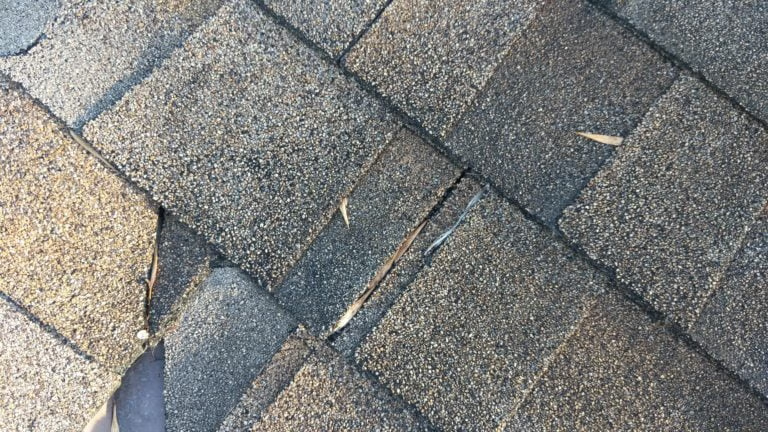
The most common clue is movement. Synthetic slate tiles may sit slightly raised, look out of line, or show corners that no longer lie flat. That usually means wind got under the leading edge and stressed the attachment.
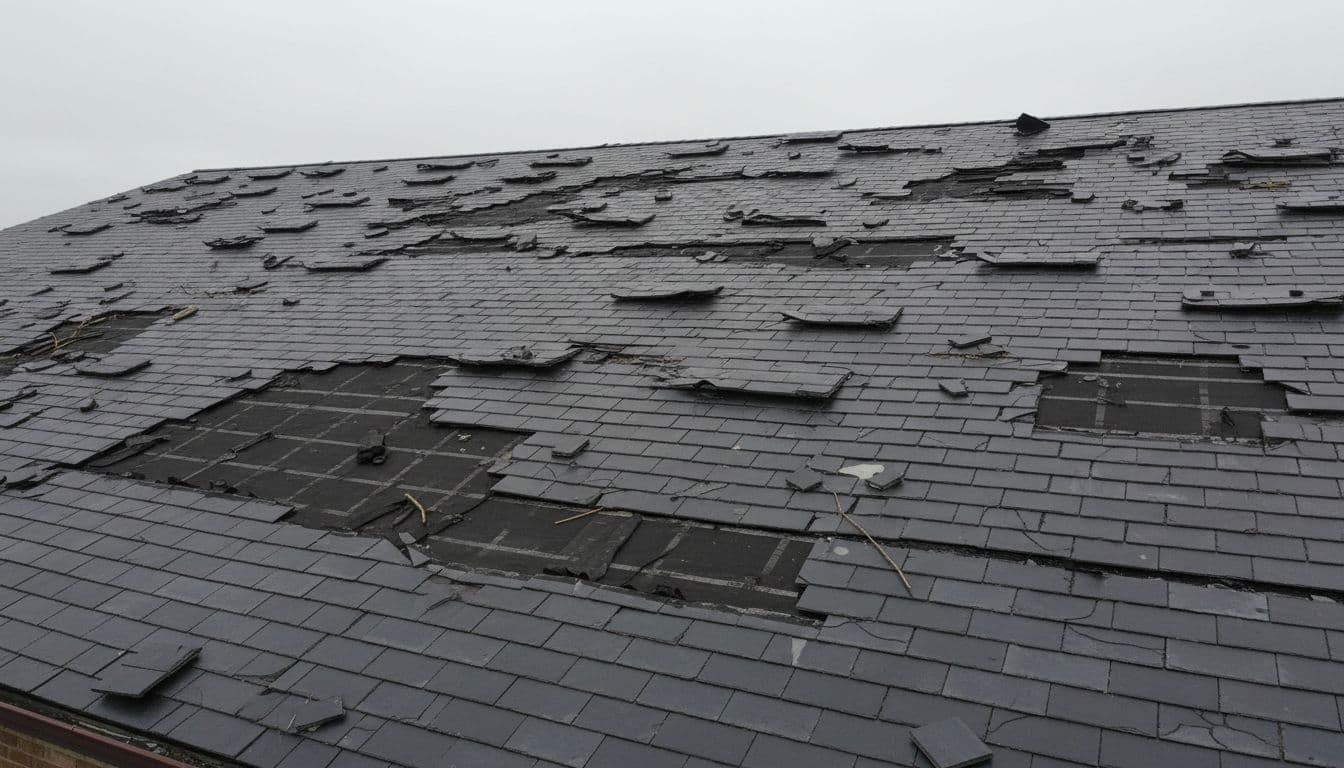
You may also see missing pieces, exposed felt, or gaps that look like missing teeth. Those openings are urgent because wind-driven rain can enter fast. On larger buildings, damage often clusters near corners and edges where uplift pressure is highest.
Cracks are another strong signal. On synthetic slate, they often show at the corners, along the lower edge, or around nail holes. A roof can still look mostly intact from the parking lot while several tiles are already weakened.
Metal details often tell the story too. Bent drip edge, loose ridge caps, or separated flashing at walls and penetrations often appear with tile damage. Many field leaks start there, which is why slate wind-damage patterns usually include both tile loss and flashing failure.
A quick comparison helps:
| What you see | What it often means | Urgency |
|---|---|---|
| Lifted tile edges | Uplift has loosened attachment | High |
| Missing or slipped tiles | Water can reach underlayment | Urgent |
| Cracks at corners or nail holes | Tile may fail in the next storm | High |
| Bent flashing or ridge pieces | Rain can bypass the roof surface | High |
If leaks show up inside after a wind event, the roof doesn’t need dramatic visible failure to be in trouble. Sometimes a commercial roof needs repair even when the damage is limited to a few strategic spots.
Step-by-Step
How to inspect the roof without making the problem worse
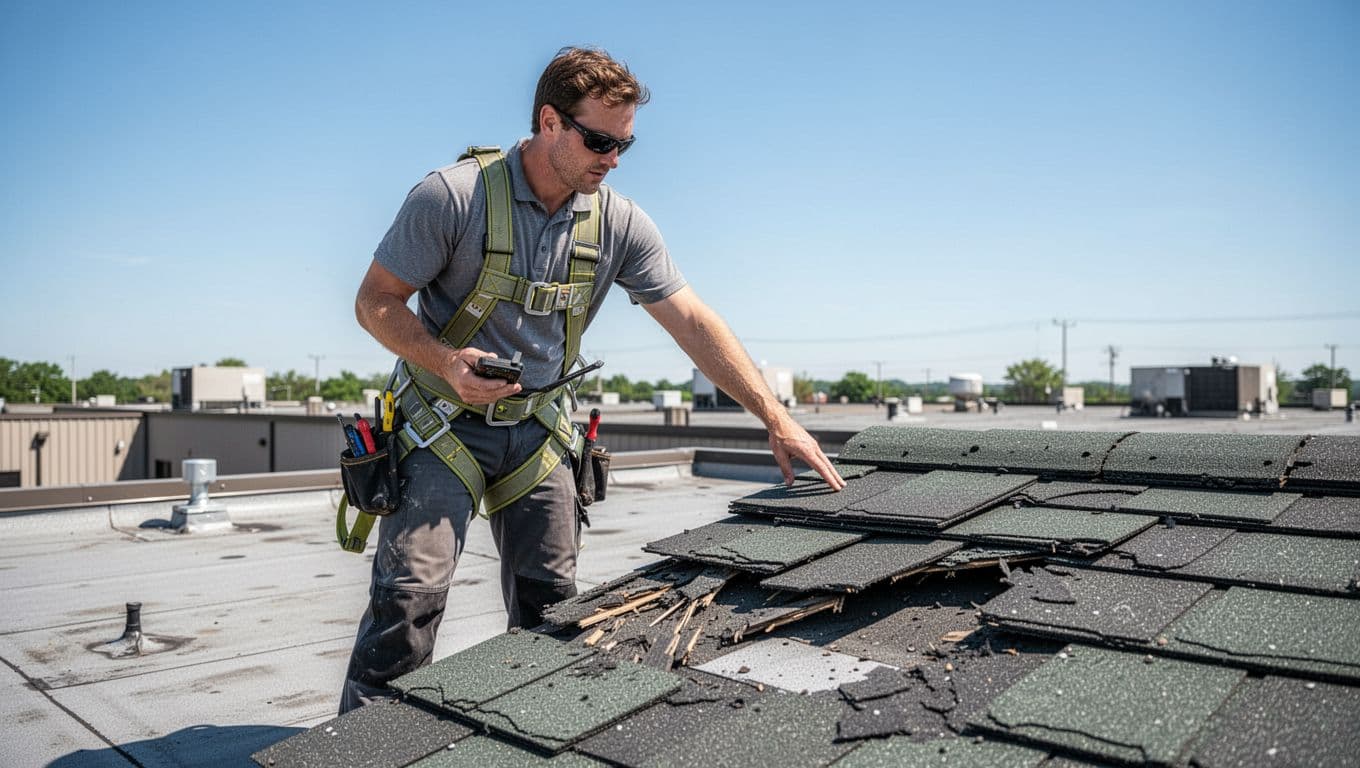
- Start at ground level. Walk the perimeter and look for broken tile fragments, displaced ridge pieces, and fresh metal flashing on the ground. Those clues often point to the damaged slope before anyone climbs.
- Check the roof edges first. Eaves, corners, ridges, and hips take the hardest wind pressure. If tiles look lifted, uneven, or out of pattern there, the damage may continue farther upslope.
- Look closely for cracks and fastening failure. Hairline fractures near nail holes, split corners, and tiles that shift under light pressure all suggest wind stress. Avoid walking directly on questionable areas because synthetic slate can crack further.
- Inspect flashing and transitions. Wind often opens paths around walls, curbs, valleys, and penetrations before it strips large sections of tile. If your property has active moisture concerns, commercial roof leak detection services can help trace hidden water entry.
- Check the inside of the building the same day. Look for ceiling stains, damp insulation, wet decking, or new drips during rain. Interior signs often confirm damage that looks minor from outside.
- Decide whether repair or replacement makes sense. If damage is isolated, a targeted fix is often enough. If multiple slopes show loose tiles, aging underlayment, and recurring leaks, commercial roof replacement may be the smarter long-term choice. For broader storm follow-up, experienced Saint Paul commercial roofing experts can document conditions and match the fix to the roof system.
Conclusion
The practical takeaway
On synthetic slate, wind damage usually looks like movement first and missing pieces second. Lifted edges, cracked corners, displaced tiles, and bent flashing are the warning signs that matter most.
For commercial owners, the key is speed. Small openings can stay hidden until driven rain reaches the deck, insulation, or interior finishes. The earlier you spot the pattern, the easier it is to stop a leak before repairs grow into a larger roofing project.
FAQ
Can wind damage synthetic slate without tearing tiles off?
Yes. Wind often loosens fasteners or lifts tile edges before anything falls away. That early movement can still let water in.
Should I look for damage only on the wind-facing side?
No. Windward slopes take the first hit, but corners, ridges, and leeward edges can also fail. Turbulence moves pressure across the whole roof.
Can a few cracked tiles wait until next season?
Usually, no. Cracked synthetic slate can hold for a while, then fail during the next storm. Quick repair costs less than chasing interior leaks.
What if leaks show up but the tiles look fine from below?
That happens often. The problem may be at flashing, nail holes, or underlayment laps. A close inspection is the only way to confirm the entry point.
Does insurance usually want photos after a wind event?
Yes. Take clear photos of roof sections, fallen pieces, interior staining, and the date of the storm. Good records help support the claim and the repair scope.
Need a roof inspection in Saint Paul or the Twin Cities? Call Sellers Roofing Company at +1-651-703-2336 or schedule a free estimate. We are a black-owned, NMSDC-certified MBE roofing contractor with 9+ years experience.