Last updated: 2026-08-01 by Ted Sellers, Owner
Hail damage on roof flashing usually shows up as small round dents, sharp dings along edges, chipped coating or paint, and bent hems or corners where metal is thinnest. In Minnesota, freeze and thaw can turn those minor strikes into opened seams and cracked sealant, which often leads to leaks at parapet edges, wall transitions, and roof penetrations.
When This Applies
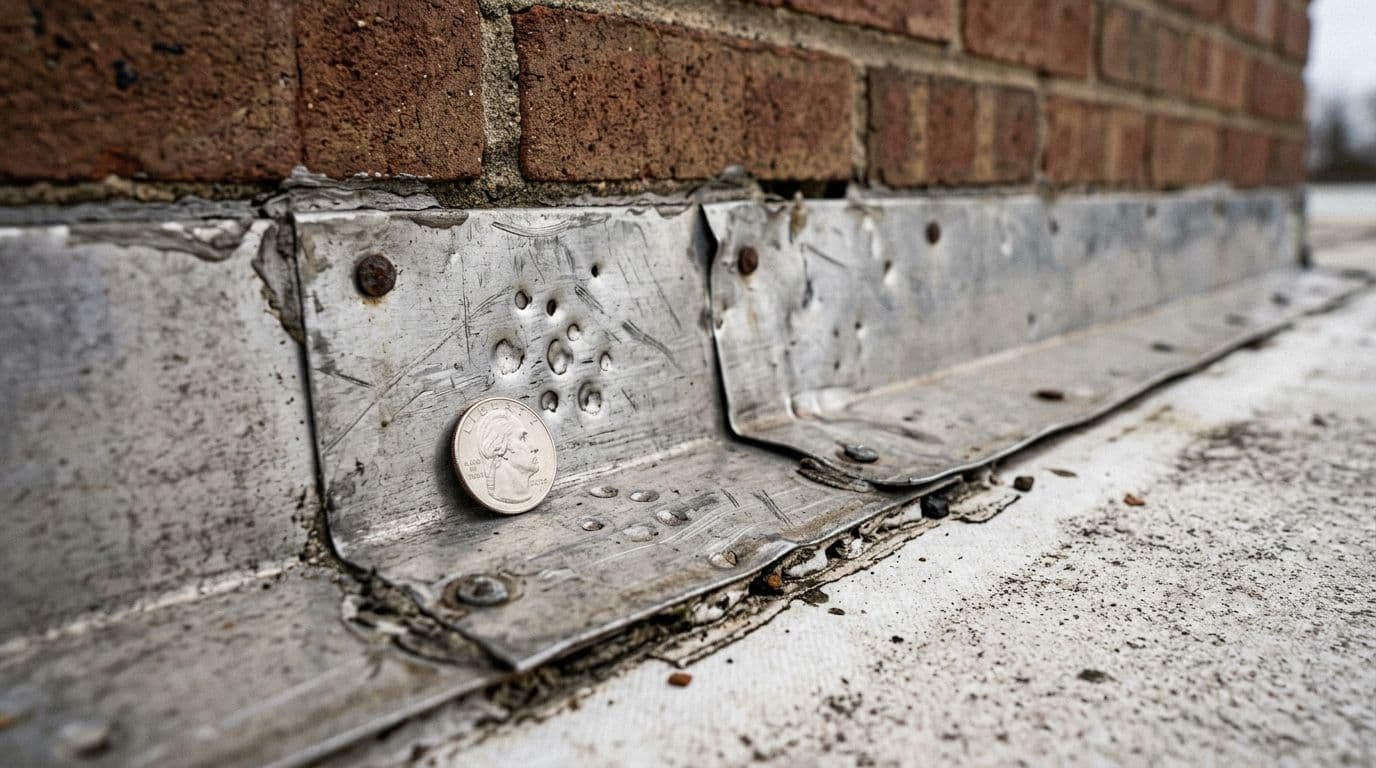
Buildings and roof types where flashing takes the hit
This applies to most Minnesota buildings with exposed metal details, especially low-slope commercial roofs. Think parapet coping, edge metal, counterflashing at masonry, and curb flashing around rooftop units. Those areas get hammered because hail often arrives with wind, so it hits at an angle and concentrates on corners and leading edges.
It also applies when your roof has a lot of “interruptions”, like HVAC curbs, wall transitions, skylights, and pipe penetrations. Flashing is the roof’s “weather gasket”. If it gets bruised, water can sneak in even when the membrane still looks fine.
On the other hand, this doesn’t always apply if your flashing is well-hidden (for example, covered by cladding) and the hail event was small and short-lived. Even then, it’s smart to confirm, because flashing failures often show up weeks later, not the same day.
For a quick comparison of storm marks versus age-related wear, see how hail damage differs from normal wear.
When dents aren’t hail (common look-alikes)
Some “damage” is just the roof showing its age. Oil-canning (wavy metal), old ladder scuffs, oxidation spotting, and fastener dimples can mimic impacts. Hail dents tend to look random but consistent, like someone tapped the metal with marbles across the same exposure zone.
Step-by-Step
Confirm flashing damage from inside and from safe viewpoints
- Review the storm date and wind direction, then note which roof edges faced the storm.
- From the ground, scan metal edges and parapet caps for uniform dimpling and bent drip lines.
- Inside the building, check top-floor ceiling areas for fresh staining near exterior walls.
- Look for water at predictable entry points, such as around rooftop units and near parapet corners.
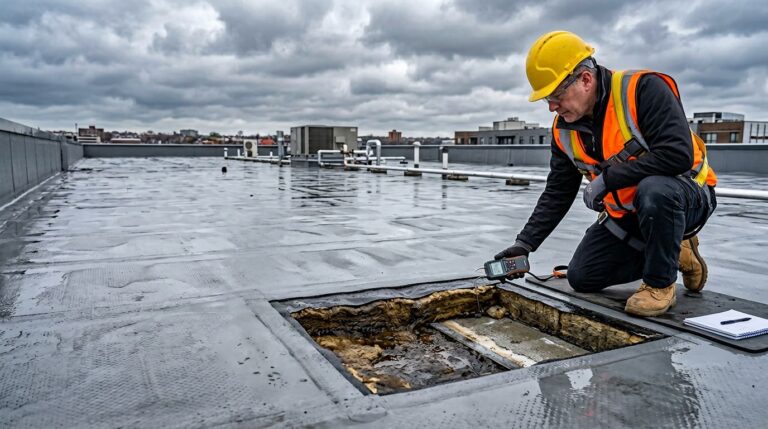
- If you see active water, treat it as urgent and assume your commercial roof needs repair.
Document proof and choose the right next action
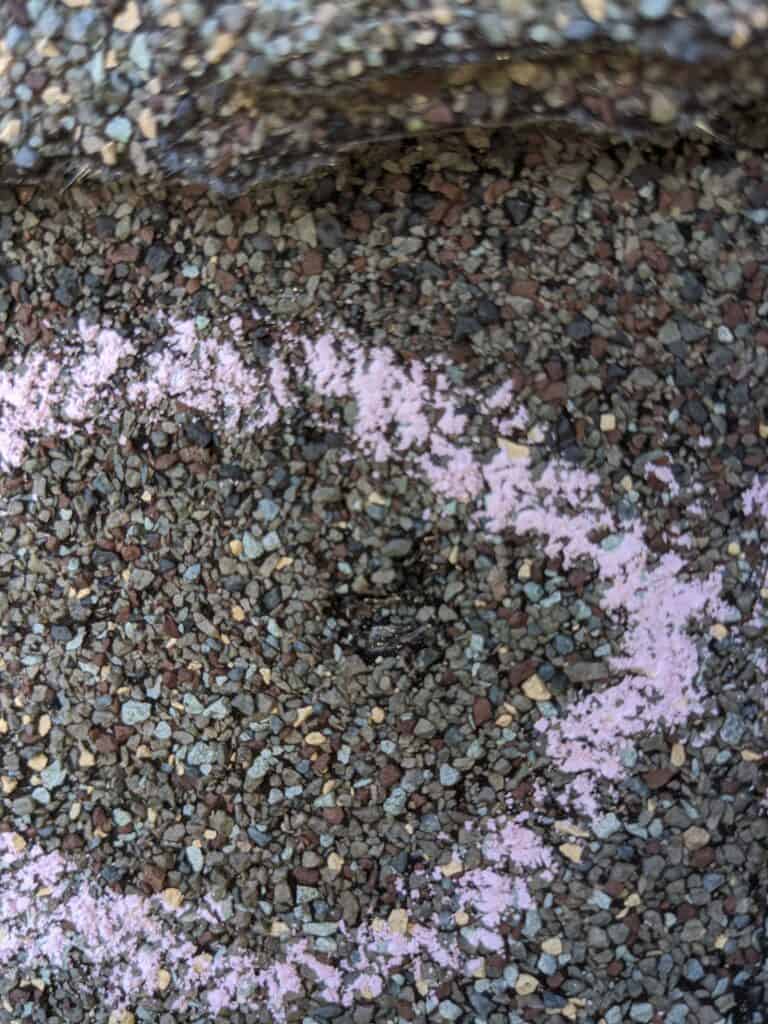
- Take close, well-lit photos of dents, including one with a coin or tape for scale.
- Photograph adjacent components too (gutters, HVAC screens, metal caps) to show pattern.
- Mark locations on a simple roof sketch so repairs target the right details.
- Schedule professional inspection, especially if the roof is low-slope and water can travel.
- If leaks are suspected, use commercial roof leak detection in Saint Paul to pinpoint the source before opening the roof.
- Decide scope: isolated flashing issues often fit commercial flat roof repair, while widespread edge-metal failure may push you toward commercial roof replacement planning.
What Roof Flashing Hail Damage Looks Like Up Close
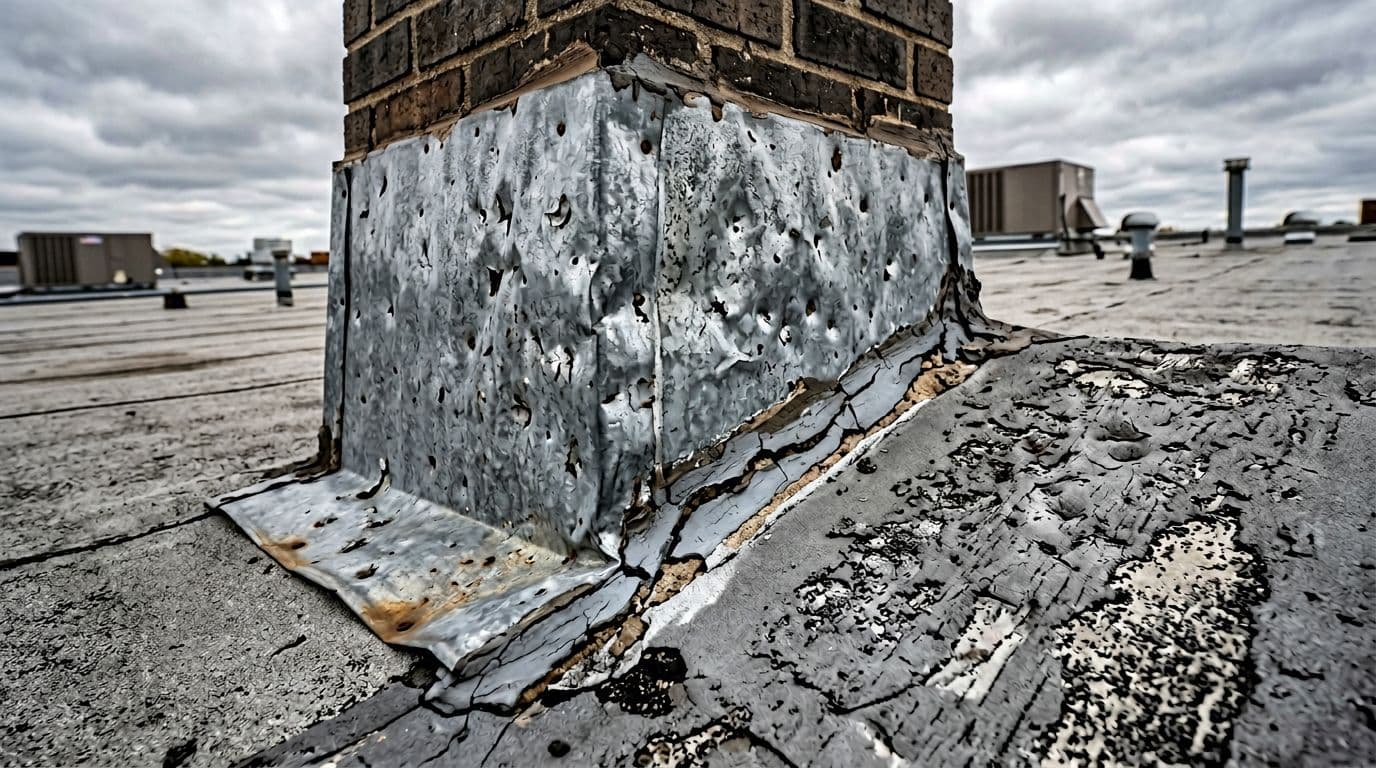
Common visual signatures on metal flashing
Most roof flashing hail damage falls into a few visual “tells”:
- Round dents with clean edges: Often shallow, but easy to feel if you run a hand along the metal (only do this when it’s safe and dry).
- Edge deformation: The hemmed edge of coping, drip edge, or counterflashing can curl or flatten, which breaks the intended drip path.
- Chipped finishes: Painted or coated metal may show tiny chips that expose bare metal. In Minnesota, that can invite rust and fast corrosion.
- Sealant distress near impacts: Sealant doesn’t have to be hit directly. A dent can flex the metal and crack an old bead.
A helpful way to think about it: flashing is like the lid on a cooler. If the rim gets dented, the seal may still “close”, but it won’t stay watertight once water pools or wind pushes.
For more detail on what inspectors look for across roof components, reference a practical hail damage checklist.
If the metal is dented and the sealant line is split, treat it as functional damage, not cosmetic wear.
Flashing locations that fail first on Minnesota commercial roofs
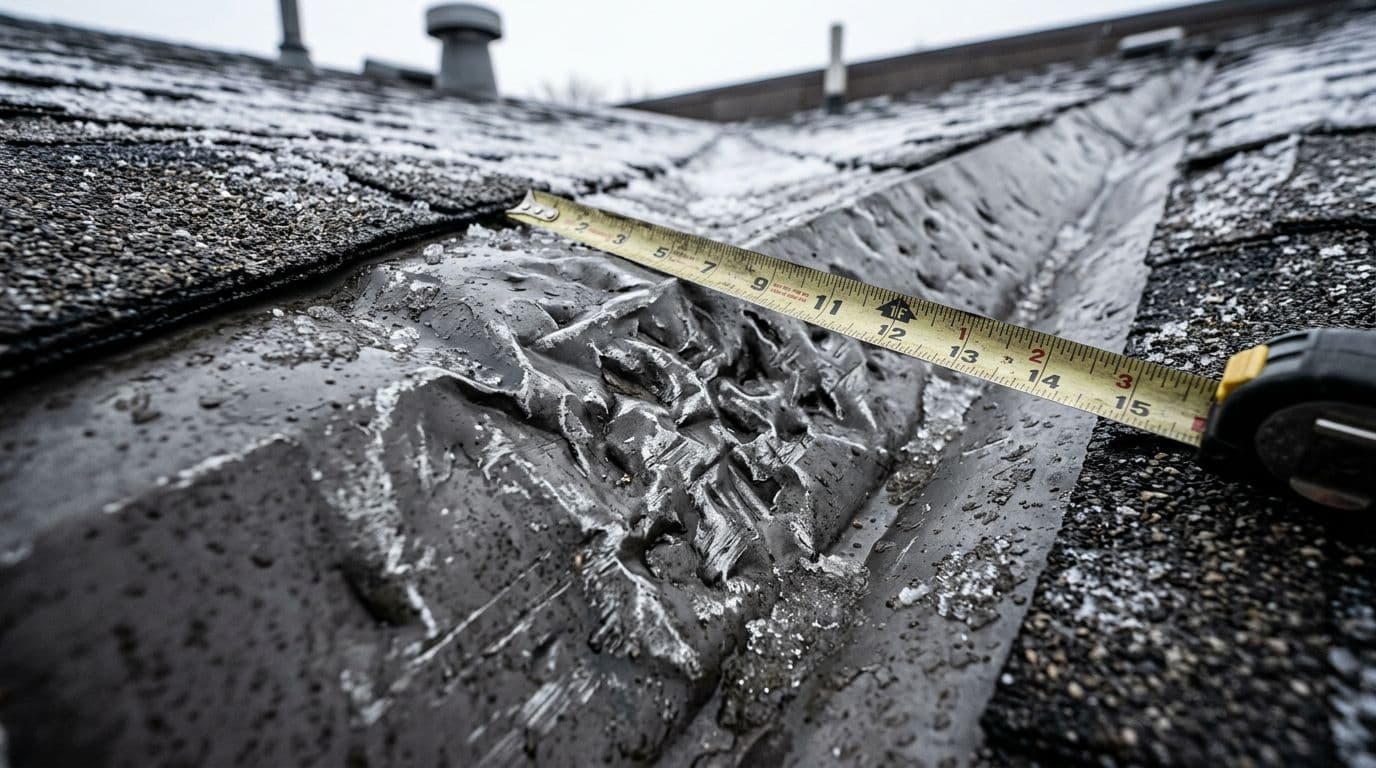
On many Twin Cities buildings, failures start where water already wants to concentrate. Parapet corners, scupper areas, and transition flashing near drains tend to show issues first. Even small dents can redirect flow toward a seam.
Also watch roof penetrations and curbs. Hail can dent the metal, but the bigger problem is movement. When the flashing deforms, fasteners can loosen and termination bars can start to lift. That’s when wind-driven rain gets under the edge.
Valley and channel-type flashing details (more common on complex roofs and some metal transitions) can show clustered impacts. Those clusters matter because they can create micro-ponding. Then, when temperatures swing, standing water and ice add stress right at the dents.
If you’re responsible for multiple properties, it helps to standardize what “damage” means. A consistent photo set, same angles, and scale references makes insurance and repair decisions easier.
For owners who want a local team to assess storm impacts and recommend next steps, start with Saint Paul commercial roofing experts.
FAQ
Will insurance pay for dented flashing if there’s no leak?
Many policies focus on functional damage. Dents alone may not qualify unless they affect water-shedding, seams, or attachment. Still, document everything, because flashing damage can lead to leaks later, and timing matters for storm-related claims.
If the coating is broken
Chipped finish and exposed metal often supports a stronger case, because it can shorten service life.
How soon should a business inspect flashing after a hailstorm?
Inspect as soon as conditions are safe, ideally within days. Quick photos capture fresh impact marks before oxidation, roof traffic, or snow and ice blur the pattern. Early inspection also helps you prevent interior damage during the next rain.
Can maintenance staff “spot seal” hail dents and call it good?
Sealant can help in limited cases, but it’s not a cure for dented or deformed metal edges. If the hem is bent or a joint opened, you usually need proper metal repair or replacement to restore the flashing geometry.
What happens if hail hits edge metal on a TPO roof?
Edge metal is a common failure point on single-ply systems. If hail dents deform the flange or loosen fasteners, wind can start peeling the perimeter. That risk climbs fast during Minnesota gust fronts, so perimeter inspection is a priority.
If you see membrane fluttering
Treat it as urgent. Secure the edge and schedule professional repair immediately.
Should we replace flashing only, or does the whole roof need work?
It depends on scope and age. Localized flashing damage often stays in the repair lane, but repeated perimeter failures, wet insulation, or widespread deformation can justify broader restoration. The right answer is the one that stops water entry and protects warranties.
Minor dents can look harmless, until spring rains prove otherwise. When you spot roof flashing hail damage, don’t wait for a ceiling stain to confirm it. Document the pattern, check the sealant lines, and act fast on edges and penetrations. The goal is simple: keep water out, and keep your operations running.
Need a roof inspection in Saint Paul or the Twin Cities? Call Sellers Roofing Company at +1-651-703-2336 or schedule a free estimate. We are a black-owned, NMSDC-certified MBE roofing contractor with 9+ years experience.