Last updated: 2026-08-10 by Ted Sellers, Owner
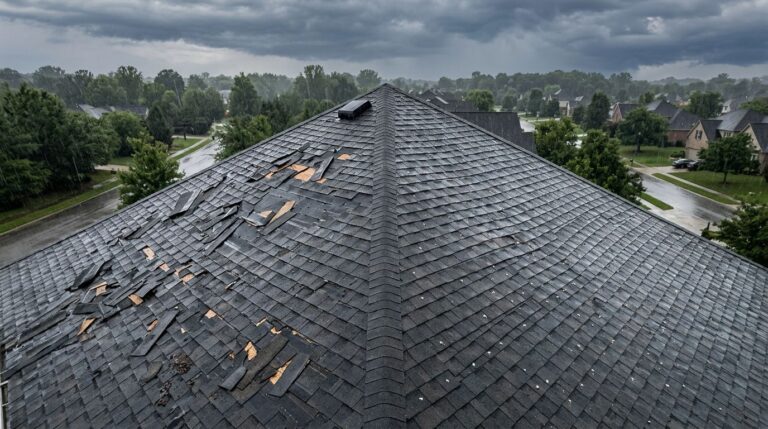
On Minnesota TPO (thermoplastic polyolefin) roofs, a popular single-ply membrane for commercial roofing and low-slope roofing, TPO roof wind damage usually shows up as lifted seams, curled perimeter edges, wrinkled membrane, loose flashing, exposed fasteners, and tears near corners or rooftop units. Some damage stays hidden until wind-driven rain gets under the membrane, so a roof can look only slightly disturbed while insulation below is already wet.
Key Takeaways
- TPO roof wind damage in Minnesota often appears as lifted seams, curled perimeter edges, wrinkled membrane, loose flashing, exposed fasteners, and tears near corners or rooftop units, with highest uplift pressure at edges and corners.
- Hidden damage from wind-driven rain under the membrane can wet insulation and spread widely, even if the surface looks only slightly disturbed—check interiors within 24 hours.
- Inspect edges and corners first, then seams and punctures; decide between repair (small seams) or replacement (widespread uplift, wet insulation) based on extent and roof age.
- Document damage quickly before more Minnesota weather hits, and distinguish wind from installation errors, UV, or hail to avoid unnecessary repairs.
When This Applies
This fits most commercial TPO roofs after a wind event
This applies to warehouses, office buildings, retail centers, schools, and other low-slope buildings with a TPO membrane. It matters most after strong straight-line winds, spring storms, or winter gusts that hit a roof already stressed by freeze-thaw cycles. These events create wind uplift pressure and negative pressure on the membrane surface, which can lift and stress the system at vulnerable points.
It may not fit a brand-new roof with no visible membrane movement and no interior signs. It also may not fit roofs covered by snow, because snow can hide uplift, edge damage, and open seams until the thaw. While Minnesota conditions differ from Florida building codes that enforce stricter wind resistance requirements, local storms can still produce significant forces on TPO roofs.
What wind damage usually looks like after a Minnesota storm
The first clues are often at the roof perimeter. TPO roof wind damage commonly starts at corners, edges, and terminations because uplift pressure is highest there. You may see the membrane pulled tight in one spot and loose in another, almost like a sheet that caught air underneath.
Look for split heat-welded seams, curled edge strips, raised wrinkles, or flashing that no longer sits flat. Around HVAC curbs, vent pipes, and parapet walls, the membrane may look stretched, torn, or lifted. If fastener plates begin to show through, the system has likely moved more than it should.
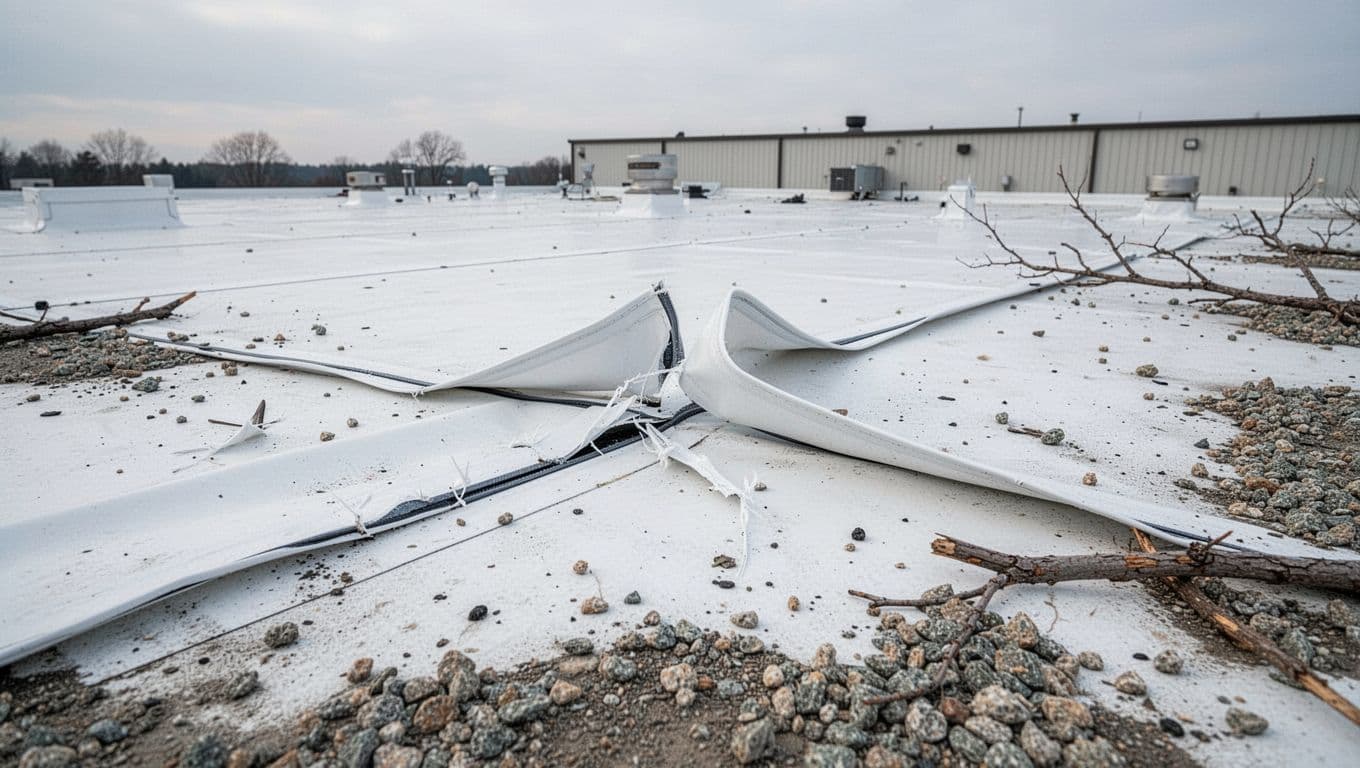
On TPO, wind damage often looks small from the ground, but the costly part is what wind-driven rain does underneath.
Hidden damage often shows up after the wind stops
A roof may look mostly intact and still have trouble below the surface. Once wind opens a seam or lifts a termination, water can soak insulation, soften cover board, and travel well away from the original opening.
For business owners, that delayed damage matters. The roof surface might suggest a small fix, while the assembly below points to a larger repair scope.
When wind is not the main cause
Not every wrinkle means storm damage. During storm damage repairs, look for installation errors, UV exposure, or ponding water as alternative issues. Old repairs can fail, poor installation can leave weak seams, and foot traffic can scuff the membrane. Hail also leaves a different pattern, with point impacts rather than directional lifting.
Still, wind and water often work together. If the surface looks disturbed after a storm, it makes sense to find hidden leaks after wind storms before moisture spreads through insulation or decking.
Step-by-Step
These steps form the core of routine inspections and roof maintenance after wind events on TPO roofs.
1. Check roof edges and corners first
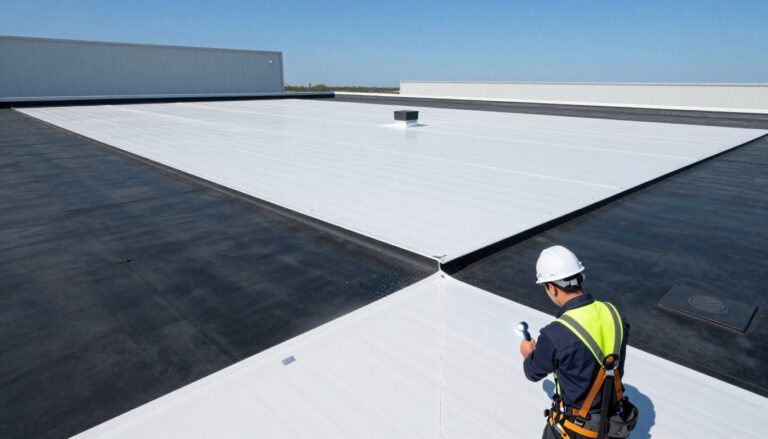
Start from a safe vantage point. Use binoculars from the ground or have a trained roofer inspect the roof. Corners, perimeters, and coping edges usually show trouble before the field of the roof does.
If edge metal or flashings look loose or a membrane strip looks curled, treat that as active damage. In Minnesota, one windy day can become a much larger problem after the next rain or thaw.
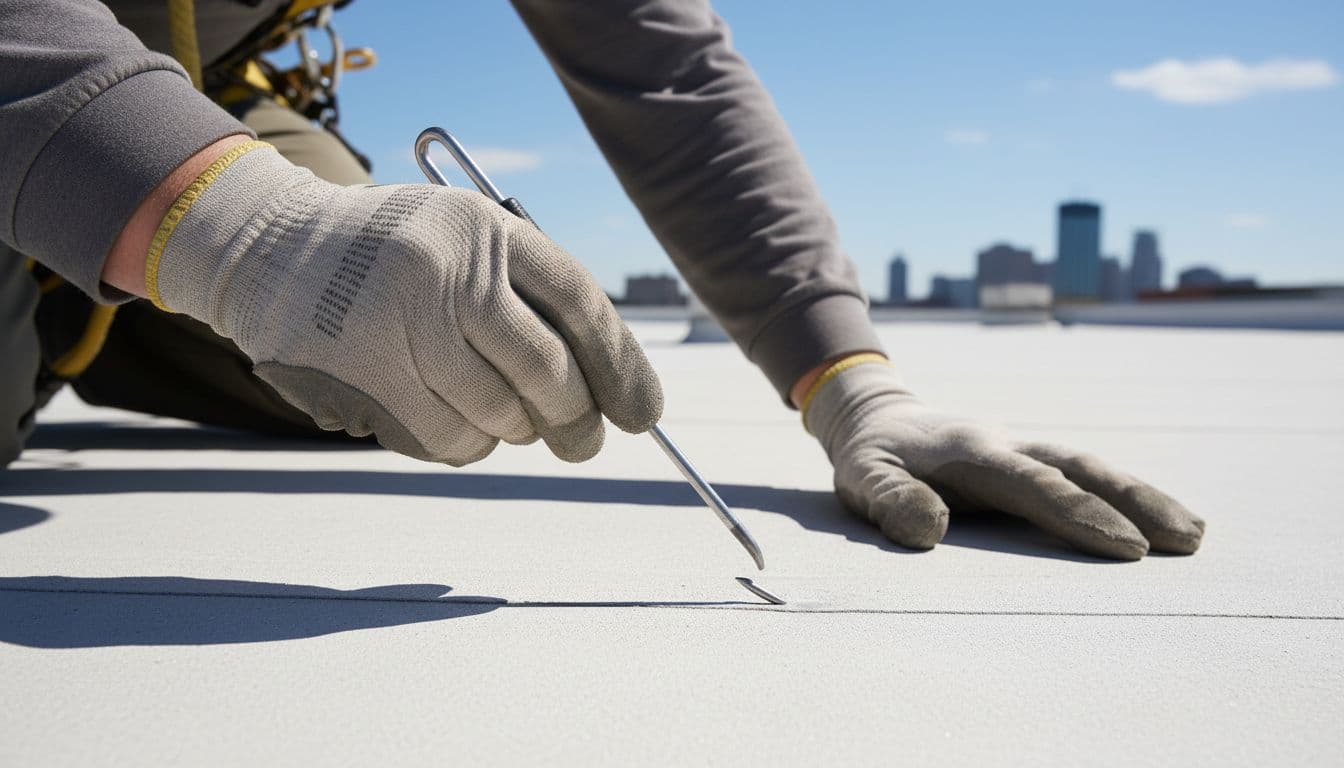
2. Look for membrane movement, open seams, and punctures
Walk the roof only if it is safe and dry. Look for bubbling, ripples, tented areas, or seams that have started to gap. Mechanically attached systems often shift more under wind uplift, while fully adhered systems may show pronounced bubbling or ripples. Wind uplift can also drag wind-borne debris across the surface, leaving membrane punctures or small cuts that later turn into leaks.
If you see exposed fasteners or loose metal
That usually means the assembly has shifted. Once metal edge details or flashings loosen, wind can peel back larger roof sections faster than most owners expect.
3. Inspect the building interior within 24 hours
A TPO roof can fail in one area and leak somewhere else inside. Therefore, check ceiling tiles, wall tops, mechanical rooms, and attic or deck areas for stains, drips, or damp insulation. Water on a commercial roof rarely stays put.
Pay close attention to buildings with rooftop units. Penetrations and roof flashing are common leak paths after wind uplift breaks nearby seams or exposes fasteners.
4. Decide whether repair or replacement makes sense
Small, isolated seam failure often needs commercial flat roof repair using hot-air welding. By contrast, large uplifted sections, widespread wet insulation, repeated seam separation, or major edge failure can point toward commercial roof replacement.
If one corner lost adhesion and the rest of the roof is dry, repair may be enough. If several seams reopened across the roof, replacement often makes better financial sense, especially to avoid moisture intrusion from delayed action.
Age matters too. If the membrane is near the end of its service life and several areas have moved, the commercial roof needs repair now, and a broader replacement plan may save money over repeat patching. For that reason, many owners start with commercial roofing repairs after wind damage and then compare repair scope against full replacement.
When repairs stop making sense
Repairs become less practical when damage extends below the membrane. Wet insulation, soft decking, or multiple uplift zones usually mean the storm damage is bigger than the visible tear.
5. Document the damage before weather changes again
Take wide shots and close-ups. Note the storm date, wind direction if known, and every area where seams, flashings, or edges changed shape. Clear photos help with claims, contractor review, and later comparisons.
Move quickly, because Minnesota weather stacks problems. A roof hit by wind on Monday may take on water by Tuesday, then freeze by Wednesday.
FAQs about TPO roof wind damage
Can a TPO roof have wind damage without an interior leak?
Yes. Wind can loosen seams or edge details before water reaches the ceiling. That is why early inspection matters.
Why leaks may show up later
Water can travel sideways across low-slope roofing on a flat roof. By the time you see a ceiling stain, the roof problem may be several feet away.
Does snow make wind damage harder to spot?
Yes, especially on white TPO. Snow can hide lifted seams, debris cuts, and loose flashing until meltwater exposes the problem, and careless TPO roof snow removal can add its own damage to the membrane.
Are roof edges more likely to fail than the middle?
Most of the time, yes. Even without hurricane force winds, wind pressure from typical Minnesota storms is stronger at corners and perimeters, so those areas deserve the first look.
What about buildings with a parapet wall?
Parapets help, but they do not remove risk. Damage often shows where the membrane terminates into the wall or where metal coping loosens.
Can repairs happen without shutting down the building?
Often they can, if the damage is limited. Many targeted TPO repairs happen in sections, which helps keep business operations moving.
What happens if damaged seams are ignored until spring?
Moisture can soak insulation all winter. Then repair costs rise because the problem is no longer only surface damage.
Wind damage on TPO roofs usually starts with movement, not a dramatic tear. Thermal expansion can cause similar movement from non-wind causes, but lifted seams, curled edges, and fresh wrinkles are the signs that matter most after a Minnesota storm.
If you catch those changes early, you may only need a focused repair. If you wait, hidden moisture can turn a small membrane issue into a much larger commercial roofing project.
{“@context”:”https://schema.org”,”@type”:”BlogPosting”,”@id”:”https://roofingexpertsstpaul.com/tpo-roof-wind-damage/#article”,”mainEntityOfPage”:{“@type”:”WebPage”,”@id”:”https://roofingexpertsstpaul.com/tpo-roof-wind-damage/”},”headline”:”What does wind damage look like on TPO roofs in Minnesota?”,”description”:”On Minnesota TPO (thermoplastic polyolefin) roofs, a popular single-ply membrane for commercial roofing and low-slope roofing, TPO roof wind damage usually shows up as lifted seams, curled perimeter edges, wrinkled membrane, loose flashing, exposed fasteners, and tears near corners or rooftop units.”,”datePublished”:”2026-04-15T03:21:51″,”dateModified”:”2026-04-15T03:21:53″,”author”:{“@type”:”Organization”,”name”:”Sellers Roofing Company”,”url”:”https://roofingexpertsstpaul.com”},”publisher”:{“@type”:”Organization”,”name”:”Sellers Roofing Company”,”url”:”https://roofingexpertsstpaul.com”,”logo”:{“@type”:”ImageObject”,”url”:”https://roofingexpertsstpaul.com/wp-content/uploads/2025/05/sellers-roofing-logo.png”}},”url”:”https://roofingexpertsstpaul.com/tpo-roof-wind-damage/”,”inLanguage”:”en-US”,”about”:{“@type”:”Thing”,”name”:”Roofing, Hail Damage, Storm Repair, Insurance Claims”},”isPartOf”:{“@type”:”Blog”,”@id”:”https://roofingexpertsstpaul.com/blog/”}} {“@context”:”https://schema.org”,”@type”:”WebPage”,”url”:”https://roofingexpertsstpaul.com/tpo-roof-wind-damage/”,”speakable”:{“@type”:”SpeakableSpecification”,”cssSelector”:[“h1″,”h2″,”.speakable”]}} {“@context”:”https://schema.org”,”@type”:”FAQPage”,”mainEntity”:[{“@type”:”Question”,”name”:”Can a TPO roof have wind damage without an interior leak?”,”acceptedAnswer”:{“@type”:”Answer”,”text”:”Yes. Wind can loosen seams or edge details before water reaches the ceiling. That is why early inspection matters.”}},{“@type”:”Question”,”name”:”Does snow make wind damage harder to spot?”,”acceptedAnswer”:{“@type”:”Answer”,”text”:”Yes, especially on white TPO. Snow can hide lifted seams, debris cuts, and loose flashing until meltwater exposes the problem.”}},{“@type”:”Question”,”name”:”Are roof edges more likely to fail than the middle?”,”acceptedAnswer”:{“@type”:”Answer”,”text”:”Most of the time, yes. Even without hurricane force winds, wind pressure from typical Minnesota storms is stronger at corners and perimeters, so those areas deserve the first look.”}},{“@type”:”Question”,”name”:”What about buildings with a parapet wall?”,”acceptedAnswer”:{“@type”:”Answer”,”text”:”Parapets help, but they do not remove risk. Damage often shows where the membrane terminates into the wall or where metal coping loosens.”}},{“@type”:”Question”,”name”:”Can repairs happen without shutting down the building?”,”acceptedAnswer”:{“@type”:”Answer”,”text”:”Often they can, if the damage is limited. Many targeted TPO repairs happen in sections, which helps keep business operations moving.”}},{“@type”:”Question”,”name”:”What happens if damaged seams are ignored until spring?”,”acceptedAnswer”:{“@type”:”Answer”,”text”:”Moisture can soak insulation all winter. Then repair costs rise because the problem is no longer only surface damage. Wind damage on TPO roofs usually starts with movement, not a dramatic tear. Thermal expansion can cause similar movement from non-wind causes, but lifted seams, curled edges, and fresh wrinkles are the signs that matter most after a Minnesota storm. If you catch those changes early, you may only need a focused repair. If you wait, hidden moisture can turn a small membrane issue into a much larger commercial roofing project.”}}]}Need a roof inspection in Saint Paul or the Twin Cities? Call Sellers Roofing Company at +1-651-703-2336 or schedule a free estimate. We are a black-owned, NMSDC-certified MBE roofing contractor with 9+ years experience.