Last updated: 2026-05-26 by Ted Sellers, Owner
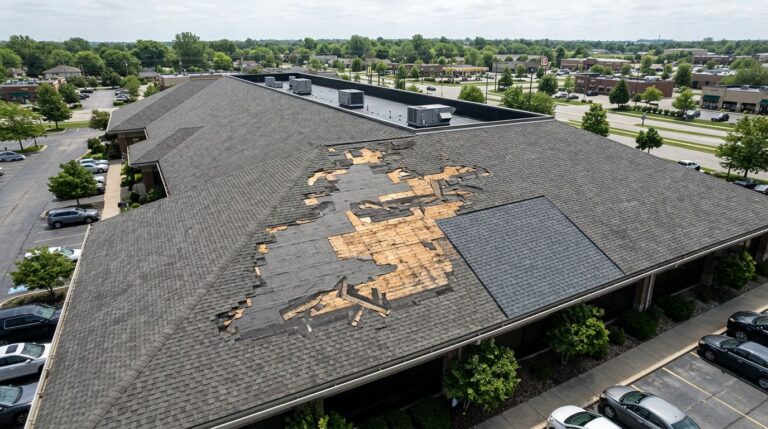
If a storm has left your roof exposed, you likely want to know how long a tarped roof will last. Emergency tarps typically protect a roof for about 30 days to six months, depending on material, installation, and exposure. Thin blue polyethylene tends to sit on the short end of that range, while reinforced, UV-treated heavy tarps hold up toward the upper end. Tarping is a temporary fix, so schedule permanent repairs promptly to limit water damage and reduce insurance complications.
What you need to know
Material quality makes a big difference. Higher-mil, reinforced poly or vinyl with hemmed edges and brass grommets resists wind and UV damage better than inexpensive blue poly or canvas. When possible, choose a tarp designed for outdoor, prolonged use rather than a thin general-purpose sheet.
How the tarp is attached affects usable life more than brand alone. Professional attachment methods distribute loads, protect edges from abrasion, and avoid punching the deck, which all reduce uplift and tearing. For exposed roofs, secure fastening and edge protection add weeks or months of reliable coverage.
Bottom line: how long will a tarped roof last
Short answer: expect reliable protection for roughly 30 days to six months depending on the tarp and how it’s installed. Thin blue polyethylene and heavy exposure tend toward the low end, while reinforced, UV-treated tarps with careful maintenance reach the upper range. Factor UV exposure, wind risk, and trapped moisture into your schedule for permanent work and insurance claims.
Typical lifespans by tarp type (summary)
Standard blue polyethylene typically provides about 30–90 days of dependable protection on a roof. While it can last longer on the ground, roof exposure accelerates wear and UV damage. Use blue poly for immediate mitigation only, not extended coverage.
Reinforced heavy-duty poly or vinyl, especially 10–18 mil with taped seams and corner reinforcements, can provide roughly 3–6 months of protection when properly fastened. These materials resist wind abrasion and UV degradation better than thin poly and are a better choice when tarping may need to last several weeks or months. Proper seams and reinforced corners greatly reduce tearing at attachment points. For broader context on tarp durability, see how long do roof tarps last.
Canvas is not suitable for roof tarping. It soaks, sags, and often fails within days to a couple of weeks under continuous moisture exposure. Avoid canvas for emergency roof cover.
What shortens tarp life: weather, exposure, and roof conditions
Weather exposure, the tarp material, and attachment quality determine how long a tarp will last. From the ground or attic you can spot practical indicators like brittle edges, gaps at fastenings, or pooling water; catching those early prevents larger damage. Focus on those three factors first when assessing a tarped roof.
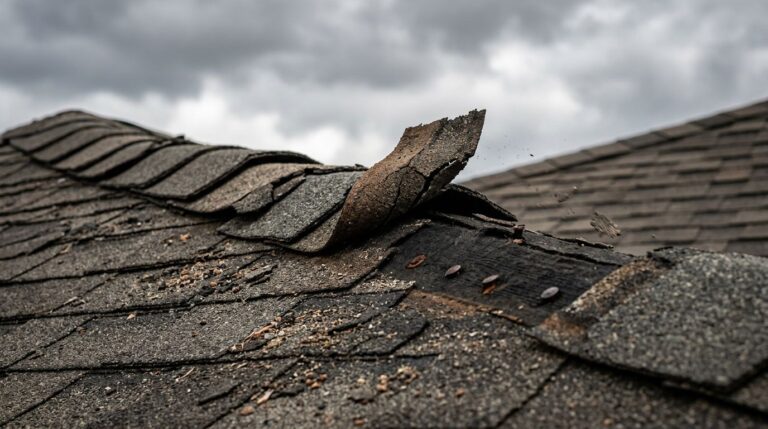
UV and temperature swings break down polyethylene fibers over time, causing embrittlement and small cracks that grow into leaks. Reflected sun from snow increases stress on the material, and wind creates failure points at edges and grommets because uplift tears seals while hail or flying debris can puncture standard blue tarps. Pooling water, shallow slopes, and frequent foot traffic concentrate weight and abrasion, promoting sagging and hidden leaks.
Which tarp materials and installation methods last longest
Thicker, reinforced tarps and professional attachment extend usable life from days into months. Material quality and secure fastening matter more than initial cost when your priority is reliable temporary coverage. Below are the material and fastening choices that add usable time on the roof.
Professional attachment methods that add days or months
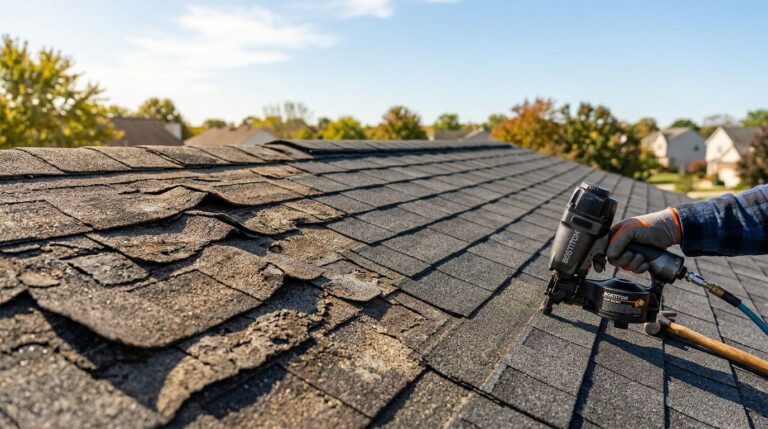
Experienced roofers distribute loads and protect edges to limit uplift and chafing. Common methods include tucking wood battens under a lifted shingle row and fastening to blocking or framing rather than punching through sheathing, using padded edge protection where the tarp crosses shingles, and overlapping seams by a couple of feet with staggered fasteners. These practices reduce tearing and preserve the deck for permanent repairs. For reference on emergency roof tarping best practices after storm damage, consider this emergency roof tarping after storm damage resource.
Common DIY mistakes that cut lifespan
DIY errors often concentrate stress and accelerate failure. Tying with thin twine, driving nails through decking, leaving edges unprotected, or allowing water to pool will shorten a tarp’s usable time. Follow professional practices where possible and inspect the cover frequently.
- Tying with thin twine or single-point anchors leads to wind tears and ripped grommets.
- Using nails or staples through the deck creates holes that invite leaks and shorten usable time.
- Leaving edges unprotected causes abrasion where shingles meet the tarp and rips seams.
- Allowing water to pool increases weight and speeds material breakdown; replace the tarp if sagging occurs.
Quick inspection and maintenance checklist to extend temporary protection
Regular checks and simple maintenance can extend a tarp’s useful life. Inspect the tarp after installation, every 48–72 hours, and immediately after heavy wind, hail, or snow. Start with a ground-level perimeter walk using binoculars and avoid climbing on wet, icy, or steep roofs; hire a licensed crew for unsafe inspections. Practical expectations for outdoor tarp durability are also discussed in how long will a tarp last outside.
What to look for during a check
Focus on signs that let water or wind get under the tarp so you can correct problems quickly. Note anything new or worsening and document conditions with time-stamped photos for claims. Typical issues include loose or torn grommets, spreading tears, sagging areas, and exposed sheathing or shifted securing boards.
- Loose, torn, or bent grommets and fasteners
- Rips, punctures, or spreading tears in the tarp material
- Sagging areas or standing water pooling on the tarp
- Exposed sheathing or edges where the tarp has pulled away
- Boards used to weigh or secure the tarp that are loosening or shifting
- New interior stains on ceilings or walls indicating leaks
Simple maintenance steps you can do safely
Address minor issues without risking the structure or your safety, and keep a record of any work. From ladder-accessible, safe-slope areas, broom out small pools of water and re-tension loose straps. Tighten or re-secure boards at the eave without puncturing the decking or tarp, and call a licensed roofer for major tears, shifted loads, or signs of sheathing rot. If you need step-by-step guidance, see a practical guide on how to tarp a roof.
When a tarp becomes a liability: signs you need replacement or permanent repair
Leaving a tarp on a roof for too long can create new problems, so watch for signs that the tarp is creating risk rather than preventing it. If the tarp hides ongoing damage, repair costs and insurance issues are more likely. Act quickly when you see attic or interior warning signs to limit the scope and cost of repairs.
Decking, mold, and moisture warning signs
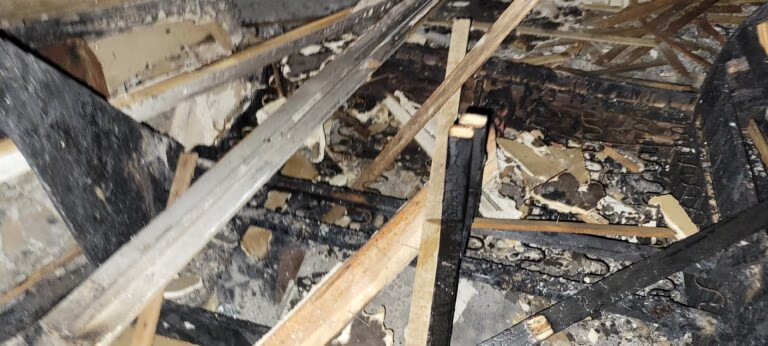
Condensation trapped under a tarp can cause rapid moisture buildup and fungal growth that weakens roof decking. In the attic, soft or spongy sheathing, visible sagging, dark mold streaks, or a musty odor all indicate the deck may be losing strength. These conditions often worsen after about 90 days under cover, so schedule inspection and permanent repairs promptly if you spot them.
Interior signs and emergency red flags
Interior indicators often reveal problems before the deck fails. Emergency red flags include spreading or darkening ceiling stains, active drips or pooling in attics, and bulging drywall or saturated insulation. If you see any of these, arrange mitigation and immediate permanent repair to limit structural and mold damage.
Insurance timelines and claim risk
Insurers typically expect prompt mitigation such as tarping or board-up and they commonly expect permanent repairs within weeks to a few months. Delaying permanent work beyond insurer timelines can risk partial or full denial of a claim, so document everything: time-stamped photos, tarp installation records, invoices, and inspection reports. Communicate deadlines and progress in writing to your adjuster and contractor to keep the claim on track.
From temporary cover to permanent fix: timelines, claims, and how Sellers Roofing Company helps
After a storm, move quickly to schedule a written estimate and align contractor work with insurer deadlines. Sellers Roofing Company provides 24/7 emergency response, documented tarping, and a claims-ready photo package to simplify the handoff to permanent repair. Our teams follow with a free inspection, a written estimate, and scheduling of licensed crews for the permanent work.
Typical contractor and insurance timelines
Expect a contractor estimate within about 3–10 days when crews are available, and plan for most residential permanent repairs to occur within 30–90 days. Some insurance adjusters require visible progress or temporary protection within 7–30 days, so check your policy and confirm deadlines in writing. Keeping written estimates and installation records makes it easier to show progress to your insurer.
How long will a tarped roof last under professional tarping and what Sellers Roofing Company does
Professionally installed heavy-duty tarps typically protect a roof for several weeks to a few months, depending on exposure and maintenance. Sellers Roofing Company’s emergency teams install reinforced tarps with professional securement, remove standing water, and deliver a full photo and notes package for your insurer. We then provide a free inspection and a written estimate to move the job toward a licensed, permanent repair. For additional commercial-focused guidance, contractors and building managers may find Roof Longevity Tips: Commercial Roof Care helpful.
Hiring checklist and questions to ask your roofer
Before signing any agreement, get written answers and keep copies with your insurance paperwork. Confirm the tarp material and expected longevity, request complete photo documentation and a claims-ready package, verify crew licensing and insurance, and obtain a written, itemized estimate and payment schedule. These steps reduce surprises and help your claim proceed smoothly.
- Materials and tarp type used (reinforced vs standard) and expected tarp longevity
- Photo documentation and a claims-ready documentation package
- Estimated timeline to permanent repair and crew licensing/insurance details
- Written, itemized estimate and payment schedule
How long will a tarped roof last: what to expect
If you need immediate tarping, documented mitigation, or a free inspection with a written estimate, contact Sellers Roofing Company’s 24/7 emergency team serving Saint Paul and the Twin Cities. Our crews can secure the roof, document the damage for your insurer, and schedule licensed local crews for the permanent repair. If you’re unsure who to call or want more details on temporary versus longer-term tarp use, review Who Do I Call To Put A Tarp On My Roof & How Long Can You Leave A Tarp On A Roof?.
For seasonal care recommendations that help prevent emergency tarping in the first place, see Weatherproof Your Roof: Maintenance Tips.
Need a roof inspection in Saint Paul or the Twin Cities? Call Sellers Roofing Company at +1-651-703-2336 or schedule a free estimate. We are a black-owned, NMSDC-certified MBE roofing contractor with 9+ years experience.