Last updated: 2026-05-26 by Ted Sellers, Owner
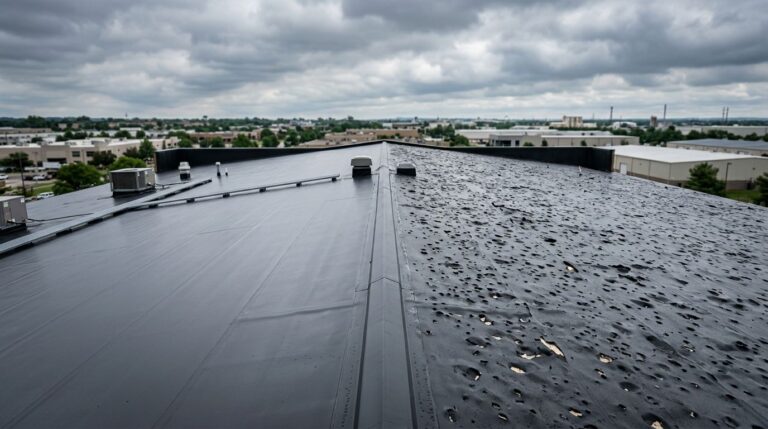
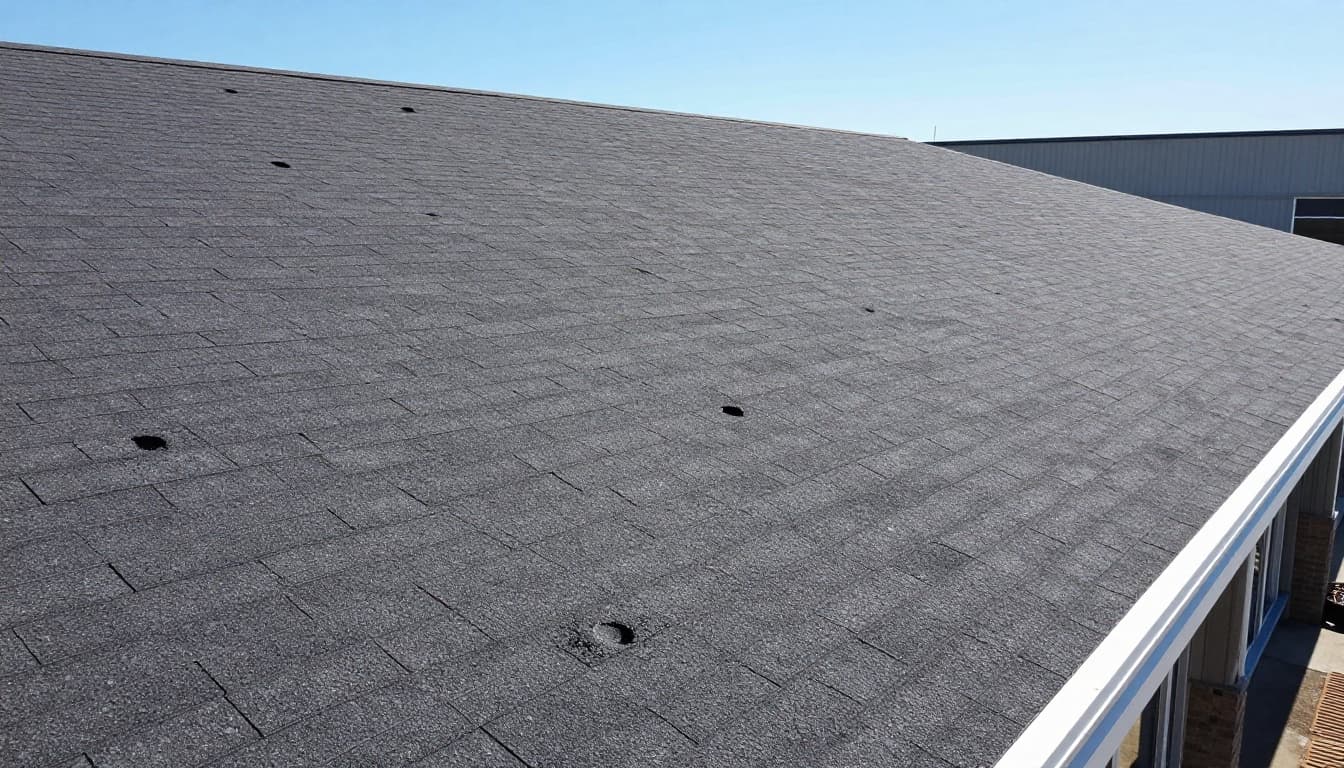
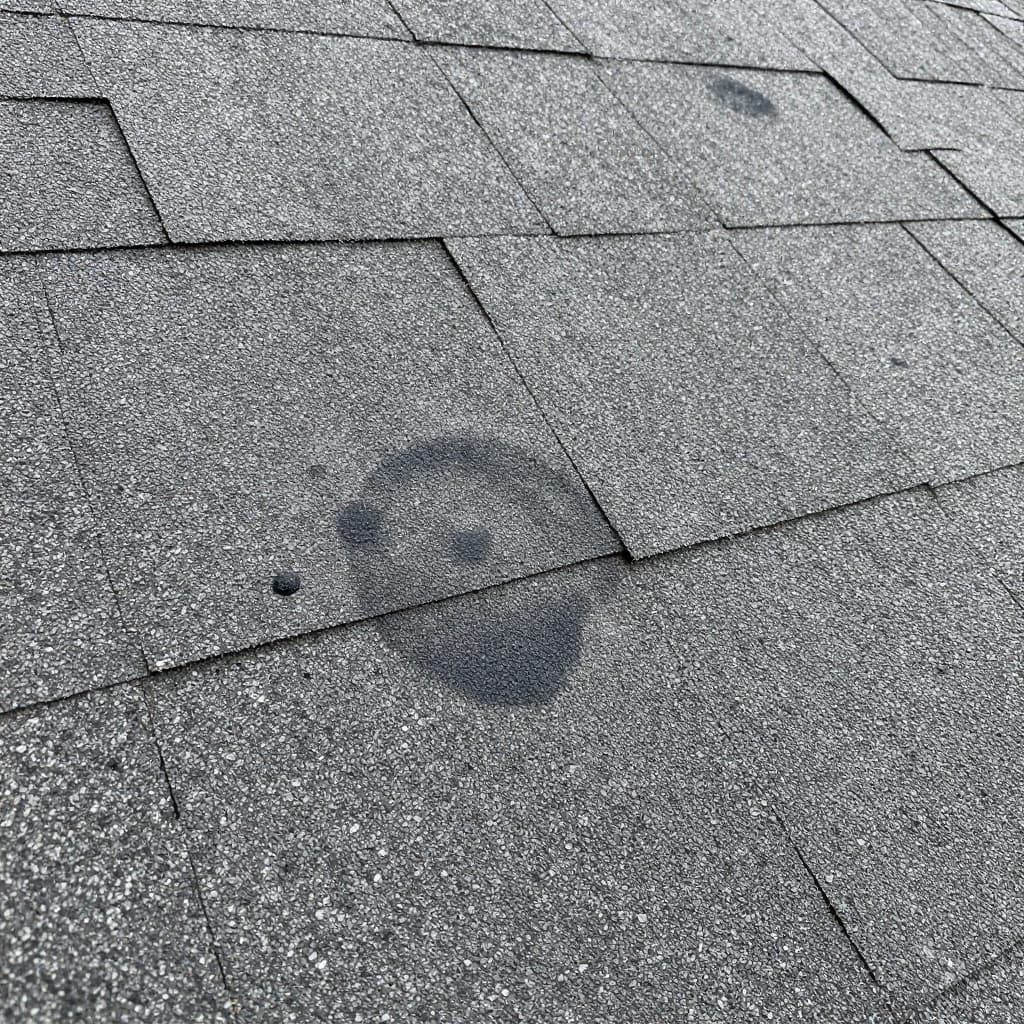
You can spot hail bruising shingles damage by finding round impact marks with missing granules and a soft, spongy feel when you press the center. True bruises often appear in clusters after a hailstorm, and nearby vents, flashing, or other metal parts may also show fresh dents. If a mark stays firm, it’s often age or wear, not hail.
When This Applies
This check helps on shingled sections of commercial buildings
Many business owners think asphalt shingles only matter on homes. However, offices, churches, retail buildings, and mixed-use properties often have shingled entries, mansards, or steep-slope accents. On those sections, hail damage can hide in plain sight.
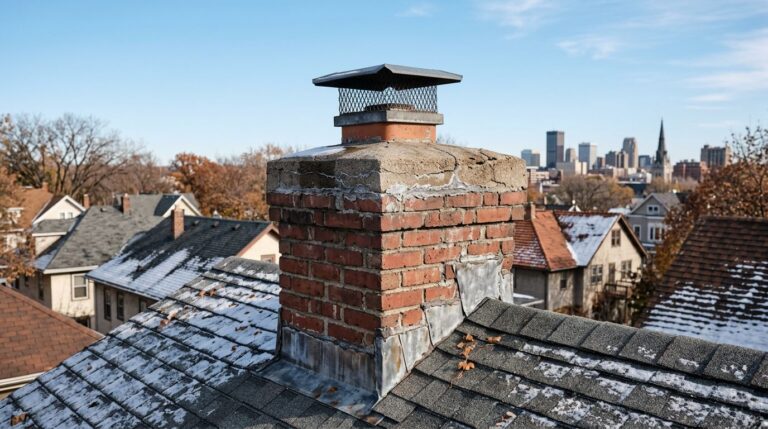
This applies best after a known hail event, especially when gutters, downspouts, roof vents, or flashing show fresh impact marks. As Travelers’ roof hail damage guide explains, dents on softer metal parts can support what you’re seeing on the shingles.
Because these roof areas are smaller, they often get skipped during routine checks. That’s a mistake. A bruised shingle above an entry or storefront can leak into trim, insulation, and wall framing before the main roof shows a problem.
Key exceptions on mixed-roof properties
This visual check does not apply the same way to TPO, EPDM, or modified bitumen roofs. Those systems show impact damage differently. So, if your property has shingles on one section and membrane on another, inspect both.
That matters for budget planning. A bruise on a shingled entry may mean your commercial roof needs repair, while the low-slope section may need a separate scope for commercial flat roof repair.
When a visual check is not enough
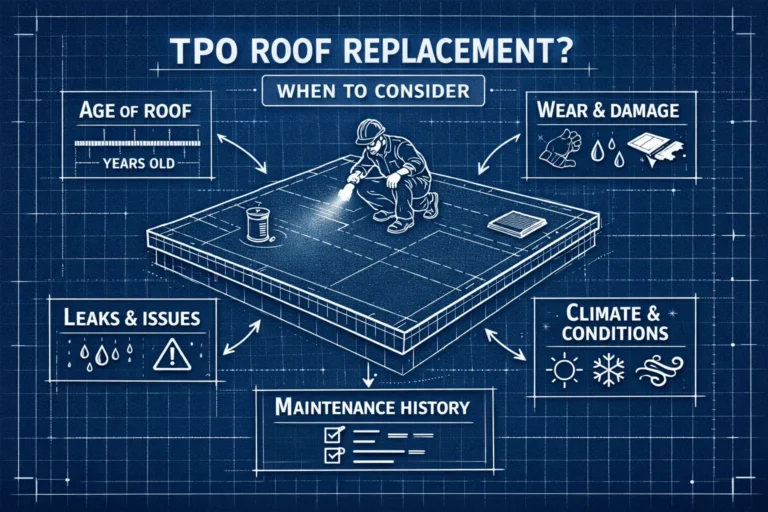
Don’t trust a quick glance if the roof is old, dirty, wet, or already blistered. Blisters, foot traffic, and heat damage can mimic hail. If marks appear on many slopes, or if leaks started after the storm, you may be looking at more than spot repairs, possibly even commercial roof replacement.
Step-by-Step
A safe way to confirm a true bruise
- Start from the ground. Check the date of the storm, then look at gutters, window screens, roof vents, condenser fins, and flashing for new dents. Those clues help separate hail from old roof wear.
- Inspect more than one area. A real storm pattern usually shows repeated hits across several shingles or slopes, not one odd mark near a ladder point, walkway, or service area.
- Look for round impact spots where the granules seem scuffed away. The center may look darker, smoother, or slightly dimpled. From a few feet away, it can resemble a thumbprint pressed into coarse sandpaper.
- Press gently on the center of the mark, but only if you can reach it safely. A true bruise often feels softer than the surrounding shingle. By contrast, normal aging usually stays firm. Roof Maxx’s hail damage overview also points to soft spots and granule loss as common signs.
- Compare each suspect mark with nearby shingles. Hail strikes from the same storm often share a similar size and shape. Random cracks, edge wear, and lifted tabs usually point to age, wind, or foot traffic instead.
- Document the pattern, not only the worst hit. Take photos of several test areas and note the slope location. Insurers and roofers want to see repeated impacts, not a single damaged shingle.
- Call for a documented inspection if you find several soft spots. A contractor can tell you whether a few shingles can be replaced, whether flashing also failed, or whether commercial roof replacement is the better long-term move.
A hail bruise is often felt as much as seen. If the center gives under light pressure, take it seriously.
Common questions after a hailstorm
Can hail bruising appear days after the storm?
Yes. The impact happens right away, but the mark may become easier to see after sun and rain wear off loose granules. That delay can also slow insurance reporting if no one documented the roof early.
Does every dark circle mean hail damage?
No. Algae, blisters, and scuffs can fool you. A bruise should fit the storm pattern and feel softer than the area around it.
What usually separates a stain from a bruise?
Stains sit on the surface. A bruise affects the shingle below the granules, so it often has a slight depression or soft center.
What if only one roof slope has marks?
That can still happen. Wind-driven hail often favors one side of a building. However, isolated marks near access points may come from maintenance traffic, dropped tools, or other roof work.
Can bruised shingles be repaired, or do they need replacement?
Small, limited areas may only need targeted repair if the shingles still seal well and the damage is not widespread.
When replacement becomes more likely
If bruises show up across several test areas, if the mat is cracked, or if leaks have started, replacement is often the safer option.
What if my building also has a flat roof?
Mixed-roof properties need two inspections after one storm. A shingled entry may bruise while the main low-slope roof shows punctures, seam stress, or ponding issues.
Why that changes the repair plan
Shingle work and commercial flat roof repair are usually priced and scoped separately, even when the same hailstorm caused both problems.
What should you do next?
Document the pattern before the roof leaks
A roof can look fine from the parking lot and still carry hidden damage. The strongest sign is not one mark, but a repeat pattern of round, soft hits after a known hailstorm.
If you manage a Saint Paul or Twin Cities property, get the roof checked while the storm date is still easy to verify. Fast documentation makes repair decisions, claim conversations, and future maintenance much simpler.
Need a roof inspection in Saint Paul or the Twin Cities? Call Sellers Roofing Company at +1-651-703-2336 or schedule a free estimate. We are a black-owned, NMSDC-certified MBE roofing contractor with 9+ years experience.