Last updated: 2026-08-01 by Ted Sellers, Owner
Yes. In Minnesota, missing shingles can cause a leak the same day if wind-driven rain, melting snow, or ice reaches exposed underlayment, nails, or flashing. Some roofs hold for a short time, but that buffer is unreliable. Roof age, shingle location, slope, and recent weather decide how fast water gets inside.
When This Applies
This applies to shingle sections on commercial buildings
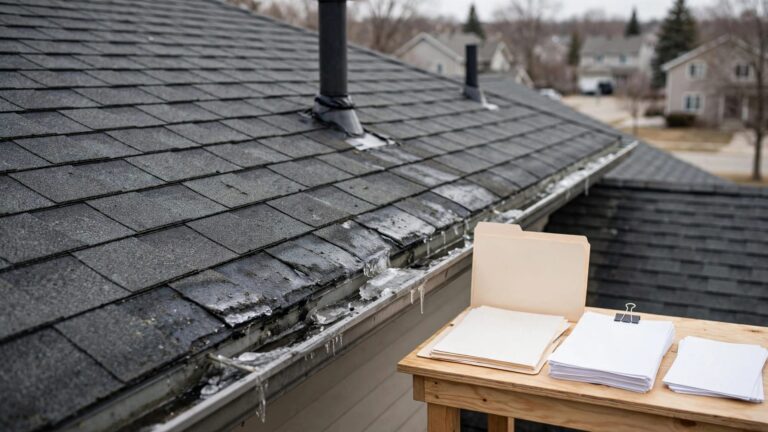
This question matters if your property has asphalt shingle roof areas, not only flat roofing. Many offices, churches, apartment buildings, and mixed-use properties in Minnesota have steep-slope sections above entries, upper floors, dormers, or attached wings.
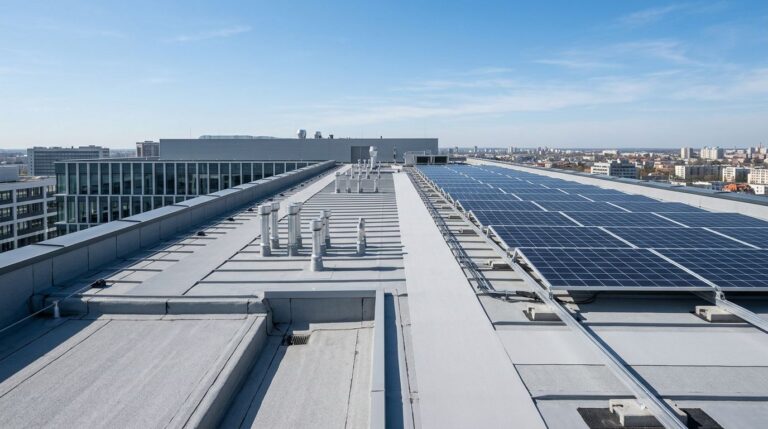
It does not apply the same way to TPO, EPDM, or PVC membranes. If your building only has a low-slope membrane, the issue is not missing shingles. In that case, the right fix may be commercial flat roof repair, not shingle work.
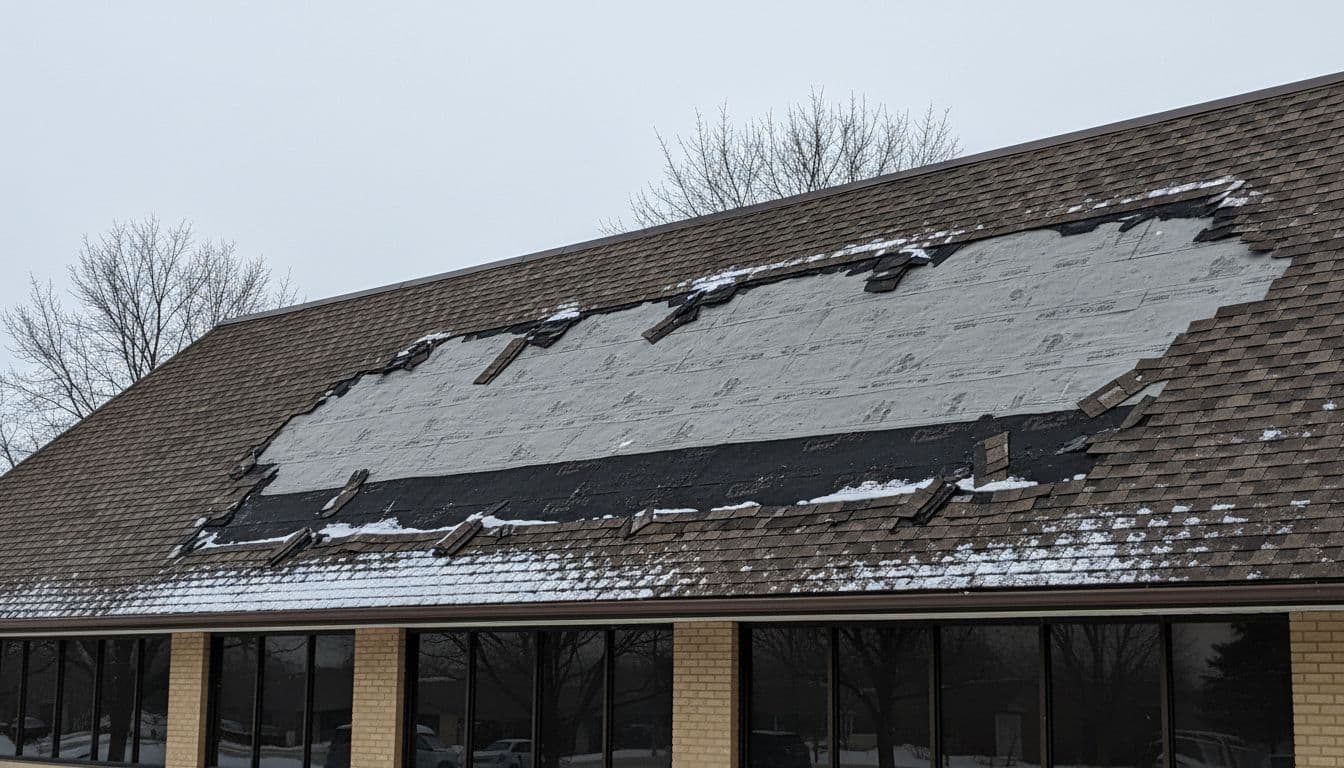
Leaks can start right away in a few common Minnesota conditions
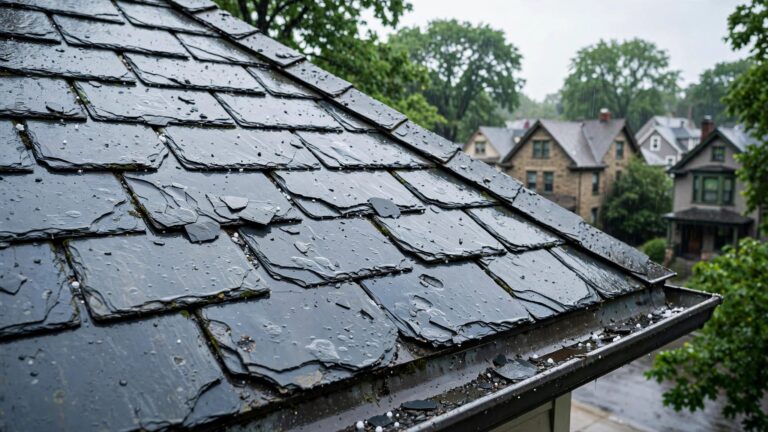
The fastest trigger is wind-driven rain. Spring thaw is also a major problem, because melting snow can slide under exposed edges and soak the layer below. Freeze-thaw cycles make the opening worse, especially on older roofs where shingles have become brittle.
The highest-risk locations leak faster
Risk climbs when the missing shingles sit near a valley, roof edge, chimney, wall flashing, skylight, or vent boot. Those areas already carry or redirect water. Once the top layer is gone, water has a short path inward.
Some roofs do not leak at once, but that does not make them safe
A newer roof with intact synthetic underlayment may stay dry for a few days. Still, that grace period is short and unpredictable. Sun, wind, and repeat wetting weaken the exposed layer fast. For business owners, waiting on luck is usually how a small shingle problem turns into wet insulation, stained ceilings, and deck damage.
Signs a Leak Has Already Started
The drip often shows up away from the missing shingles
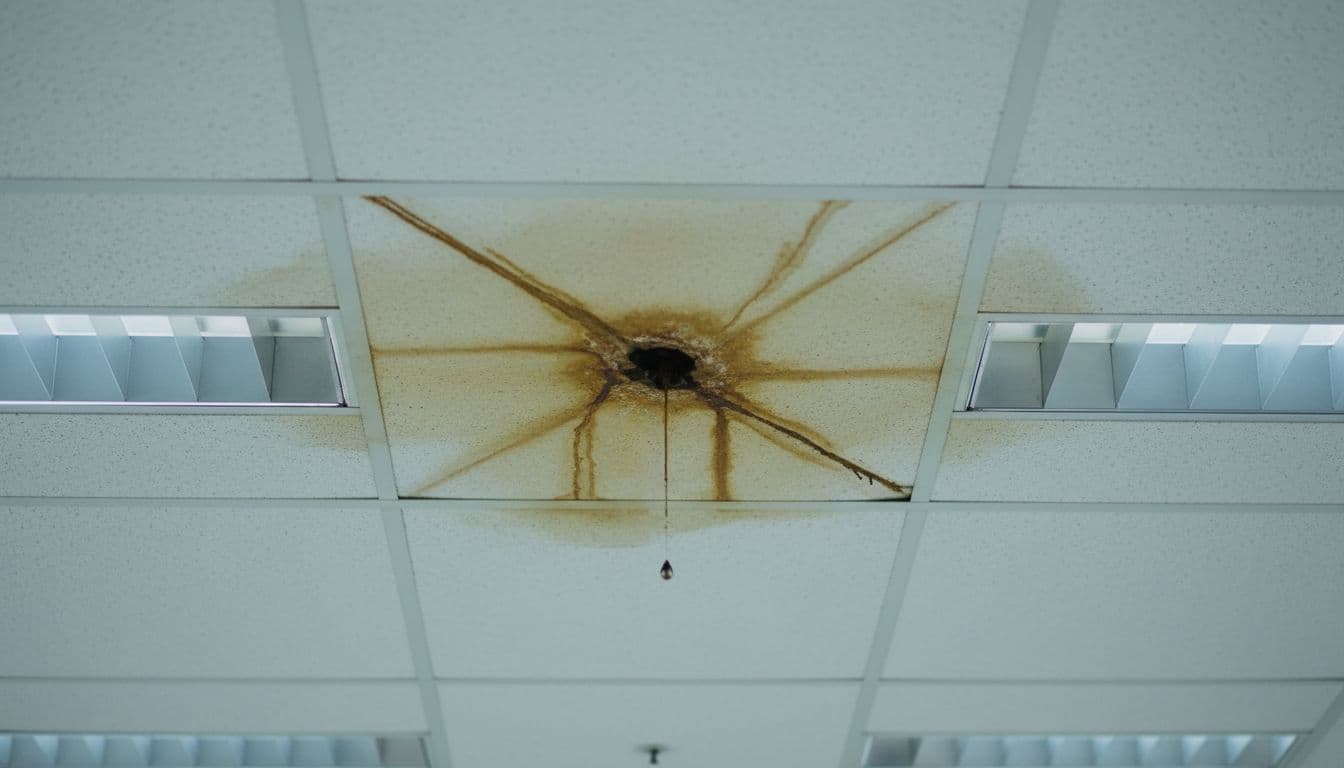
Leaks from missing shingles rarely drip straight down. Water can run along decking, rafters, or insulation before it appears indoors. That is why many owners first notice a stain in a hallway or office, not directly below the roof opening.
Common clues include ceiling stains, bubbling paint, damp insulation, musty odor, or discolored acoustic tiles. If you see any of those, your commercial roof needs repair, even if the water stops when the weather clears.
Step-by-Step
1. Confirm the roof type and the damage area
First, verify that the problem is on a shingle section. From the ground, look for bare spots, dark underlayment, broken tabs, or shingles on the pavement. Do not send staff onto the roof after a storm. Wet slopes, hidden ice, and soft decking create real fall risk.
2. Protect the interior before the next storm hits
Move stock, electronics, and paper files away from the suspected leak zone. Set containers under active drips, and cover sensitive items with plastic. If water is near lights or equipment, shut off power to that area if it is safe to do so.
3. Document what you can see
Take date-stamped photos of the roof area from the ground, the exterior elevation, and any indoor staining. Note the weather, the time you first saw damage, and whether the leak got worse during wind or thaw. That record helps separate new storm damage from older wear.
4. Get a professional inspection that follows the water path
Most missing-shingle leaks travel before they appear inside. A targeted advanced leak inspection can confirm whether water is entering at the lost shingles, at nearby flashing, or at another weak point opened by the same storm.
5. Decide between spot repair and larger work
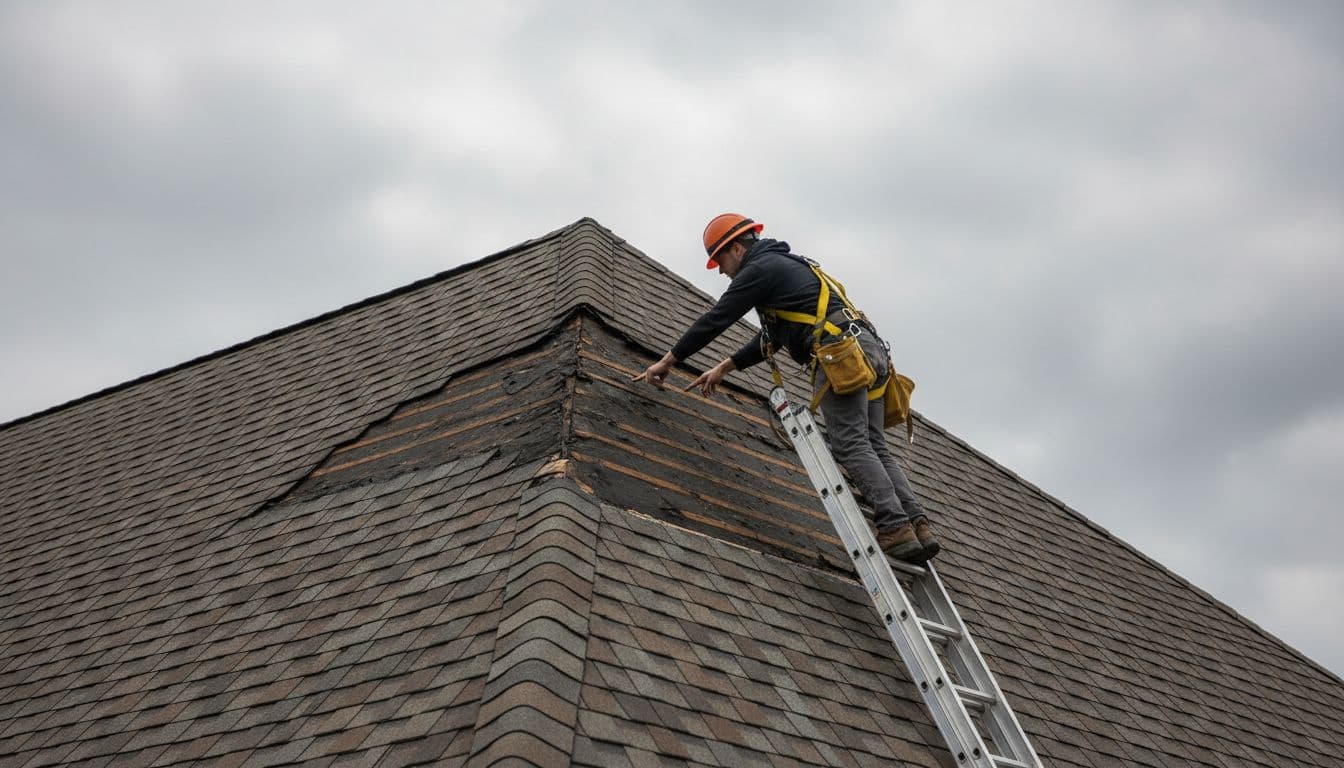
If the damage is isolated and the deck is dry, a repair may be enough. If shingles are brittle, losses keep repeating, or moisture has spread under a larger area, ask whether commercial roof replacement is the better financial call. A full evaluation from Sellers Roofing commercial roofing can also catch related failures on flashing, edges, and drainage details.
When repair is no longer enough
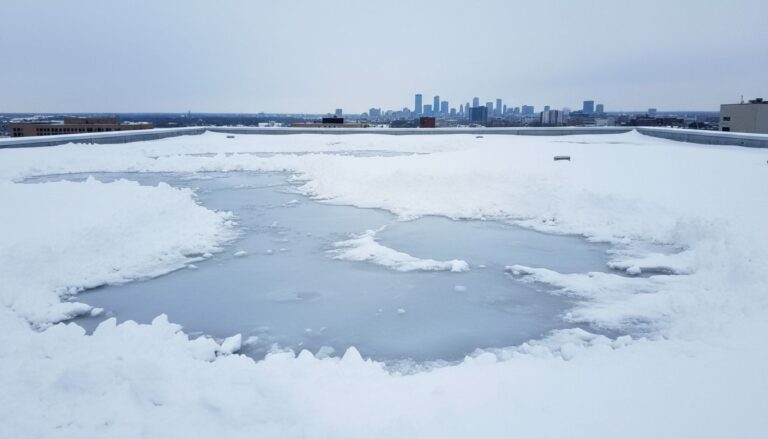
Some Minnesota properties have both shingle roofs and low-slope sections. If an upper shingle area dumps water onto a membrane below, you may need more than one fix. In that case, shingle repair alone will not solve the full leak path.
Final Answer
Missing shingles can cause leaks right away in Minnesota, and the odds rise fast during wind, thaw, and ice-related weather. Some roofs buy a little time, but no business owner should count on that buffer.
The best move is quick documentation, interior protection, and a real inspection. Small openings often lead to big water damage long before the roof looks bad from the ground.
FAQ
Can one missing shingle cause a leak on a commercial building?
Yes, especially if that shingle was near flashing, a valley, or an edge. One opening in the wrong spot can let water under the system fast.
Should I wait to see if the roof leaks before calling someone?
No. Waiting often means the first proof is interior damage. By then, insulation, decking, and ceiling materials may already be wet.
Will insurance cover wind-blown shingles?
It depends on the policy and the cause of loss. Storm-related damage is often treated differently than wear. Good photos and prompt reporting help.
What if the shingles were already old?
Age-related decline can limit coverage. That is another reason to document the condition as soon as shingles go missing.
How long can exposed underlayment hold after shingles blow off?
Sometimes a few days, sometimes only one storm. Temperature swings, UV exposure, and foot traffic shorten that window.
What if my building has both shingles and a flat roof?
Then the leak path may cross roof types. Water can enter high on the shingle slope and show up where the flat roof begins, which changes the repair plan.
Need a roof inspection in Saint Paul or the Twin Cities? Call Sellers Roofing Company at +1-651-703-2336 or schedule a free estimate. We are a black-owned, NMSDC-certified MBE roofing contractor with 9+ years experience.