Last updated: 2026-10-18 by Ted Sellers, Owner
Yes. Heavy snow can cover wind-lifted seams, bent edge metal, loose flashing, and small punctures until thaw exposes them. On commercial roofs, the first clear sign may show up in spring as interior leaks, wet insulation, or shifted membrane. That’s why winter storm damage often needs photos, temporary dry-in, and a focused post-thaw inspection.
When This Applies
Which commercial roofs face the highest risk
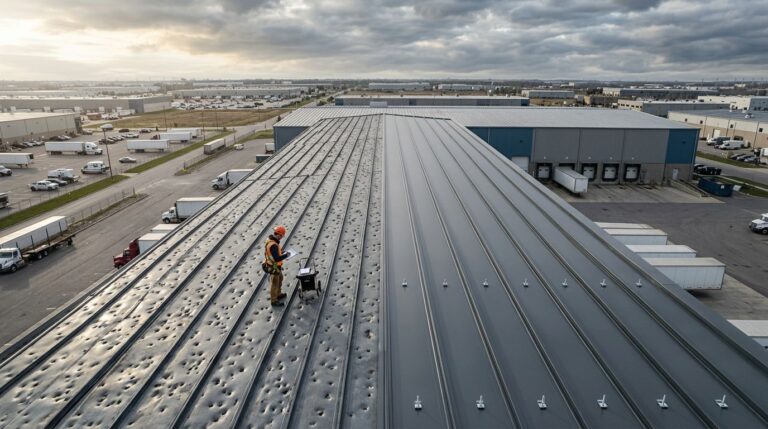
This issue matters most for business owners with low-slope and metal roofing. Warehouses, retail buildings, offices, schools, and light industrial sites are common examples. Large roofs have long seams, many penetrations, and wide open edges, so wind has more places to get underneath.
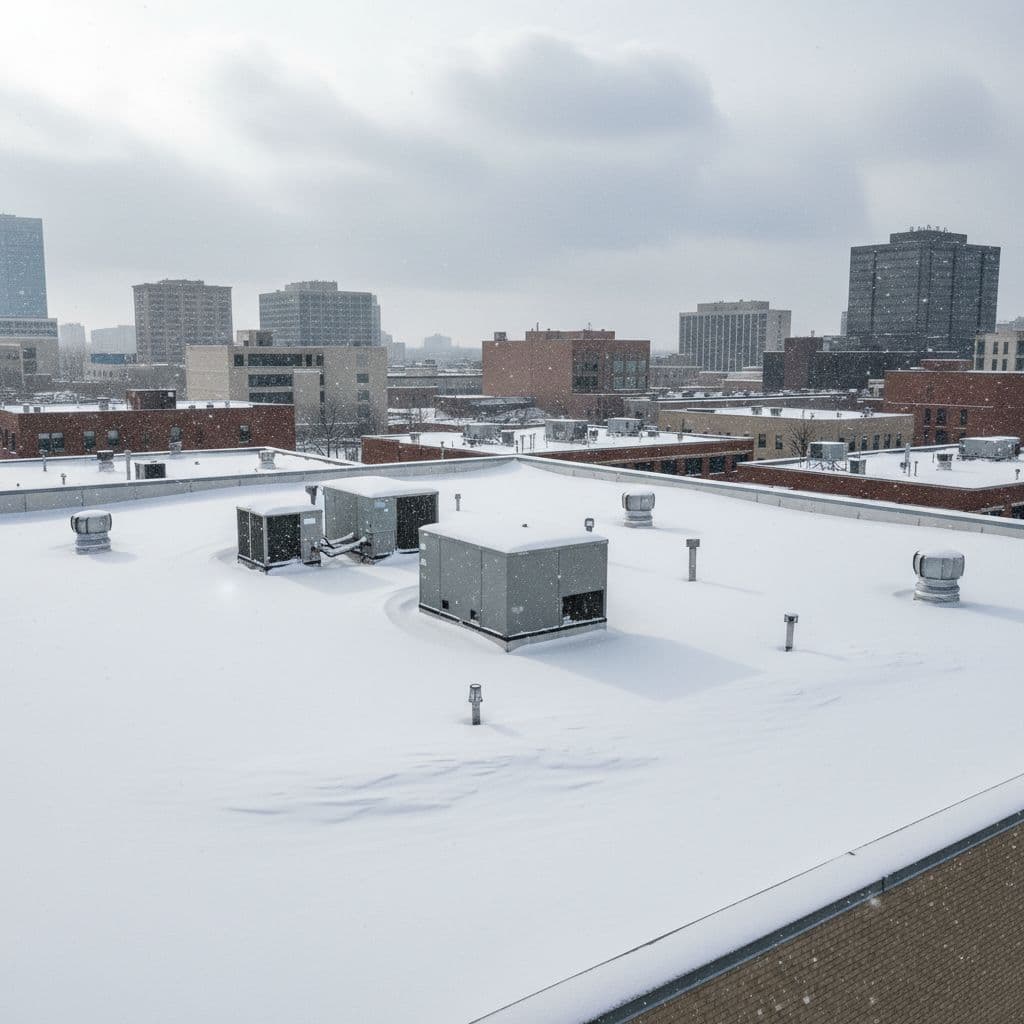
Snow makes that harder to spot. A white roof can look calm from the parking lot while the membrane edge has already lifted. On metal systems, drifts can hide bent trim, loose fasteners, or separated panel seams. By the time snow melts, water may have already moved into insulation or decking.
Roofs where snow hides the most
Flat and low-slope roofs are the biggest concern because damage often sits under drifts, around rooftop equipment, or at perimeter edges. If you own a building with TPO, EPDM, PVC, modified bitumen, or metal, snow can mask small failures that later turn into leaks. When the source is unclear, professional commercial roof leak detection can help trace the entry point before repairs spread beyond the real problem.
When it usually does not apply
This is less likely when the roof stayed mostly exposed all winter, the storm damage was documented right away, or the building has no signs of leakage after snowmelt and spring rain. It also fits less well when the problem is clearly old age, long-term ponding, or deferred maintenance.
Exceptions that change the answer
A roof can still hide damage without an obvious leak. Wind may weaken seams or flashing in January, then spring rain finishes the job in April. If your commercial roof needs repair after a winter storm, don’t assume a late leak means the loss is new. On big roofs, water often shows up far from the actual breach.
How Snow and Thaw Conceal Wind Damage
What wind often loosens before anyone sees it
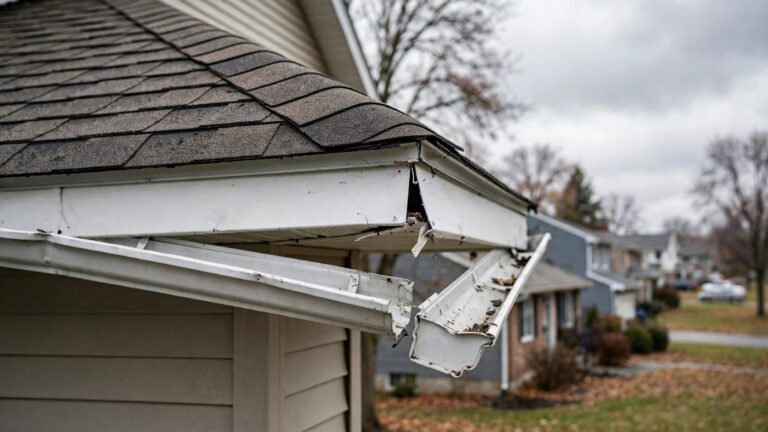
Wind rarely tears off a whole commercial roof in one dramatic moment. More often, it starts small. It lifts an edge, opens a lap, shifts a flashing detail, or loosens fasteners around a curb. Then snow settles over the disturbed area and hides it.
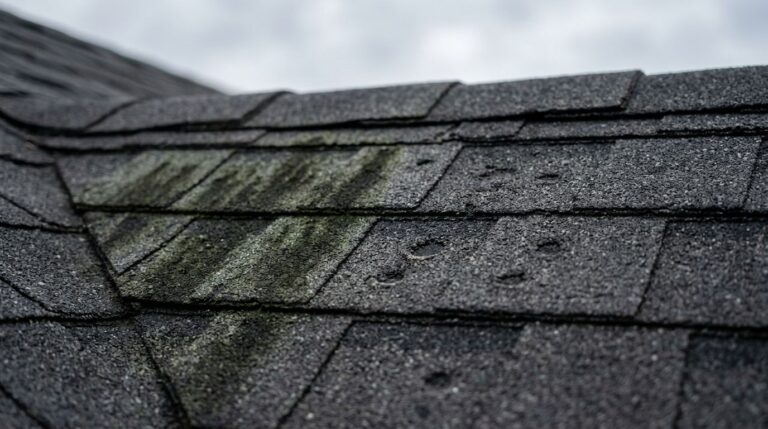
That cover matters because snow and ice block visual clues. You can’t easily see membrane wrinkles, displaced edge metal, or fine openings at penetrations. In addition, repeated freeze-thaw cycles widen weak spots. A seam that barely lifted in one storm may open more after several temperature swings.
Some building owners focus only on snow load. Weight matters, but surface concealment matters too. Guidance on safe snow removal for commercial roofs shows how early snow management can reduce both structural stress and hidden roof trouble.
Why the trouble often looks sudden in spring
Spring leaks often feel like they came out of nowhere. In reality, the failure may be months old. Once meltwater starts moving, it can travel under membrane, into insulation, and along the deck before it reaches a ceiling stain.
On many commercial roofs, the leak you notice in spring began as winter wind damage hidden under snow.
That delay can confuse claim decisions. Carriers often look closely at whether the issue came from a covered storm event or from wear. Clear photos, weather dates, moisture readings, and repair records help separate fresh damage from old trouble. That’s also why broad permanent work should usually wait until the roof condition is documented.
For a broader look at how snow and ice affect low-slope systems, this guide to flat commercial roof snow and ice risks gives useful context.
Step-by-Step
1. Document the roof before thaw or repairs change the evidence
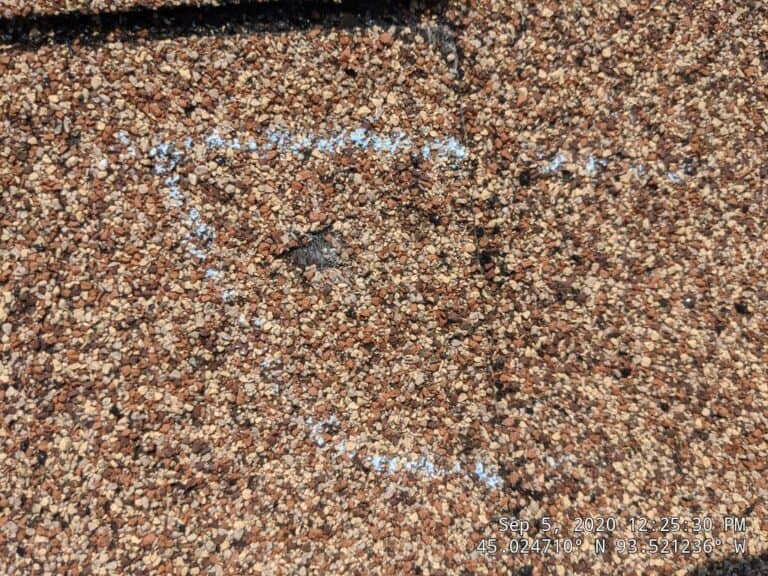
Take date-stamped photos from safe vantage points. Capture roof edges, drifting areas, drains, rooftop units, interior stains, and any snow patterns that suggest uplift or ice damming. Save storm dates, tenant complaints, and maintenance logs too.
If access is unsafe
Don’t send staff onto a slick or damaged roof. Use a qualified contractor with proper fall protection. If wet materials must come out to prevent more loss, photograph them first and save samples when possible.
2. Stop more damage, but keep the work temporary
Most policies expect you to limit further damage. That means tarping an exposed section, sealing a short open seam, clearing blocked drains, or protecting the interior. It does not mean rushing into a full tear-off before the condition is inspected.
This distinction matters. Temporary dry-in work usually helps the claim. Permanent work completed too early can erase proof. If water is entering occupied space, move fast on stabilization and keep every invoice, field note, and photo.
3. Schedule a post-storm inspection that looks past the obvious leak
Ask for an inspection that checks seams, flashings, penetrations, edge metal, rooftop equipment curbs, and wet insulation, not only the spot where water showed inside. On larger buildings, that process may take several hours because hidden moisture and long leak paths take time to trace.
A contractor familiar with professional commercial roofing services in Saint Paul should be able to tell you whether the issue is isolated or spread across multiple roof areas. That difference shapes everything that follows, from repair scope to claim value.
4. Decide whether repair is enough or the scope has grown
Some roofs need a targeted fix. If wind only opened one seam or lifted one flashing area, a commercial flat roof repair may solve the problem. That works best when the surrounding membrane is dry and the system still has good service life left.
When the scope moves beyond a patch
If inspection or tear-off finds widespread wet insulation, multiple seam failures, damaged edge metal, or repeated leaks across the field, the job may shift toward commercial roof replacement. That change can support a supplement when the added cost ties back to the same covered event. Keep upgrades separate from claim work, because insurers won’t fold elective improvements into a storm loss.
5. Compare the insurer’s scope to the real roof condition
Don’t compare only the bottom line. Match quantities, insulation thickness, tear-off, flashing, edge metal, permits, disposal, and code items. Short payouts often come from missing line items, not one bad price. If the carrier approved only a patch but your roofer found soaked insulation or hidden deck damage, ask for a revised scope in writing.
If the file turns into a dispute, clean documentation carries weight. The strongest package usually includes photos, moisture data, measured quantities, and a short explanation of why the original scope missed covered work. A local commercial roofing contractor in St. Paul can often walk the adjuster through those details on site.
Conclusion
Heavy snow can absolutely hide wind damage until spring, especially on large commercial roofs with low slopes, exposed edges, and many penetrations. What looks like a sudden March leak often started as a smaller winter failure that stayed buried.
The best move is simple: document early, limit added damage, and inspect before small concealed problems turn into soaked insulation or interior loss. When the roof condition is clear, you can choose the right fix once, whether that means a targeted repair or a larger replacement.
FAQ
Can a commercial roof look fine all winter and still be damaged?
Yes. Snow can cover lifted seams, loose flashing, and punctures for weeks. Meanwhile, meltwater may move through insulation before any ceiling stain appears. A quiet winter roof isn’t proof that the system escaped damage.
Should snow be removed before the insurance adjuster arrives?
Only if waiting would risk more damage or a safety problem. Temporary mitigation is usually reasonable. Full restoration is different. Photograph everything first, notify the carrier, and keep the work limited to protection, not permanent rebuilding.
What if the leak starts weeks after the windstorm?
That happens often on commercial roofs. Wind can weaken a detail without causing an immediate drip. Then thaw, rain, or freeze-thaw movement opens the area further. A delayed leak does not automatically mean the problem came from wear.
What helps the most in that case
Date-stamped interior photos, weather records, and a contractor report that separates old conditions from fresh storm-related damage.
Can one hidden problem lead to a much larger repair scope?
Yes. Once crews open the roof, they may find wet insulation beyond the visible stain, or damage at several nearby details. If the added work comes from the same covered event, the claim may need a supplement to match the actual scope.
Will prior repairs block coverage for winter wind damage?
Not by themselves. The key question is cause. If an insurer can show an old failed patch caused the leak, coverage may narrow. If a new wind event damaged a different area, or worsened the roof in a new way, part or all of the claim may still be valid.
Need a roof inspection in Saint Paul or the Twin Cities? Call Sellers Roofing Company at +1-651-703-2336 or schedule a free estimate. We are a black-owned, NMSDC-certified MBE roofing contractor with 9+ years experience.