Last updated: 2026-08-01 by Ted Sellers, Owner
Sometimes. In Minnesota, commercial property insurance may pay for matching metal roof panels when your policy promises replacement with like kind, quality, or comparable materials and exact panels no longer exist. Insurance disputes often arise when trying to replace high-performance PVDF finishes with lower-tier SMP finishes or vice versa, as this affects the like kind and quality standard. Coverage often fails if the damage is only cosmetic, the policy has a cosmetic or matching exclusion, or the carrier can source a true match.
Key Takeaways
- Minnesota commercial insurance may cover matching metal roof panels under replacement cost policies requiring like kind and quality when exact panels, profiles, or finishes are unavailable, especially on older, weathered roofs—but no blanket state matching law exists.
- Coverage often fails for cosmetic damage exclusions, wear/tear, or available matches; prove functional impacts like coating/seam compromise and get manufacturer letters showing unavailability.
- Key steps: Review policy wording, document damage beyond appearance, scope uniform roof sections (e.g., one slope), and use appraisal for scope disputes before legal action.
- Outcomes hinge on policy phrases like comparable material, evidence over patchwork repairs, and distinguishing high-end finishes (e.g., PVDF) from lower-tier options.
When This Applies
Matching usually matters on older commercial metal roofs
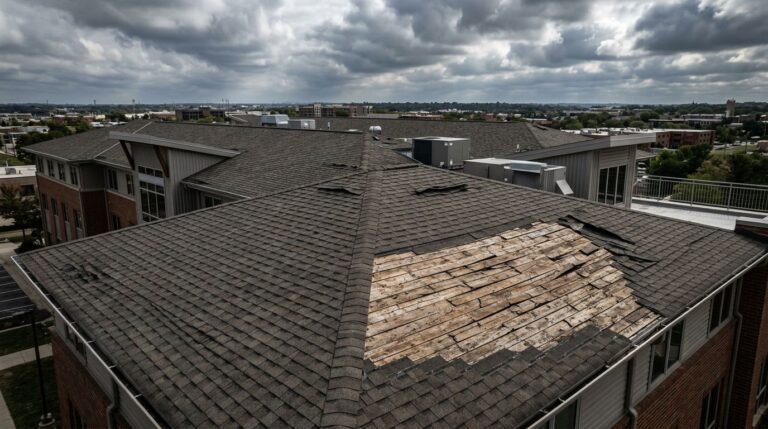
This issue matters most for commercial owners with storm-damaged metal roofing, especially when the roof is older, faded from UV exposure that impacts color retention, or made in a discontinued profile or finish. A new bright panel beside ten weathered panels on standing seam systems can look like a patch on a suit. If the policy pays replacement cost and calls for like kind and quality, you may have a strong argument that a mismatched repair, often requiring custom color matching, is not a true repair.
Minnesota does not have a blanket state match law that forces coverage in every claim. Still, Minnesota courts have treated matching as more than a style preference. In the Cedar Bluff siding case involving metal siding colors, the court required broader replacement when comparable material was unavailable after storm damage for exterior applications. That case involved siding, not metal roofing, but owners often use the same logic in roof disputes.
Insurers also like metal roofs because they tend to manage risk well over time due to their long-term durability, as discussed in this insurance angle on metal roofs. Yet a lower-risk roof does not mean an easy claim.
Policy wording that helps
Look for phrases such as like kind and quality, comparable material, and replacement cost. Those words often decide whether the carrier owes only a few panels or a larger roof section, particularly when standard colors are unavailable compared to premium color options.
Matching often fails when the carrier calls the damage cosmetic
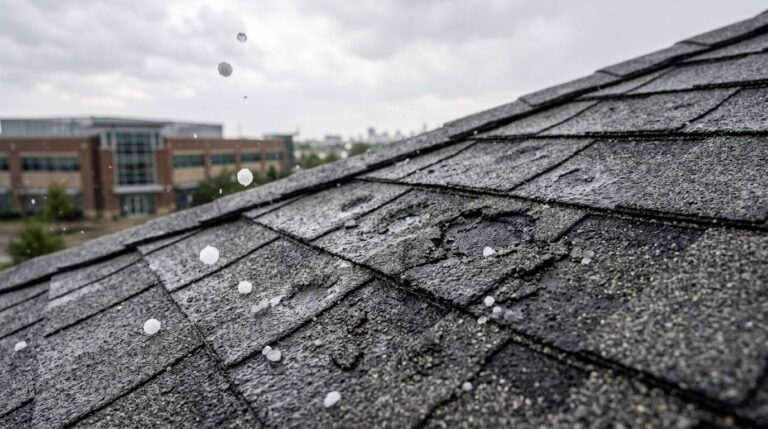
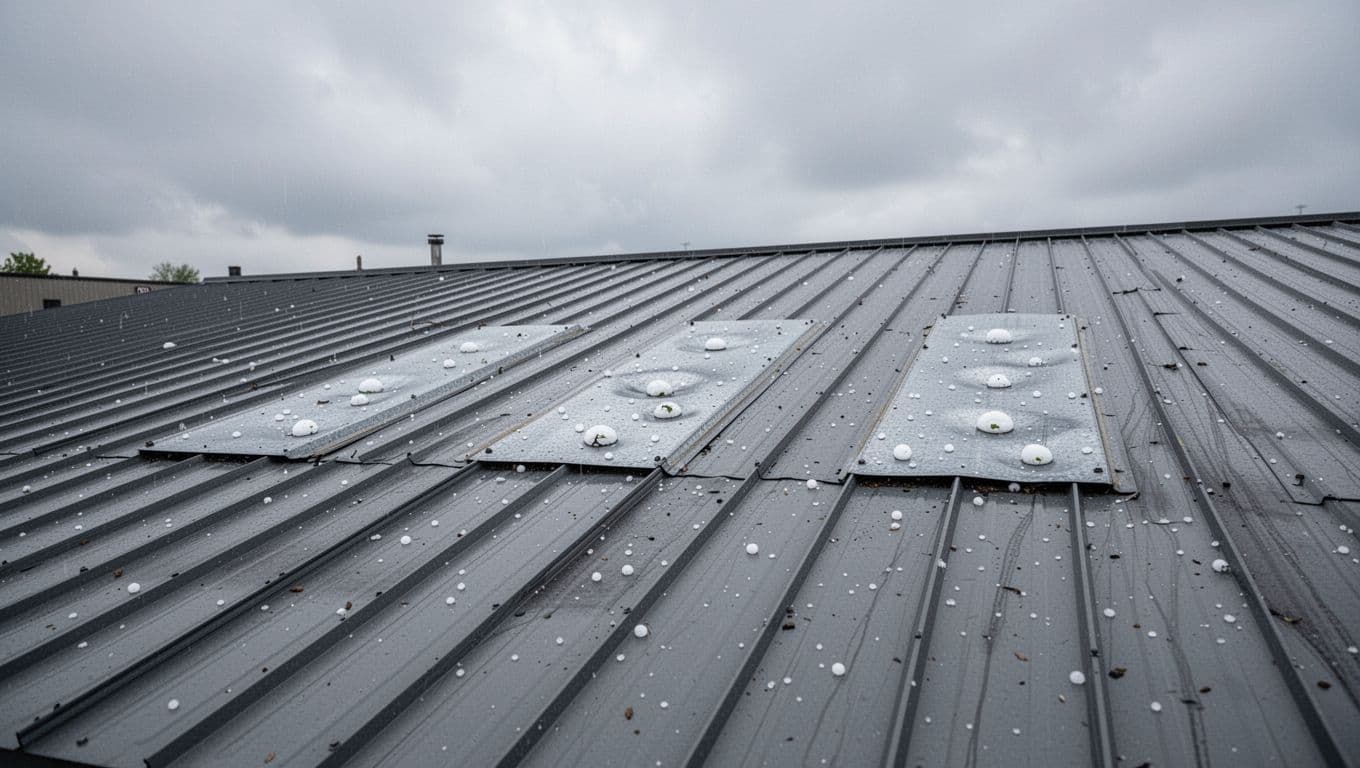
Insurers push back when hail leaves dents but no punctures, seam failure, or coating damage. Many commercial policies now contain a cosmetic damage exclusion, and that can block payment for dented metal panels that still shed water. A Minnesota hail dispute reviewed by Property Insurance Coverage Law shows how hard these cases can be when the carrier labels the loss appearance-only.
If the carrier says only the dented panels need replacement, the real question is whether the repaired roof will still be one roof, or a visible patchwork.
When this does not apply
It usually does not apply to wear and tear, rust, bad maintenance, old fastener problems, or roofs where matching panels are still available. It may also fail on actual-cash-value policies. If the roof has widespread damage, the dispute may shift from matching to commercial roof replacement.
Step-by-Step
1. Read the policy before you read the estimate
Start with the property form, endorsements, and loss settlement section. You need to know if the policy pays replacement cost, actual cash value, or a limited schedule for roof surfaces. Also check for cosmetic damage, matching, and ordinance or law language. If your broker sent only a summary, ask for the full form.
What to flag
Pay close attention to exclusions attached after renewal. A single roof-surface endorsement can change the whole claim.
2. Prove the damage affects function, not only appearance
A dent is not always harmless. On architectural metal systems, impact can weaken protective coatings, disturb seams, loosen concealed clips, or distort drainage paths. Hail damage can also compromise functional components like flashing, drip edge, and ridge vent, even if panels seem only dented. That matters even more where metal details meet low-slope areas. In some buildings, what starts as a panel claim can also lead to commercial roof leak detection Saint Paul and follow-up commercial flat roof repair.
If your adjuster says the roof is only ugly, get a contractor or consultant to explain why the commercial roof needs repair, not paint.
3. Show that a true match is unavailable
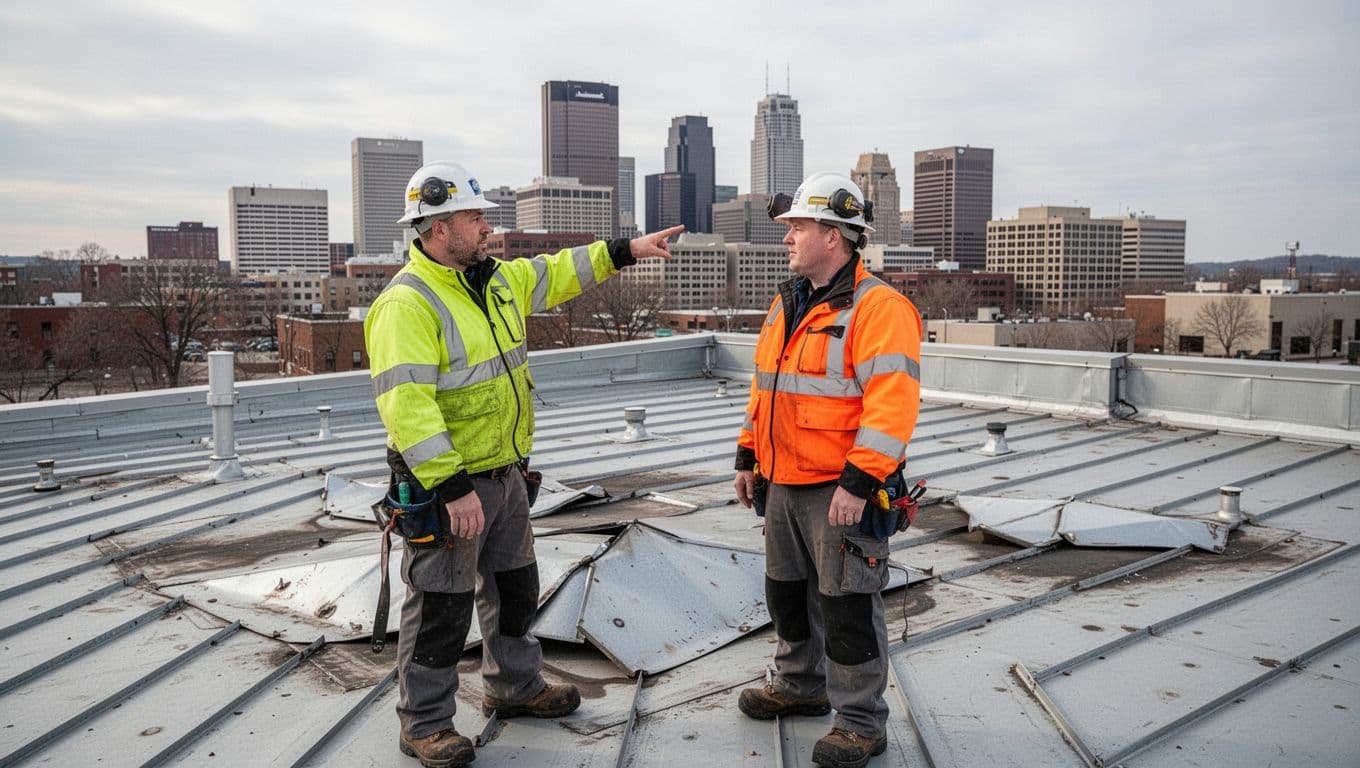
Ask the panel manufacturer, supplier, or contractor for a letter on profile, gauge, finish, color, paint code, and coating availability. Compare physical color samples and color charts to prove metal roof colors no longer match. If the profile is discontinued, say so clearly. Distinguish between textured finishes or metallic finishes and flat colors, and document if the finish has changed, since touch-up paint is often an insufficient remedy for high-end Kynar coatings. If the color exists but the finish has changed, document that too. Good photos help, but supplier letters carry more weight than phone opinions.
4. Ask for a scope that restores a uniform roof section
Do not argue for a full roof by reflex. Ask for the smallest scope that returns the roof to like kind and quality. That may be one slope, one elevation, or one continuous section rather than three isolated panels. Metal roofing trim items like gable end fascia and closure strip highlight system compatibility issues if only part of the roof is replaced, leaving visible mismatch, uneven weathering, and a weaker system. Detailed scopes from Saint Paul commercial roofing experts can help show why a piecemeal repair creates these problems.
5. Use appraisal, then legal help if needed
If the carrier accepts coverage but underpays the amount, appraisal may be the fastest path. It often works well when the fight is over scope, pricing, or how many panels need replacement. If the carrier denies the claim based on an exclusion, a coverage attorney may be the better next step. That matters most when a partial payment would leave a patchwork roof or push you toward a much larger commercial roof replacement later.
Common follow-up questions
What if the manufacturer stopped making my panel profile?
That usually helps your matching argument. A discontinued profile makes a true repair harder, especially when the roof has long visible runs and exposed differences in rib pattern, sheen, or color.
If only the color changed
A new coating system can still look wrong beside weathered panels, particularly with metal roof colors and metal siding colors that weather uniquely over time. Matching is more than picking the closest paint chip.
Will insurance replace undamaged panels next to the damaged ones?
Sometimes, yes. The key is whether replacing only the damaged panels restores the roof to like kind and quality. If not, adjacent undamaged panels may need replacement as part of a reasonable repair scope.
What if the roof doesn’t leak?
A leak is helpful proof, but not the only proof. Metal roofs can lose coating protection, moisture resistance, seam integrity, or panel alignment before water shows up inside, especially if panels are adjacent to other materials where vinyl safe technology could be compromised. Functional damage beats a cosmetic argument.
Does one damaged slope mean the whole roof gets replaced?
Usually not. Most claims stop at the affected slope or roof section unless matching, code rules, or system layout make a smaller repair impractical. Scope should follow the evidence, not frustration.
Can code upgrades be covered too?
They can be, but only if your policy includes ordinance or law coverage. That issue is separate from matching, yet it can increase the claim when replacement work triggers current code requirements.
A metal roof should look and perform like one system with long-term durability and system compatibility, not a quilt of old and new steel. For Minnesota business owners, the outcome turns on three things: policy wording, proof that matching panels are unavailable, and evidence that the loss is more than cosmetic.
Before you accept a partial payment, compare the carrier’s scope to what a real repair requires. A short policy review and a documented roof inspection beat guesswork every time.
Need a roof inspection in Saint Paul or the Twin Cities? Call Sellers Roofing Company at +1-651-703-2336 or schedule a free estimate. We are a black-owned, NMSDC-certified MBE roofing contractor with 9+ years experience.