Last updated: 2026-09-28 by Ted Sellers, Owner
A roof leak is rarely just a stain on the ceiling. It can start at flashing, a roof vent, a chimney, a damaged shingle, a drain, or a low-slope membrane detail—and water can travel before it becomes visible indoors. This guide helps St. Paul homeowners and property managers take the right first steps, understand when repair is realistic, and know when emergency help is needed.
What Should You Do When Your Roof Leaks?
When your roof leaks, protect people and belongings, photograph visible damage, and arrange a roof-specific inspection before making broad permanent repairs. A qualified roofer can trace the entry point, stabilize an active leak, and determine whether a focused repair or larger roof work is appropriate.
What to Do First After You Find a Roof Leak
Protect the area below the leak
Move furniture, electronics, and other belongings away from active drips. Use a container for water when practical, and be cautious around lights, outlets, or a sagging ceiling. If a ceiling is bulging, water is near electricity, or access to the roof is unsafe, treat that as an urgent condition.
Document before the evidence changes
Take photos of the interior stain or active leak, the exterior roof from the ground, gutters, roof-edge details, and any fallen shingle or flashing material. Note when the leak appeared and what weather was happening. This record is useful whether the final answer is a simple repair, a storm claim, or a maintenance decision.
Do not guess at the source
Water can enter at one point and travel along decking, framing, insulation, or a low-slope roof assembly before appearing inside. The stain is the exit point, not necessarily the entry point. A repair should address the actual roof detail that failed, not merely the nearest visible wet spot.
If water is actively entering, review our emergency roofing service in St. Paul. For a written scope on a repairable roof issue, start with a St. Paul roof repair evaluation.
Common Sources of Roof Leaks
Flashing, chimneys, and wall transitions
Flashing is the metal or membrane detail that directs water away from roof transitions. Chimneys, skylights, walls, valleys, and roof-to-wall connections all require it. A loose, corroded, or incorrectly integrated flashing detail can allow water behind the roof covering even when the surrounding shingles look acceptable.
Roof vents and pipe boots
Plumbing vents, bathroom vents, and other roof penetrations need durable flashing and weather seals. Cracked boots, loose fasteners, dried sealant, or damaged collars can create a leak that is easy to miss from the ground. Because these areas sit above the roof surface, a small opening can direct water into the attic before it reaches a ceiling.
Missing, lifted, or damaged shingles
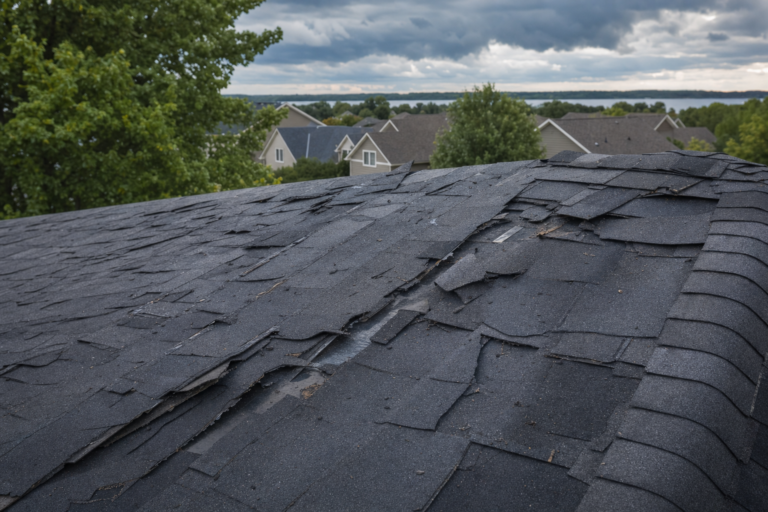
Wind, hail, age, and poor prior repairs can affect shingles and their seals. A shingle issue may be limited to one slope, but the repair needs to match the roof system and protect the surrounding underlayment and flashing. Read our guide to wind damage around roof edges and soffits when a storm may be part of the problem.
Low-slope roofs, seams, and drains
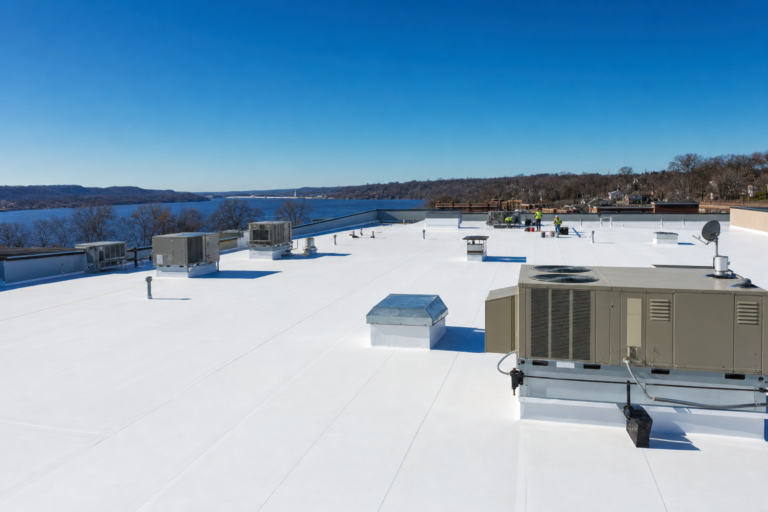
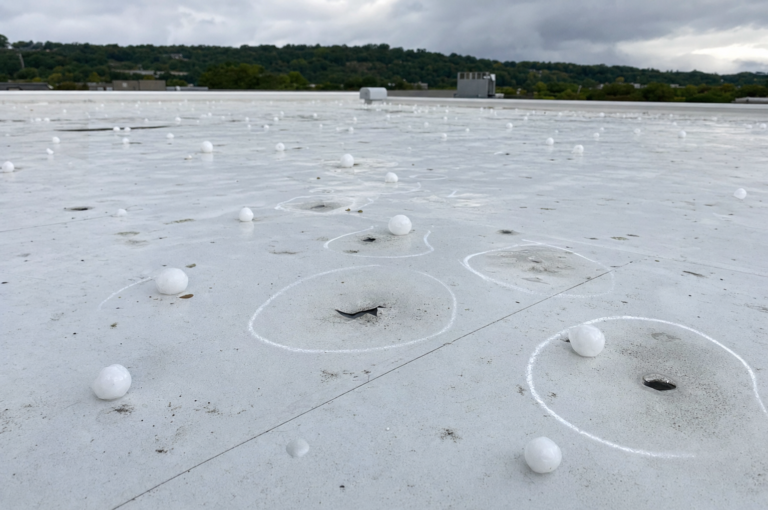
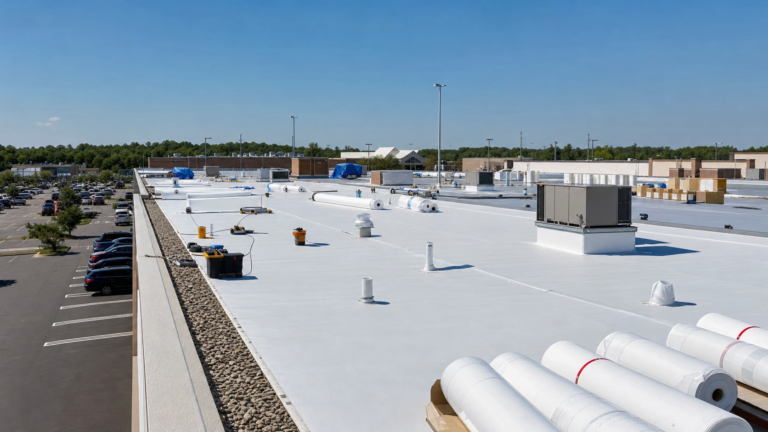
TPO, EPDM, PVC, and modified-bitumen roofs rely on seams, flashing, drains, scuppers, and penetrations—not shingles—to shed water. A leak can come from an open seam, puncture, drain flashing, or wet insulation below the membrane. When the source is uncertain, commercial roof leak detection is the right way to trace it before a permanent repair hides the evidence.
When Roof Repair Is Enough—and When It Is Not
A repair is often appropriate when the issue is isolated, the surrounding materials remain sound, and the roof can be restored without creating a short-lived patchwork solution. Examples include a damaged pipe boot, localized flashing failure, a small membrane breach with dry insulation, or a limited number of shingles affected by wind.
Replacement may be the more responsible choice when repairs would be repeated across multiple areas, the roof has widespread deterioration, materials are brittle or no longer repairable, moisture has spread below a membrane, or a storm has damaged the system beyond a focused repair. A good inspection explains the difference in writing rather than treating every leak as a replacement job.
For residential roofs, see our residential roof repair service. Property managers and commercial owners can use our commercial roof repair service in Saint Paul for low-slope and larger-building needs.
When to Call for Emergency Roofing Help
Emergency roofing is appropriate when water is actively entering, a storm has removed materials, a tree or debris strike has opened the roof, or a temporary cover is needed to prevent added damage. The immediate goal is stabilization—not a rushed permanent repair. Temporary protection should be documented, limited to what is necessary, and followed by a full inspection.
For a practical overview of this process, read what emergency roof tarping can cost in St. Paul. If a storm may have caused the opening, use our Minnesota roof storm damage and insurance claims guide to organize photos, estimates, and policy documents.
Common Mistakes to Avoid After a Roof Leak
- Sealing a stain instead of finding the opening: Interior paint does not solve a roof failure. Identify the water path first.
- Using a broad permanent repair before inspection: Emergency protection is sometimes necessary, but extensive work can hide the original condition.
- Assuming every leak requires replacement: Some leaks are localized and repairable; the scope should fit the system condition.
- Waiting through repeated water entry: Moisture can affect insulation, framing, ceilings, and finishes even when the visible stain is small.
- Walking an unsafe roof: Wet, icy, steep, or visibly damaged roofs require proper access and trained personnel.
Frequently Asked Questions
Can a roof leak stop on its own?
It may stop when the weather changes, but the opening can still be present. A leak that appears only during wind-driven rain, snow melt, or ice conditions still deserves inspection.
How do I know if a roof leak is an emergency?
It is urgent when water is actively entering, electrical areas are affected, the ceiling is sagging, materials are missing after a storm, or occupants and property cannot be protected safely. Temporary stabilization should come before a full repair decision.
Will a small roof leak cause major damage?
It can. Water can wet insulation and framing or travel away from the original opening before it becomes visible. Early inspection generally gives you more repair options.
Can I repair a roof leak myself?
Simple interior protection may be appropriate, but roof access and permanent repairs can be unsafe or cause more damage when the source is uncertain. Hire a qualified roofer for steep, wet, icy, storm-damaged, or low-slope membrane roofs.
Does homeowners insurance cover roof leaks?
Coverage depends on the cause of loss and policy language. Sudden storm damage may be treated differently from long-term wear, maintenance issues, or deterioration. Document the condition and review the policy active on the date of loss.
Conclusion and Next Steps
Roof leaks are easiest to manage when you act early, preserve the evidence, and use a repair scope that addresses the real water entry point. Start with a professional roof repair assessment in St. Paul when you need a clear explanation of what failed and what it will take to fix it.
Need a roof inspection in Saint Paul or the Twin Cities? Call Sellers Roofing Company at +1-651-703-2336 or schedule a free estimate. We are a black-owned, NMSDC-certified MBE roofing contractor with 9+ years experience.