Last updated: 2026-08-01 by Ted Sellers, Owner
Yes. Strong wind can lift or tear starter shingles at the eaves, especially if the seal strip failed, nails were misplaced, or the roof edge lacks proper drip edge support. Once that first course loosens, water can get under nearby shingles and damage the edge system, which makes fast inspection and repair important.
When This Applies
This applies to shingled roof edges on commercial buildings
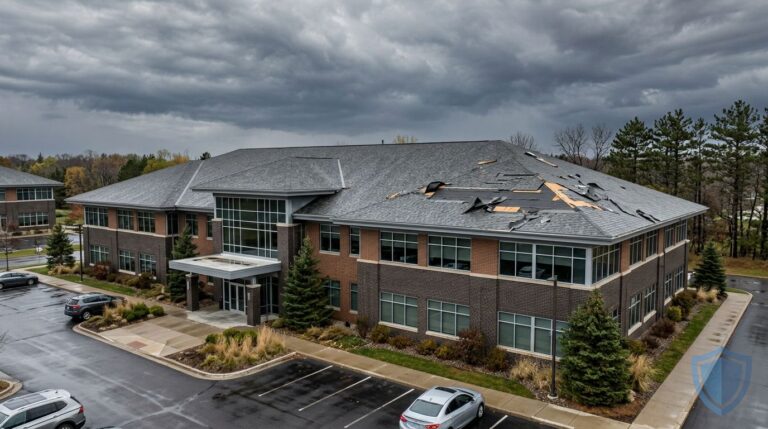
This guide fits business owners with asphalt-shingled roof sections, not only houses. Many offices, retail centers, churches, schools, and multi-family properties have shingled canopies, mansards, or steep-slope entry roofs tied into a larger flat roof.
Those mixed roof details matter because the eave is exposed and easy for wind to grab. Starter shingles sit under the first visible course and help that edge stay sealed. When starter shingle wind damage begins, the next shingles can lift like a zipper.
Most owners miss this because the field shingles still look fine from the parking lot. The failure often starts under that first course, where wind, old adhesive, and edge metal all meet. For a clear explanation of why starter strips matter so much, see these starter shingle basics.
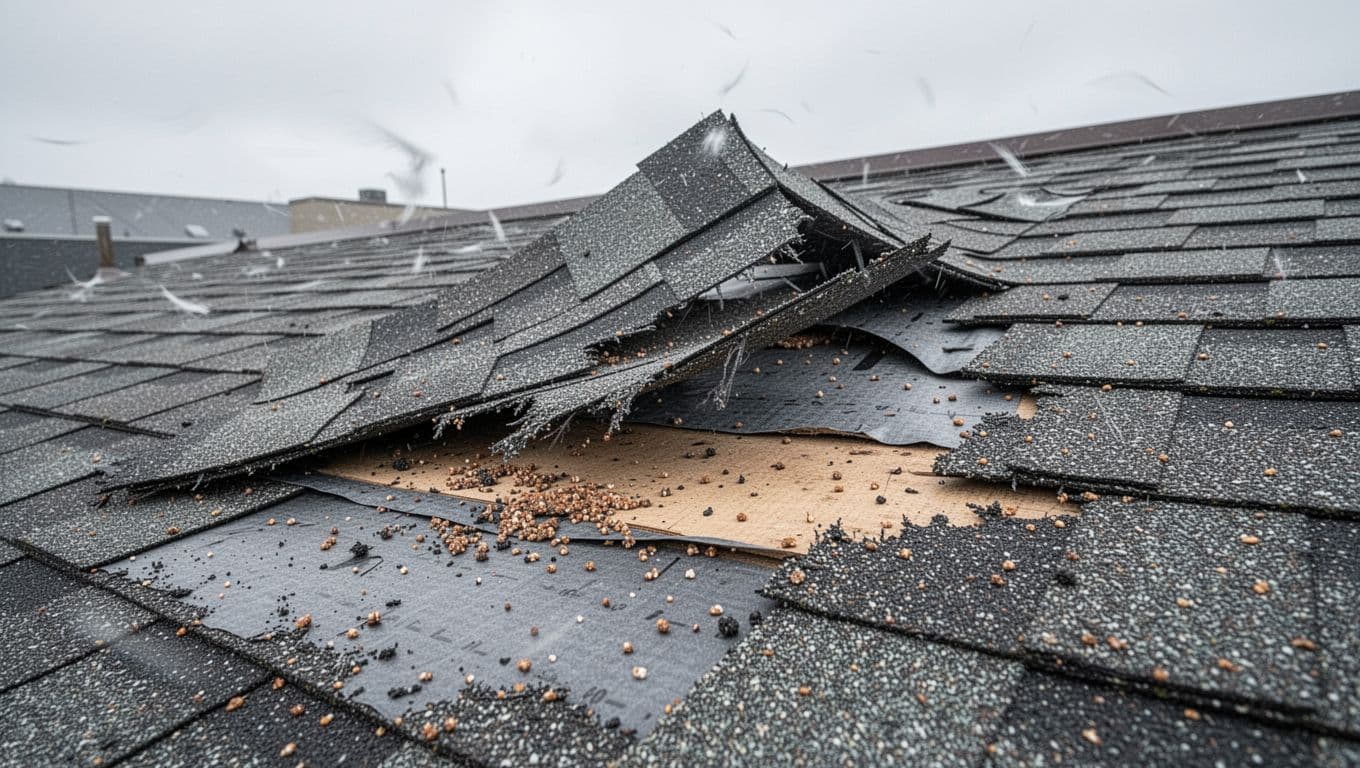
At the eave, one failed seal can weaken several shingles above it.
When it does not apply
If your building has only TPO, EPDM, PVC, or standing-seam metal, this exact problem doesn’t apply. Those roofs can suffer wind damage too, but not from missing or loose starter shingles.
Cold snaps make eave failures more likely
Minnesota weather adds stress at the edge. After freeze-thaw swings, older adhesive strips may not hold well, and a hard gust can lift the first course before warmer weather helps it re-seal. New roofs installed in cold conditions can be more exposed for the same reason.
Edge cases that fool owners
Sometimes the starter strip isn’t the only failure. Wind may bend the drip edge, loosen fascia metal, or open a transition where shingles meet a membrane roof. In that case, water can travel farther than expected, so commercial roof leak detection in Saint Paul is useful when stains appear away from the roof edge.
These signs make a quick first check easier:
| Sign at the eave | What it often means |
|---|---|
| First course lifted | Starter strip or seal failure |
| Black adhesive exposed | Wind broke the bond line |
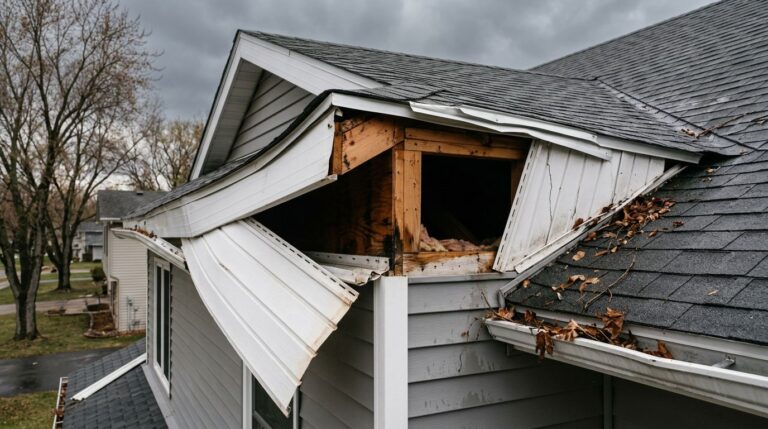
| Drip edge bent outward | Edge metal also took the hit |
When two or more show up after the same storm, the edge detail deserves prompt repair.
Step-by-Step
What to do after a wind event
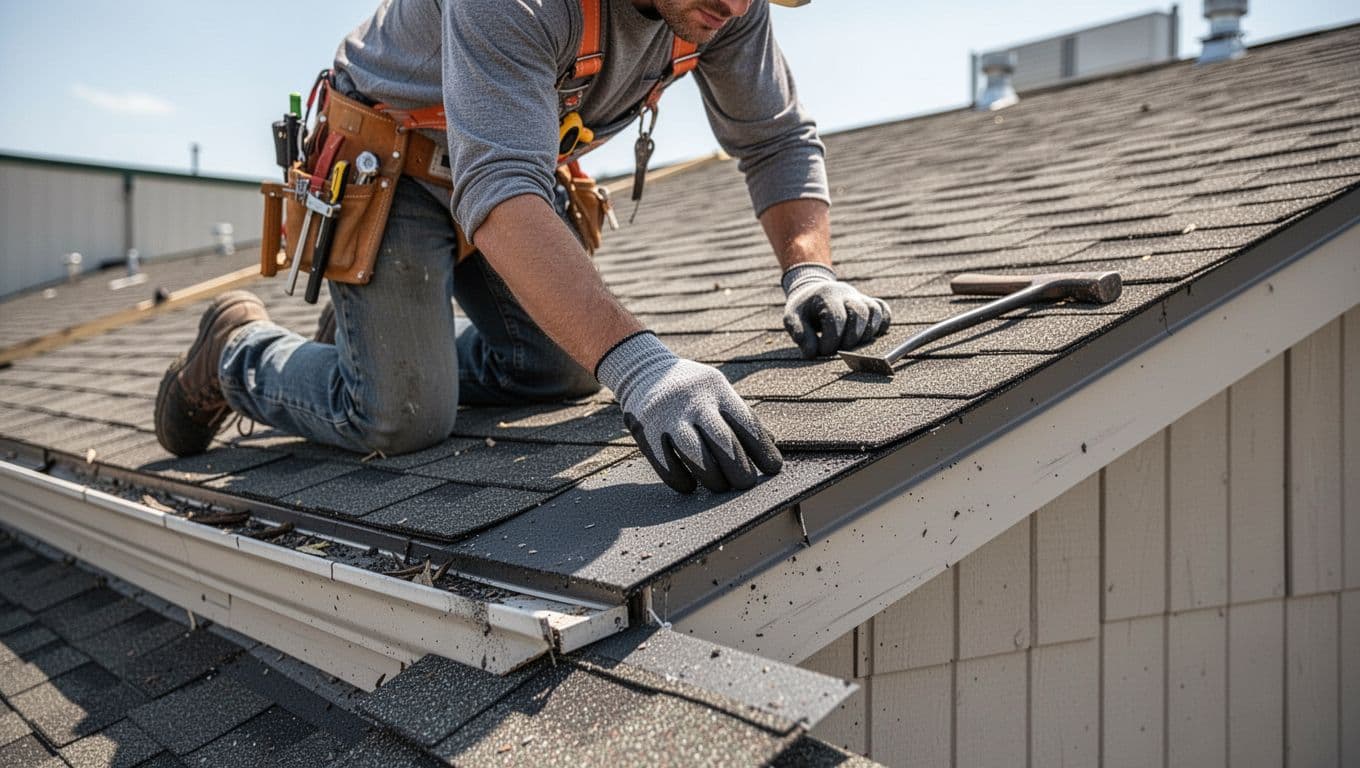
- Start from the ground. Use binoculars or zoom photos, not a quick climb. Look for lifted shingle corners, exposed black adhesive, torn starter pieces, bent drip edge, or a wavy line along the eaves. If the edge no longer lies flat, your commercial roof needs repair, even without an active leak.
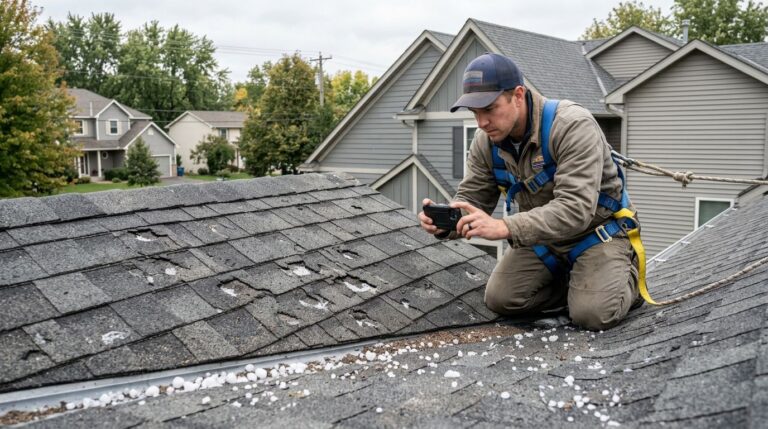
- Document what changed right away. Take wide shots of each slope, then close photos of the eaves, gutters, fascia, and any debris on the ground. Save the storm date, wind reports, and interior photos too. That record helps when you compare bids, speak with tenants, or discuss insurance.
- Check gutters and downspouts next. Starter shingle fragments, fresh granules, and seal-strip pieces often collect there first. When those signs show up after high winds, they support what you’re seeing at the roof edge and help confirm the damage wasn’t old or unrelated.
- Inspect the inside of the building. Water from eave failure may show up near exterior walls, soffits, window heads, or ceiling edges. On mixed-slope properties, it can also track into adjoining low-slope areas, which is why a simple shingle issue sometimes becomes a larger commercial flat roof repair.
- Protect contents, not the roof system. Move inventory, electronics, and furniture away from wet areas. Set up catch buckets or plastic protection indoors if needed. Avoid self-installed edge tarps unless trained staff have proper fall protection, because bad temporary work can hide damage and make later repairs less clear.
- Schedule an inspection that focuses on the eaves, not only the field shingles. Ask the roofer to check starter strips, nail placement, seal lines, underlayment, decking, and drip edge. Poor starter installation can affect long-term performance, as this starter shingle warranty explanation points out.
- Decide whether the fix should stay local. If damage is limited to the first course and metal edge, a targeted repair may be enough. If the decking is soft, leaks keep returning, or wind damage extends across multiple roof areas, ask for a written comparison between repair and Saint Paul commercial roofing services, including whether a commercial roof replacement is the smarter spend.
Common follow-up questions
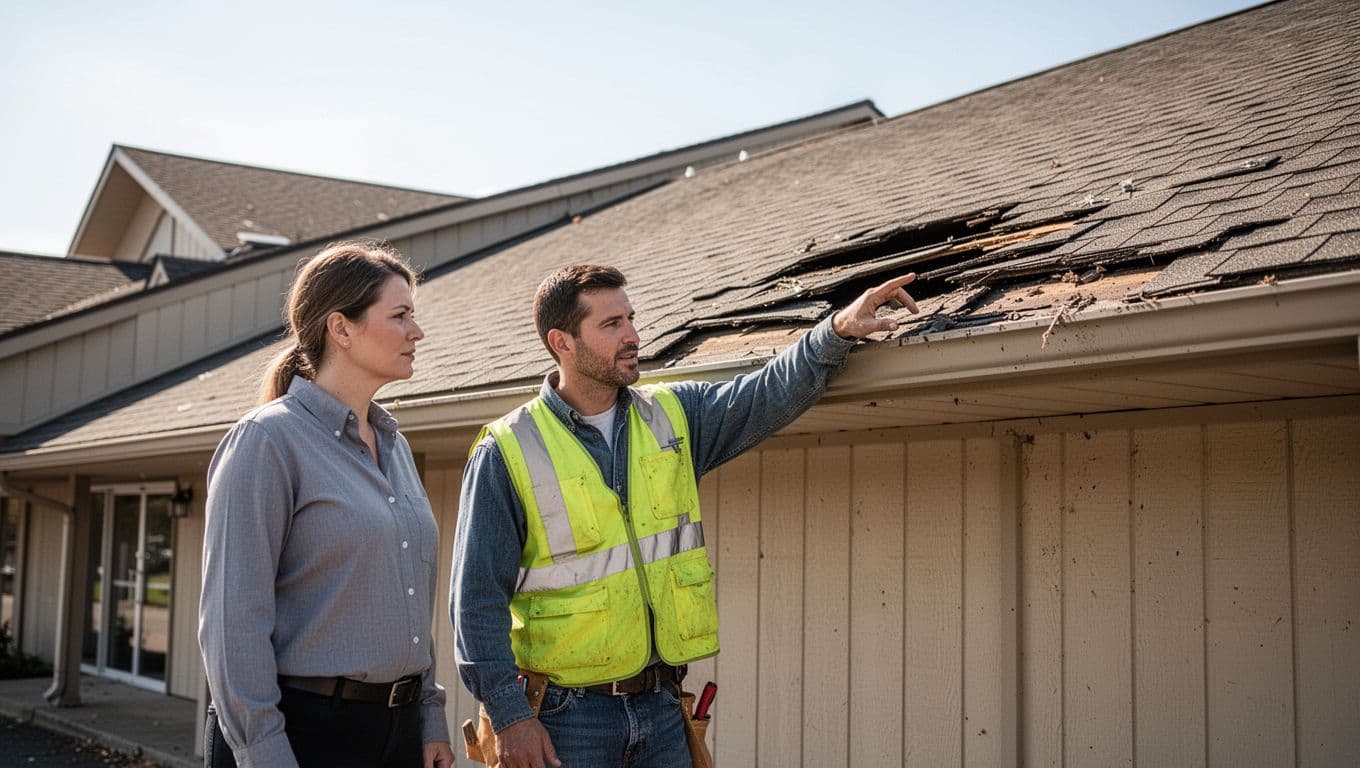
Can wind damage only the starter strip and leave the rest of the roof in place?
Yes. The eave takes the first hit, so the starter can loosen before field shingles blow off. Older roofs show this more often, but bad installation can cause it on newer ones too. Once the edge seal fails, nearby shingles usually become more vulnerable.
Will a loose starter shingle always cause a leak?
No, not on day one. Yet it lowers wind resistance and opens a path for driven rain, especially around drip edge and underlayment laps. A dry ceiling after one storm doesn’t mean the edge is sound.
Should I wait for interior stains before calling a roofer?
No. By the time water shows inside, the damage may already include soaked decking, wet insulation, or stained wall finishes. Early action is usually cheaper and far less disruptive to tenants, customers, or staff.
When a claim discussion makes sense
If shingles are missing, metal edge is bent, or interior damage appeared after a known wind event, document it early and get a professional inspection before the next storm changes the evidence.
Can this happen on a newer roof?
Yes. Age matters, but installation quality matters more at the eaves. Missing starters, misplaced nails, weak sealing, or poor drip edge detail can all lead to early failure, especially after cold-weather installs.
What if the damaged eave sits beside a flat roof section?
Then water may travel sideways instead of straight down. That crossover is common on retail fronts and office entries. The membrane section may look like the source when the actual opening started at the shingled edge, so both roof types should be inspected together.
What to do next
Act before the next storm
Starter shingles are small, but they protect the most exposed roof edge. Once wind breaks that first seal, the next storm can widen the opening and turn a modest repair into interior damage.
If you see lifted eaves, missing adhesive lines, or bent drip edge, act while the fix is still localized. Ask for photos, a written scope, and a clear answer on whether you need edge repair, commercial flat roof repair, or a full commercial roof replacement. For most owners, the cheaper decision is the faster one.
Need a roof inspection in Saint Paul or the Twin Cities? Call Sellers Roofing Company at +1-651-703-2336 or schedule a free estimate. We are a black-owned, NMSDC-certified MBE roofing contractor with 9+ years experience.