Last updated: 2026-08-01 by Ted Sellers, Owner
Yes. Freeze-thaw cycles can crack chimney counterflashing in Minnesota, especially where mortar, sealant, or fasteners already have movement. Water gets in, freezes, expands, and opens the gap wider. By the time you see a ceiling stain, the leak path may already include brick, flashing, sheathing, or the roof deck.
Key Takeaways
Quick scan
- Freeze-thaw damage starts in small gaps, then works the crack wider.
- Chimney counterflashing usually fails at corners, joints, and the reglet, not in the middle of the metal.
- A stain inside shows where water came out, not always where it got in.
- On a commercial flat roof, the problem can hide under TPO roofing, EPDM, modified bitumen, or BUR.
- Temporary dry-in work is fine, but permanent repairs should wait until the source is documented.
When This Applies
Where freeze-thaw damage shows up first
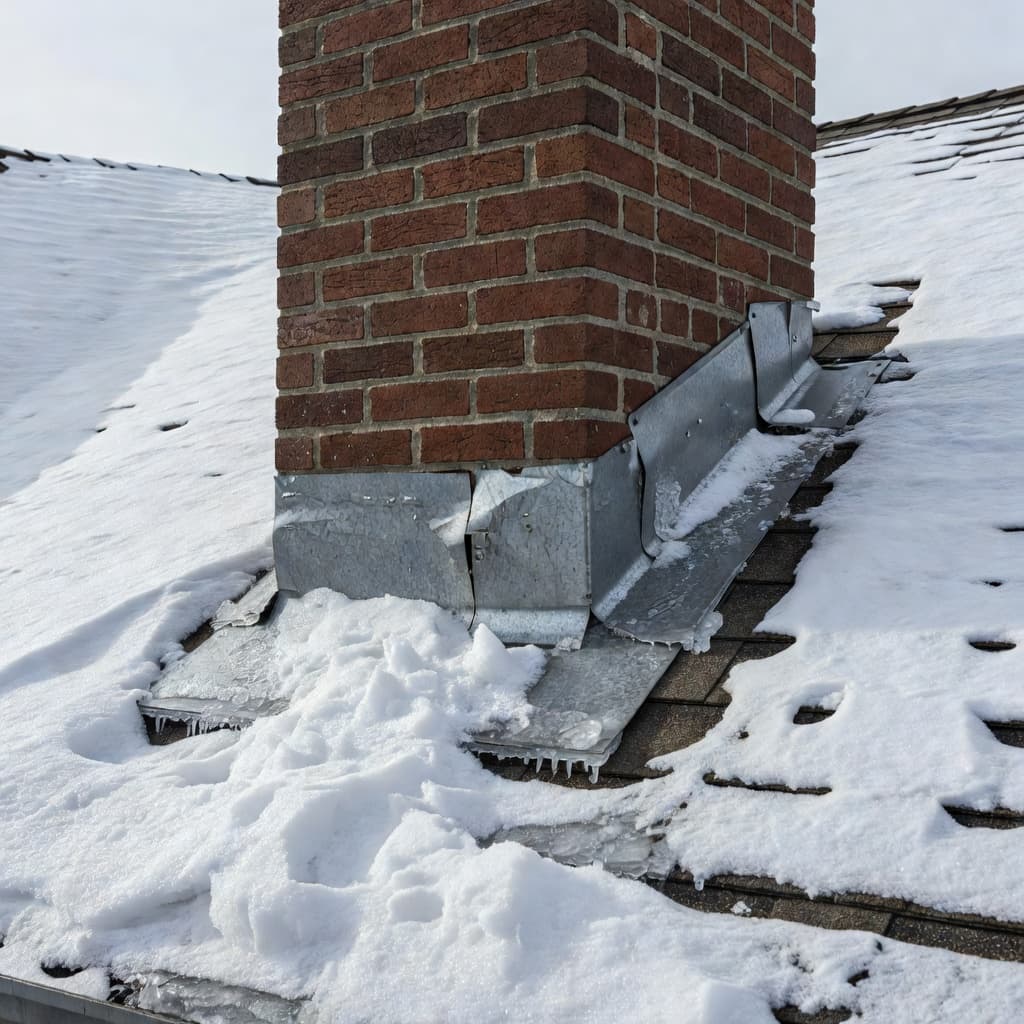
Minnesota gives flashing a hard season. Snow melts, water runs behind the counterflashing, then the cold comes back. That cycle pushes against the metal and the masonry at the same time. Over time, the weak point opens.
The first signs are usually small. You may see a split at the upper edge, loose sealant at the brick joint, or a bent piece of metal at the chimney corner. If the chimney crown is cracked, the problem gets worse fast. Water sits on the masonry, then works into the joint and freezes.
The stain tells you where water came out. It does not always tell you where it got in.
Residential roofs, commercial roofs, and different materials
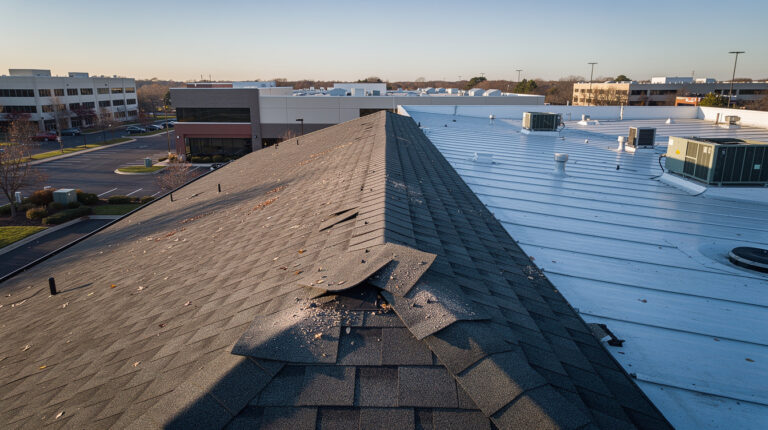
On asphalt shingles, chimney leaks often show up at the uphill side of the chimney, where step flashing and counterflashing work together. On metal roofing, thermal movement can stress the flashing line and the sealant edge. A small gap here does not stay small.
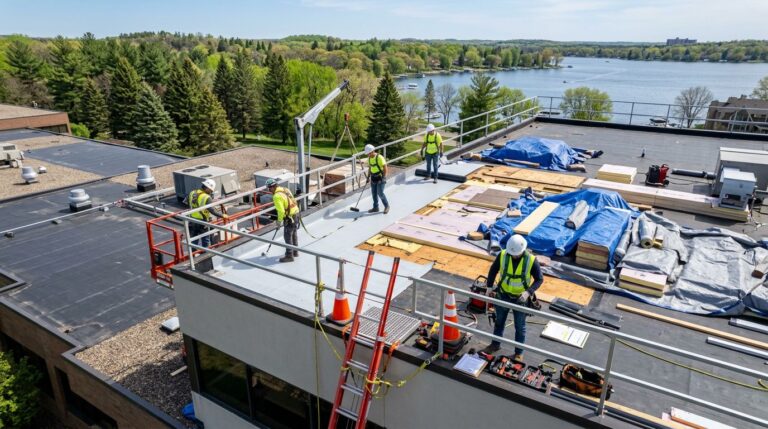
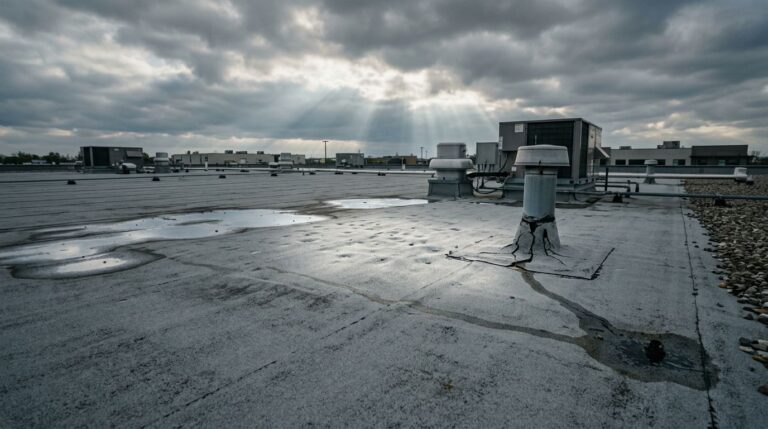
A commercial roof inspection gets more complicated. On a commercial flat roof, whether the system is TPO roofing, EPDM, modified bitumen, or BUR, water can travel under the membrane before it shows inside. The crack in the chimney detail may be only one part of the failure.
If the chimney sits on a church, office, retail building, or multifamily property, a St. Paul commercial roofing team should inspect the assembly as a system. That matters when the question is commercial roof repair, commercial roof restoration, commercial roof coatings, or a larger commercial roof replacement.
When the problem is not freeze-thaw
Not every chimney leak starts with cold weather. A bad crown, old mortar, poor flashing install, or a damaged cricket can leak in any season. A hail damage roof can also bend metal and open a path that freeze-thaw later makes worse. The same goes for a broader storm damage roof.
If the leak only shows during snowmelt, ice dam removal may be part of the answer, but it does not replace a chimney flashing repair. If the roof has older wear and tear, the issue may belong in a roof insurance claim only when a covered event caused the damage.
Step-by-Step
1. Trace the leak path before touching the flashing
Start with timing. Does the leak happen during wind-driven rain, after a thaw, or only when snow sits on the roof? That pattern narrows the source fast. Check the ceiling stain, the attic or deck area, the chimney face, and the roof slope above it.
If water is active, Call 651-703-2336 for 24/7 Emergency Roofing. Stop the water first. Do not start permanent work yet.
2. Inspect the whole chimney assembly
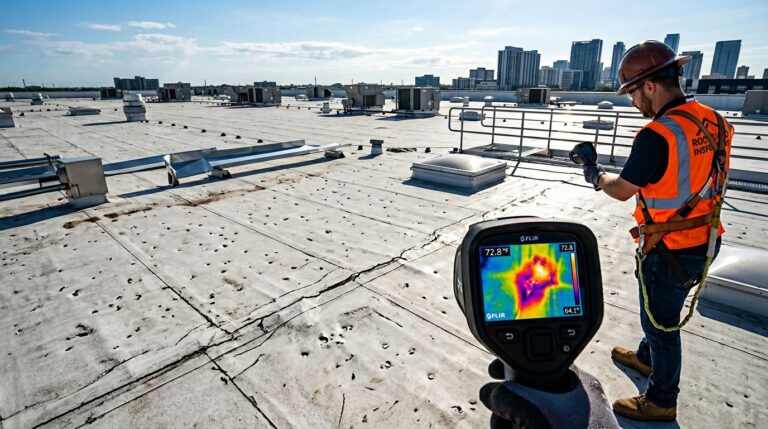
A proper commercial roof inspection or residential inspection looks at more than the visible crack. The chimney crown, mortar joints, cap, counterflashing, step flashing, cricket, and adjacent membrane all matter. One bad detail can feed another.
On TPO roofing, EPDM, modified bitumen, and BUR, the roof surface may look fine while the opening sits at the chimney line or a nearby penetration. That is why a stain under the chimney is not enough. You need the full leak path.
3. Keep temporary work temporary
Dry-in work is fine. Emergency sealant, a limited tarp, or a small patch can stop more water. Permanent tuckpointing, full metal replacement, or a broad roof patch is different. That can erase the evidence you need to prove cause and scope.
When the leak path is unclear on a larger building, professional commercial roof leak detection can show whether the opening is at the chimney, the cricket, or a nearby seam. That is better than guessing and closing the case too early.
4. Decide between repair, restoration, or replacement
If the damage is isolated, commercial roof repair or residential roof repair may be enough. A cracked counterflashing joint, a loose reglet, or a small crown repair does not automatically mean a full reroof.
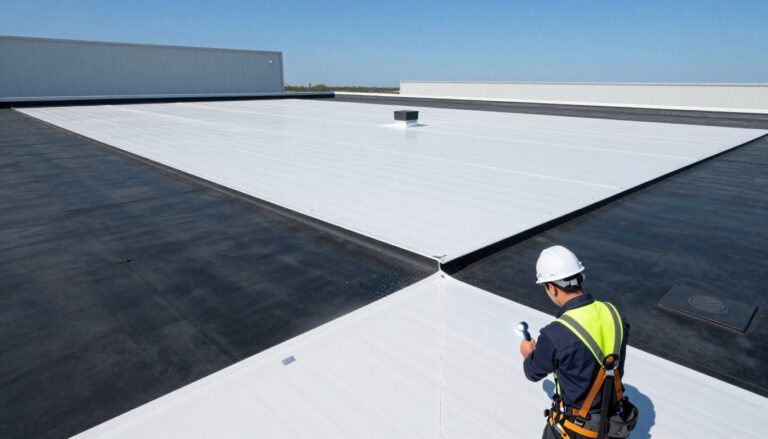
If the roof field is tired but still sound, commercial roof restoration or commercial roof coatings may extend service life. Those systems do not fix a failed chimney detail by themselves, though. They only make sense when the rest of the assembly still has life left.
If the roof deck is wet, the insulation is saturated, or the same area keeps failing, commercial roof replacement or residential roof replacement may be the cleaner call. If it is a house, Get a Free Residential Roof Estimate before you assume the chimney is the only problem.
5. Build the insurance file before permanent work
A roof insurance claim lives or dies on proof. Take photos before and after the emergency work. Save invoices, moisture readings, weather notes, and any damaged material that can still be documented. If the issue followed hail or a storm, connect the dates.
For Saint Paul roofing, Minneapolis roofing, and the wider Twin Cities roofing market, winter details matter. Any Minnesota roofing crew that handles this work should understand freeze-thaw, snow load, and water travel. Look for union-built roofing experience, GAF certified crews, IUPAT Local 96 ties, and MN License 803862. The paperwork matters as much as the metal.
Common Questions About Chimney Counterflashing Cracks
Can freeze-thaw cycles crack counterflashing by themselves?
Yes. Water in a tiny gap freezes, expands, and pushes the metal or the sealant line apart. The metal usually does not fail all at once. It moves a little, then a little more, until the joint opens enough to leak.
How do I tell flashing damage from chimney crown problems?
Look at the pattern. If water shows up near the top of the chimney or runs down the masonry face, the crown may be part of the problem. If the leak shows only at the roof line, the counterflashing or step flashing deserves more attention. Many leaks involve both.
Is this the same as an ice dam leak?
Not exactly. Ice dams push meltwater backward under shingles and flashing at the eaves. Chimney leaks happen higher on the roof and often start at the masonry joints or the flashing edge. Both can happen in the same winter, which makes diagnosis messy.
Do commercial flat roofs fail differently around chimneys?
Yes. On a commercial flat roof, the membrane can stay intact while the chimney detail, flashing tie-in, or nearby seam opens. That is common on TPO roofing, EPDM, modified bitumen, and BUR. A small visible leak can hide a larger wet area below.
Will insurance pay for chimney counterflashing cracks?
Sometimes. If a covered storm opened the system, the claim is stronger. If the issue came from wear, old mortar, or poor maintenance, coverage gets weak fast. A fresh hail damage roof or storm damage roof file is different from a long-running leak. The date and cause decide the claim.
Conclusion
The short version
Freeze-thaw cycles can crack chimney counterflashing in Minnesota, and they often do it one small gap at a time. The crack itself is only part of the story. Mortar, crown, sealant, and the roof system around the chimney all matter.
If the leak is active, treat it as a water-control problem first, then a repair problem. That order keeps the damage smaller and the evidence cleaner.
Small flashing gaps rarely stay small here. In Minnesota, water finds the weak point, then winter keeps working on it.
Need a roof inspection in Saint Paul or the Twin Cities? Call Sellers Roofing Company at +1-651-703-2336 or schedule a free estimate. We are a black-owned, NMSDC-certified MBE roofing contractor with 9+ years experience.