Last updated: 2026-05-26 by Ted Sellers, Owner
Short answer: Identify synthetic slate hail damage by looking for fresh impact marks that don’t match normal aging: chipped edges and broken corners on slate shingles, star-like cracks, surface bruising (dull, scuffed “pock” spots). Then confirm the pattern makes sense for hail (random, wind-driven, on exposed slopes) and document it with clear photos and counts by roof plane.
Hail can treat synthetic slate roofing like a paintball target. Unlike natural slate, which often fractures deeply on impact, synthetic slate tends to show more contained damage such as chips, cracks, and bruising. Some hits leave obvious breaks. Others look minor today but turn into leaks months later.
For commercial owners, the stakes are higher because small roof failures can disrupt tenants, equipment, and operations. A fast, methodical check helps you separate real storm damage from everyday wear.
When This Applies
Buildings where synthetic slate often shows up
Synthetic slate is common on commercial properties that want a high-end authentic look and curb appeal without the weight of natural slate. Owners choose it because it’s lightweight and usually doesn’t require the structural reinforcement often needed for natural slate. Think entry canopies, mansards, steep-slope accents above a flat-roof footprint, and certain multi-family buildings.
Because these roofs are often “architectural features,” they can get missed during post-storm checks. Yet they still protect walls, transitions, and soffits, which means damage can feed water behind exterior cladding.
Common commercial scenarios
- Mansard sections over a retail strip where hail hits the upper face hard.
- Hotels and senior living with steep-slope accents tied into low-slope areas.
- Churches and schools that use composite slate for aesthetics and longevity.
These scenarios highlight why owners select this roofing material, which offers superior durability to traditional asphalt shingles despite a higher installation cost.
If you want a deeper look at what inspectors check on these systems, see this guide to synthetic slate roof inspections. It’s a helpful reference for what “normal” inspection coverage should include.
If the marks don’t show a storm pattern, insurers often treat them as wear. Good photos and slope-by-slope notes protect you later.
When this approach doesn’t fit, and what to do instead
This hail-focused visual check works best on steep-slope synthetic slate shingles. It doesn’t translate well to every roof on a typical commercial building.
Flat roofs and mixed systems
Many commercial sites have a hybrid: synthetic slate on a steep feature plus a membrane on the main deck. If the building also has ponding, soft spots, or open seams, you may be dealing with commercial flat roof repair needs at the same time. In that case, inspect both systems, but don’t judge a membrane roof by “shingle rules.”
Also, if you already have active leaks, that’s a different urgency level. At that point, treat it as “commercial roof needs repair” and prioritize water entry points, not cosmetic debate.
Step-by-Step
Start with safety, then lock down the storm story
- Confirm the hail event details. Write down the date, time window, and hail size reports from local sources. This helps you match fresh hail damage impacts to a real storm.
- Check the roof from the ground first. Use binoculars and look for missing tabs, fresh bright edges, and debris at downspouts. Fast clues often show up at corners and eaves.
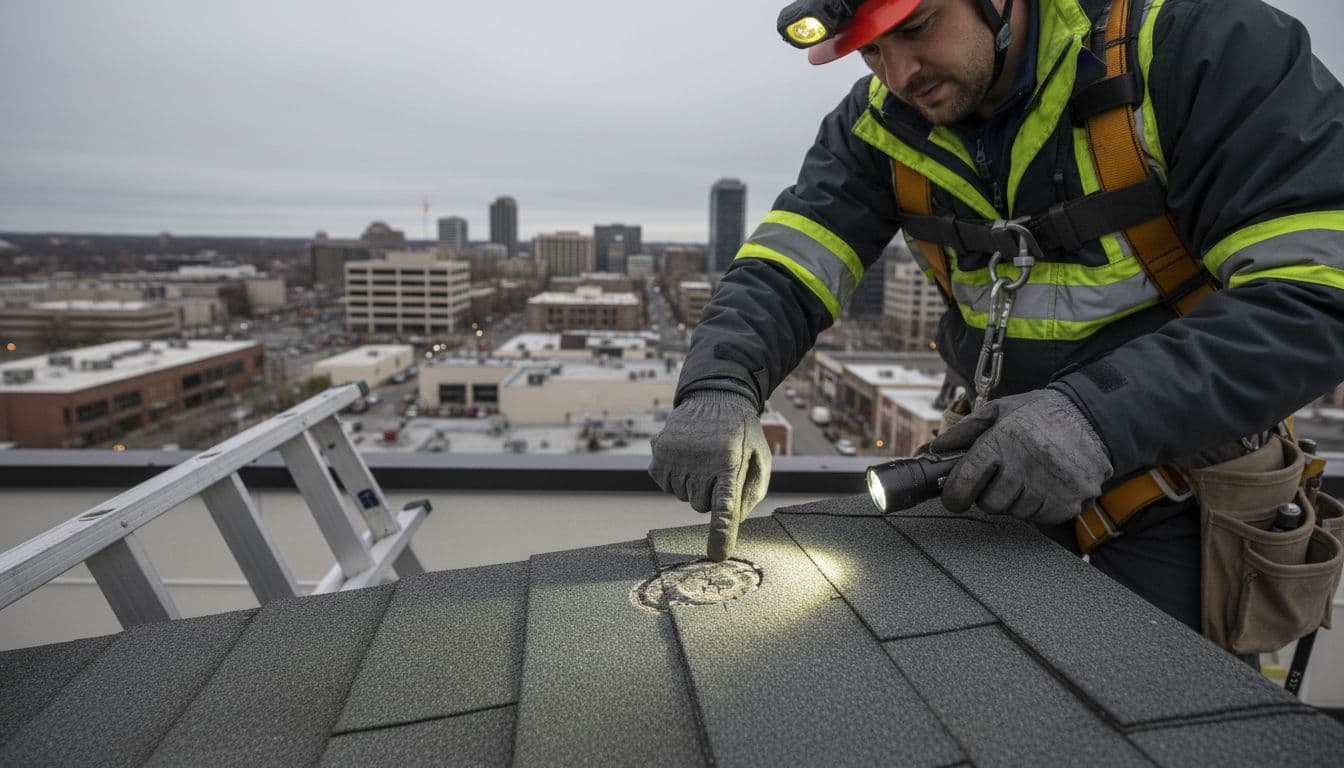
- Only access the roof when it’s safe. If unsure, consult a professional roofing contractor. Wet synthetic slate can be slick. Use proper fall protection and controlled access, especially on steep slopes.
Inspect shingles up close for true impact signatures
-
Scan the most exposed slopes first. Hail usually hits windward faces, ridges, and perimeter areas harder. If damage is “perfectly even,” it may be aging, not hail.
-
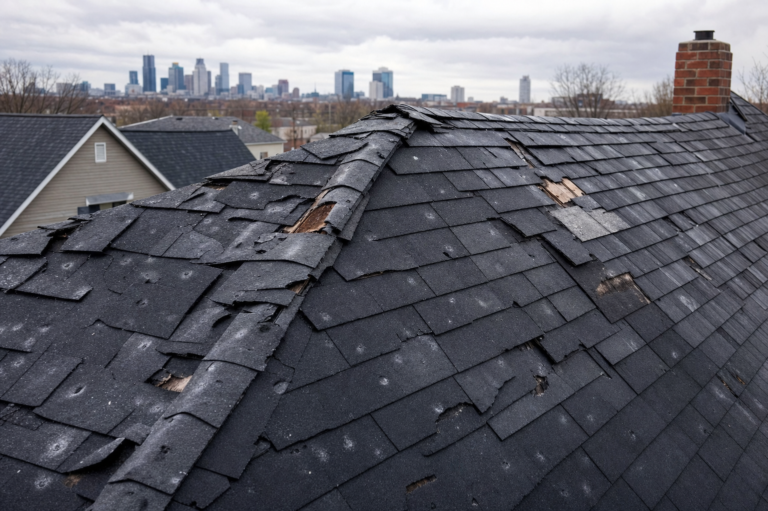
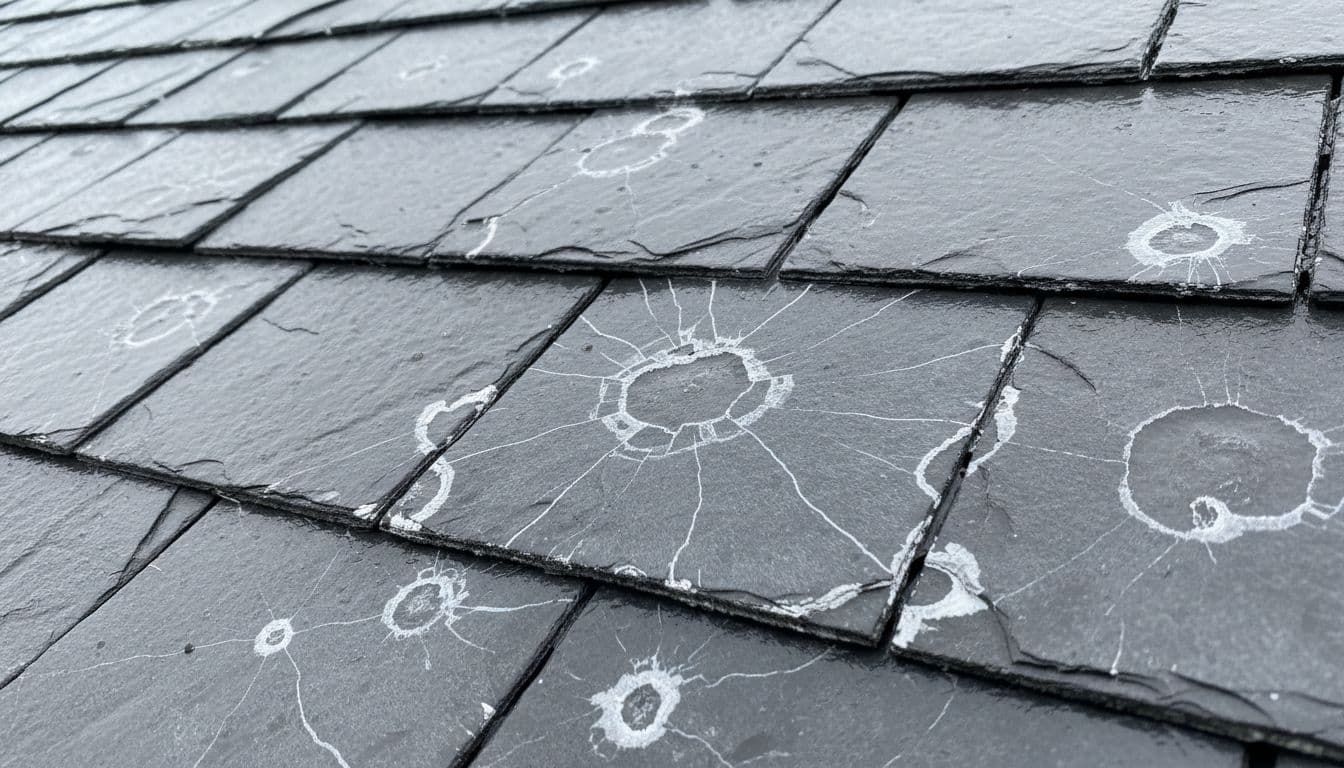
Look for edge chips and fractured corners. Fresh hail breaks often show a sharp, clean edge with less dirt embedded. Older wear looks rounded and stained.
-
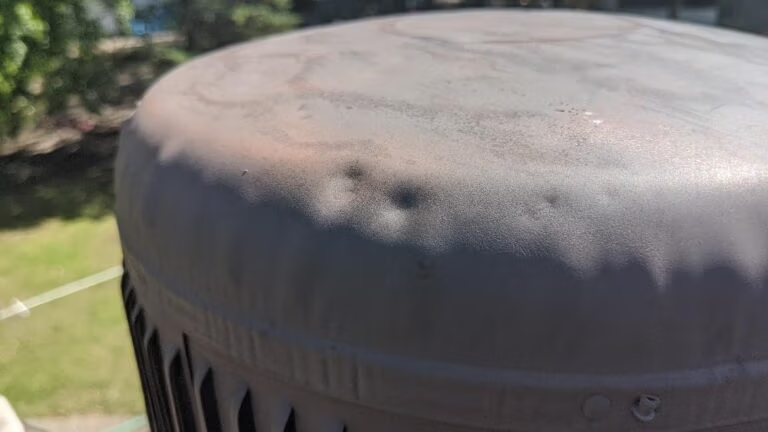
Check for “bruising” and scuffing. Many of these products are made from a polymer blend to provide premium durability and high impact strength, but some synthetic slate won’t shatter. It can compress or scuff where hail hits. Those spots can look dull, chalky, or slightly cratered.
-
Spot star cracks and hairline splits. Use angled light (flashlight or sun) across the surface. A crack can hide straight-on, then pop into view at a low angle.
-
Watch for delamination or surface lifting. Some products can separate in layers after impact. For context on separating hail damage from wear on slate-like materials versus natural slate, review hail impact vs wear delamination signs.
Confirm it’s hail (not foot traffic, heat, or manufacturing defects)
- Map the damage pattern by roof plane. Hail doesn’t follow tidy rows. It shows random strikes, clustered where wind drove stones, and lighter damage in sheltered zones.
- Rule out common look-alikes. Foot traffic often creates repeated scuffs in paths near HVAC or access points. Heat aging tends to fade large areas evenly. Manufacturing issues can repeat the same flaw on many shingles. Distinguish hail damage patterns from standard wear seen on natural slate.
- Photograph and count impacts the same way each time. Take a wide shot for location, then close-ups with a coin for scale. Count hits per 100 sq ft per slope so your notes stay consistent.
- Decide whether you need repair, testing, or replacement. If damage is isolated, targeted synthetic shingle replacement may work. If many slopes show fractures, it can push you toward commercial roof replacement on that steep-slope section of synthetic slate roofing, especially when matching becomes hard.
A quick reality check on “hail resistance”
Some synthetic slate is marketed as impact resistant, with a Class 4 hail rating or UL 2218 Class 4 standards, but “resistant” doesn’t mean “immune.” Hail size, wind speed, roof age, and installation details all change outcomes. This Q&A on how hail impacts synthetic slate does a good job explaining why the same storm can damage one roof and barely mark another. 13. Check related components that fail first. Even if the shingle faces look okay, inspect ridge caps, flashings, valleys, pipe boots, and skylight transitions. These often leak before the field shingles do.
</EXISTING_CONTENT>
FAQ
Can hail damage synthetic slate without breaking it?
Yes. Despite synthetic slate’s excellent UV resistance, fire resistance, and lifespan comparable to natural slate along with a typical 50-year warranty that surpasses asphalt shingles, hail can leave bruising, scuffs, or compressed impact points that don’t look dramatic. Over time, those spots can speed up cracking, water absorption, or surface wear, depending on the product.
When “minor” marks matter most
If the marks sit near laps, fasteners, or flashing edges, treat them more seriously.
What if I only see damage on one side of the building?
That often supports a hail claim, not the opposite. Wind drives hail, so one elevation can take most of the hits. Document the undamaged sides too, because the contrast helps confirm storm direction.
Could the marks be from maintenance crews instead of hail?
They could. On roofing material like synthetic slate made from rubber slate or recycled materials, traffic damage usually shows repeatable scuffs, aligned scratches, concentrated wear near access points, or signs like fading and curling. Hail damage appears more random and shows impact signatures like chips, fractures, and bruises.
How soon should I inspect after a hailstorm?
Inspect as soon as conditions are safe. Fresh breaks show clean edges before dirt and oxidation dull them. Early documentation also helps if interior leaks show up later.
What happens if I ignore suspected hail damage?
Small fractures can widen with freeze-thaw cracking and thermal movement. That can lead to recurring leaks at transitions, stained walls, and hidden deck damage. If moisture spreads to low-slope areas, the fix can shift from a simple shingle repair to broader commercial flat roof repair work.
Conclusion
To identify synthetic slate hail damage, focus on impact clues (chips, cracks, bruising) and a storm-consistent pattern across exposed slopes. Then document it in a way an adjuster or consultant can follow. When in doubt, treat the roof like a system, because flashings and transitions often fail first. Your best next step is a measured inspection of synthetic slate roofing before small hits become expensive water problems. Synthetic shingles offer a viable alternative to natural slate, but they require vigilant maintenance.
Need a roof inspection in Saint Paul or the Twin Cities? Call Sellers Roofing Company at +1-651-703-2336 or schedule a free estimate. We are a black-owned, NMSDC-certified MBE roofing contractor with 9+ years experience.