Last updated: 2026-08-01 by Ted Sellers, Owner
Yes, sometimes. In Minnesota, insurers often apply labor depreciation to a claim when the insurance policy mandates an Actual Cash Value settlement and the specific wording allows for it. When homeowners encounter roof claim labor depreciation, it is usually because the carrier has chosen to depreciate both materials and the labor required to install them. Conversely, if your insurance policy provides for a Replacement Cost Value settlement, labor is typically paid at current market rates, with any depreciation held back until the covered work is fully completed and documented.
Key Takeaways
- Policy Language is Paramount: Whether your insurance carrier can depreciate labor depends on the specific wording of your policy, with Actual Cash Value policies being the most susceptible to labor depreciation.
- RCV vs. ACV Distinctions: While Replacement Cost Value (RCV) policies often allow for the recovery of depreciation once the work is completed, Actual Cash Value (ACV) settlements may permanently exclude those costs.
- Scope Matters as Much as Depreciation: Often, an inadequate initial claim payment is caused by an incomplete scope of work rather than just depreciation; accurately documenting damage—especially on commercial roofs where water travels—is essential to ensuring a fair payout.
- The First Check Is Not Final: You have the right to review the adjuster’s estimate line by line. If the scope of damage is misidentified or labor is improperly depreciated, you can challenge the assessment by providing thorough documentation, such as moisture readings, photos, and professional contractor assessments.
When This Applies
Who usually sees labor depreciation on roof claims
Labor depreciation shows up most often on policies governed by Actual Cash Value. That includes homeowner claims and commercial property files. The roof type does not control the answer; the policy language is what dictates how the valuation is calculated. When an insurance company applies Actual Cash Value, they are attempting to determine the value of the property at the time of loss, which often leads to debates regarding whether labor costs should be subject to the same reduction as materials.
You can see it on estimates for asphalt shingles, metal roofing, and almost any commercial flat roof assembly. That includes TPO roofing, EPDM, modified bitumen, and BUR. It can also appear on scopes that include commercial roof repair, commercial roof replacement, commercial roof restoration, or commercial roof coatings after a covered loss.
This discussion fits first-party property claims. It does not answer contractor warranty disputes or third-party liability losses.
This quick comparison is where most confusion starts:
| Claim basis | How labor is often treated | What the first check looks like |
|---|---|---|
| Actual Cash Value | Labor may be depreciated if the policy allows it | Lower initial payment |
| Replacement Cost Value | Labor is usually priced at current rates | Depreciation may be recoverable later |
The first payment is not always the whole payment. On many policies, the missing amount is a holdback, not a denial.
When labor depreciation usually does not apply
If your policy pays based on Replacement Cost Value, labor is less likely to stay depreciated at the end of the claim. After the work is done, the carrier often releases the Recoverable Depreciation. That is common after residential roof replacement, residential roof repair, or a documented commercial roof inspection that confirms the full scope.
What can still reduce the check
A higher payout does not mean a full payout. Every applicable deductible still applies. So do exclusions, age limits, cosmetic damage language on some metal systems, and non-covered upgrades.
Some Minnesota policies split the claim. A house may be settled at replacement cost while an older accessory structure is settled at an actual cash value basis. Commercial forms can do the same through endorsements on certain roof sections or assemblies.
Minnesota exceptions that change the answer
Minnesota is not a one-line state on this issue. Carriers often point to specific case law decisions that let claims be calculated as a fact-based value, not a rigid formula. This involves evaluating the physical depreciation of the materials based on their remaining life expectancy. That is why roof claim labor depreciation often turns on the specific wording found in your policy, not on a slogan from an adjuster or contractor.
A hail damage roof claim and a storm damage roof claim can both end up under-scoped if hidden damage is missed. On low-slope roofs, water may enter at one seam and show up far away at the ceiling. That matters because the final claim payout may miss tear-off labor, wet insulation, or flashing work if the estimate is based on incomplete information. For more background, see this Minnesota labor depreciation overview and this labor depreciation case roundup.
If the estimate depreciates labor, don’t assume the carrier is right. Don’t assume it’s wrong. Read the policy form first.
Step-by-Step
1. Check whether the policy pays Actual Cash Value or Replacement Cost Value
Start with the declarations page and the estimate summary. Look for Actual Cash Value, Replacement Cost, or both. Across Minnesota roofing claims, those two labels decide whether labor can be reduced on the front end.
Two places the answer hides
The declarations page tells you the settlement basis. The estimate shows how the carrier applied it. If the policy is Replacement Cost Value but the first payment is limited to the Actual Cash Value, the balance may be recoverable after the work is done.
If the estimate and policy do not match, ask the adjuster to point to the exact Policy Language. That request is simple, and it often clears up the dispute fast.
2. Read the labor lines, not only the roof total
A low check does not always mean the Material Costs are wrong. The labor columns may be where the money disappeared. Read the estimate line by line.
On homes, look for tear-off, steep-charge, disposal, flashing, and underlayment labor. On commercial files, read the lines for membrane removal, insulation replacement, edge metal, and seam work. That matters on TPO roofing, EPDM, modified bitumen, BUR, and metal roofing because labor drives a large share of the job cost, while Material Costs are often adjusted based on the remaining Useful Life of the components.
Watch for labor depreciation hidden inside bundled line items. Edge metal, vent work, flashing resets, and removal labor may be reduced without a bold note at the top. On a complex file, that can cut thousands from the Initial Payment.
This is also where scope errors start. A carrier may price a patch while your contractor documents a broader commercial roof repair or a full commercial roof replacement. The same thing happens when a carrier prices a coating while the roof needs section replacement, not commercial roof coatings or a light commercial roof restoration.
3. Match the estimate to the actual damage, not the stain inside
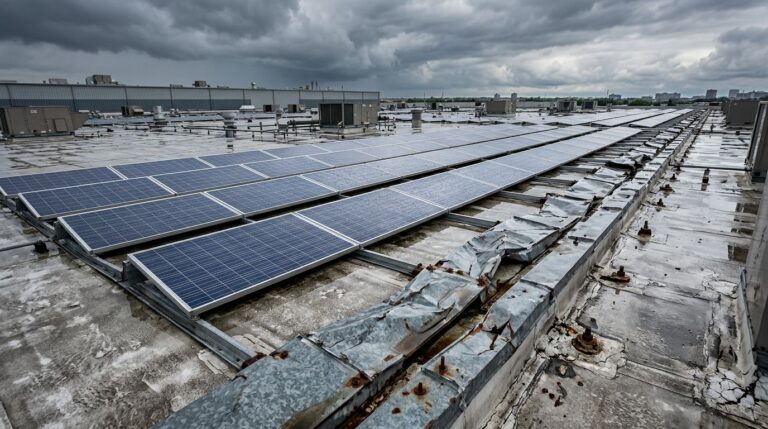
A ceiling stain is a clue, not a map. On a large commercial flat roof, water can move along seams, cover board, insulation, or metal deck flutes before it drops inside. If the adjuster scopes only the area above the stain, labor and material counts can both come in low, resulting in an inadequate Initial Payment.
That problem shows up after hail, wind, and freeze-thaw cycles. In Minnesota, ice, backed-up drainage, and failed details after ice dam removal can blur the source even more. If the leak path is unclear, use commercial roof leak detection services before approving the final Supplement to the scope.
Inside water marks show where the leak exited, not always where it started.
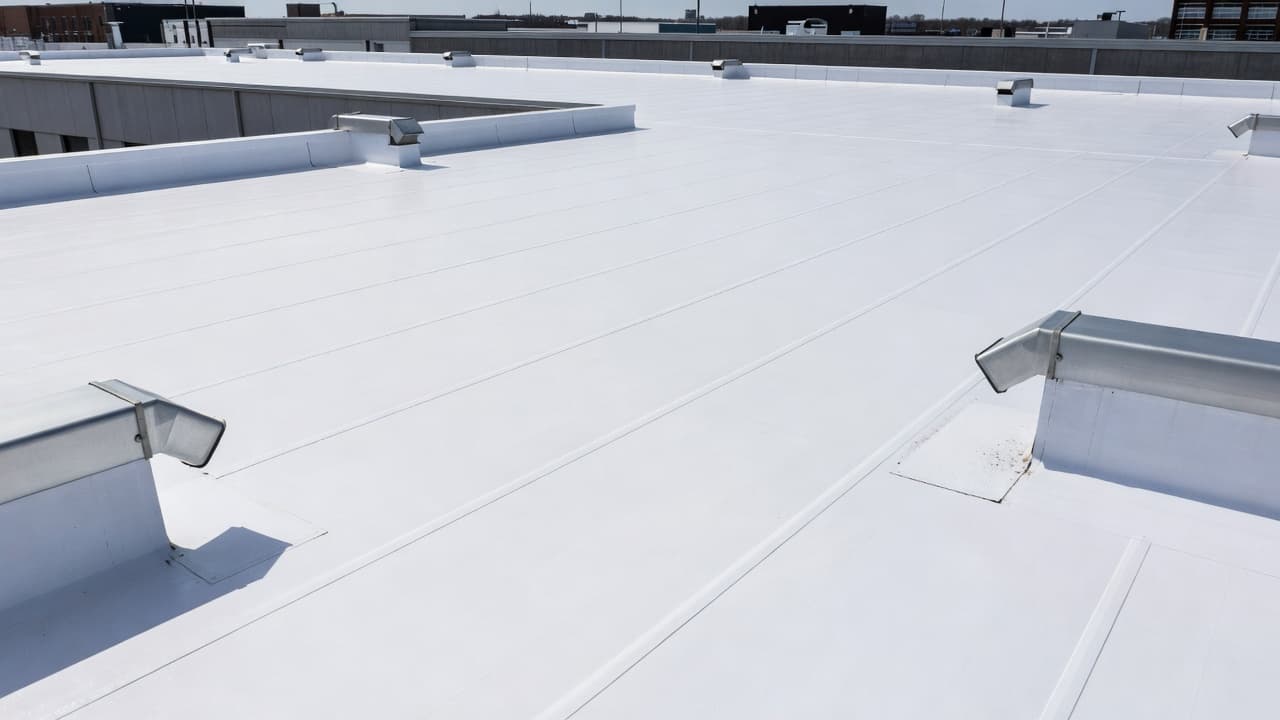
If the roof is actively leaking, protect the building first. Temporary drying, tarping, and emergency sealing are reasonable. For urgent water entry, Call 651-703-2336 for 24/7 Emergency Roofing.
4. Build the file before you challenge the depreciation amount
Photos, weather dates, moisture readings, and clean Documentation win arguments. Opinions alone do not. If the roof was dry before the storm and wet after it, document that chain. Thorough Documentation is essential to justify a full Roof Replacement.
This matters in Saint Paul roofing, Minneapolis roofing, and broader Twin Cities roofing work because Minnesota weather stacks causes together. Wind can lift a seam. Hail can bruise membrane or crack a flashing corner. Snow and thaw can push water into the same opening days later.
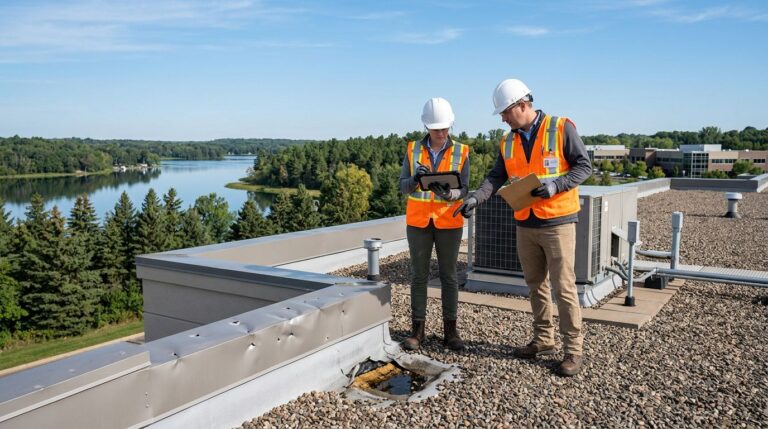
For commercial owners, a second scope from a contractor who knows occupied buildings is often worth it. Sellers Roofing Company, 801 Transfer Road, Saint Paul MN 55114, was established in 2017 and has completed 1,100+ roofs, 801 residential and 300 commercial. The company holds MN License 803862, works with IUPAT Local 96 Roofers, Carpenters Local 322, and Laborers Local 563, and many owners prefer that union-built roofing model on active properties. If you need a documented second opinion, Get a Free Commercial Roof Inspection is a practical next step.
Homeowners should ask the same questions. Is the roofer GAF certified or otherwise manufacturer-approved? Does the estimate separate what is damaged from what is old? Good files help on both residential roof repair and replacement claims.
5. Know what changes the final payout
The first check is often not the last one. If the policy includes Recoverable Depreciation, you may receive those withheld funds after the Contractor Invoice and Proof of Completion are submitted to the carrier. If the policy only allows for Non-recoverable Depreciation, the lower number may be final unless the scope is proven inaccurate. Remember that the homeowner is still responsible for the Deductible regardless of the depreciation terms.
That distinction matters on every roof insurance claim, but it matters more on large commercial jobs. Hidden wet insulation, code-required changes, and mismatched repair assumptions can turn a small request into a major one. A patch price may not fit a roof that needs broader section work.
Betterment is not the same as covered damage
Do not mix covered loss with elective upgrades. If you move from basic repair to custom metal, designer shingles, or a non-required redesign, the insurer may pay only the like-kind portion.
Timing matters too. This Minnesota roof claim payment timeline gives a reasonable frame for first and follow-up payments. Keep every invoice, moisture map, photo, and change order until the claim closes.
Conclusion
Insurers in Minnesota may depreciate labor on a roof claim, but this practice typically occurs within an Actual Cash Value settlement rather than a Replacement Cost Value adjustment. Ultimately, the specific policy language serves as the primary authority for how these costs are handled during your claim payout. Always verify the terms of your agreement to ensure the carrier is following the correct protocols for your specific situation.
If the estimate seems insufficient, investigate the settlement basis first. You should also examine the damage path, as an inaccurate scope can impact your final recovery more significantly than individual line item depreciation. Remember that carriers often weigh the market value of the materials against the cost of labor when determining the fair market value of the loss, and any discrepancies in the initial scope can lead to an inadequate settlement.
FAQ
Can an insurer depreciate labor on both home and commercial roof claims?
Yes. The issue is not limited to houses. Labor depreciation can show up on claims for asphalt shingles, metal roofing, and commercial membranes such as TPO, EPDM, modified bitumen, and BUR if the policy pays Actual Cash Value rather than Replacement Cost Coverage.
What if my commercial estimate prices a patch, but the roof needs more?
Ask for a reinspection and support it with photos, moisture readings, and a contractor scope. On a commercial roof, water often travels away from the opening. That is why the first estimate can miss wet insulation and understate labor.
Does labor depreciation change after hail or wind?
The cause of loss does not erase the ACV versus RCV issue. What hail and wind do change is scope. A hail damage roof may need new flashings or insulation. A storm damage roof may need seam work, edge metal, or broader tear-off labor. When evaluating Roof Claim Labor Depreciation, insurers often assess the total Contractor Invoice to determine if the labor costs were reasonable for the scope of work performed.
Is emergency work covered, or will the insurer call it maintenance?
If the roof is leaking now
Reasonable mitigation is usually the right move. Tarping, drying, and small temporary repairs help stop added damage. Save photos and receipts before permanent work hides the cause.
Can I recover withheld depreciation after the roof is replaced?
Usually yes, if the policy is RCV and you meet the carrier’s deadline. Send the final invoice and Proof of Completion. This recovery process is standard for a Roof Replacement, as it ensures the insurer is paying for actual repairs rather than anticipated Wear and Tear. This applies to a home project and to a large commercial file, whether the job ended in repair, replacement, or a covered section rebuild.
Need a roof inspection in Saint Paul or the Twin Cities? Call Sellers Roofing Company at +1-651-703-2336 or schedule a free estimate. We are a black-owned, NMSDC-certified MBE roofing contractor with 9+ years experience.