Last updated: 2026-08-01 by Ted Sellers, Owner
Yes. A hail damage TPO roof can stay watertight at first because hail often bruises the membrane, stresses welded seams, or compresses insulation without making an open hole. Leaks may show up later, when heat, foot traffic, ponding water, or another storm turns that hidden damage into a path for moisture.
When This Applies
This is most common on commercial TPO roofs after a strong hailstorm
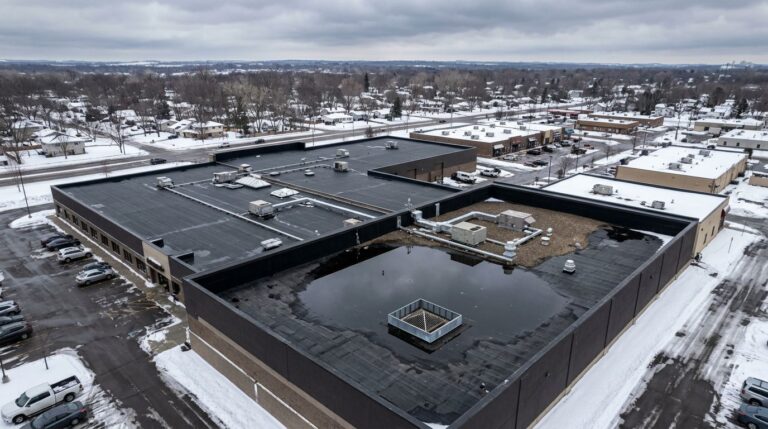
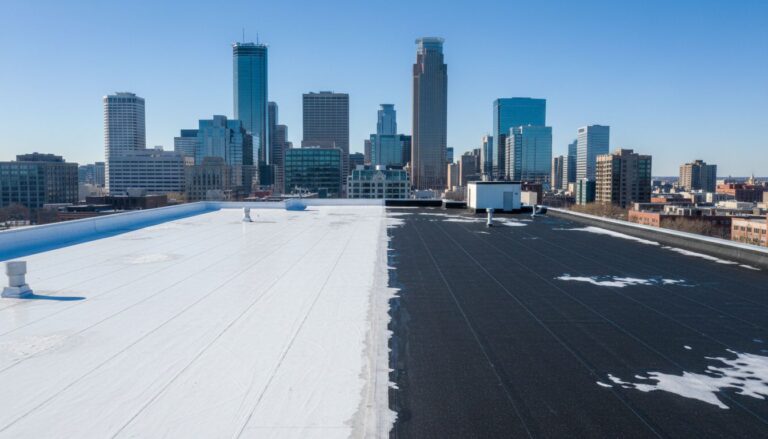
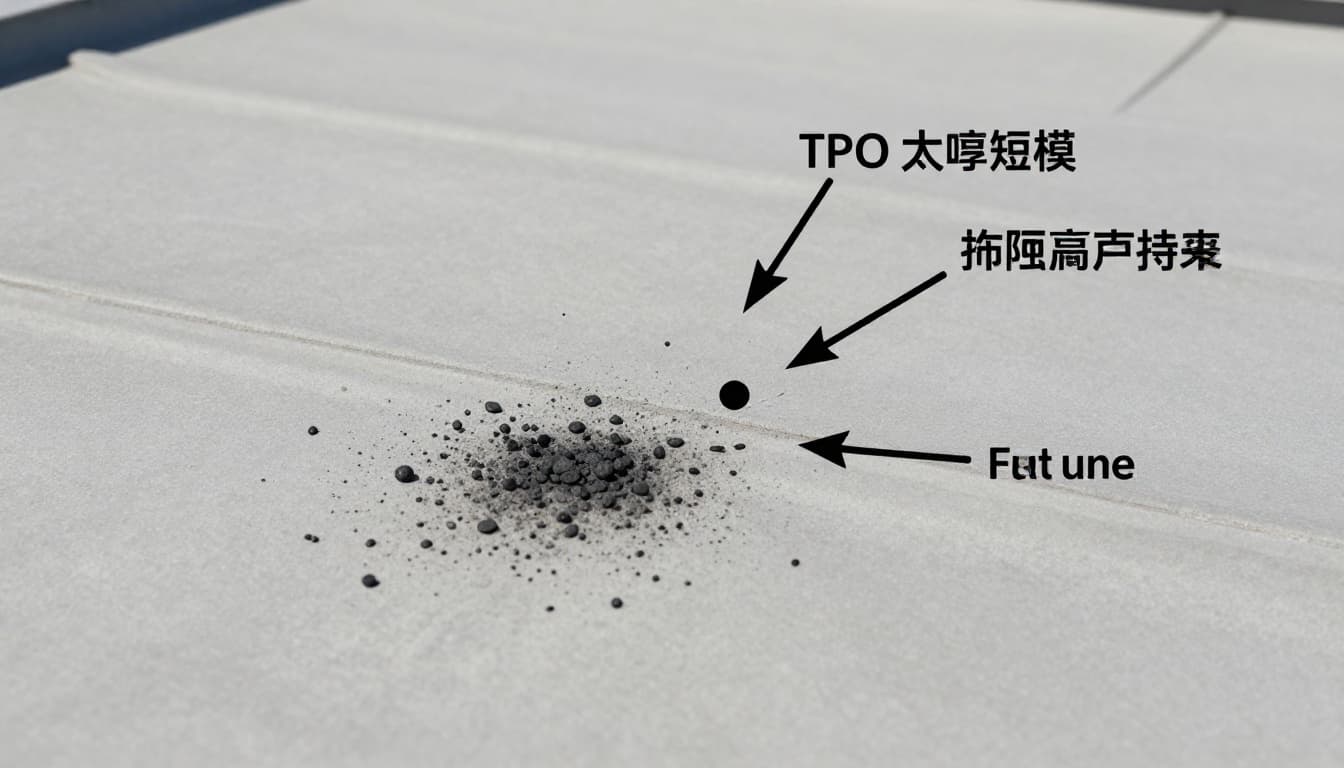
This matters most if you own or manage a low-slope building with white or light-colored TPO. On these roofs, hail can leave scuffs, splatter marks, shallow dimples, or stretch marks that don’t leak the same day. As this industry overview of impact damage on single-ply membranes explains, impact can weaken the system before water shows up inside.
White membranes also make subtle splatter easier to see. Still, surface marks alone don’t tell the full story. What matters is whether the hit changed the membrane, a seam, or the layer below.
A warehouse, office, school, or retail site with rooftop equipment faces more risk. Hail often hits hardest around curbs, drains, and walkway edges, where movement already stresses the roof.
It doesn’t apply the same way when the roof already has open damage
If the membrane is punctured, split, or pulled loose at a seam, you’re past the “hidden damage” stage. The same is true if ceiling stains, wet insulation, or interior drips already exist. Then the issue isn’t whether leaks will happen. It’s how far moisture has already traveled.
Older roofs can also blur the picture. Age, UV wear, and past repairs may weaken the membrane before the storm ever arrives. In that case, hail may be the trigger, not the whole cause.
A few edge cases can speed up or delay leaks
Large, dense hail can bruise a membrane without tearing it. Soft insulation can compress under impact and create low spots that hold water. Wind-driven hail can also damage flashing and terminations before the field membrane shows much change.
No leak today doesn’t mean no roof damage.
Because water moves sideways on low-slope systems, the source may be far from where the leak later appears. That’s why many owners only learn a commercial roof needs repair weeks after the storm.
Step-by-Step
1. Record the storm details and roof condition
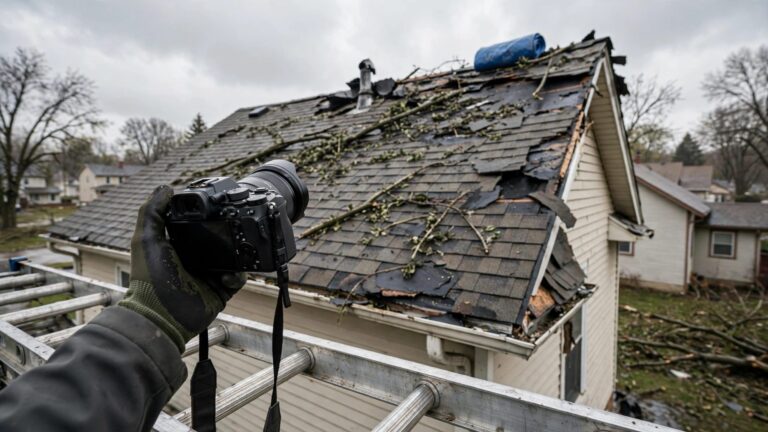
Save weather reports, note hail size, and photograph the roof as soon as it’s safe. Also gather your last inspection records and repair history. Keep photos of rooftop units, drains, and metal edging too. That timeline helps separate fresh storm damage from older wear.
2. Look for impact clues, not just holes
From safe access points, check for scuffs, splatter marks, dented metal, cracked accessories, and stressed seams. Don’t rely on an interior walk-through alone. A TPO roof can look intact while still being weakened.
Pay extra attention to these areas
Inspect around drains, HVAC curbs, skylights, walk pads, and roof edges. Those spots move more than the open field, so hail damage there can turn into leaks faster.
3. Get targeted moisture testing before the next storm
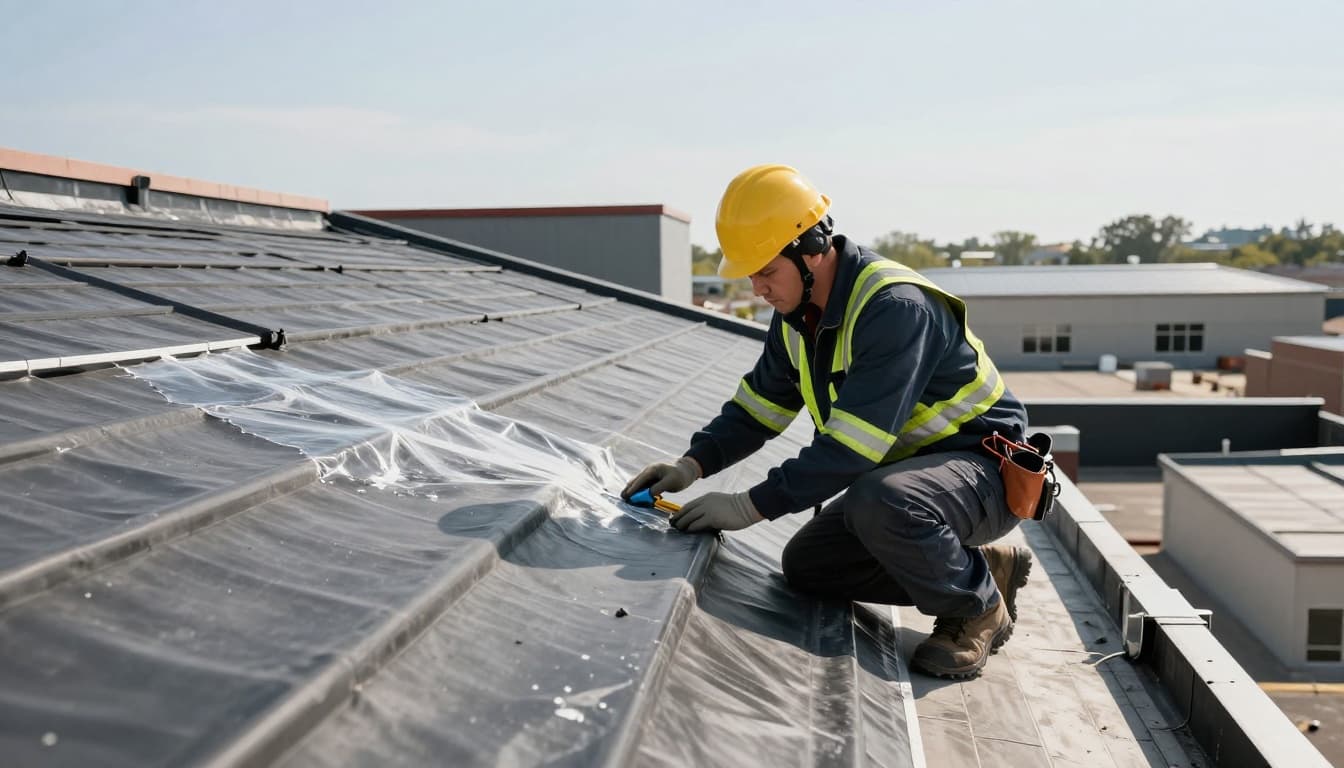
A visual walk won’t always find wet insulation or a seam that opened by a fraction. That’s why commercial roof leak detection matters after hail, even when the ceiling is dry. On flat roofs, trapped moisture can spread under the membrane before anyone sees a stain.
Infrared or electronic testing can help locate hidden trouble. That early proof also gives you better repair options.
4. Match the fix to the damage pattern
If the damage is isolated and the insulation is dry, commercial flat roof repair may be enough. If hail weakened large sections, opened several seams, or soaked the roof assembly, a patch may only delay a larger bill. Temporary fixes can buy time, but they shouldn’t replace a plan.
When damage is broad, commercial roof replacement often makes more financial sense than repeated emergency calls. If you need a second opinion on scope and timing, a team that handles Saint Paul commercial roof replacement can compare repair, restoration, and full replacement based on the roof’s age and condition.
Frequently asked questions after a hailstorm
Can hail damage the insulation under TPO without puncturing the top layer?
Yes. The membrane may survive the hit while the insulation compresses below it. That can create soft spots and low areas that collect water later.
If the building stays dry, can we wait a few months?
Waiting raises the risk. Heat, freeze-thaw cycles, and service traffic can turn minor impact damage into seam failure. Fast documentation also helps with insurance.
Will insurance require an active leak before it counts as damage?
Not always. Many claims depend on storm dates, photos, test results, and proof of functional damage. A roof doesn’t need to drip in the lobby before the loss is real.
How soon should a commercial TPO roof be inspected after hail?
Within 24 to 72 hours is best, once roof access is safe. Fresh impacts are easier to document, and you still have time to stop more damage before the next rain.
If the hail was large or wind-driven
Move faster when metal flashings, skylights, or rooftop units also took hits. Those details often fail before the field membrane does.
Can a coating cover hail damage instead of repair work?
Sometimes, but only when the membrane is still sound and dry. A coating won’t fix wet insulation, broken seams, or damaged flashing. Used in the wrong place, it only hides the problem.
What to Do Next
Don’t wait for the first drip
A leak is often the last sign, not the first. Think of hail damage like a bruised tire. It may still hold air today, but the weak spot is already there.
Document the storm, get the roof checked, and decide early whether repair or replacement makes sense for your building. Acting while the damage is still contained is usually the cheapest move.
Need a roof inspection in Saint Paul or the Twin Cities? Call Sellers Roofing Company at +1-651-703-2336 or schedule a free estimate. We are a black-owned, NMSDC-certified MBE roofing contractor with 9+ years experience.