Last updated: 2026-08-01 by Ted Sellers, Owner
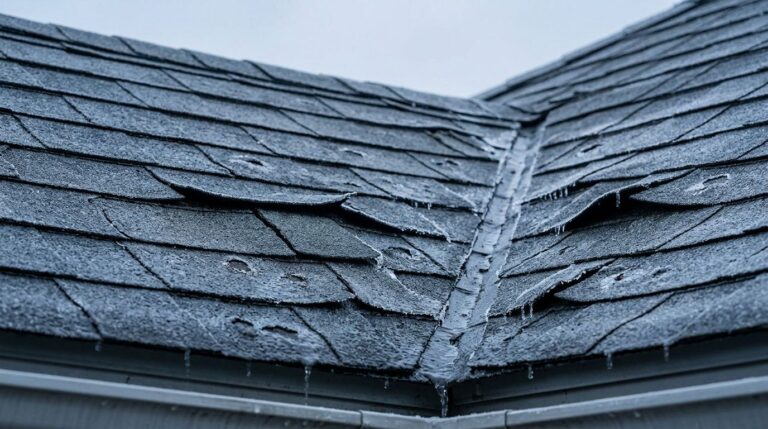
Yes. Hail damage, a common form of storm damage, can weaken a roof without cracking asphalt shingles or leaving obvious holes. Impacts can bruise the shingle mat, knock off protective granules, loosen fasteners, and stress seams and flashing. On low-slope commercial roofs, hail can cause small punctures or membrane fractures that stay hidden until leaks, wet insulation, or HVAC curb problems show up later.
When This Applies
It’s most common on commercial buildings after “small” hail or storm damage
This applies to many commercial owners because your roof is built like a layered system. Hail can harm one layer while the surface still looks fine from the ground. That’s especially true on older roofs, roofs with foot traffic, and buildings with lots of penetrations (HVAC units, vents, skylights).
If you manage a facility, retail site, warehouse, or multi-tenant property, hidden hail damage matters because it often shows up as energy loss, recurring leaks, or shortened roof life. A “no broken shingles” view can still lead to your next budget line item being commercial flat roof repair, or in worse cases, a full commercial roof replacement.
A good rule: if hail hit hard enough to leave marks on soft metals (gutters and downspouts, roof vents, roof caps), it hit hard enough to stress roofing materials too.
When it usually doesn’t apply (or is less likely)
Some scenarios reduce the chance of meaningful hidden damage:
Newer, impact-rated systems with clean drainage
If your roof is newer, features impact-resistant shingles or class 4 shingles with documented impact ratings, and drains fast, minor hail may leave little to no lasting harm. Even then, curb flashings and seams can still take a hit.
Hail that was brief, small, and wind-free
Short events with small hail and low wind are less likely to cause functional damage, especially on thicker membranes. Still, “less likely” isn’t the same as “no risk,” because localized hits can happen.
How Hail Damages a Roof Without Breaking Shingles
Bruised Shingles: damage you can’t see from the parking lot
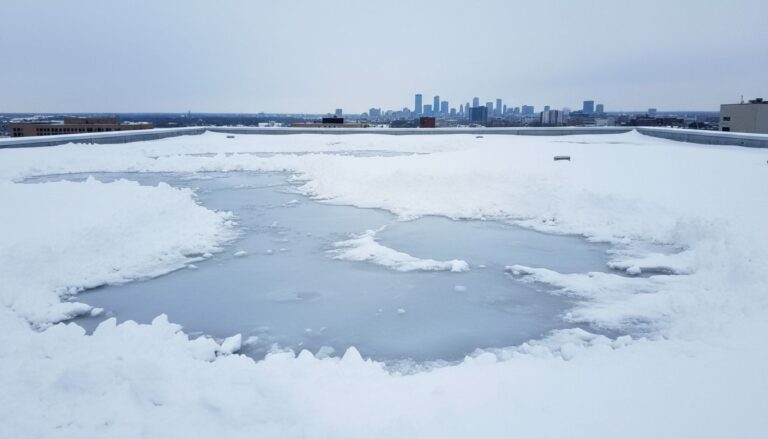
Think of hail like a hammer tap on a layered sandwich. The top can look normal, while the layer underneath compresses. On asphalt shingles, that can mean a bruise in the mat beneath the shingle granules that weakens waterproofing. On commercial low-slope roofs, hail impact can leave membrane marks that turn into splits after the next freeze-thaw cycle.
The tricky part is that bruising can be hard to confirm without a close inspection and trained touch. That’s why many owners use documentation-based inspection methods described in references like InspectApedia’s hail damage identification guidance.
A roof doesn’t have to “look destroyed” to start failing. Hail damage can reduce remaining service life first by compromising structural integrity, then cause leaks later.
Granule loss: the slow leak before the leak
Even without cracked shingles, hail can knock off granules. Those granules protect the asphalt from sun and weather. Once they’re gone, shingles dry out and age faster. You might not notice right away, but months later you can see accelerated wear, brittle edges, and exposed asphalt.
For commercial owners, that often turns into a “why is this roof suddenly acting old?” problem. If your maintenance team is chasing small water stains, it can be a sign your commercial roof needs repair, even if the surface still seems intact.
For additional industry background on how hail affects different roof systems, see Professional Roofing’s article on identifying hail damage.
Low-slope membranes can hide punctures and seam stress
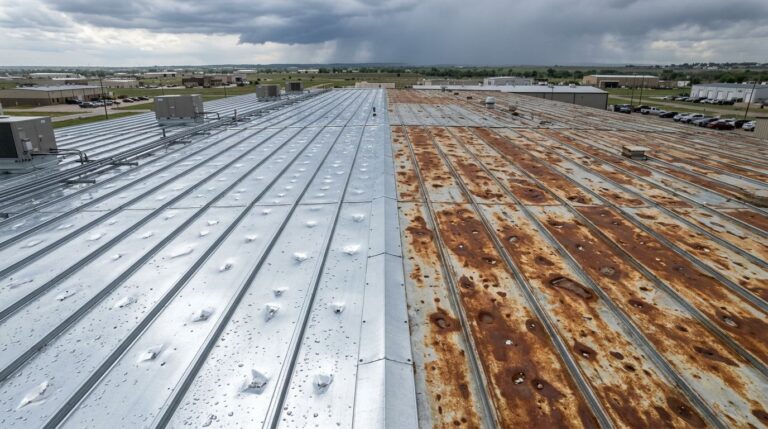
On TPO, PVC, EPDM, and modified bitumen systems, hail may not leave dramatic “holes.” Instead, it can cause tiny punctures, fractured surfacing, or seam stress that later opens under thermal movement. Add rooftop equipment vibration and foot traffic, and small weak points can grow.
If you want a local starting point for options after a storm (inspection, repair, replacement planning), review the service scope on Saint Paul commercial roofing experts.
Step-by-Step
A practical post-hail process for business owners
- Confirm the storm details. Note date, time window, hail size reports, and wind direction if you know it, because impact patterns matter for hail damage.
- Document collateral damage at ground level. Photograph dented gutters and downspouts, rooftop units (from safe angles), window wraps, soft metal caps, and siding marks. Insurers often weigh this heavily.
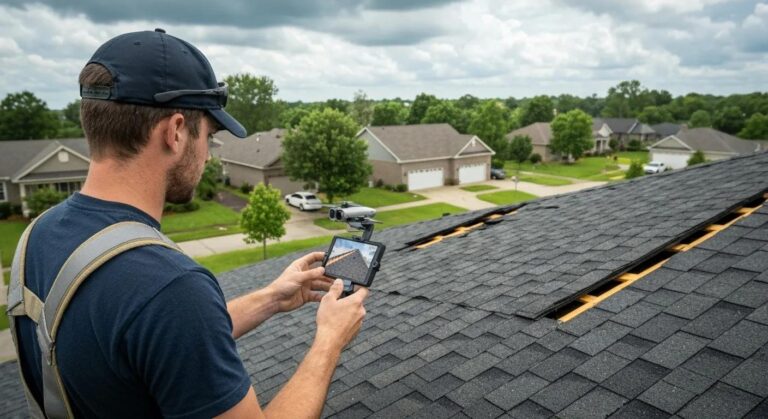
- Do a safe preliminary roof inspection of the roof surface. Use binoculars or drone footage if possible. Look for disturbed granules near downspouts, membrane scuffs, flashing displacement, and unusual dark circles or “splatter” marks.
- Check inside the same day and again after the next rain. Walk top-floor perimeters, inspect ceiling tiles for interior water damage, and look for damp odors. On commercial buildings, water can travel far before it shows.
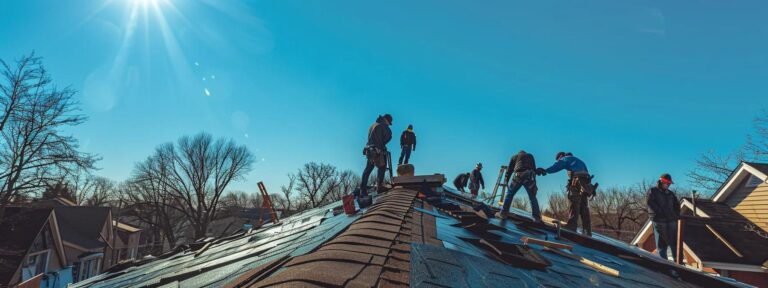
- Bring in a professional roofing contractor or HAAG-certified inspector if anything feels off. Hidden moisture in insulation can spread quietly. Have them perform leak-finding and a thorough roof inspection. A targeted assessment like commercial roof leak detection Saint Paul can help you avoid repairing the wrong area.
- Separate short-term stabilization from long-term decisions. Temporary patches from your roofing contractor can stop active intrusion, but they don’t prove the roof is fine. Decide next steps using condition, age, and scope, not hope.
If you only fix what you can see, you may pay twice, once for the patch, then again when the water intrusion in wet insulation forces a larger tear-off.
FAQ
How can I tell if hail damage is “functional” versus cosmetic?
Functional hail damage changes water shedding, seam integrity, or membrane watertightness, such as cracks in wood shingles or dents in metal components. Cosmetic damage is surface marking without performance loss. A pro usually confirms the difference through close inspection, test cuts or samples when needed, and moisture checks.
Will insurance cover hail damage if there are no broken shingles?
Often, yes, if you can document storm date and damage indicators to support your insurance claim. Coverage depends on your policy and proof. Strong photos of collateral damage plus a roof report helps with filing an insurance claim. For inspection standards used by many inspectors, see InterNACHI’s hail damage inspection education.
What if my flat roof has no punctures, should I still worry?
Yes. Hail can stress seams, damage flashing at curbs, and bruise insulation under the membrane, leading to soft spots. Those issues may show up later as recurring leaks, especially near drains and penetrations.
How soon should I schedule an inspection after hail?
Schedule a roof inspection as soon as the roof is safe to access. Early documentation helps with claims and reduces the chance that normal wear gets blamed for hail impact. Also, prompt repairs can prevent wet insulation from spreading.
When does hail push a building toward replacement instead of repair?
Replacement becomes more likely when impacts are widespread across multiple sections, moisture mapping shows saturated insulation in many areas, or the roof is near the end of its expected service life, potentially causing roof leaks. At that point, repeated commercial flat roof repair attempts may cost more than a planned roof replacement or full commercial roof replacement.
Hail doesn’t need to “break” shingles to cause real trouble like roof leaks. The smarter move is to treat hail damage like hidden plumbing: verify it early, document it well, then fix the true source before operations, tenants, or inventory pay the price.
Need a roof inspection in Saint Paul or the Twin Cities? Call Sellers Roofing Company at +1-651-703-2336 or schedule a free estimate. We are a black-owned, NMSDC-certified MBE roofing contractor with 9+ years experience.