Last updated: 2026-05-26 by Ted Sellers, Owner
A severe hailstorm rolls through the Twin Cities, and your roof takes a beating. Everything looks fine from the ground, but weeks later, you notice a water stain spreading across your ceiling. So, can hail damage cause roof leaks? The short answer is yes, and often, the damage isn’t obvious until it’s already causing problems inside your home.
Hail creates hidden vulnerabilities in your roofing materials. Cracked shingles, bruised granule layers, and compromised seals may not leak immediately, but they break down your roof’s defenses over time. Understanding what to look for, and when leaks typically appear, can save you from costly repairs down the road.
At Sellers Roofing Company, we’ve spent over 18 years helping Saint Paul homeowners and businesses assess storm damage and navigate the insurance claim process. This guide covers the signs of hail damage, the timeline for leaks, and what steps to take after a storm hits your property.
Why hail damage can lead to roof leaks
Your roof functions as a multi-layered defense system against Minnesota’s harsh weather. Each component, from the granule-coated shingles to the underlayment beneath, works together to keep water out. When hail strikes, it disrupts this system in ways that aren’t always visible from the ground. A single hailstone traveling at 100 mph carries enough force to crack shingles, dislodge protective granules, and create weak points that water will eventually exploit.
The Protective Barrier Gets Compromised
Hail strips away the granule layer on asphalt shingles, which acts as your roof’s first line of defense against UV rays and moisture. Without this layer, your shingles age faster and become brittle. The impact also creates microcracks in the shingle surface that you can’t see without a close inspection. These cracks allow water to seep into the underlayment, where it sits and slowly degrades the materials below.
Once the granule layer is compromised, your shingles lose their ability to shed water effectively, making leaks almost inevitable.
Damage Creates Entry Points Over Time
The question “can hail damage cause roof leaks” comes down to understanding that most leaks develop gradually. Hail doesn’t have to punch a hole through your roof to create a leak. Instead, it weakens the seals around flashing, dents metal vents, and bruises shingles until they lift or curl.
Water then wicks under these damaged areas during rain or snowmelt, finding its way through the smallest gaps. Minnesota’s freeze-thaw cycles make this worse, as trapped moisture expands when it freezes, widening cracks and accelerating deterioration. You might not see water inside your home for weeks or even months, but the damage is already working against you.
How hail damages shingles and roof components
Hail creates three distinct types of damage depending on the size of the hailstones and the age of your roofing materials. Understanding these damage patterns helps you recognize why the question “can hail damage cause roof leaks” matters so much after a Minnesota storm.
Small hail (under 1 inch) bruises the granule surface without cracking shingles. Medium hail (1 to 2 inches) creates visible mat fractures where the asphalt layer splits beneath the surface. Large hail (over 2 inches) can tear shingles completely or punch through to the underlayment below.
Physical Impact on Shingles
When hail strikes your roof, it compresses the asphalt mat beneath the granules, creating soft spots that weaken with each subsequent rain cycle. You might see circular dents that look like bruises, where the protective granules have been displaced but the shingle hasn’t cracked yet. These bruised areas lose their waterproofing ability long before visible cracks appear, allowing moisture to penetrate and deteriorate the underlying materials.
Bruised shingles may look intact from ground level, but they’ve already lost the structural integrity needed to keep your home dry.
Damage Beyond Shingles
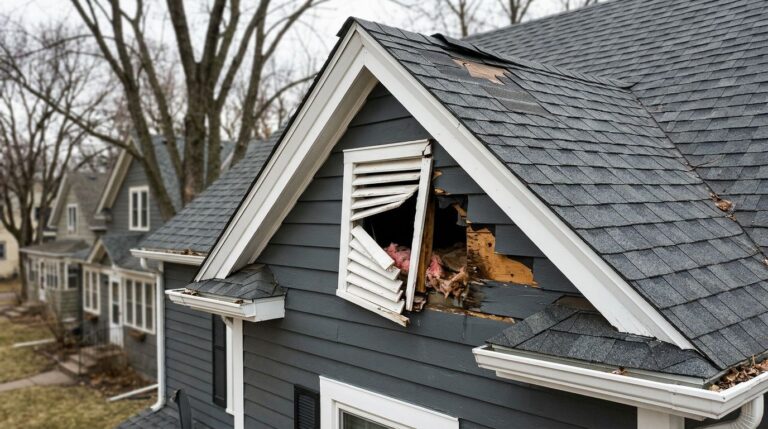
Hail doesn’t discriminate. It dents metal flashing around chimneys and vents, compromises rubber boot seals on pipe penetrations, and cracks the plastic housing on attic ventilation systems. These components are just as critical as your shingles for keeping water out.
Signs of hail damage that often predict leaks
Identifying hail damage before it turns into a leak requires knowing what to look for on your Saint Paul roof. Most homeowners miss the early warning signs because they expect obvious holes or missing shingles. The truth is, hail damage shows up in subtle ways that predict future leaks long before water enters your home. Learning to spot these indicators helps you address problems while repairs are still manageable and insurance claims are easier to document.
What You’ll See From Ground Level
Look for dark spots on your shingles where granules have been knocked away, exposing the black asphalt underneath. You might notice shingles with corners that curl upward or edges that lift away from the roof deck. Dented gutters and downspouts signal that hail hit your property hard enough to damage metal, which means your shingles likely sustained similar impact. Check the ground around your foundation for granule accumulation, resembling coarse sand that washes off damaged shingles during rain.
Close-Up Damage Patterns
A professional inspection reveals bruised shingles with soft spots that compress under finger pressure. Cracked or split shingle tabs indicate severe impact that will leak within months.
Hail damage isn’t always immediately visible, but the patterns it creates consistently lead to leaks if left unaddressed.
When leaks show up after hail and what affects timing
The timeline between hail impact and water appearing inside your home varies dramatically based on roof age, storm severity, and weather patterns following the initial damage. Some leaks appear within days if the hail punched through underlayment or cracked shingles completely.
Most leaks develop over weeks or months as damaged areas deteriorate through Minnesota’s rain cycles and temperature swings. Understanding this timeline explains why homeowners often ask “can hail damage cause roof leaks” long after the storm has passed.
Immediate vs. Delayed Leak Timeline
Severe hail damage creates leaks within 24 to 48 hours during the next rainfall. You’ll see water stains or dripping in your attic if hailstones tore through multiple roof layers. Moderate damage takes longer, typically showing up within 30 to 90 days as compromised shingles allow moisture into the underlayment. Minor bruising might not leak for six months or more, but the damage still shortens your roof’s lifespan significantly.
Factors That Accelerate Water Intrusion
Your roof’s age determines how quickly hail damage turns into leaks. Older shingles (10+ years) have already lost flexibility and granule protection, making them vulnerable to faster deterioration after impact. Minnesota’s freeze-thaw cycles expand trapped moisture in damaged areas, widening cracks with each temperature swing.
Temperature fluctuations in Minnesota can turn small hail damage into major leaks within a single season.
What to do after a hailstorm in Minnesota
Taking immediate action after a hailstorm protects your property and strengthens your insurance claim. Most homeowners wait too long, allowing additional storms to compound the damage or making it harder to prove when the initial impact occurred. Your first 48 hours determine whether you’ll get a full roof replacement or settle for partial repairs that don’t address underlying problems.
Document the Damage Immediately
Walk your property and photograph any visible damage to your roof, siding, gutters, and outdoor fixtures. Take close-up shots of dented downspouts, cracked vents, and granule loss in your gutters. Note the storm date and approximate hail size if possible. This documentation becomes critical evidence when filing your insurance claim, especially since answering “can hail damage cause roof leaks” often requires proving the timeline between impact and water intrusion.
Thorough documentation in the first 48 hours after a storm dramatically improves your chances of insurance approval.
Schedule a Professional Roof Inspection
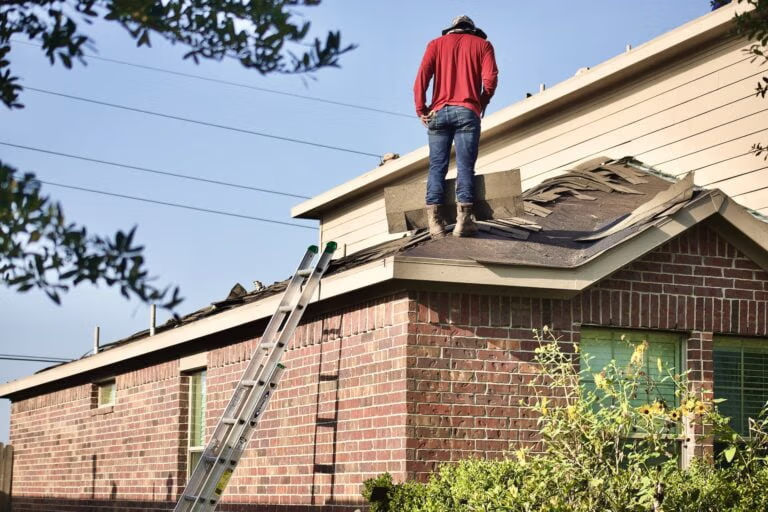
Contact a licensed Minnesota roofing contractor who specializes in hail damage assessment. At Sellers Roofing Company, we provide free storm damage inspections and help you navigate the insurance process, often securing approvals for replacements that were initially denied.
Wrap-up and what to do next
Answering “can hail damage cause roof leaks” requires understanding that visible water damage often appears long after the initial storm. Your roof’s protective layers deteriorate gradually, turning minor hail bruising into serious leaks within weeks or months. Minnesota’s freeze-thaw cycles accelerate this process, making prompt inspection critical for preventing costly interior damage.
The difference between a simple repair and a full replacement often comes down to timing. Property owners who document damage immediately and schedule professional inspections within 48 hours typically secure better insurance outcomes and avoid compounding deterioration from subsequent storms.
Sellers Roofing Company has helped Saint Paul property owners navigate hail damage claims for over 18 years. Our team provides detailed inspections that identify hidden damage and works directly with your insurance adjuster to ensure you receive fair coverage. Schedule your free hail damage inspection before the next storm compounds your existing damage.
Need a roof inspection in Saint Paul or the Twin Cities? Call Sellers Roofing Company at +1-651-703-2336 or schedule a free estimate. We are a black-owned, NMSDC-certified MBE roofing contractor with 9+ years experience.