Last updated: 2026-08-01 by Ted Sellers, Owner
Actual cash value vs replacement cost comes down to one question: does the insurer pay for your roof as an aging asset or as a new one? Actual cash value subtracts depreciation for age and wear. Replacement cost pays what it takes to install a comparable new roof, though many policies release part of that money after the work is finished.
When This Applies
Which commercial roof claims fall under this choice
This applies to commercial business owners filing a property claim after hail, wind, fire, or another covered loss. It matters most when the roof is older, the building has a low-slope system, or the repair bill is large enough to raise the replacement question.
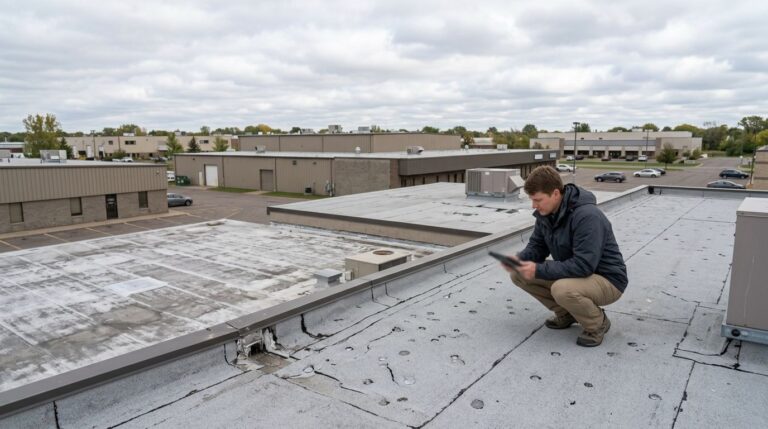
It often matters less when your loss is small. For example, a limited puncture may only call for commercial flat roof repair, not a full claim fight over valuation. On the other hand, if wet insulation has spread or seams have failed across a large area, the gap between ACV and replacement cost can decide whether a commercial roof replacement is affordable.
It does not apply the same way when the policy excludes wear and tear, has an ACV-only roof endorsement, or limits code upgrades. It also may not help if the carrier says the roof damage came from age, not a covered event. For a commercial view of policy valuation, this commercial property coverage FAQ gives a useful overview.
This quick comparison shows the practical difference:
| Valuation method | What the insurer pays | What it means for you |
|---|---|---|
| Actual cash value | Replacement cost minus depreciation | Lower first check, more out-of-pocket cost |
| Replacement cost | Cost to replace with comparable new materials | Higher total recovery, if policy conditions are met |
In plain terms, ACV treats the roof like a used truck. Replacement cost treats it like buying a similar new truck today.
ACV measures what the old roof was worth at the time of loss. Replacement cost measures what a new comparable roof costs now.
Step-by-Step
How to read a roof claim and protect your payout
- Check the policy language first. Look for the roof valuation section, not just the declarations page. If the form says ACV for roofs, depreciation will reduce the settlement. If it says replacement cost, read the conditions for releasing the full amount.
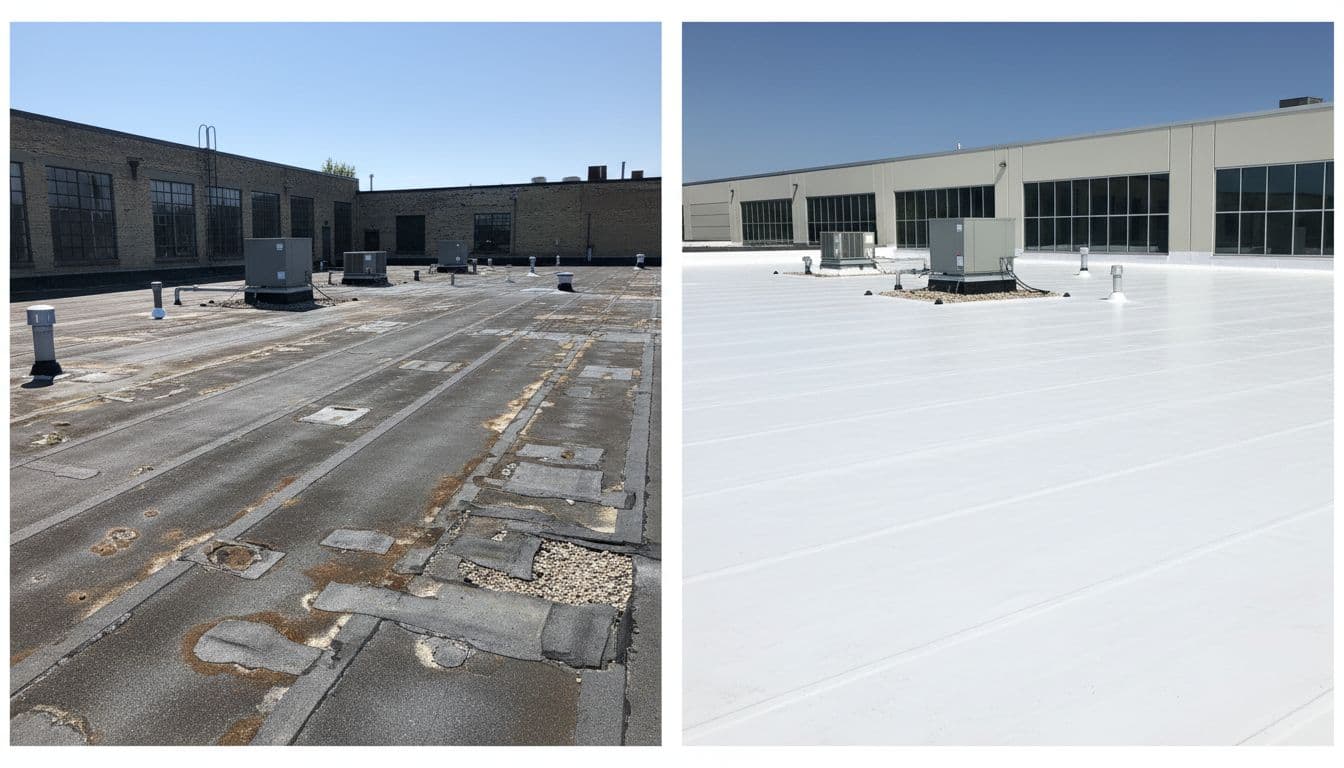
- Confirm the real scope of damage. A leak stain inside doesn’t tell you how far the problem spreads. Start with a thorough inspection or professional leak detection for flat roofs so you know whether the issue is isolated or system-wide.
- Compare the adjuster’s estimate to roof conditions. If your commercial roof needs repair, the scope should list repair items. If the membrane, insulation, or deck is widely affected, the estimate may need to shift from patching to replacement. That is where a seasoned commercial roofing Saint Paul contractor can help document the difference.
- Find the depreciation line. In most ACV claims, the insurer subtracts age and condition from today’s replacement cost. In many replacement cost claims, the carrier still pays ACV first, then releases the withheld depreciation after work is completed. This ACV vs. replacement cost guide explains that common structure.
- Ask whether anything else is capped or excluded. Code-required insulation, edge metal, drainage changes, and tear-off costs may not be treated the same way as the membrane itself. Also check deadlines, because some policies require repairs within a set period before the recoverable amount is paid.
- Save every invoice and photo. Final payment usually depends on proof that the work was done. Keep contracts, change orders, completion photos, and paid receipts together. That paperwork often decides whether you receive only ACV or the full replacement-cost balance.
The best time to sort this out is before work starts. After all, a low first payment can push an owner toward a short-term patch when the roof really needs a longer-term fix.
FAQs Commercial Owners Ask After the Adjuster Leaves
Can an insurer pay ACV first on a replacement cost policy?
Yes, that happens often. The first check may be the ACV amount, with the rest paid later as recoverable depreciation after the roof work is finished and documented.
What if my roof is old but still had years left?
Age matters, but condition matters too. A well-kept roof may still show depreciation, yet good maintenance records can support a better valuation and a stronger argument against a wear-and-tear denial.
Does replacement cost mean I can choose any new roofing system?
No. Most policies pay for a comparable roof, not any upgrade you want. If you switch systems by choice, you may pay the price difference unless code or building needs require the change.
Will insurance buy a full roof if only one section was damaged?
Sometimes, but not always. Full replacement may be justified when repairs won’t restore function, when trapped moisture spreads, or when code issues make partial work unrealistic.
What should I do if the carrier says the damage is just wear and tear?
Get independent documentation fast. Photos, moisture scans, storm dates, and a roofing report can help separate old wear from new covered damage. That matters even more when the building has a flat or low-slope roof.
A roof claim is not just about damage, it’s about valuation. When you understand actual cash value vs replacement cost before you approve the scope, you protect your budget and your building. Review the policy, verify the roof condition, and make the settlement match the real work your property needs.
Need a roof inspection in Saint Paul or the Twin Cities? Call Sellers Roofing Company at +1-651-703-2336 or schedule a free estimate. We are a black-owned, NMSDC-certified MBE roofing contractor with 9+ years experience.