Last updated: 2026-10-23 by Ted Sellers, Owner
Can TPO Fishmouth Seams Cause Leaks?
Yes. A fishmouth seam on a TPO roof can leak when the membrane lifts, the weld never fully closed, or water tracks under the overlap. Small, dry wrinkles may stay harmless for a while, but any open seam, staining, or wet insulation turns it into a real leak risk.
These defects matter because seams are the weak point in many low-slope commercial roofs. One raised spot can look minor from below, yet still let water move under the membrane and spread damage far from the entry point.
When This Applies
Why fishmouth seams matter on TPO roofs
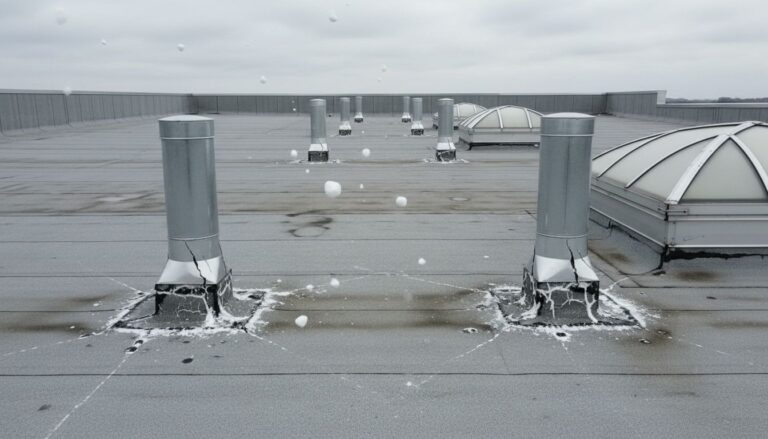
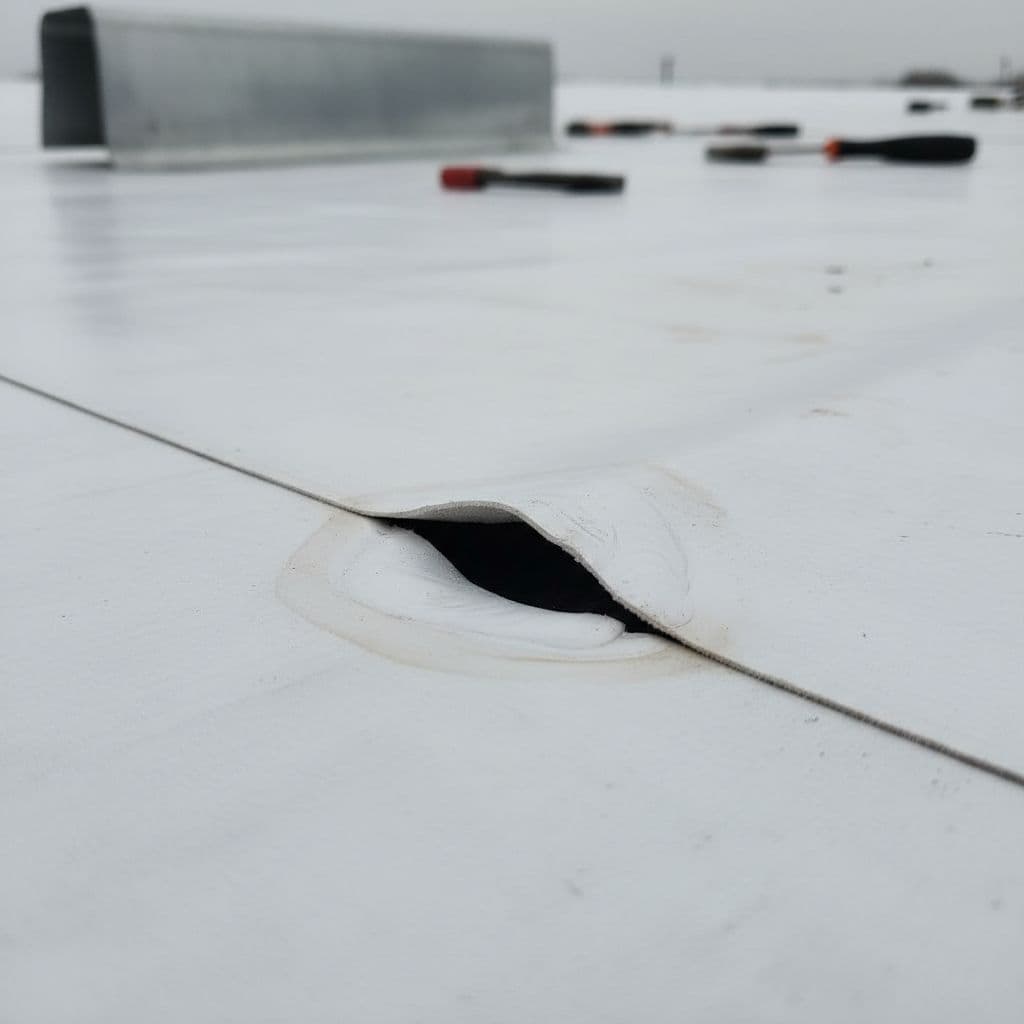
A fishmouth seam is a raised wrinkle or opening where two pieces of TPO should lie flat and bond together. Instead of a tight weld, the membrane forms a pocket. That pocket can catch water, dirt, and movement from wind or heat cycling.
On a TPO system, the seam is not a detail to ignore. It is part of the waterproof barrier. If the edge of the weld opens, even a little, rain can work under the membrane and travel along the lap. That is why a seam defect can show up later as a ceiling stain in a different part of the building.
Fishmouths show up more often after poor seam prep, trapped air, membrane shrinkage, or foot traffic near the lap. They also show up after repairs that were rushed or not tested well. For a plain-language look at seam failure patterns, this guide to TPO roof seam failure shows why lifted seams deserve fast attention.
When the seam is not the real source
A fishmouth does not always mean the seam is already leaking. If the wrinkle is small, dry, and fully fused at the edges, it may stay stable for a while. That said, it still needs attention because TPO seams can change fast after heat, movement, or ponding water.
Sometimes the seam looks guilty when the real source sits nearby. Loose flashing, a failed pipe boot, an open termination, or a puncture up-slope can send water to the fishmouth area and make it look like the problem started there. A stain under the seam does not prove the seam is the first breach.
When it points to a larger roof problem
Repeated fishmouth seams across several laps usually point to installation trouble, membrane movement, or a roof that is aging out of easy repair. Dirt in the seam, trapped air, poor alignment, and shrinkage can all break the bond.
When the damage is isolated, the roof may only need commercial flat roof repair. When seams fail across the field, the scope grows fast. At that point, a wider inspection and a possible commercial roofing services in Saint Paul review make more sense than another small patch. If the roof shows multiple leaks, wet insulation, or repeated seam openings, commercial roof replacement starts to become the practical answer.
Step-by-Step
1. Inspect the seam before anyone seals it
Look at the fishmouth seam in full daylight if you can. Search for lifted edges, gaps in the weld, dirt trapped in the lap, and staining around the seam line. A fishmouth that opens at the edge is far more likely to leak than a wrinkle that stays fully fused.
If the roof has active water inside, photograph the interior stain and the roof area at the same time. That pairing helps connect the leak to the seam. It also gives you a record if the damage later turns into a claim or a supplement.
What matters most
Focus on the seam edge, the membrane texture, and any nearby punctures or loose flashing. One bad seam can draw attention away from the real source, so the surrounding roof matters as much as the defect itself.
Avoid the quick cover-up
A coat of sealant over a dirty, open fishmouth rarely solves the problem for long. The area needs to be cleaned, dried, and tested before anyone decides whether a patch or re-weld will hold.
2. Trace the water path, not just the stain
Water rarely enters and stops there. On large roofs, it can run under insulation, along laps, and around details before it shows up inside. That is why a stain below the fishmouth does not always mean the seam is the only breach.
If the source is unclear, professional commercial roof leak detection services can find hidden moisture before the repair starts. Thermal scans, moisture mapping, and selective test cuts often show whether the leak comes from the fishmouth, another seam, or a nearby detail.
A ceiling stain often marks the end of the leak path, not the beginning.
When to slow down
If the roof is wet, slippery, or packed with equipment, keep the search simple and safe. Document what you can, then let a qualified crew finish the inspection. On TPO roofs, a careful leak trace is often faster than repeated guessing.
3. Decide whether it is a small repair or a bigger failure
A single fishmouth seam with dry insulation may call for a targeted patch or re-weld. That is classic commercial flat roof repair territory. The roof still has life left, and the problem is local.
The answer changes when you find wet insulation, repeated seam openings, membrane shrinkage, or several fishmouths in different fields of the roof. At that point, your commercial roof needs repair on a wider scale, and full commercial roof replacement starts to make more sense.
What a repair should solve
A proper repair should close the opening, restore the seam bond, and stop water from traveling under the membrane. If the seam keeps lifting after work is done, the repair was too small for the problem.
When replacement beats another patch
If the same roof keeps leaking in different seasons, or if the seams fail near edges, penetrations, and ponding areas, the building may be past point repairs. Repeated service calls cost time and money. A larger scope can be cheaper over the full life of the roof.
4. Keep the paper trail clean if insurance is involved
If the seam damage came after wind, hail, or another covered event, document the roof before permanent work starts. Take date-stamped photos, save moisture readings, and note where the water entered. That record helps if the claim turns into a supplement later.
Do not mix a leak repair with unrelated upgrades. A carrier may cover the damage tied to the loss, but not a redesign of the roof or a better membrane just because the roof is open. If a tear-off reveals broader damage, the scope can change, but it still needs proof.
What to keep
Save the inspection notes, repair estimate, and every receipt for temporary dry-in work. Those records matter if the job moves from spot repair to a larger scope. Clear documentation also helps when the first estimate misses hidden damage and the file needs to be adjusted.
Conclusion
Fishmouth seams on TPO roofs can leak, and the risk rises fast when the seam is open, dirty, or already pulling apart. A small wrinkle may be harmless for now, but a lifted seam is a warning sign, not a detail to ignore.
The right fix depends on what the roof shows around the seam. One isolated defect can fit commercial flat roof repair. Multiple seam failures, wet insulation, or repeated leaks point toward a bigger scope, sometimes commercial roof replacement.
Short answer, inspect early, trace the leak path, and match the repair to the real damage. A small seam problem is cheapest when you catch it before water spreads.
FAQ
How fast can a fishmouth seam start leaking?
A fishmouth seam can leak the first time water reaches an open edge. Some fail right away after wind, heat, or foot traffic. Others hold for weeks before movement opens them wider. The speed depends on how well the seam was welded, how much water ponded there, and whether the insulation beneath the seam is already soft or wet.
Does a fishmouth seam mean the roof was installed badly?
Not always, but installation quality matters. A fishmouth seam can come from trapped air, dirty membrane, poor alignment, or a weld that never fully bonded. Roof movement and age can also create the problem later. If you see several fishmouth seams near one another, installation details deserve a closer look.
Can a roofer fix one fishmouth seam without replacing the roof?
Yes, if the damage is isolated and the surrounding membrane is still sound. A roofer may clean the area, dry it, re-weld the seam, or add a patch. If the insulation is wet, the seam keeps reopening, or the membrane around it has shrunk, the repair may be too small for the problem.
Should I wait if the seam looks small and dry?
You can monitor a dry seam for a short time, but it should not disappear from the inspection list. Small defects grow when the roof moves, gets walked on, or starts to pond water. If the roof protects a business space, a tiny seam defect can still become a building problem after one storm.
Is a fishmouth seam covered by insurance?
Sometimes, but only when the damage ties to a covered event. A leak caused by sudden wind or storm damage is different from long-term wear or poor maintenance. If the seam is part of a claim, document the defect before any permanent repair and keep emergency mitigation separate from final work. See our commercial TPO roofing service for roof-system options.
Need a roof inspection in Saint Paul or the Twin Cities? Call Sellers Roofing Company at +1-651-703-2336 or schedule a free estimate. We are a black-owned, NMSDC-certified MBE roofing contractor with 9+ years experience.