Last updated: 2026-05-26 by Ted Sellers, Owner
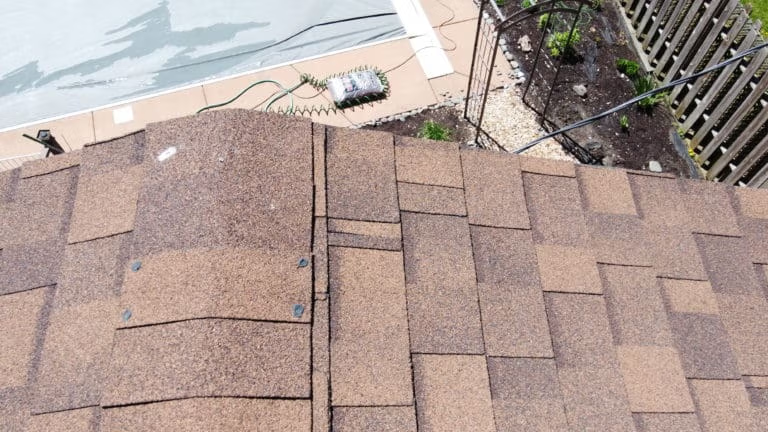
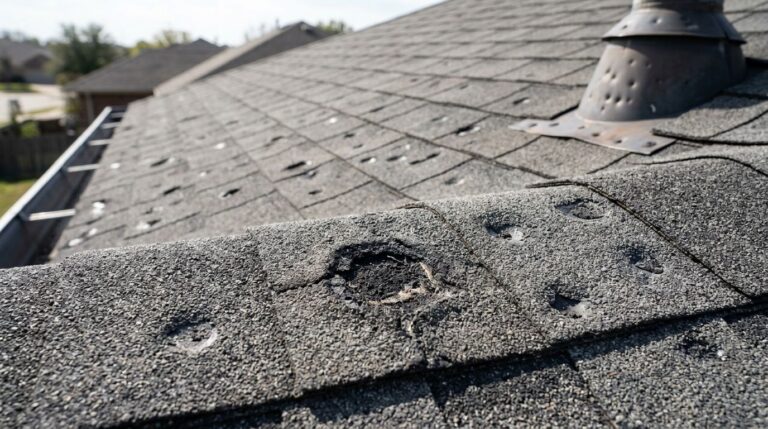
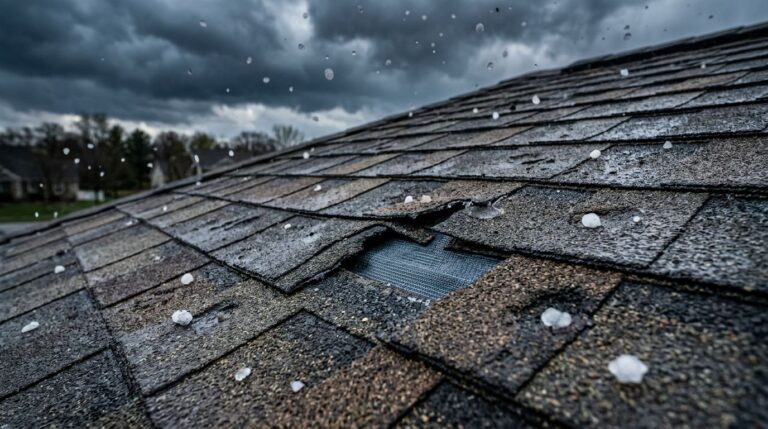
A hail “bruise” in asphalt shingles usually shows up as a round, slightly dimpled spot that feels softer than the shingle around it when you press it. From a ladder, you can confirm it by checking for a consistent circular impact mark, comparing firmness at the center vs. the edge, and documenting several similar hits on multiple shingles after a known hail event.
When This Applies
This ladder test works best for certain roofs and situations
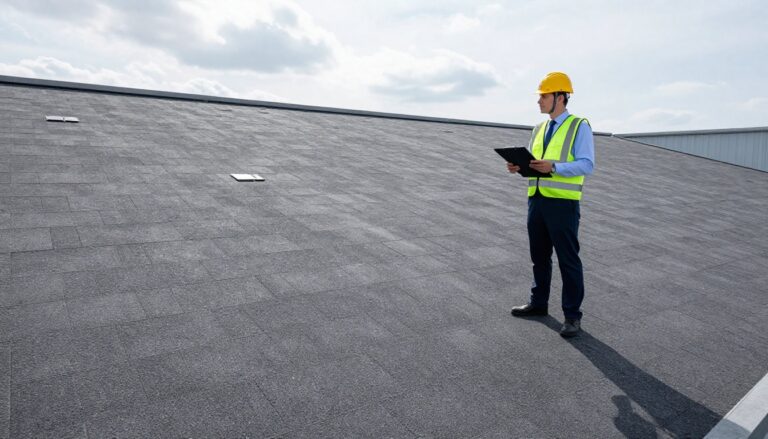
A hands-on ladder check makes sense when you own a building with asphalt shingles you can safely reach from the eaves (common on office entries, mansards, retail storefront accents, and smaller pitched-roof buildings).
It’s most useful when:
- Hail fell recently, and you want a quick, evidence-based read before calling in a full inspection.
- You can access a lower roof edge without stepping onto the roof surface.
- You’re seeing new “freckling” on shingles, gutters, or metal roof edges after the storm.
If you want to compare what you’re seeing to real-world examples, this visual guide to hail damage photos helps you sanity-check the shapes and patterns.
The key idea behind a “bruise”
Think of a bruise on a peach. The skin might look only slightly marked, but the tissue underneath is crushed. With hail, the top granules can look mostly intact, while the impact fractures the shingle mat below. That hidden break is why hail damage shingles can leak months later, not always right away.
When this does not apply (and what to do instead)
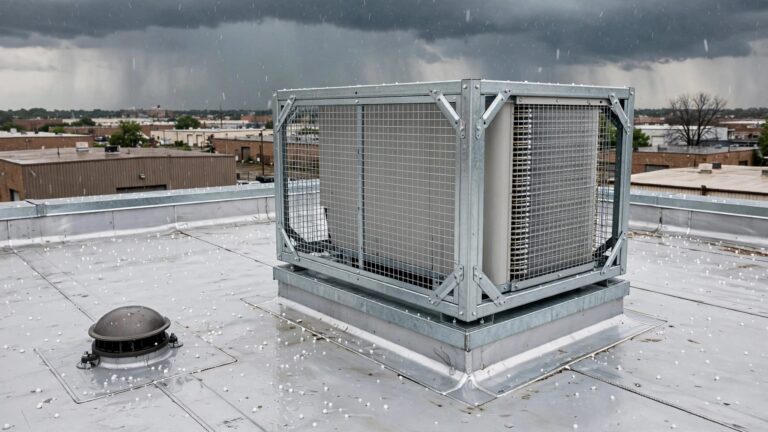
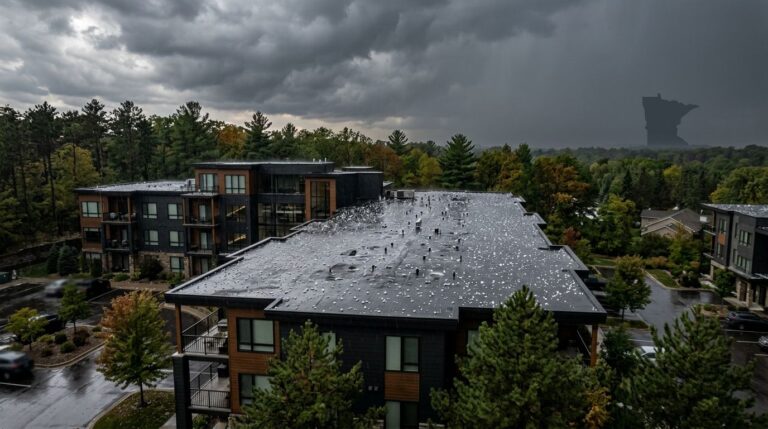
If your building has a membrane, metal, or ballast roof, this ladder test won’t tell you much. Hail behaves differently on TPO, EPDM, PVC, SPF, and standing-seam metal. Those systems call for a purpose-built inspection and, when needed, commercial flat roof repair instead of shingle spot checks.
Stop and call a pro if any of these are true
Skip the ladder test and schedule an inspection if:
- The roof edge is higher than a one-story reach, or the ground is sloped or soft.
- It’s icy, wet, windy, or below-freezing (cold shingles can feel “hard” and mislead your press test).
- You see active dripping, ceiling stains, or wet insulation. At that point, your commercial roof needs repair and time matters more than self-diagnosis.
Step-by-Step
Set up a safe, controlled ladder inspection
- Pick a dry day with calm wind and good light.
- Use a ladder tall enough to extend at least 3 feet above the eave.
- Set the ladder at about a 4:1 angle (1 foot out for every 4 feet up).
- Stabilize it on firm ground, and tie it off if you can.
- Have a second person spot the ladder while you work.
- Wear shoes with clean, grippy soles, and keep both hands free (use a tool belt or pouch).
Find “candidate” spots before you press anything
- Start at the roof edge and scan shingles at a shallow angle, morning or late afternoon light works well.
- Look for round marks, often 1 to 2 inches wide, that repeat across nearby shingles.
- Check for granule displacement that looks like a subtle “halo” or scuff inside a circle.
- Note collateral clues near the same roof plane: dents in metal drip edge, gutter screens, downspouts, roof vents, or soft metal flashings.
- Avoid judging from one shingle. Hail patterns show up as a cluster, not a single odd spot.
Do the “press and compare” bruise check (the part that confirms it)
- Place your thumb pad lightly on the center of the suspected impact.
- Press just enough to feel the surface give, not enough to grind granules.
- Move your thumb 1 to 2 inches away from the mark and press again.
- Compare the two areas:
- If the center feels spongy or softer than the surrounding shingle, treat it as a likely bruise.
- If it feels equally firm everywhere, it may be a scuff, stain, manufacturing texture, or normal wear.
What a true hail “bruise” usually feels like
A bruise often has a muted “give,” like pressing on a dense foam pad. It’s not mushy, and it usually doesn’t crack under light pressure. If you feel sharp cracking or see immediate splitting, stop pressing and document only, the shingle may be brittle from age or cold.
For a more technical explanation of hail impact patterns (and what inspectors look for), see InterNACHI’s training material on identifying hail damage during roof inspections.
Document it like you might need it later
- Circle each suspected bruise lightly with sidewalk chalk (don’t use markers or paint).
- Take a close photo straight-on and another at a low angle.
- Include a coin or tape measure in the photo for scale.
- Record the roof plane (front, rear, north slope), and how many bruises you find in a 10-foot by 10-foot area.
- Repeat on at least two different sections of the same slope.
If you end up in an insurance conversation, good photos help. If you need deeper reading on common hail indicators across materials, this reference on asphalt shingle hail damage identification can help you understand the terminology you’ll hear.
FAQ
Will a bruised shingle always look “bald” or black?
No. Some hail damage shingles keep most granules in place, especially with smaller hail or newer shingles. The bruise is often more about softness and mat fracture than obvious granule loss.
What to look for when granules still cover the spot
A faint circular outline, a slight dimple, and a center that presses softer than the perimeter.
What if the shingle feels soft, but I don’t see a clear circle?
Softness alone isn’t enough. Heat, foot traffic, and manufacturing features can change texture. Treat it as “suspect,” then look for a repeating pattern and collateral dents on metal components.
The pattern rule
Hail tells a consistent story across multiple shingles, not one random patch.
Can I do this test on a steep-slope roof from a ladder?
Only at the edge you can safely reach without leaning or stepping onto the roof. If you find yourself stretching, you’re past the safe limit. A contractor can use proper fall protection and walk the roof without guessing.
How many bruises mean I should consider an insurance claim?
There’s no single number that fits every policy or shingle type. In practice, you’re looking for widespread impacts on a defined slope, plus supporting collateral damage. If you can document repeated bruises across several test areas, it’s time to schedule a professional inspection.
If the roof is older
An older roof can tip from “repair” to commercial roof replacement faster after hail, because the shingles have less remaining life.
What if my property has shingles on the entry and a flat roof everywhere else?
Treat them as two inspections. Shingles may show bruising, while membranes may show seam stress, punctures, or fractured coatings. If either area is taking on water, don’t wait, isolate leaks quickly and plan the right repair scope.
What to do after you confirm a likely shingle bruise
Decide whether this is a spot fix or a bigger scope
If you find a few isolated bruises and no leakage, you may only need targeted repairs. If bruises are widespread, or you have interior water signs, schedule a professional storm inspection and start documenting immediately. For Twin Cities owners, a local contractor like Sellers Roofing Company can confirm damage, separate hail bruises from look-alikes, and outline next steps before small issues turn into bigger ones. Act early and you’ll protect both your roof system and your operating budget.
Need a roof inspection in Saint Paul or the Twin Cities? Call Sellers Roofing Company at +1-651-703-2336 or schedule a free estimate. We are a black-owned, NMSDC-certified MBE roofing contractor with 9+ years experience.