Last updated: 2026-08-01 by Ted Sellers, Owner
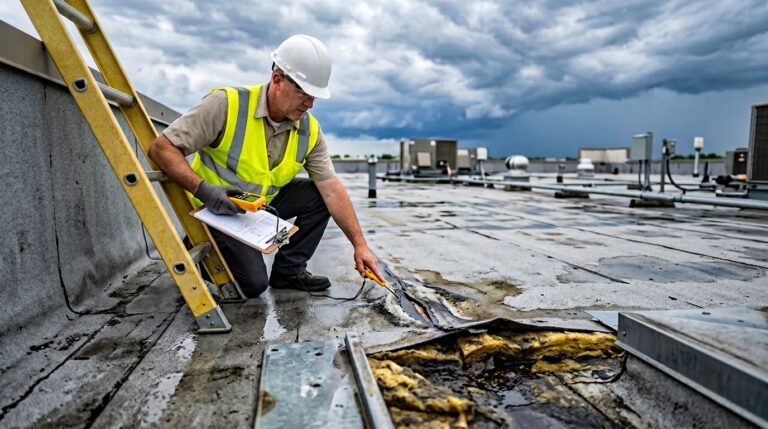
Most commercial EPDM roofs in Minnesota last 20 to 30 years. Roofs at the high end usually have good drainage, clean seams, and regular inspections. Roofs fail sooner when ponding water, snow stress, foot traffic, and skipped maintenance let small defects spread into wet insulation and recurring leaks.
When This Applies
This lifespan estimate fits most low-slope commercial EPDM roofs
This answer fits warehouses, office buildings, retail centers, schools, and other low-slope properties with an EPDM membrane. It also assumes the roof was installed well and has not gone years without inspection or minor repair.
Minnesota weather is rough on any membrane. Winter brings snow load, ice, and freeze-thaw movement. Summer adds UV, heat, hail, and storm-driven rain. Over time, those swings stress seams, flashing, drains, and rooftop units. That is why a real-world EPDM roof lifespan here often lands below best-case brochure claims.
The EPDM Roofing Association service life guide explains that long-term performance depends on design, installation, and upkeep, not age alone. A broader national EPDM lifespan overview places many rubber roofs in the 15 to 30 year range, which is why Minnesota owners should treat 20 to 30 years as a planning range, not a promise.
When the estimate stops being useful
The 20 to 30 year range does not tell the whole story if your roof has chronic ponding, saturated insulation, storm damage, or repeated patches over the same leaks. It also does not apply to TPO, PVC, metal, or steep-slope systems. Once moisture gets into the roof assembly, condition matters more than the calendar.
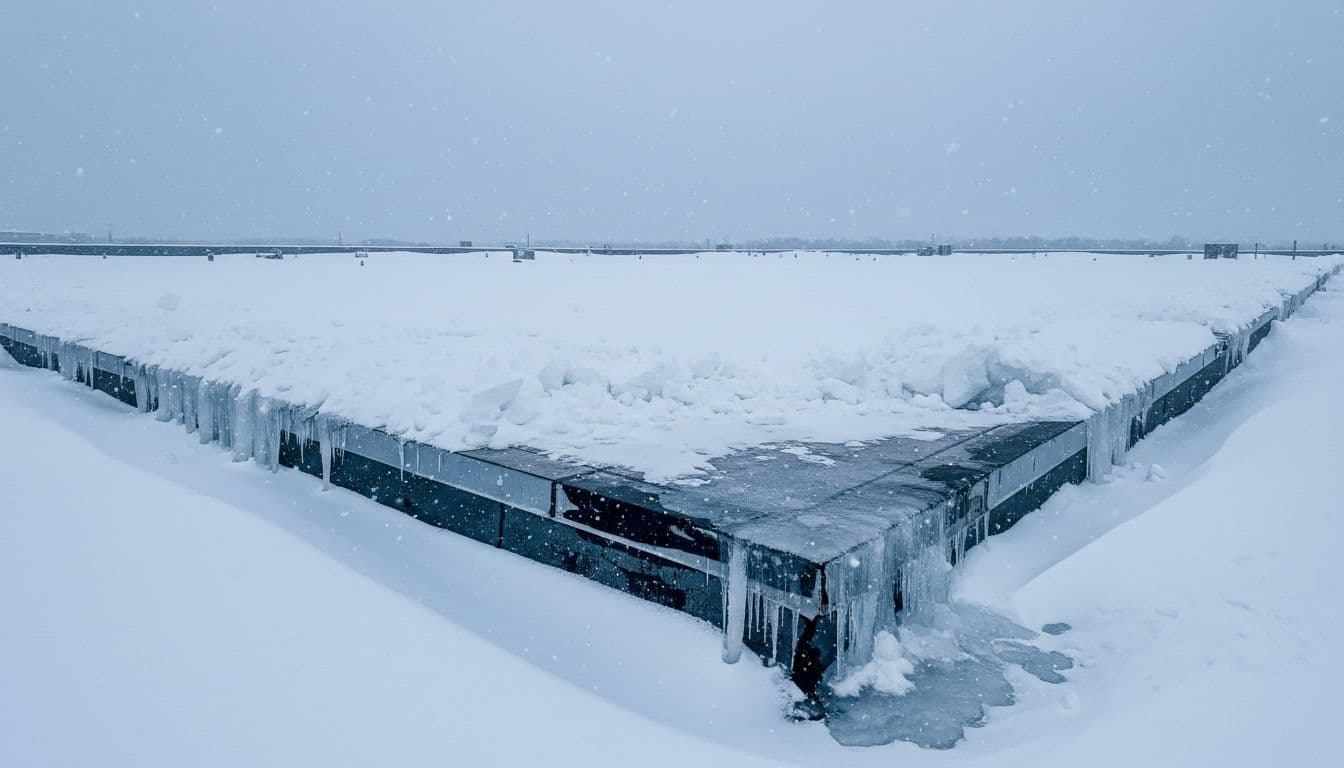
Cold weather alone rarely ruins EPDM. In most cases, trapped water and ignored details do the real damage.
Step-by-Step
1. Pull the install date and repair history
Start with records. Find the install year, warranty papers, leak reports, and notes on past patches. A 12-year-old roof with one isolated repair is a different asset than a 22-year-old roof with yearly service calls.
If you do not have records, schedule an inspection and moisture scan. For business owners, that replaces guessing with something you can budget around.
2. Check seams, flashings, drains, and rooftop units first
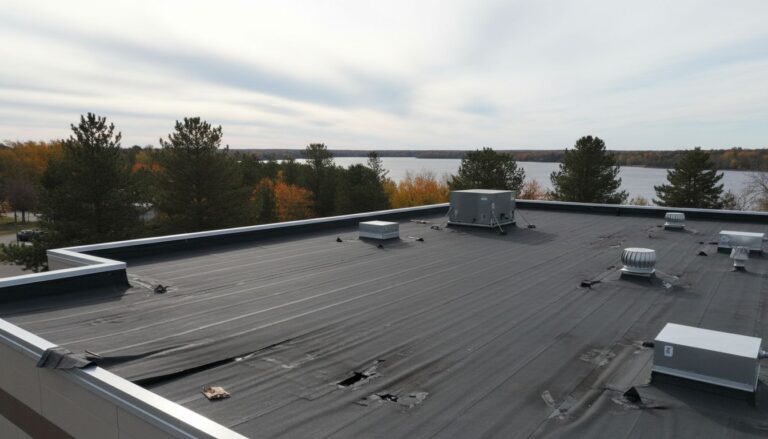
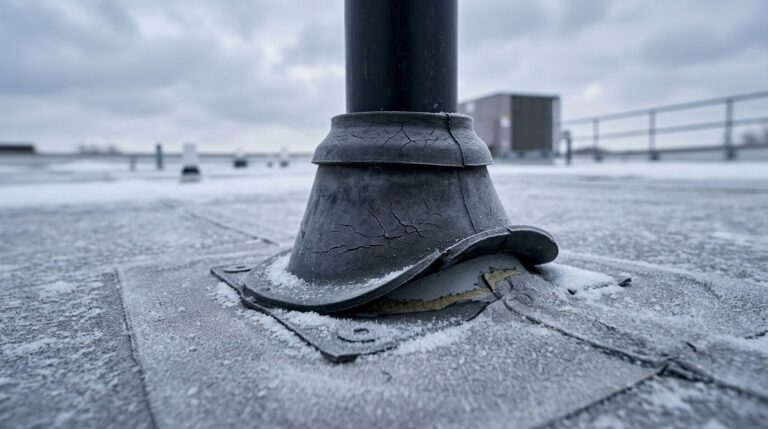
Most EPDM failures begin at the details, not in the center of the roof. Look at seam edges, wall terminations, pipe boots, drain bowls, and curbs around HVAC equipment. If the membrane is pulling at edges, cracking at flashings, or opening at seams, your commercial roof needs repair soon.
If leak stains keep showing up in new places, leak detection for EPDM commercial roofs can trace water back to the actual entry point instead of the spot where it appears inside.
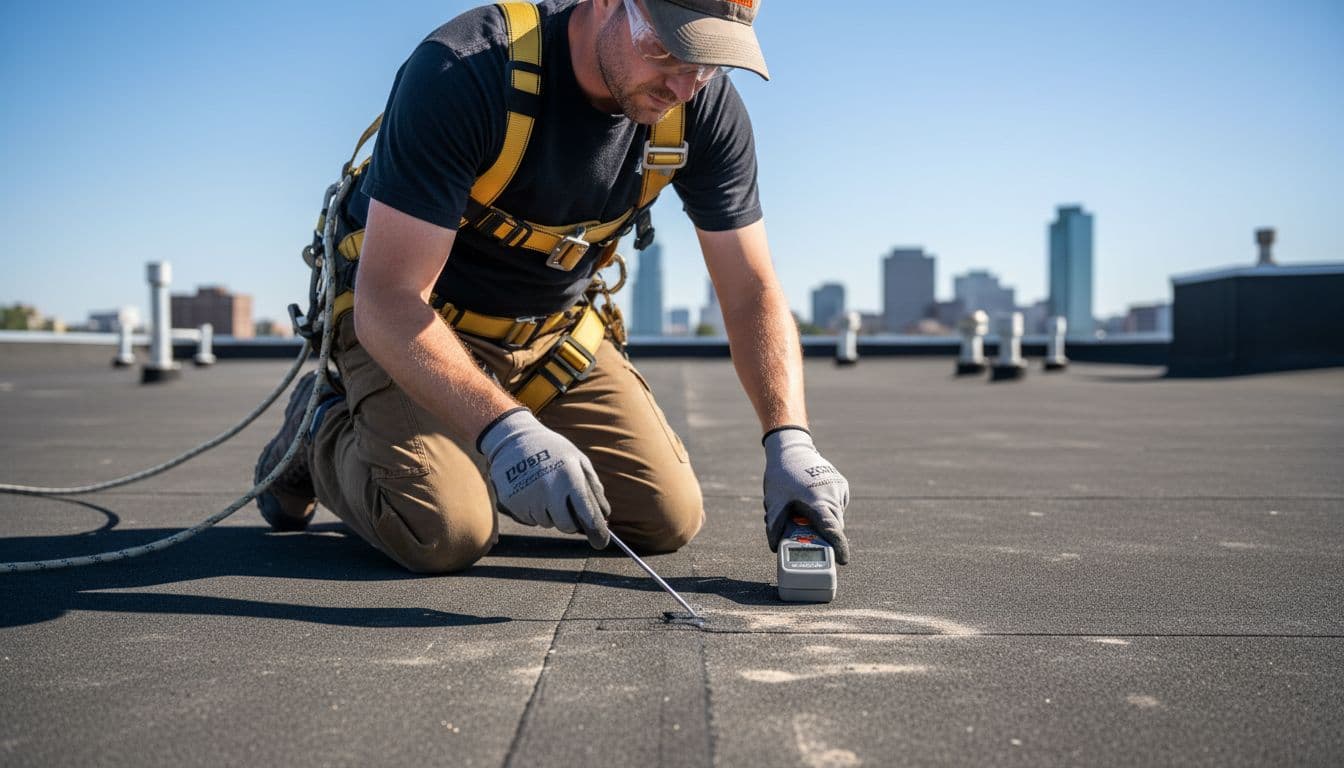
If water sits after rain or snowmelt
Standing water speeds up wear because it keeps seams and flashings wet longer. On a Minnesota roof, slow drainage also increases freeze-thaw stress in spring and fall.
3. Decide whether the damage is local or system-wide
An isolated puncture or one open seam often qualifies for commercial flat roof repair. That makes sense when the insulation is still dry and the rest of the membrane has life left.
Widespread seam failure, wet insulation, repeated interior leaks, or membrane pull-back at several walls push the decision toward commercial roof replacement. At that point, more patching can feel like bailing water from a leaky boat.
Use this quick screen before approving more repairs.
| Roof condition | Best next move |
|---|---|
| Under 15 years old, damage limited to one area | Targeted repair |
| Around 15 to 20 years old, scattered issues, dry insulation in most areas | Repair plus documented inspection |
| Near 20 to 30 years old, repeated leaks, wet insulation, widespread seam stress | Plan replacement |
A contractor familiar with commercial roofing in Saint Paul can help you compare repair cost, downtime, and remaining life instead of focusing on age alone.
Repeated leaks usually mean the weak point is larger than the last patch.
4. Build maintenance into your operating budget
Most EPDM roofs last longer when they get spring and fall inspections, plus a check after major hail or wind. Remove debris, keep drains open, limit service traffic, and document each repair. Those simple steps help stop minor defects before they soak insulation or decking.
For many buildings, the best move is not asking how long the roof should last. It is tracking how the roof is aging right now.
FAQ
Can EPDM handle Minnesota winters well?
Yes. EPDM generally stays flexible in low temperatures, which helps in cold climates. Still, winter performance depends on drainage, seam condition, and how the roof handles snowmelt. A durable membrane can still fail early if water keeps finding weak details.
What are the first signs an EPDM roof is near the end?
Recurring leaks, seam separation, flashing cracks, membrane shrinkage, and wet insulation are the main red flags. Rising repair frequency also matters. If the same area keeps failing, age may no longer be the main issue.
What happens if snow sits on an EPDM roof for months?
The membrane itself can tolerate long snow cover. The bigger risk is trapped moisture, blocked drains, ice around details, and extra structural load. Snow management matters most when drifting is heavy or melting water cannot leave the roof.
Can a coating extend an older EPDM roof’s life?
Sometimes it can, but only when the membrane is still sound and the insulation is dry.
When coatings are a poor fit
If seams are failing across the roof or moisture is already inside the system, a coating may hide problems instead of solving them. In that case, replacement planning is usually the safer expense.
Should I replace a 20-year-old EPDM roof right away?
Not always. Some 20-year-old roofs still have useful life if leaks are rare and the assembly is dry. Others are already done because repairs were delayed too long. Condition beats age when you make the final call.
A Minnesota EPDM roof can last a long time, but it rarely lasts on age alone. Drainage, seam health, and maintenance decide whether you get 12 years, 20 years, or closer to 30 years.
If your roof is pushing that range, a documented inspection gives you the answer numbers cannot.
Need a roof inspection in Saint Paul or the Twin Cities? Call Sellers Roofing Company at +1-651-703-2336 or schedule a free estimate. We are a black-owned, NMSDC-certified MBE roofing contractor with 9+ years experience.