Last updated: 2026-08-01 by Ted Sellers, Owner
Yes. Roof hail damage can weaken seams, flashing, membrane surfaces, and roof coatings without causing an immediate leak. Then sun, ponding water, freeze-thaw cycles, and foot traffic widen the damage until water gets in. On commercial roofs, a hail hit in spring can show up as an interior leak months later, especially on low-slope systems.
When This Applies
Delayed leaks are most common on low-slope commercial roofs
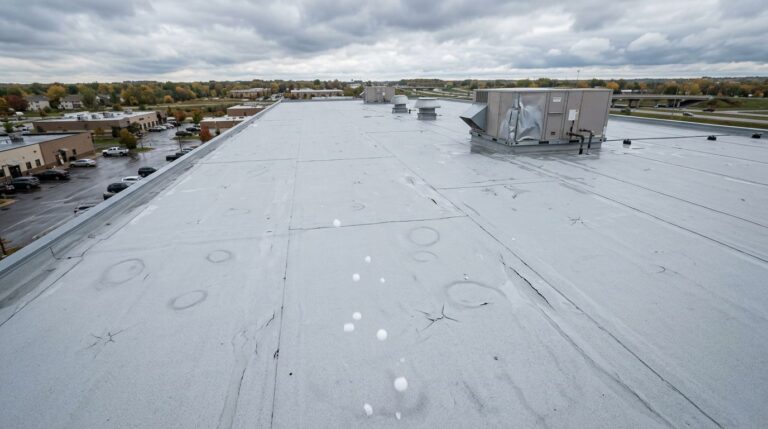
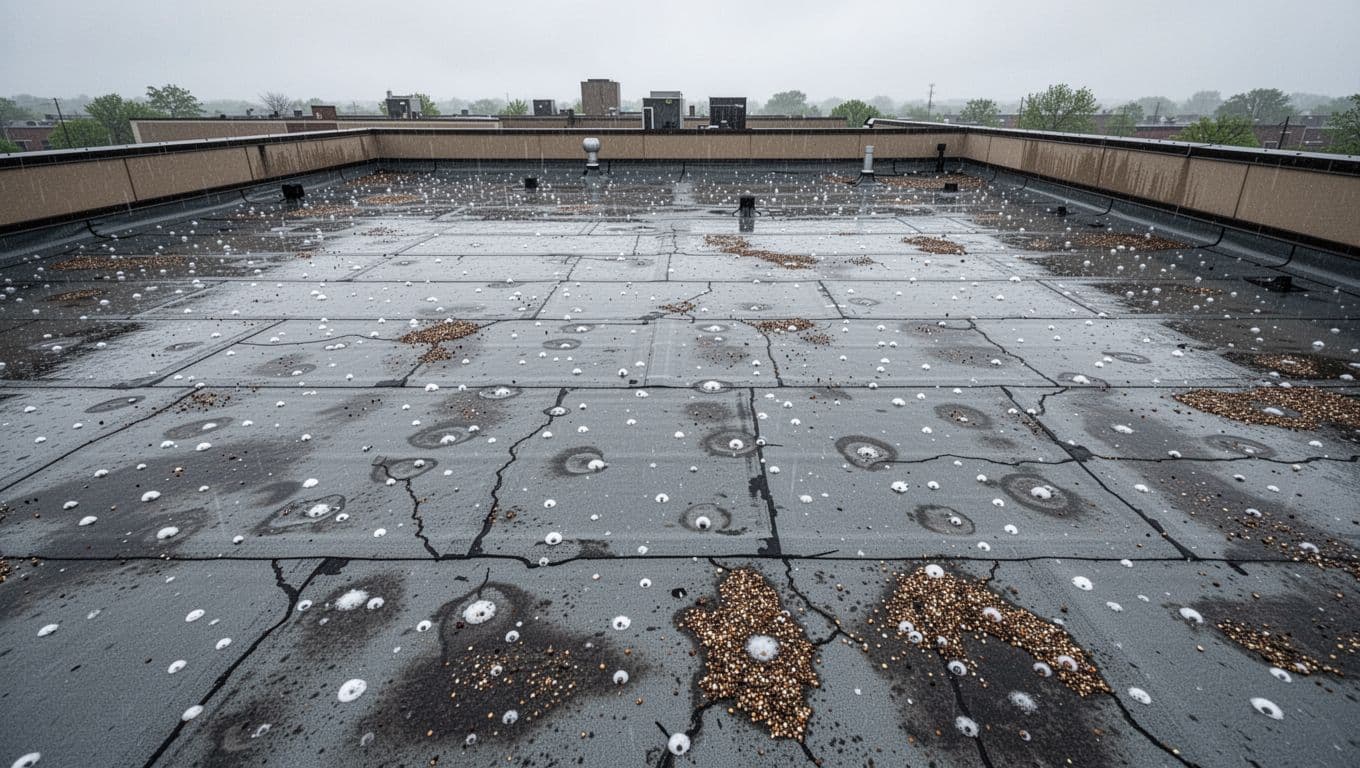
This applies to business owners with flat or low-slope roofs, especially TPO, EPDM, modified bitumen, BUR, and metal systems with exposed details. Hail may bruise the membrane, crack coating, loosen fasteners, or split flashing, even when the roof still looks serviceable from the ground.
It also applies when the building had no leak before the storm, but starts showing stains later. In many cases, water enters at one point and travels far from the spot you see inside. That makes hail damage easy to miss and easy to misread.
When it may not apply
A delayed leak is less likely if an inspection happened right after the storm and found only cosmetic marks, with no membrane breaks, wet insulation, open seams, or damaged flashing. It’s also less likely on newer roofs with strong drainage and no weak repair patches.
Exceptions that fool business owners
Older roofs are the biggest exception. Hail may not create a brand-new problem, but it can push an aging roof past its limit. A roof that was already close to failure may leak months later because hail sped up the decline.
Past repairs can hide risk, too. A patched area may hold for weeks, then fail after heat and cold cycles. If you own a warehouse, retail center, office, or multi-tenant building, that delay matters because the first sign may be wet insulation, mold risk, or damaged inventory, not a dramatic drip.
Why Leaks Show Up Later
Hail often weakens the roof before water gets in
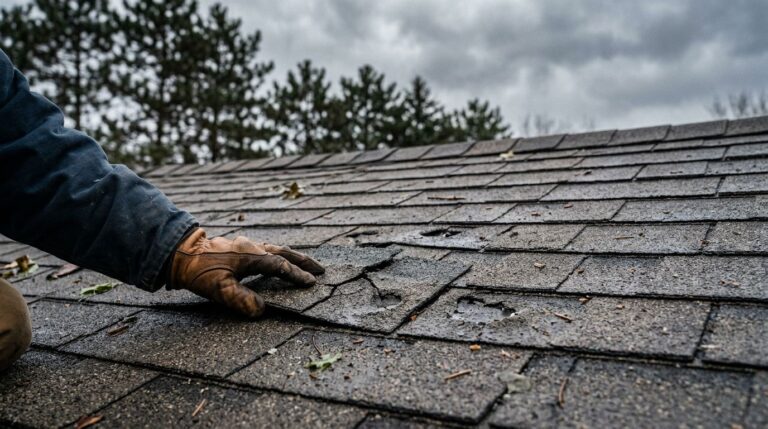
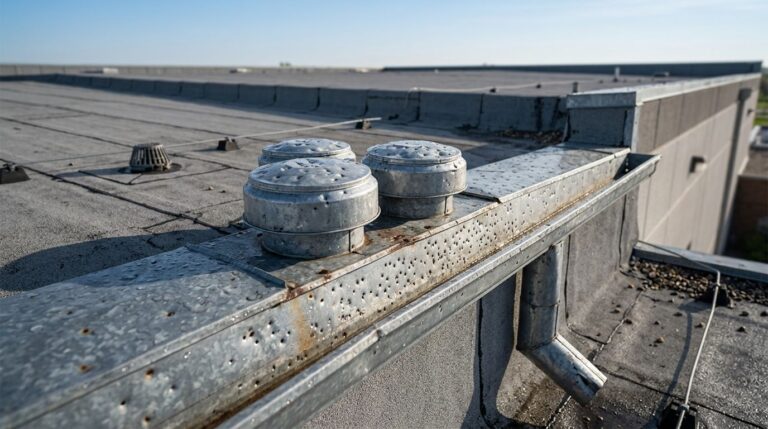
Think of hail like a punch that leaves a bruise. The roof may not split open that day, but the protective layer has lost strength. On single-ply roofs, impact can stress seams and puncture points around HVAC curbs, drains, and pipe boots. On coated roofs, it can crack the coating and expose the layer below.
Once that happens, time becomes part of the damage. UV rays dry and age the hit area. Rain sits longer where drainage is poor. Minnesota heat and cold make materials expand and shrink, so a tiny flaw becomes a path for water. That’s why a business owner may assume the storm “didn’t hurt much,” then face a leak later in the season.
Hail damage often starts as a bruise, not a hole. The leak comes later.
Weather and foot traffic finish the job
Roof traffic after a storm can turn hidden damage into an active leak. Service calls for HVAC units, satellite equipment, or vents put pressure on weakened spots. Meanwhile, standing water keeps testing the same area.
If the roof has repeated stains, soft insulation, or bubbling sections, your commercial roof needs repair through an experienced Saint Paul commercial roofing team. Waiting usually shrinks your repair options.
Step-by-Step
1. Match the leak timeline to the hail event
Start with dates. Find the storm date, past repair invoices, and any maintenance notes. If the leak began weeks or months after a hailstorm, that timing matters. It doesn’t prove the cause by itself, but it creates a strong inspection path.
2. Look for interior clues, but don’t trust the stain location
Check ceiling tiles, wall tops, insulation odor, rust on deck fasteners, and moisture near rooftop equipment. Still, don’t assume the leak is directly above the stain. On commercial roofs, water often travels sideways before it drops into the building.
3. Get a roof inspection with moisture testing
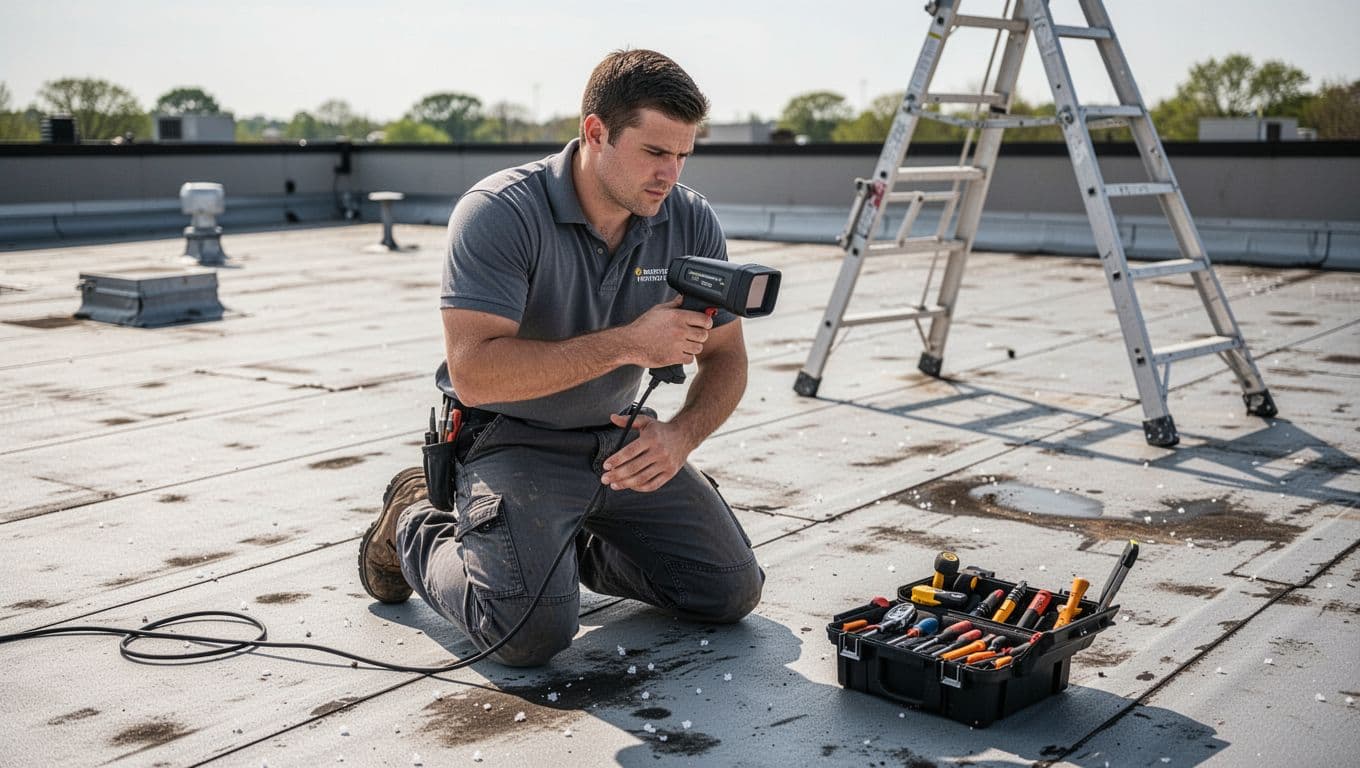
A visual walk alone may miss hidden damage. The better move is a professional inspection that checks seams, penetrations, flashing, drains, and trapped moisture. When a leak is hard to trace, schedule commercial roof leak detection in Saint Paul so the source gets mapped before repairs start.
If there’s no interior leak yet
Don’t wait for one. Wet insulation can sit out of sight while energy bills rise and the deck slowly degrades.
4. Compare targeted repair against remaining roof life
If damage is isolated and the roof still has years left, commercial flat roof repair may be the smart choice. If hail exposed widespread weak areas, a patch may only buy time. In that case, commercial roof replacement can cost less over the next few years than repeated service calls, interior cleanup, and tenant disruption.
FAQ
Can a hail-damaged roof pass a quick inspection and still leak later?
Yes. Quick visual checks often miss bruised membrane, cracked seams, or moisture under the surface. That’s why leaks can appear long after the storm.
How long after a hailstorm can a commercial roof start leaking?
It varies. Some leaks show up with the next hard rain. Others take weeks or months because weather cycles slowly open the damaged area.
Will insurance cover a leak that starts months later?
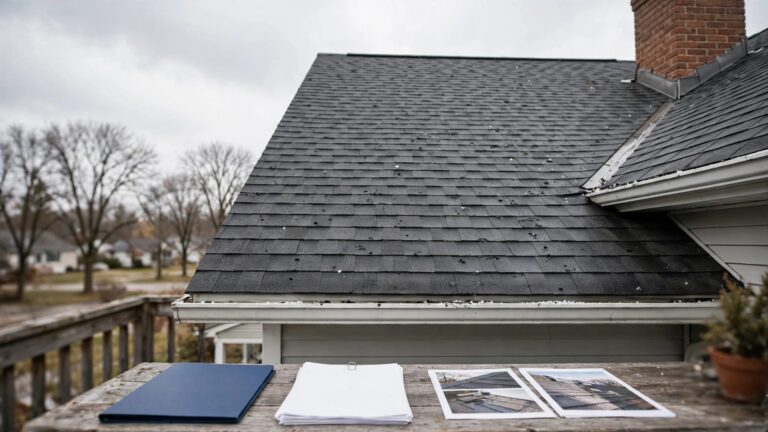
Often, yes, but timing and proof matter. Photos, storm dates, inspection notes, and repair records make the claim much stronger.
What hurts a claim
Long delays without documentation can make insurers argue the leak came from age or neglect, not hail.
Can TPO or EPDM roofs leak from hail without obvious holes?
Yes. Hail can stress seams, flashing, and welded joints without leaving a clear puncture. Moisture testing often finds damage the eye misses.
When is repair no longer enough?
Repair stops making sense when wet insulation spreads, seams fail in several areas, or the roof is already near the end of its service life. At that point, patching becomes expensive short-term thinking.
Does one leak mean the whole roof is failing?
Not always. One leak can come from one weak detail. Still, if the roof has several old patches and new hail damage, broader failure becomes more likely.
Bottom Line
Act before the next weather cycle
Yes, hail damage can cause leaks months later, and commercial roofs are especially prone to that delay. The strongest move is early inspection, clear documentation, and a repair plan that matches the roof’s age.
If hail hit your building and something now feels off, treat it as roof hail damage until proven otherwise. Waiting rarely makes the answer cheaper.
Need a roof inspection in Saint Paul or the Twin Cities? Call Sellers Roofing Company at +1-651-703-2336 or schedule a free estimate. We are a black-owned, NMSDC-certified MBE roofing contractor with 9+ years experience.