Last updated: 2026-08-01 by Ted Sellers, Owner
Short answer: To spot hail damage roof valleys, focus on what valleys do best: collect water, granules, and debris. From the ground, look for streaks of washed-out granules, bent or dented valley metal, and uneven shingle lines where the valley “channels” runoff. If you can access the roof safely, check for circular bruises, granule loss, exposed mat, and lifted seams along the valley.
When This Applies
Who should inspect roof valleys after hail?
This applies if you own a home, duplex, or small commercial building with sloped sections that form valleys. It also applies to many retail and office properties where a pitched entry ties into a low-slope roof and creates “valley-like” water paths at transitions.
Valleys take more abuse than most roof areas because water speeds up there. When hail hits, the damage pattern can look messy because runoff later “edits” the evidence by washing loose granules downslope. That’s why a roof can look fine from one angle, yet the valley tells a different story.
If your property budget depends on uptime, valley checks matter. A small bruise near a valley can turn into a leak during the next heavy rain, then you’re suddenly triaging ceiling tiles and inventory.
For a photo-based checklist that’s written for building owners, see this roof hail damage inspection checklist PDF.
When it doesn’t apply (and when not to DIY)
If the roof is steep, high, wet, or still covered with ice or snow, don’t climb. Valleys are also easy to slip on because they hold damp debris. In those cases, document from the ground and schedule a professional inspection.
If you can’t maintain three solid points of contact and a stable stance, the “inspection” isn’t worth it.
Also, keep in mind that hail can damage a roof without leaving dramatic marks. Shingles may bruise below the granules. For deeper technical context on bruising and test methods, this guideline for assessing hail damage to shingle roofs is a useful reference.
Step-by-Step
Ground checks first (fast, safe, and often enough)
- Confirm the storm window. Note the date, time, and hail size reports in your area, then write it down for your records.
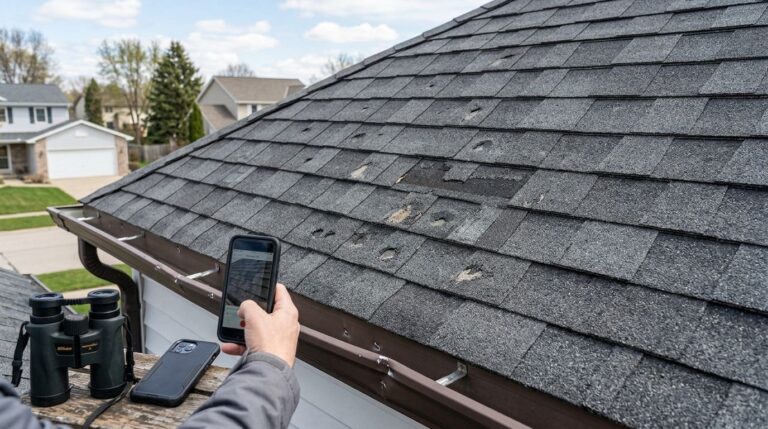
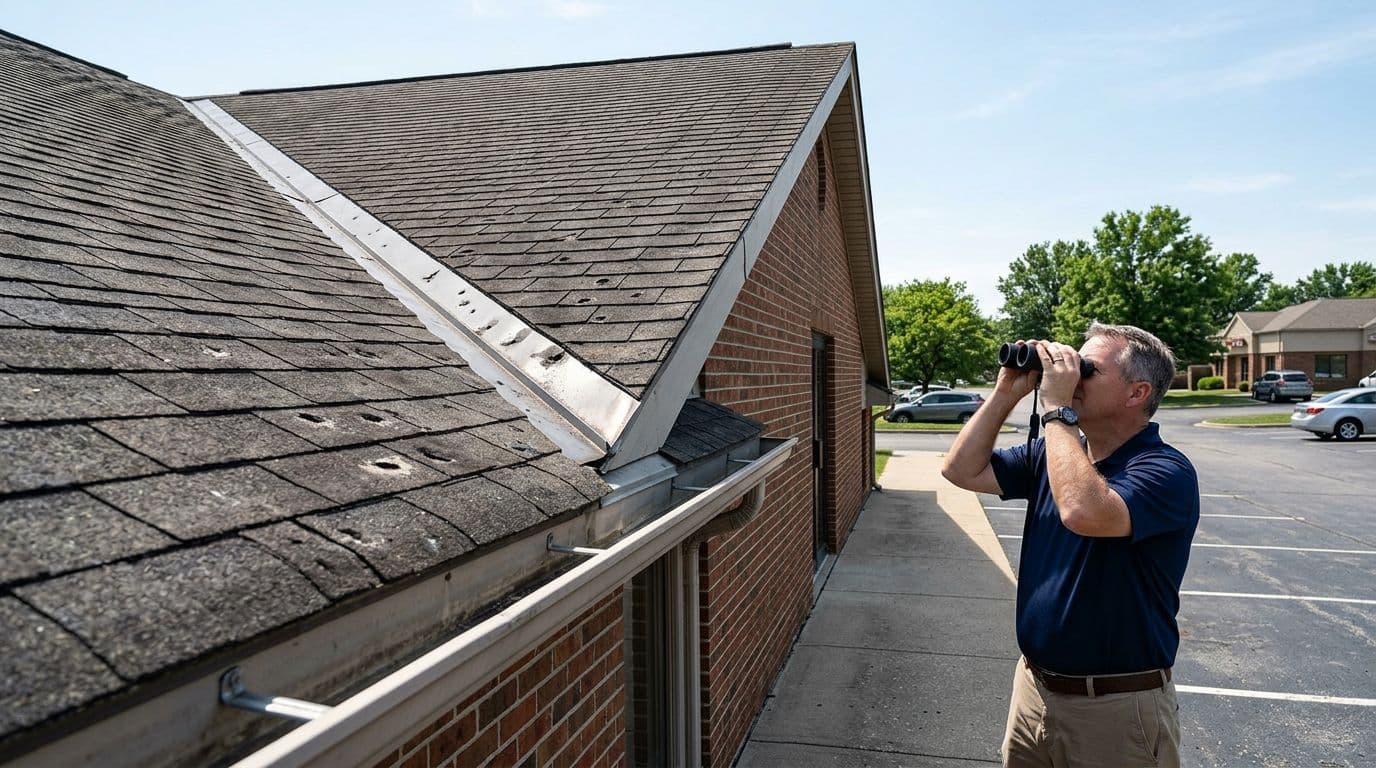
- Scan valleys with binoculars. Look for pale “wash lines” running down the valley that suggest granules released and later rinsed.
- Check gutters and downspouts for granules. A heavy pepper-like buildup right after hail often points to shingle surface loss upstream, commonly near valleys.
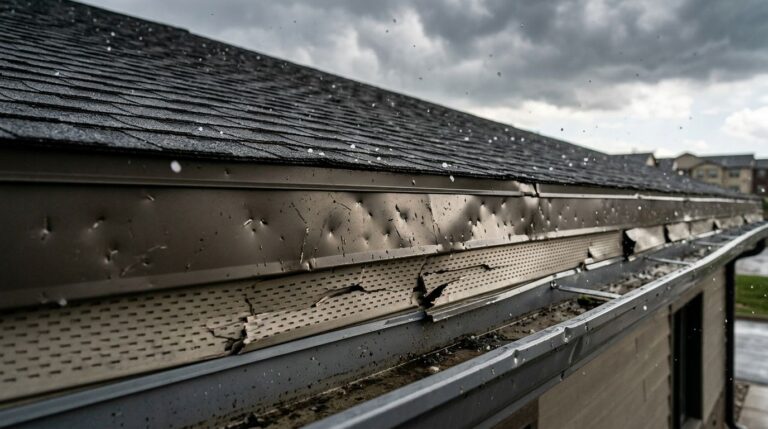
- Inspect valley metal from below. Dents in exposed flashing or bent edges are a strong clue, because metal shows impacts clearly.
If you can safely access the roof, focus on valley-specific clues
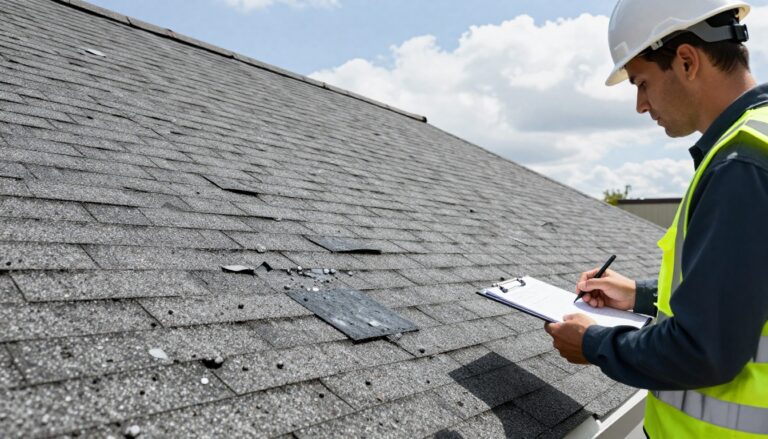
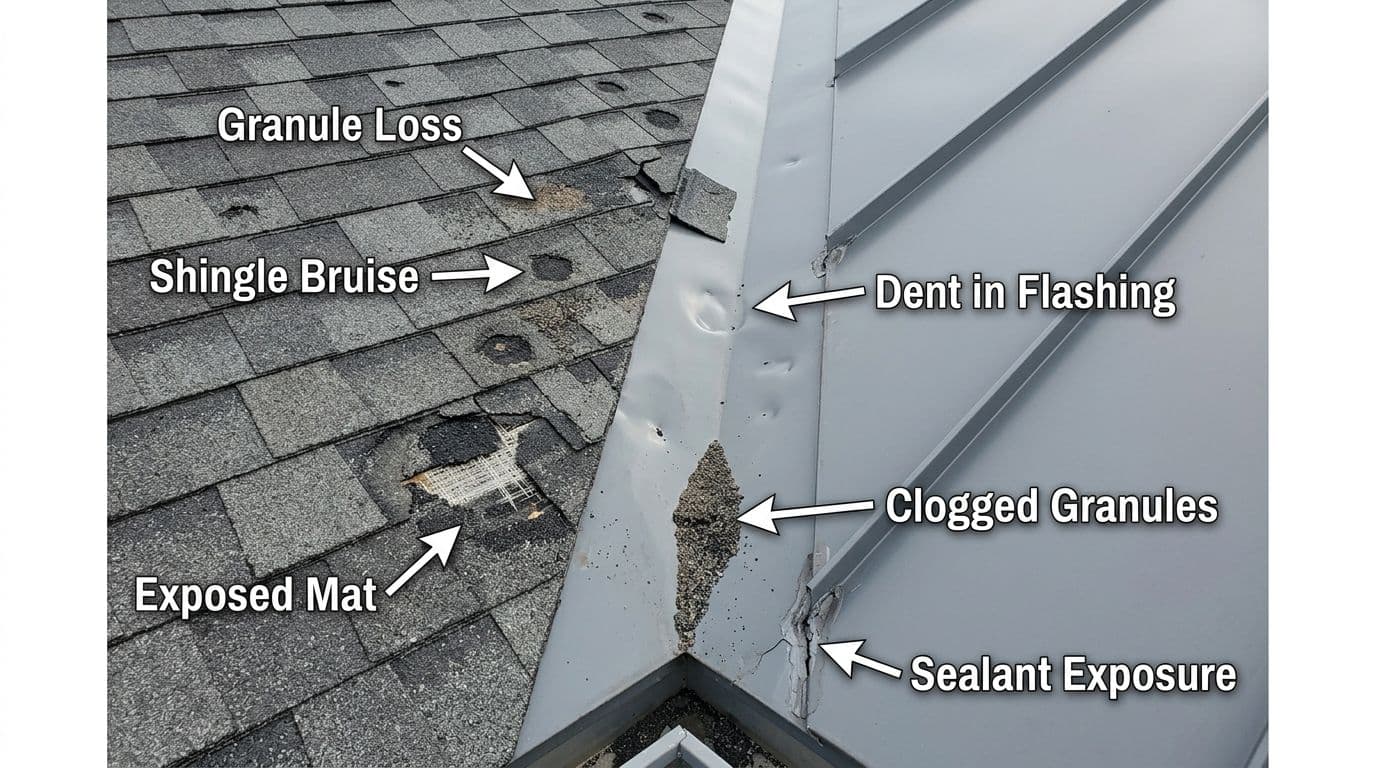
- Look for circular bruise marks near the valley line. Hail often leaves round spots where granules are missing and the surface feels softer. In good light, bruises can appear as dull circles compared to surrounding shingles.
- Watch for “exposed mat” and thin spots. In the valley, water moves faster. If hail stripped granules, runoff accelerates wear. Exposed fiberglass mat, shiny asphalt, or dark patches are red flags.
- Inspect the shingle edges that cross the valley. Hail can fracture corners and create short cracks. Those cracks widen as water runs through the valley, like a sidewalk crack that grows each winter.
- Check for lifted seals and displaced shingles. Impacts plus wind-driven rain can loosen adhesive strips. If shingles feel loose along the valley, water can track underneath.
- Photograph and map what you find. Take wide shots that show the valley location, then close-ups with a coin for scale. Save everything in one folder. If you later decide on repairs, that organization helps.
Decide what to do next (repair, detection, or replacement)
- Treat valley damage as a leak-risk zone. If you see bruising, exposed mat, dented flashing, or heavy granule loss, assume the commercial roof needs repair (or the residential roof does) until proven otherwise. On buildings where leaks are hard to trace, schedule professional help like commercial roof leak detection Saint Paul so you fix the source, not the symptom.
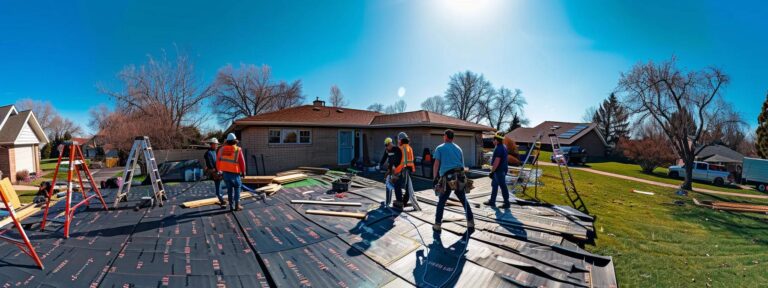
- Match the response to the roof system and scope. A localized valley issue might be a targeted repair. Widespread bruising across multiple slopes, especially with damaged flashings, can push the decision toward commercial roof replacement on mixed-use properties.
- If your building is low-slope, don’t assume valleys are the only issue. Ponding zones, seams, and transitions often fail first after impact. In that case, you may be looking at commercial flat roof repair alongside any valley work.
For Minnesota owners who want a local second opinion after storms, a Saint Paul team that handles both repair and replacement can help document damage and options, including trusted commercial roofing company Saint Paul.
FAQ
Will dented valley flashing automatically cause a leak?
Not always. Small dents may be cosmetic, especially on thicker metal. The risk rises when dents crease seams, open fasteners, or crack sealant lines. If water runs over that spot every storm, minor defects become big problems faster.
What if the valley looks fine, but I’m finding granules in the gutters?
Granules can come from broader slope damage, not only valleys. Still, valleys concentrate runoff, so they often show the clearest “wash pattern.” If granules spike after hail, document it and inspect multiple slopes, not just the valley.
How can I tell hail bruising from normal wear in a valley?
Wear is usually even and gradual. Hail bruises tend to be round, scattered, and inconsistent in size. Also, bruises may feel soft when pressed, while normal aging feels uniformly rough. When in doubt, compare the valley area to a sheltered slope plane.
What should I do if I think hail damage will become an insurance claim?
Start with photos, dates, and any maintenance records. Then review claim timing and documentation steps in your state. This Nebraska Department of Insurance hail damage document is a good plain-language example of how insurers often frame inspection and estimating.
Can I use a drone to inspect roof valleys at home?
Yes, if local rules and your comfort level allow it. A drone is useful for steep or high roofs because you can capture close-ups without stepping onto the valley. Focus on stable, well-lit shots of the valley line, flashing seams, and any circular granule-loss marks.
Hail leaves clues, but valleys decide how expensive those clues become. When you spot bruises, granule loss, or dented flashing in a valley, act sooner rather than later, because water will keep returning to the same path. A clear photo set and a smart next step, repair, detection, or replacement, usually saves more money than waiting for the first ceiling stain.
Need a roof inspection in Saint Paul or the Twin Cities? Call Sellers Roofing Company at +1-651-703-2336 or schedule a free estimate. We are a black-owned, NMSDC-certified MBE roofing contractor with 9+ years experience.