Last updated: 2026-08-01 by Ted Sellers, Owner
Hail damage on an asphalt shingle roof usually shows up as round bruises, missing granules, cracked tabs, and dents on nearby metal. The clearest clue is a soft, dark impact spot that feels bruised under light pressure. On commercial buildings, compare several roof slopes because one side often takes the hardest hit.
When This Applies
Use this process for shingled commercial roof sections
This applies to business owners with asphalt shingle roofs, or shingled roof sections, on offices, churches, retail buildings, and multi-family properties. It also helps when a storm passed through but leaks haven’t appeared yet.
If your building has mixed roofing systems, use this guide only on the sloped shingle areas. A hail damage roof can hide trouble for weeks, so early checks matter.
When this process does not fit
It does not fit TPO, EPDM, PVC, modified bitumen, or standing-seam metal roofs. Those systems show impact damage in different ways. If your low-slope section took the storm, you may need commercial flat roof repair, not shingle spot checks.
Older roofs can fool you
Age can mimic storm damage. Brittle shingles may crack from foot traffic, heat, or past wear. Uniform granule loss across the whole roof often points to aging, while fresh hail marks look random and concentrated on the storm-facing slope.
Step-by-Step
Step 1: Check the ground, gutters, and soft metal first
Start where it’s safest. Look for dented downspouts, metal flashing, HVAC fins, window trim, and mailbox lids. Hail strong enough to dent soft metal often hits shingles hard enough to bruise them too.
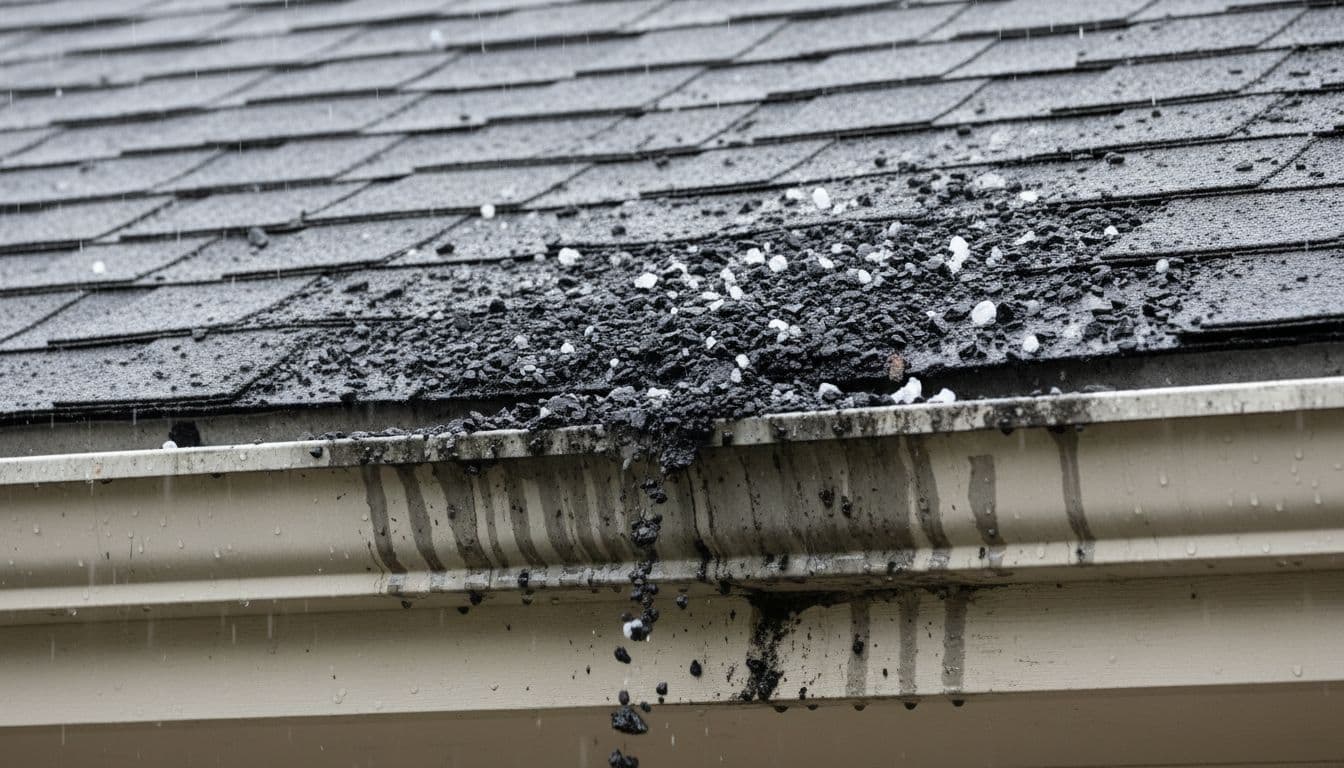
Then check gutters and downspouts for a pile of dark granules. Granules protect asphalt from sun and water. When a storm knocks them loose, the roof loses part of its shield. Also scan for chipped paint on trim or cracked light covers near the roofline.
Step 2: Look for round bruises and bare spots on the shingles
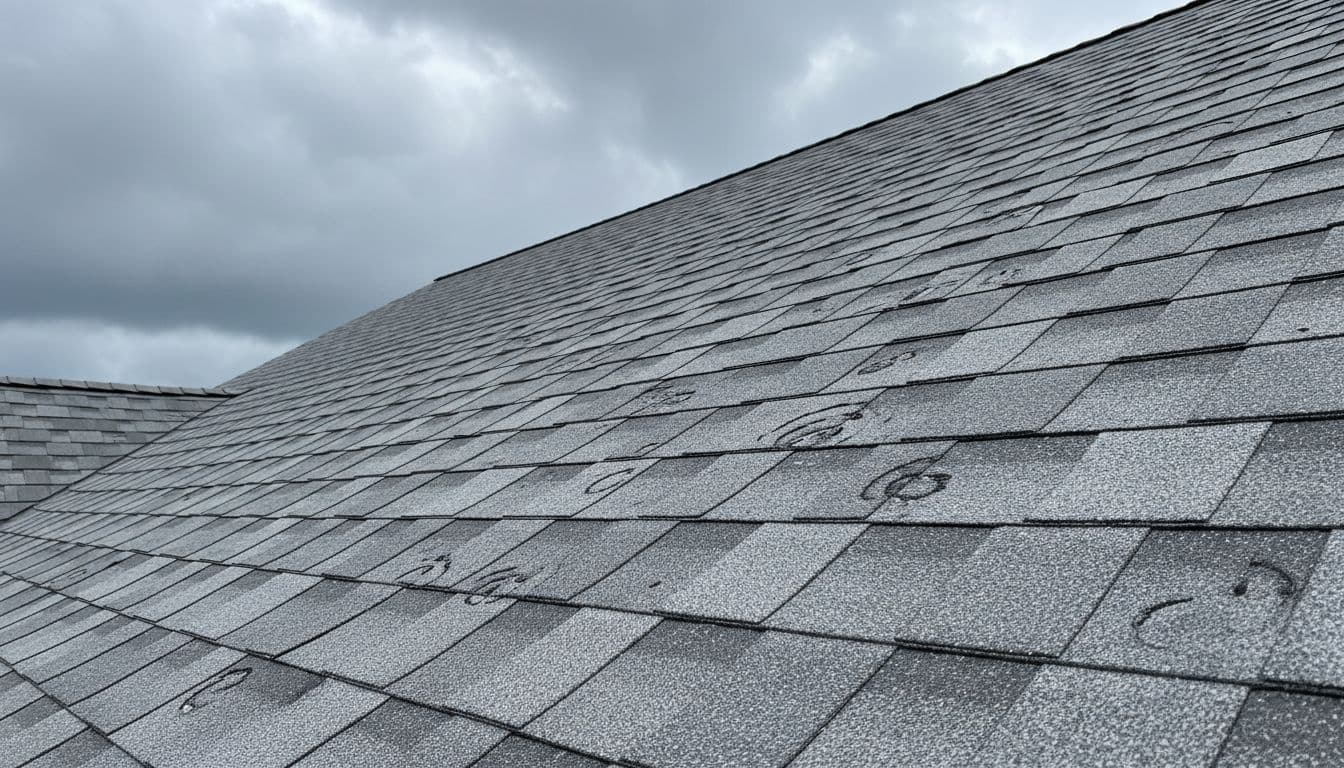
Get on the roof only if it’s safe and dry, or have a pro do it. Search for scattered, circular impact marks. Many are dark, about coin-size, and slightly rougher than the shingles around them.
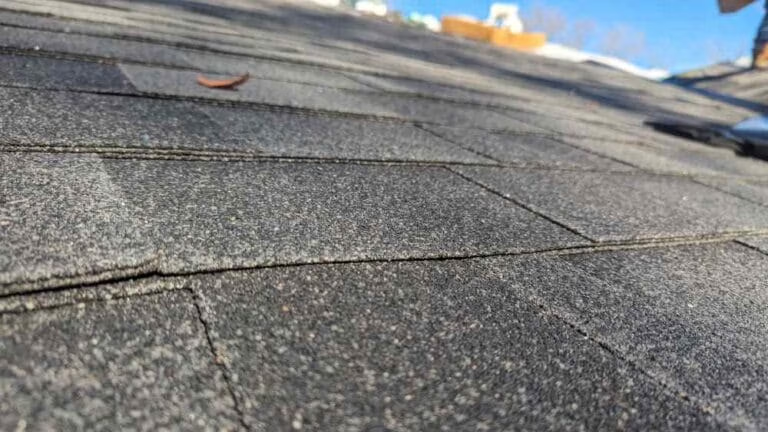
A true bruise often feels soft, like pressing a thumb into a ripe peach. By contrast, simple scuffs stay firm. For extra photo examples, see this guide to bruised asphalt shingles.
Hard scuffs can be cosmetic. Soft impact spots usually mean the shingle mat took a hit.
What a bruise looks like up close
Look for crushed granules, a shiny spot where asphalt shows through, or a small ring-shaped crack. Random hits across one slope matter more than one isolated mark.
Step 3: Check for cracks, torn tabs, and exposed mat
Some hail is large enough to split the shingle surface. Look for short cracks, broken tab corners, or black substrate showing through. Those marks age fast because sun and rain now hit the shingle directly.
Also inspect ridge caps and hip shingles. They sit higher and can take harder impact. Inside the building, check ceiling tiles near penetrations because water can travel before it drips. If stains are already showing, your commercial roof needs repair now, not later.
Step 4: Compare each slope and test the pattern
Don’t stop after one roof face. Hail often strikes from one direction, so the west or south slope may show heavy damage while the other sides look fine. That contrast helps separate storm damage from normal wear.
Check vents, roof jacks, and flashing near the damaged area. If metal is dented and the shingles below show bruises, the pattern is stronger. Some inspectors use a light chalk rub to make hidden impacts easier to spot. This roof hail damage visual guide shows the kind of patterns worth documenting.
When the pattern matters more than a single mark
One blemish proves little. Ten to twenty similar hits in a test square, plus metal dents nearby, gives you a far better case for repair or an insurance review.
Step 5: Decide between monitoring, repair, and replacement
Minor, isolated hits may only need watchful follow-up. However, widespread bruising, cracked tabs, and active leaks call for action. A small damaged area might need a targeted repair. Broad damage across several slopes can point toward commercial roof replacement.
Take dated photos from each slope and keep storm notes while the damage is fresh. When water enters the building, the visible stain rarely shows the exact entry point. That’s why many owners pair a hail inspection with professional commercial leak detection before repairs begin.
FAQ
Can shingles have hail damage even if there are no leaks?
Yes. Hail can bruise the mat and strip granules without opening an immediate hole. The leak may show up months later, after heat, cold, and rain widen the damaged spot.
How do I tell hail damage from blistering?
Blistering usually appears more uniform and comes from heat or shingle age. Hail marks look random and often line up with dents on metal nearby.
A quick field clue
If the spot feels soft or freshly fractured, hail is more likely. If it looks worn and widespread, age is the better suspect.
Should I do the chalk test myself?
Only if the roof is safe, dry, and easy to access. Use a light rub, not scraping. Heavy pressure can scuff the shingle and confuse the result.
What happens if I ignore small hail marks?
Small marks can turn into leaks, lost insulation value, stained ceilings, and deck rot. Waiting also makes it harder to prove the storm caused the damage.
When is repair enough, and when is replacement smarter?
Repair works when damage is limited and the rest of the roof still has solid life left. If impacts are widespread, the shingles are older, or many tabs are cracked, replacement often makes more financial sense.
What to Do Next
Act before hidden damage spreads
Hail damage on shingles rarely looks dramatic at first. More often, it looks like a bruise on fruit, small on the surface, softer underneath.
If you own a commercial building, document dents, granule loss, and shingle bruising soon after the storm. Then get a qualified inspection before small impact marks turn into a bigger bill.
From the parking lot, the roof may look fine. Up close, the story can change fast.
Need a roof inspection in Saint Paul or the Twin Cities? Call Sellers Roofing Company at +1-651-703-2336 or schedule a free estimate. We are a black-owned, NMSDC-certified MBE roofing contractor with 9+ years experience.