Last updated: 2026-05-26 by Ted Sellers, Owner
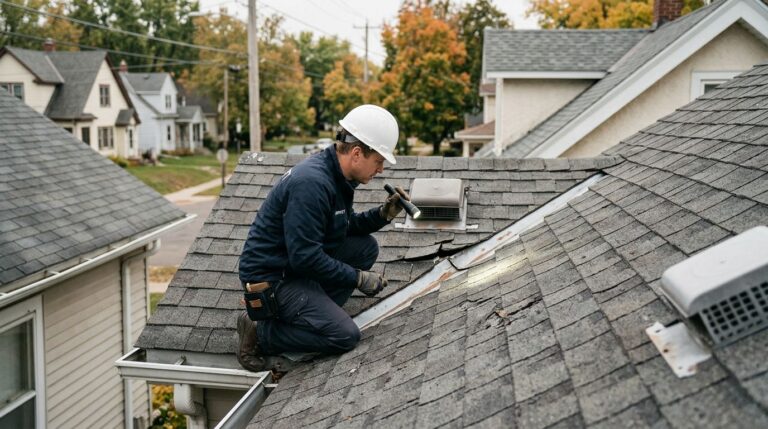
Hail can crack shingles without leaving an obvious hole. The giveaway is a bruise: a soft spot where the asphalt mat fractured under the granules. Look for tight clusters of impacts, granules collecting in gutters, and matching “collateral” dents on vents, flashing, or AC fins. If you find soft bruises or repeated impact patterns, treat it as hail damage and document it fast.
When this applies
Roofs and properties where hidden hail cracking is most likely
This applies anytime your building has asphalt shingles, even if most of your roof is flat. Many commercial sites have shingle mansards, entry canopies, dormers, or small sloped sections over offices.
Hidden cracking is more likely when shingles are:
- Older and already brittle from sun and freeze-thaw cycles
- On steep slopes that take direct hits
- On windward faces where hail drives sideways
- Installed over decking that flexes more than expected
On the other hand, this doesn’t “fit” roofs with membranes like TPO, EPDM, or modified bitumen. Those systems show hail differently (dents, punctures, seam stress). If you manage a mixed roof portfolio, you may need both shingle checks and commercial flat roof repair after the same storm.
If you want a plain-language explanation of what hail damage tends to look like (and what it doesn’t), the IBHS guide on hail damage questions is a solid reference for owners.
What you can spot without climbing (and why it matters)
From the ground, you can’t confirm a crack under granules, but you can build a strong case.
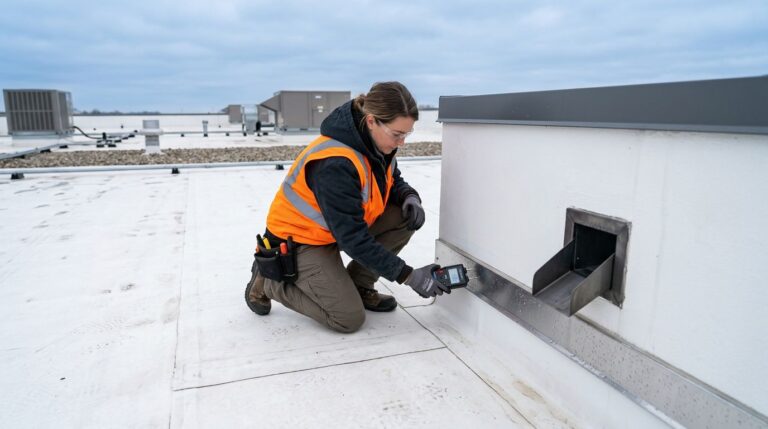
Start with “collateral” clues. Hail rarely damages only shingles. Check soft metals and painted surfaces first. Dents on roof vents, bent gutter screens, chipped window wraps, or pockmarked condenser fins often show the storm’s intensity.
Also look for granules. A sudden surge of dark grit at downspout outlets can mean impacts knocked protective granules loose. That doesn’t prove fractures, but it raises the odds of hail cracked shingles.
One more clue is pattern. Hail damage shows random, scattered hits. Wear damage looks even and gradual.
Before you decide what you’re seeing, use this quick comparison:
| What you notice | Common cause | What it suggests | Best next move |
|---|---|---|---|
| Granules at downspouts after storm | Hail or heavy rain | Possible impact loss | Document and inspect closer |
| Tight clusters of marks on one slope | Wind-driven hail | Likely hail field | Check for soft bruises |
| Even, widespread granule thinning | Age and UV | Wear, not hail | Plan maintenance timeline |
| Raised bumps that pop | Blisters | Manufacturing/heat | Don’t file as hail yet |
| Crescent-shaped splits near edges | Wind or cold flex | Could be non-hail | Look for matching collateral dents |
The takeaway: don’t rely on a single sign. Hail cases get stronger when several clues line up.
If you can’t access the roof safely, don’t. Binoculars, photos, and a pro inspection beat a fall every time.
Step-by-Step
Start with safe documentation before you inspect shingles
- Photograph hailstones (or measured dents) if you can do it safely, then note date, time, and which sides got hit hardest.
- Walk the perimeter and take wide shots of each roof slope, plus close-ups of dents on vents, caps, gutters, and metal trim.
- Check downspout outlets and splash blocks for fresh granules, then photograph the piles next to a coin for scale.
Check for “hail bruise” clues that point to cracks under granules
- Choose test areas on each slope (low, mid, high), because hail rarely hits evenly.
- With safe access only, look for circular impact zones where granules look scuffed, thinner, or slightly darker.
- Feel gently with a fingertip. A bruise often feels soft or spongy, unlike a firm shingle.
- Use side lighting (early morning or a flashlight held low). Raking light makes tiny surface disruptions easier to see.
- Mark a suspected spot with sidewalk chalk, then take a photo and move on. Avoid rubbing hard, because you can dislodge granules and confuse the evidence.
How to tell hail hits from blisters and foot traffic
- If you see a raised bump that breaks open like a pimple, that’s more consistent with a blister.
- If the mark sits in a straight line near a walkway, foot traffic is a stronger suspect.
- If the marks scatter randomly and match dents on metal, hail climbs back to the top of the list.
Confirm cracking patterns and decide what action fits your risk
- Look for repeats. A few isolated marks can be noise, but many similar impacts usually mean damage.
- Watch for exposed mat. When granules shear off, you may see shiny asphalt or a small “bald” spot. That area ages fast.
- Check inside the building next. Stains, wet insulation, or musty odors can mean the system already leaks.
- If multiple slopes show bruises, plan a professional evaluation. A contractor can test squares, document hits, and separate hail from wear. This roof hail damage checklist PDF can help you organize what to photograph and record.
- Treat urgent water entry as an emergency, because a small crack under granules can turn into a fast leak. If your commercial roof needs repair in any area (including flat sections), stop the water first, then sort out scope and coverage.
- If damage is widespread and shingles are near end-of-life, you may be looking at replacement planning. On mixed-use properties, hail can accelerate timelines for both steep-slope work and a broader commercial roof replacement decision.
FAQ
Will hail always knock granules off if it cracked the shingle?
Not always. Some impacts fracture the asphalt mat while granules stay in place, at least at first. That’s why soft bruises matter. Over time, heat and rain can loosen granules above the crack, and you’ll see a bald spot later. Early documentation helps you avoid “it happened long ago” arguments.
How soon should I inspect after a hailstorm?
Inspect as soon as it’s safe, ideally within a few days. Fresh hits photograph better, and loose granules haven’t washed away yet. Also, temporary leaks can start quickly. If you wait until ceiling tiles stain, you’ve lost time and may face bigger interior costs.
Can I spot hail cracked shingles from a drone photo?
Sometimes, yes. Drones can show impact fields, displaced granules, and pattern differences between slopes. However, many cracks under granules don’t show clearly from above. Use drone images to map suspect areas, then confirm with a close inspection where safe and allowed.
What if my building has both shingles and a flat roof?
Mixed systems after the same storm
Handle it as one event with two inspection tracks. Shingles tend to bruise and crack under granules. Flat systems may show dents, seam stress, or punctures from rooftop equipment strikes. In practice, you might need shingle repairs plus commercial flat roof repair on the same claim or work order.
If there’s no leak, do I still need to act?
Yes, if evidence points to hail. A bruise is like a bent paperclip: it may hold for a while, then fail with heat and time. At minimum, document, monitor, and get an expert opinion on repairability versus replacement. For more context on post-storm assessment, see Beacon’s overview on assessing roof damage after hail.
Conclusion
Hidden hail damage is frustrating because it doesn’t announce itself from the parking lot. Still, hail cracked shingles usually leave a trail: collateral dents, granules where they shouldn’t be, and soft bruises in repeating patterns. Document what you can safely see, then confirm the scope before small fractures turn into leaks. When in doubt, treat it like a time-sensitive maintenance issue, because water always wins if you give it enough chances.
Need a roof inspection in Saint Paul or the Twin Cities? Call Sellers Roofing Company at +1-651-703-2336 or schedule a free estimate. We are a black-owned, NMSDC-certified MBE roofing contractor with 9+ years experience.