Last updated: 2026-08-01 by Ted Sellers, Owner
Wind damage usually lifts, creases, tears, or removes asphalt shingles, often along roof edges and corners. Roof blistering from extreme heat looks like small raised bubbles or popped pits on the shingle surface. In short, wind damage vs heat blisters comes down to movement versus bubbles, broken seals versus intact tabs, and storm patterns versus heat exposure.
Key Takeaways
- Wind damage lifts, creases, tears, or removes asphalt shingles, especially at edges, ridges, and corners, with broken seal strips and storm patterns; act fast to prevent worsening.
- Heat blisters form small raised bubbles or popped pits in sun-exposed field areas, leaving seals intact; often tied to age, heat, or ventilation issues rather than insurable events.
- Distinguish by location (edges vs. open areas), shape (lifted/torn vs. bubbles), seal strip (broken vs. bonded), and patterns (storm vs. heat-related).
- For shingled commercial roofs, document findings and hire a professional for inspection, repair, or commercial roof replacement decisions to avoid claims disputes or escalation.
- Early diagnosis saves money: small fixes beat full replacements, especially if both issues or age complicate the picture.
When This Applies
This applies to shingled commercial buildings
This question matters if your business property has asphalt shingles, or if a mixed-roof building has a shingled section over offices, entries, or living units. Asphalt shingles consist of asphalt bitumen and a fiberglass reinforcement mat. It also matters after a windstorm, heat wave, sudden leak, or manufacturing defects, which may be covered by a manufacturer’s warranty rather than insurance.
For owners of churches, retail strips, offices, and multifamily properties, the right call can save money. A small repair is far different from a full claim dispute or a rushed commercial roof replacement.
When this does not fit your roof
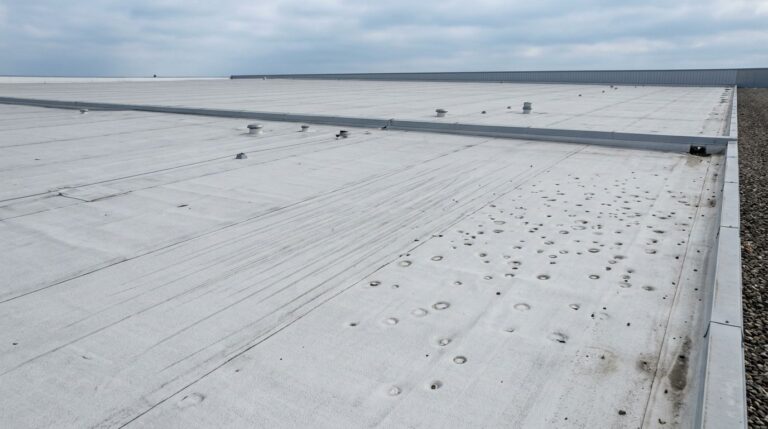
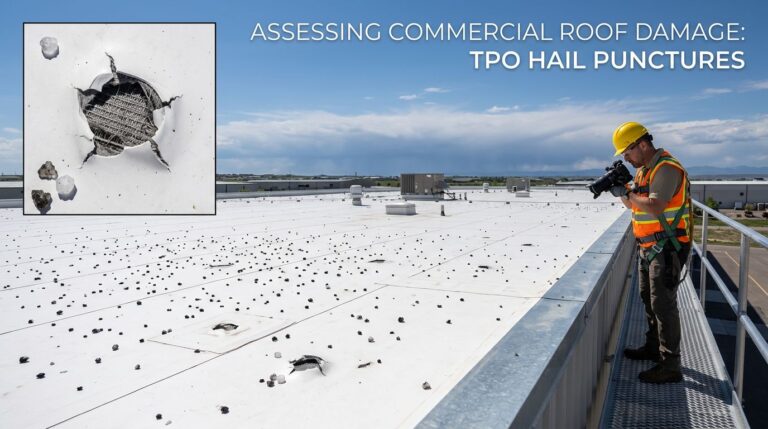
If your building has TPO, EPDM, modified bitumen, or metal, this comparison does not fit well. Those roofs fail in other ways, such as punctures, open seams, flashing splits, or loose fasteners. In those cases, you need the right commercial roofing services Saint Paul team, not a shingle-only diagnosis.
Age can blur the picture
Older shingles can show both problems at once, including curling shingles as a symptom of aging. A brittle tab may blister from heat and later crack in wind. If damage is broad, the roof may be past spot fixes. If it is limited and the system still has life left, hire a roofing contractor for an accurate assessment; the commercial roof needs repair, not roof replacement.
Step-by-Step
1. Check where the damage sits
Wind usually hits ridges and eaves first. Look at eaves, rakes, ridges, corners, and areas near parapets or taller walls. Roof blistering tends to show up in open, sun-beaten field areas instead.
This quick chart helps separate the two:
| Sign | Wind damage | Heat blisters |
|---|---|---|
| Location | Edges, corners, ridges | Broad sun-exposed areas |
| Shape | Lifted, creased, torn | Small round bubbles or pits |
| Seal strip | Often broken | Often still bonded |
| Cause pattern | Storm-related | Heat-related |
Location alone is not enough, but it gives you a strong first clue.
2. Look at the shape of the shingle
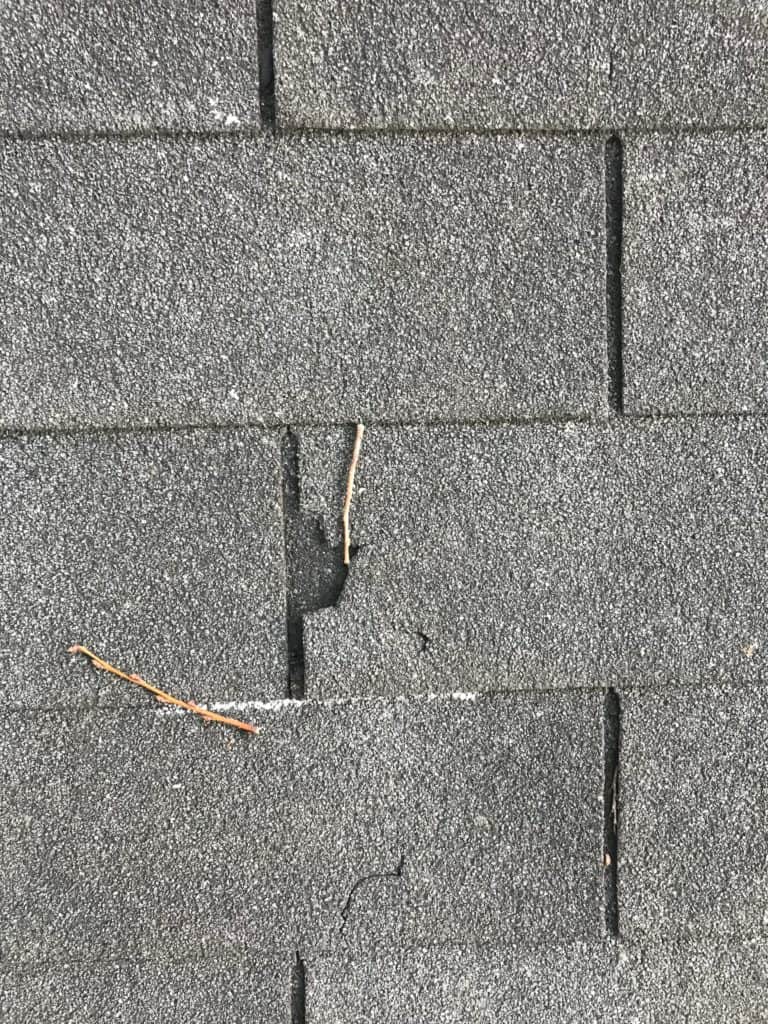
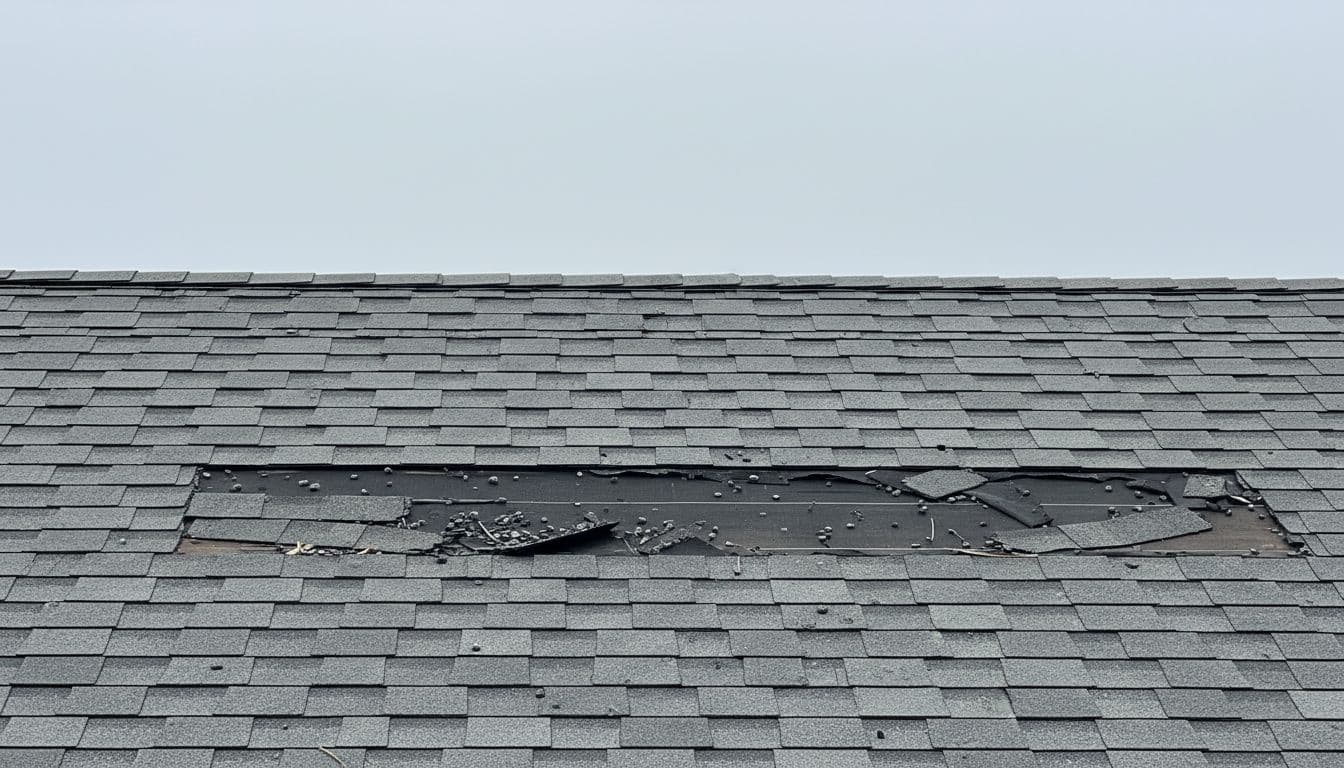
Wind changes the shingle’s position. Tabs may curl up, fold back, crease across the mat, or tear off. Missing tabs and exposed nail lines also point to uplift. Granule loss from ceramic granules often accompanies this, signaling surface wear from storm forces. Unlike hail damage, which creates circular impressions or concave impressions, wind damage does not produce popped blisters.
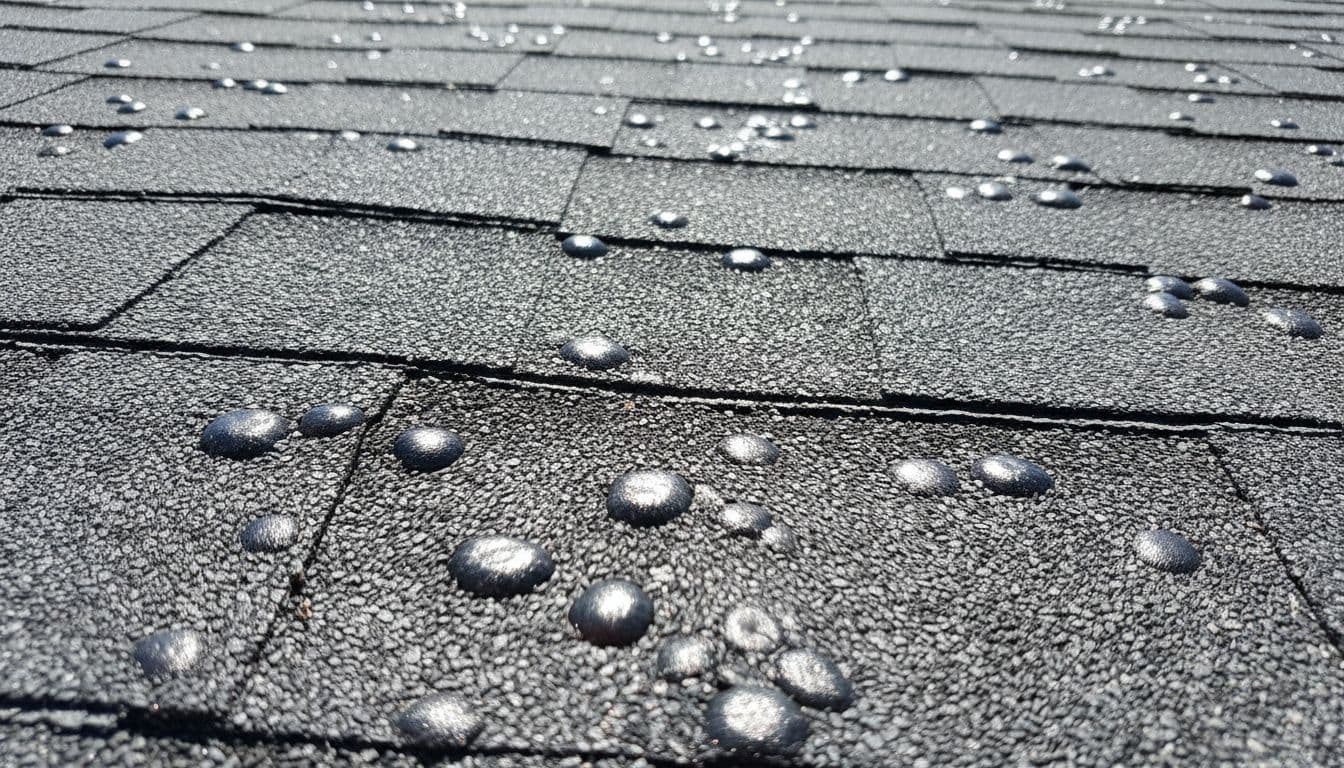
Heat blisters stay on the surface. They look like small bumps, or tiny craters if they have popped. The shingle usually stays in place.
3. Check the seal strip and the underside
A wind-damaged shingle often loses its seal. If a trained roofer gently lifts the tab, the bond may be broken or uneven. You may also see fresh creases where the shingle bent and snapped back.
Blisters usually do not break the seal strip first. They affect the top surface before they affect attachment. That distinction matters because wind damage can open a path for water fast.
4. Look for a weather pattern
Wind damage rarely appears as one neat bubble here and there. Instead, it often lines up with recent storms, much like hail damage or impact damage. You may also see loose granules in gutters, bent metal, or damage on the same slope as nearby tree impact. Check soft metals for collateral damage to confirm a storm event.
Blistering follows heat and roof age more than a single storm date, often linked to trapped moisture from poor attic ventilation. It can appear more evenly spread, especially on south-facing slopes. If interior staining has started, a professional commercial roof leak inspection can help find hidden moisture before it spreads.
5. Match the finding to the repair decision
Wind damage usually needs action sooner. Once tabs unseal, the next storm can pull more shingles loose. That is why prompt repair matters. A focused fix may work if the damage is limited. Widespread uplift may push the job toward commercial roof replacement.
When both show up together
Heat blisters do not always mean failure today, but they do reduce shingle life due to extreme heat, UV rays, and the loss of hydrocarbons in the asphalt bitumen that lead to surface failure. If blistering is widespread and the mat is thinning, the roof may not hold up well in future storms. On mixed-use buildings, this can also affect nearby low-slope sections, which may need commercial flat roof repair if water migrates into adjoining roof areas. A professional roof inspection by a roofing contractor can document collateral damage for an insurance claim or to justify roof replacement.
Document everything with photos, dates, and slope locations. That record helps with claims, repair scope, and budget planning.
Frequently asked questions
Can heat blisters cause leaks right away?
Sometimes, but not always. Intact roof blistering on asphalt shingles is often a surface issue first. Once popped blisters wear away granules leading to granule loss, moisture can reach the shingle mat and eventually the roof deck faster, especially on older roofs.
Will insurance cover blistered shingles?
Usually, roof blistering is treated as age, heat, or product wear on asphalt shingles, not sudden storm damage. Hail damage, impact damage, or wind damage is more likely to fit an insurance claim because it is tied to a specific weather event and shows visible uplift.
Can one roof slope have wind damage while another has blisters?
Yes. Wind may hit one exposure harder, while heat causes roof blistering on the sunniest slope of asphalt shingles. That split pattern is common on larger buildings with different orientations.
What if the shingles look brittle and cracked too?
Brittle asphalt shingles are harder to diagnose from photos alone. Wind can crack them more easily, and heat can make them worse over time. In that case, the key issue is remaining service life, not just the original cause.
How fast should a business owner act after finding damage?
Act quickly if tabs are loose, pieces are missing, or moisture has reached the interior or roof deck. Small shingle problems grow fast after the next storm. Early repair including a roof inspection to check for poor attic ventilation as the root cause of blistering is cheaper than letting a minor defect turn into deck damage or a larger leak event.
The fastest way to sort this out is simple: wind lifts and tears, heat blisters bubble and pit. Look at the edges, the seal strip, and the pattern across the roof.
If the roof shows broken tabs, missing shingles, or interior moisture, move fast. Early action can keep a small repair from turning into a large capital expense.
Need a roof inspection in Saint Paul or the Twin Cities? Call Sellers Roofing Company at +1-651-703-2336 or schedule a free estimate. We are a black-owned, NMSDC-certified MBE roofing contractor with 9+ years experience.