Last updated: 2026-08-01 by Ted Sellers, Owner
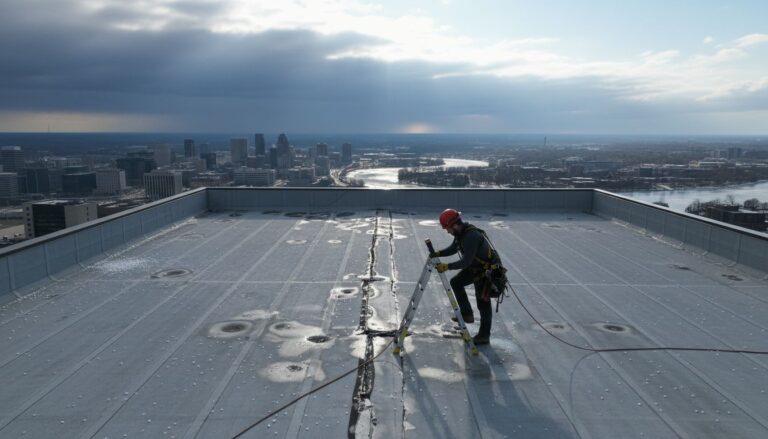
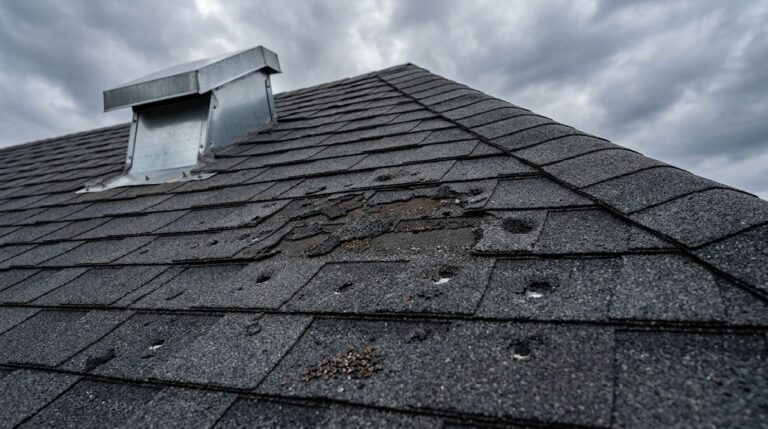
Modified bitumen wind damage on flat roofing usually looks like lifted seams, curled edges, missing granules, exposed asphalt, loose flashing, wrinkles, and tears near the roof perimeter. After a strong storm, you may also see displaced debris or new interior leaks. On a commercial roof, those signs mean the modified bitumen membrane may have lost its seal and needs prompt attention.
Key Takeaways
- Modified bitumen wind damage shows as lifted seams, curled edges, missing granules, exposed asphalt, loose flashing, wrinkles, and tears, mainly at perimeters, corners, and flashing on low-slope commercial roofs.
- Inspect starting at edges and corners for uplift, then check the field for surface loss and tears; trace hidden moisture to avoid interior leaks.
- Repair limited, dry damage promptly with resealed laps and flashing; opt for replacement if widespread failure, wet insulation, or aging roof makes patches uneconomical.
- Wind damage looks abrupt and uneven, unlike uniform aging; act fast after storms to prevent water spread and further peel-back.
When This Applies
If you own or manage a low-slope commercial roof
This applies to offices, warehouses, retail centers, schools, and multi-tenant buildings with low-slope roofs using modified bitumen. It matters most after high winds, strong thunderstorm lines, or winter gusts that hit an exposed building.
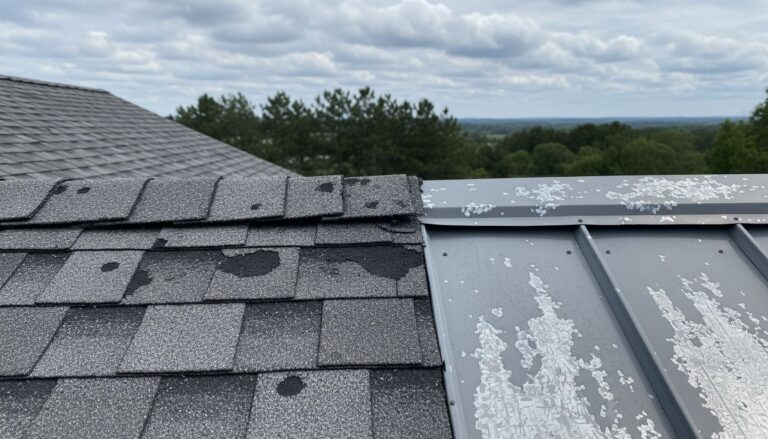
It does not apply the same way to metal roofs, steep-slope shingles, or single-ply systems like TPO. Those roofs can fail from wind too, but the visual clues are different.
Signs that usually point to wind, not age
On modified bitumen low-slope roofs, whether SBS modified bitumen or APP modified bitumen, wind damage often starts at edges, corners, laps, and flashing details. Those spots represent the wind pressure zones, so they usually show the first changes in this multi-ply system.
Look for seam edges that have lifted enough to cast a shadow. You may also see cap sheet wrinkles that run with the wind path, granules stripped away in uneven patches, or flashing pulled off a wall or curb. In more serious cases, the membrane tears where it was already stressed.
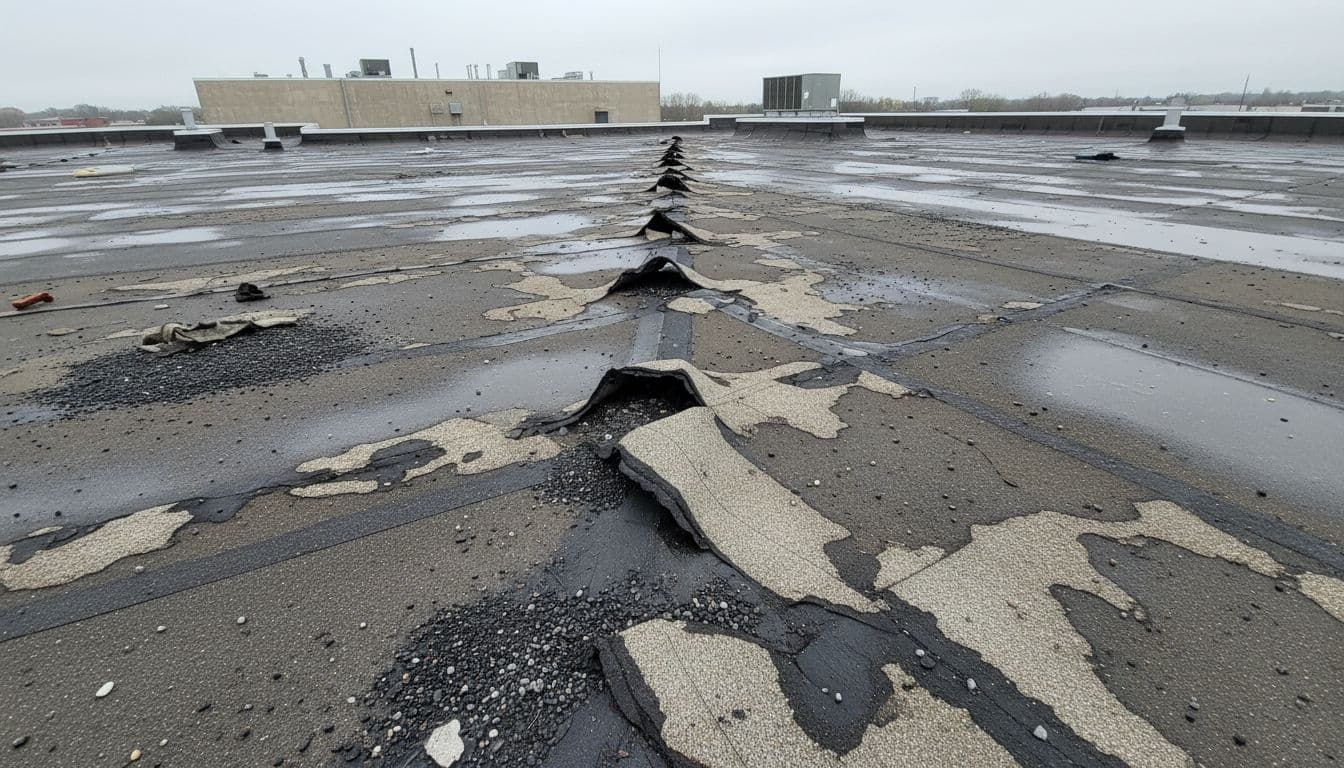
Wind rarely wears a roof down evenly. Instead, it grabs weak points and tries to peel them back. Normal aging looks broader and more uniform, while storm damage looks abrupt and uneven. This contrasts with installations designed for high wind durability.
On modified bitumen roofs, the perimeter usually tells the story first.
Edge cases after ponding water or old patches
Some marks can fool you. Membrane blisters from trapped moisture, foot-traffic scuffs, and failing older repairs can look similar from a distance.
Still, those issues often overlap with storm damage. Wind tends to expose the weak spots that were already close to failure, so a storm may reveal both old wear and fresh damage at the same time.
Step-by-Step
1. Start at the perimeter and corners
Begin with the perimeter edges, corner areas, and wall terminations. Modified bitumen wind damage often starts there because wind uplift is strongest at the outside of the roof.
Check edge metal, base flashing, and membrane terminations for loose fasteners, gaps, lifted laps, sealant that has split open, or flashing failures. Also compare one side of the building to the other, because the windward side usually takes the hardest hit.
2. Check the roof field for surface loss and tears
Next, inspect the open roof surface for fresh granule loss, exposed asphalt, scuffed patches, ridges, or split repairs in the roofing membrane. If windborne debris blew across the roof, you may also find punctures or drag marks.
Take photos with a fixed reference point, such as a drain, curb, or HVAC unit. That makes it easier to track whether the damage is isolated or spread across several areas.
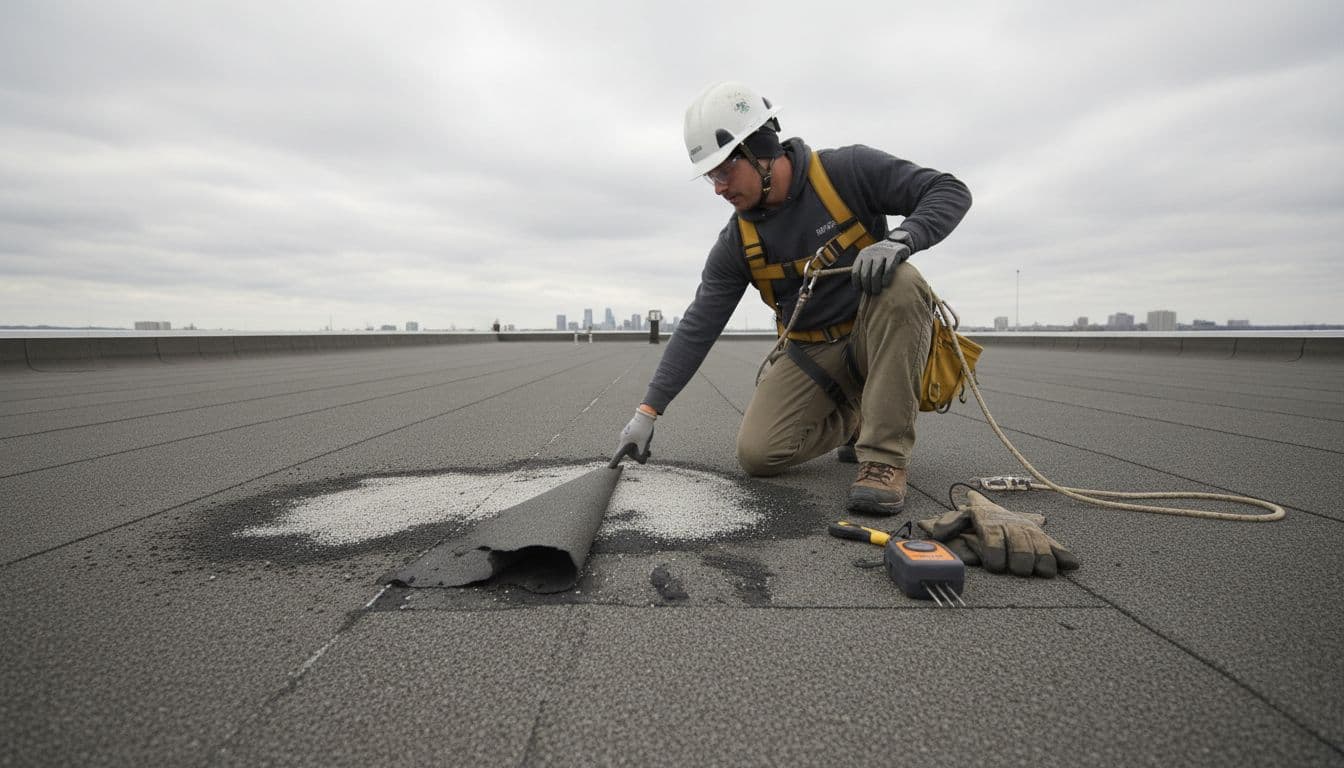
3. Trace hidden moisture before it spreads
If wind has opened the roofing membrane, water may already be moving below the surface. Interior stains do not always appear directly below the damage, which is why visual checks alone can miss the full picture.
For that reason, many owners follow a storm inspection with a professional roof inspection that includes commercial roof leak detection services. Finding wet insulation early can keep a small roof issue from turning into damaged ceilings, inventory loss, or mold concerns.
If leaks showed up indoors
Mark ceiling stains, note the time they appeared, and photograph the affected rooms. That record helps separate fresh storm loss from older wear and supports repair planning.
4. Decide whether repair or replacement makes sense
When damage is limited to a few seams, flashing points, or small roof sections, commercial flat roof repair is often enough. Fast repairs matter because once wind gets under one loose lap of the asphalt membrane, the next storm can peel back more membrane.
A commercial roof needs repair right away when seams are open, edge metal is loose, or water has entered the insulation. If large sections have lifted because wind uplift exceeded the tensile strength of the material, moisture is widespread, or the roof has a long history of patching, commercial roof replacement after wind damage may be the better long-term choice.
How Serious Is the Damage?
When repair is usually enough
Targeted repair usually works when the damage is limited on the modified bitumen roof, the insulation beneath the waterproofing layers is still dry, and the rest of the membrane maintains good tear resistance while remaining well-bonded. In those cases, crews can often reseal laps, replace damaged flashing, and patch affected sections without major disruption.
When the roof is telling you more
Widespread seam failure, soft spots underfoot, repeated blow-offs, or open laps in several areas point to a system problem, not a one-spot fix. Age matters too, because an older modified bitumen commercial roof with fresh wind damage often reaches the point where repeated repairs stop making financial sense, particularly when weighing options like a more energy efficient commercial roof replacement.
This quick comparison helps frame the decision:
| What you see | Likely next step |
|---|---|
| One or two lifted seams, dry insulation | Targeted repair |
| Several damaged areas, some wet insulation | Section replacement or larger repair |
| Broad seam failure, recurring leaks, aging roof | Commercial roof replacement |
The main takeaway is simple: the more water and movement you find, the less likely a small patch will hold. For repaired modified bitumen roofs, consider a maintenance plan to extend performance and avoid future issues.
FAQ
Can wind damage show up days after the storm?
Yes. Storm damage can loosen seams or flashing right away, but interior leaks may not show until the next rain or thaw. Low-slope roofs often let water travel before it drops inside.
Does missing granule surfacing always mean wind damage?
No. Age (which compromises UV resistance), foot traffic, and heat can also wear granules away. Wind damage is more likely when the loss looks fresh and uneven, especially if it appears with lifted laps or torn edges.
Can staff inspect the roof right after high winds?
Only if access is safe and the surface is dry. Wet modified bitumen can be slick, and hidden soft spots lacking substrate support can create a fall risk. A trained roof inspector is the safer choice.
What if the leak is far from the torn area?
That is common on commercial roofs. Water can move along seams, insulation, or deck contours before it appears indoors, so the visible leak may be well away from the actual opening.
Why that matters
If crews only patch the ceiling-side area, the roof leak can continue. The source has to be traced, not guessed.
Should an older roof still be repaired after wind damage?
Sometimes, yes. A short-term repair can stop active leaks and protect operations. Still, if the roof is near the end of its service life, options like elastomeric coatings can extend aging torch down roofing (a common name for modified bitumen systems); otherwise, replacement may cost less than repeated emergency work.
Modified bitumen wind damage is often easy to recognize once you know where to look, edges, seams, flashing, and fresh surface loss. The bigger risk is what water may be doing underneath the membrane.
For business owners, speed protects more than the roof. Early photos, a careful inspection, and prompt action can prevent minor storm damage from turning into a major building problem.
Need a roof inspection in Saint Paul or the Twin Cities? Call Sellers Roofing Company at +1-651-703-2336 or schedule a free estimate. We are a black-owned, NMSDC-certified MBE roofing contractor with 9+ years experience.