Last updated: 2026-08-01 by Ted Sellers, Owner
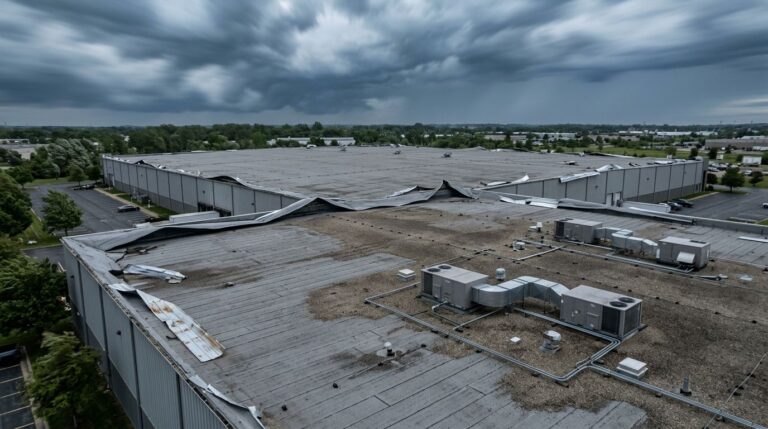
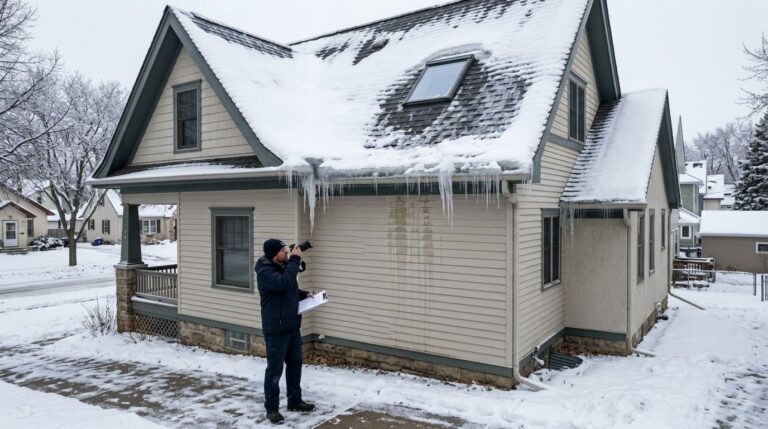
To document roof hail damage for insurance claims, take wide photos of the entire roof, slope-by-slope roof images, close-ups of shingle impact marks, and photos of dents on soft metals like gutters and vents. Include a ruler or coin for scale, and document the storm date and any temporary repairs.
Proper photo documentation helps prove that roof damage was caused by a specific hailstorm rather than normal wear or aging.
Professional roofing inspectors typically photograph hail damage in a specific sequence to clearly show the location, severity, and pattern of impacts.
Photo Order Used by Roofing Inspectors
Follow this order when documenting roof hail damage:
1. Wide Roof and Property Photos
Start with wide photos showing the entire home and roof.
Photograph:
- Front and back of the house
- All visible roof slopes
- Gutters and downspouts
- Nearby trees or storm debris
These photos establish the property location and storm context.
2. Roof Slope Photos
Next, photograph each roof slope individually.
For every slope capture:
- One straight-on photo
- One 45-degree angle photo
- One closer inspection image
This helps show how hail impacts appear across the roof surface.
3. Close-Up Damage Photos
Document individual hail impact areas.
Common signs of hail damage include:
- Shingle bruising
- Circular impact marks
- Granule loss
- Cracked shingles
Take multiple close-up photos of each damaged area.
Every close-up should include a ruler, tape measure, or coin for scale so the size of the impact is visible.
4. Soft Metal Impact Photos
Insurance adjusters often confirm hailstorms by examining soft metal damage, which dents more easily than shingles.
Photograph:
- Gutters
- Roof vents
- Flashing
- Ridge caps
- HVAC covers
- Downspouts
Dents in soft metals help confirm hail size and impact force.
5. Storm Evidence Documentation
Additional evidence can strengthen your insurance claim.
Record:
- Date and time of the storm
- Local weather alerts or hail reports
- Interior leaks or water stains
- Temporary repairs such as tarps
This documentation helps create a timeline linking the storm to the roof damage.
Tips for Taking Insurance-Ready Roof Damage Photos
For the clearest documentation:
- Take photos in good lighting
- Use high-resolution images
- Keep photos sharp and in focus
- Photograph damage from multiple angles
- Label files by date and roof location
Example file name:
2026-05-12-north-roof-slope-hail-damage.jpg
Organized photos make it easier for insurance adjusters to verify hail impact patterns and approve claims faster.
Why This Version Performs Better
1. Strong Featured Snippet Target
The first paragraph directly answers:
“How do you document roof hail damage?”
2. Cleaner Structure
AI search prefers:
- numbered sections
- short paragraphs
- predictable formatting
3. Reduced Redundancy
Your version repeated the process explanation several times. This version:
- keeps meaning
- removes fluff
- improves readability
4. Better Semantic Signals
Adds context Google associates with claims:
- hail impact patterns
- roof slopes
- storm timeline
- insurance adjusters
When This Applies
This works best for Minnesota commercial owners after a known hail date
This process fits commercial business owners who need clean proof for an insurance file to support determinations of Actual Cash Value or Replacement Cost Value under Minnesota insurance requirements, especially when the building is still operating. A professional roofing contractor serves as a key resource for these commercial owners. It’s useful for offices, retail, warehouses, churches, and multi-family roofs, including shingles and many low-slope systems.
Use it when you can point to a likely storm window (even a one to three-day range). That timing matters because adjusters compare your photos to weather history and the roof’s condition. If you want a Minnesota-focused checklist mindset, compare your notes to tips for documenting roof damage in Minnesota.
This also applies when you’re trying to answer a simple question: commercial roof needs repair, or is it cosmetic wear? Clear photo sets reduce “maybe” and push the claim forward.
When photos alone aren’t enough (and when to stop)
Photos help an insurance adjuster verify issues like missing shingles, but they don’t replace safe access and trained assessment.
If access is risky, document from the ground and call a pro
Skip roof-walking if it’s icy (common in February), steep, wet, or higher than your comfort level. Also avoid stepping on brittle skylights, snow-covered membranes, or areas near roof edges without fall protection.
If getting the shot puts you at risk, it’s the wrong shot. Take ground photos and escalate to a qualified storm damage inspection.
For flat and low-slope systems, leaks can show up far from the impact point. If you suspect moisture travel, pair your hail documentation with professional verification like commercial roof leak detection in Saint Paul.
Step-by-Step
Exact roof hail damage photos to take (angles adjusters can match to the roof)
- Set your camera for consistency before you start. Clean the lens, turn off beauty filters, and use the 1x lens (not 0.5x) to avoid distortion. Enable date/time, and keep HDR on if it helps detail. Then hold the phone level for every wide-angle shot.
- Photograph the whole building from all four sides. Stand across the street or parking lot and take one photo per side. Include signage or a street marker if possible. These are your “this is the property” anchors when filing an insurance claim.
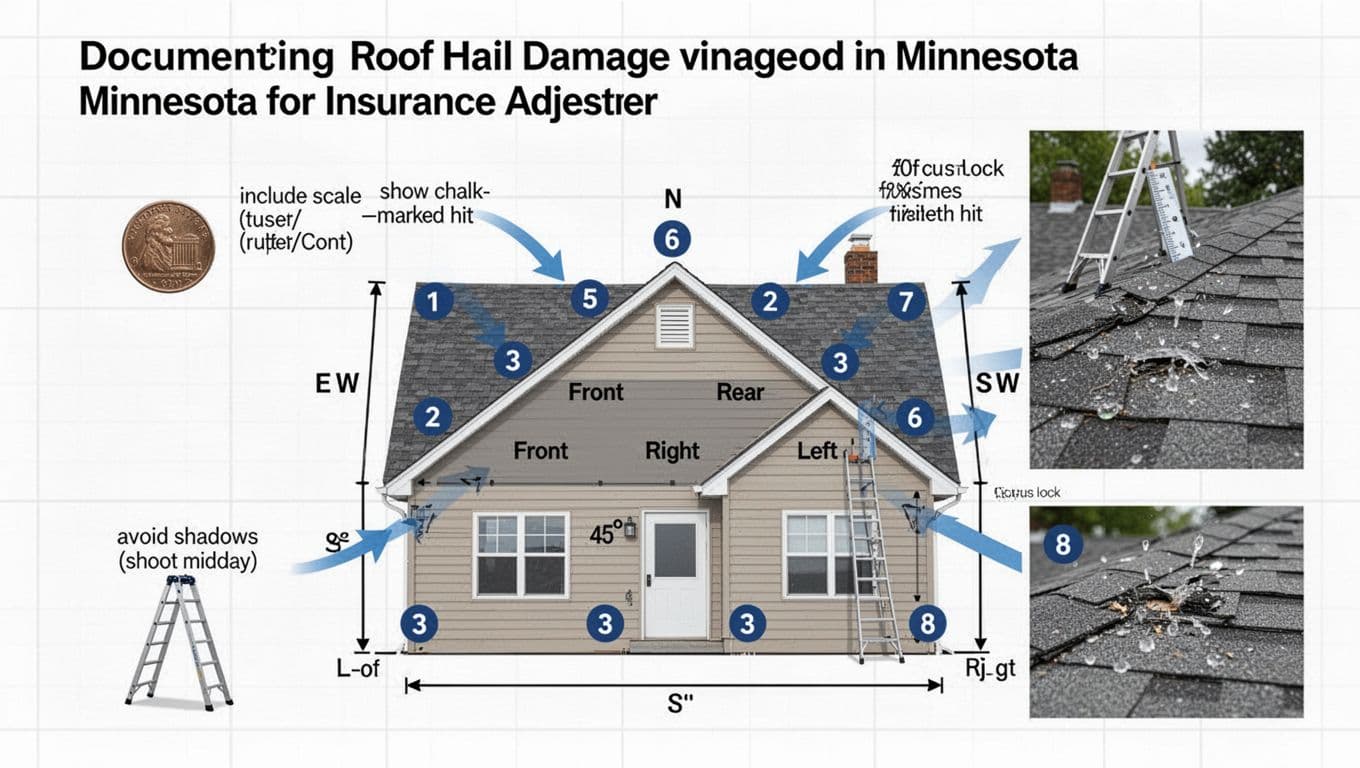
- Capture roof-plane context from the ground at three angles per slope. For each visible slope, take (a) straight-on, (b) 45° from the left, (c) 45° from the right. Keep the roof edge and at least one fixed reference (chimney, HVAC curb, parapet) in frame.
- Record soft-metal “tell” damage first (it photographs well). Hail often causes collateral damage like dented gutters, downspouts, gooseneck vents, ridge caps, and metal wraps. Shoot each item twice: one wide-angle shot showing where it is, then a close-up that shows dent pattern and paint chipping.
- On each roof slope, shoot a wide “grid” series before close-up photos. If you can safely access the roof (or a contractor can), take four wide-angle shots per slope: lower-left, lower-right, upper-left, upper-right. Keep each photo square to the surface (straight down) so an adjuster can understand coverage.
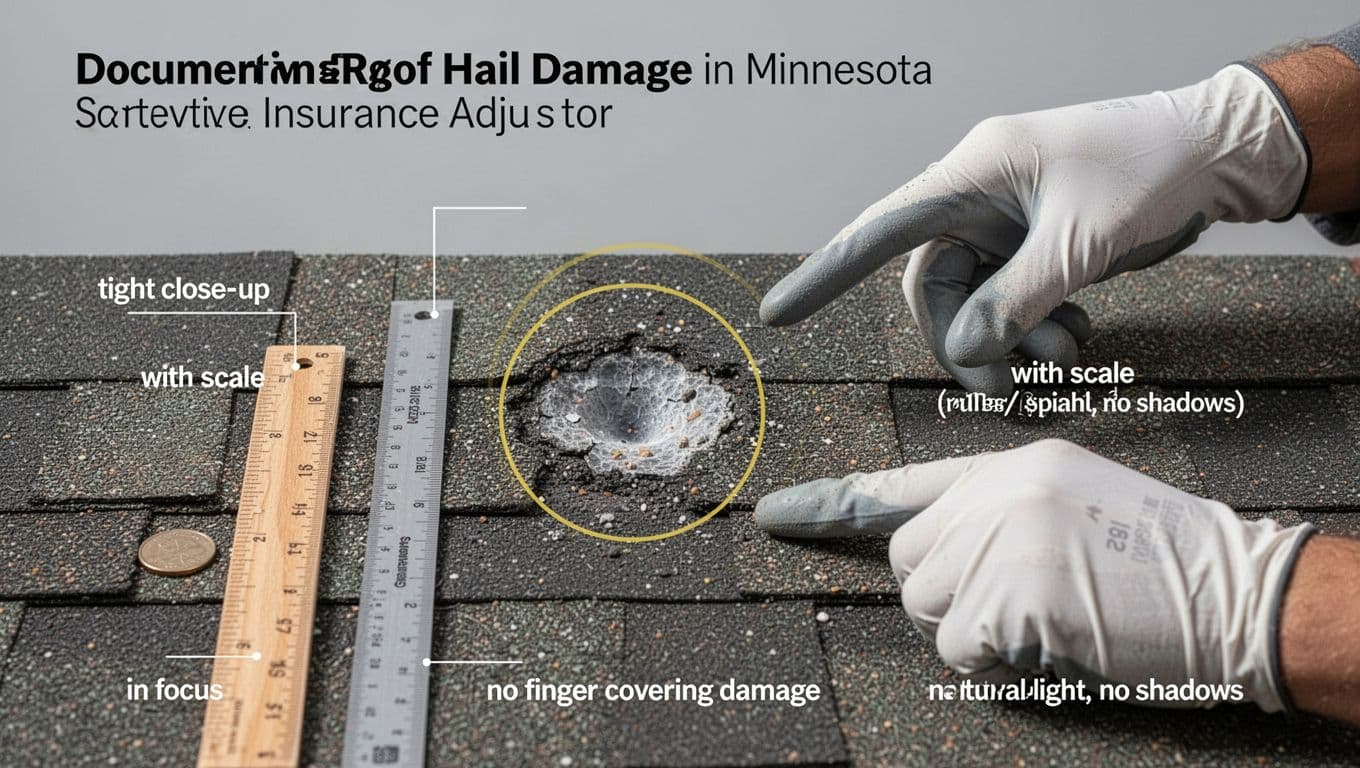
- Take the core verification shot: tight close-up with scale, straight-on to the surface. Place a ruler or coin beside the suspected hit. Don’t cover damage with your fingers. Tap to focus on the shingle bruising, granule loss, or missing shingles, then hold steady. Take two versions: one with flash off, one with flash on, because glare sometimes reveals bruising.
- Add the adjuster-friendly angle: 45° oblique close-up with the same scale. Move your phone so the light rakes across the surface. This angle often shows texture change, fractured mat, or displaced granules. Keep the scale in the same plane as the impact.
- Mark only what you’re photographing, and show the mark in-frame. Use sidewalk chalk to circle one hit, then take the close-up photo again. Don’t chalk the whole roof. Your goal is to help the adjuster find the exact spot, not create confusion.
- Repeat close-up photos in a pattern, not just “best hits.” Adjusters look for distribution. Aim for 6 to 12 close-up photos per slope, spread out. If all hits appear on one windward side, document that contrast with photos of the opposite slope.
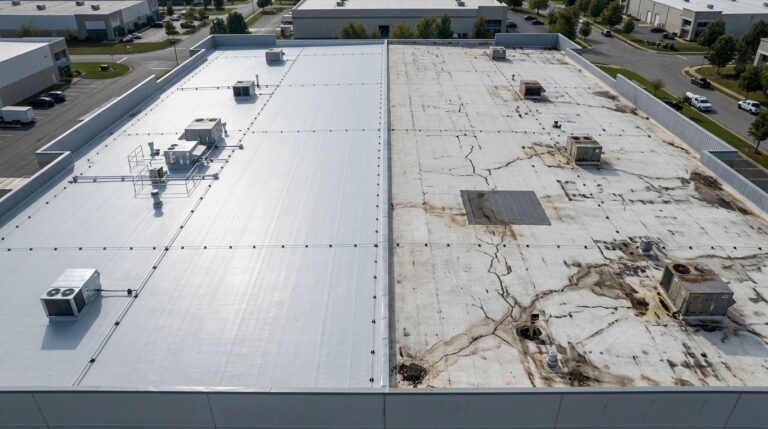
- Document membrane and flat-roof details where hail often shows up. On TPO, EPDM, modified bitumen, and metal systems, focus on (a) exposed corners, (b) seams, (c) flashing at penetrations, (d) drain bowls and scuppers, (e) rooftop unit curbs during your storm damage inspection. If you’re seeing seam stress or puncture risk, that can support commercial flat roof repair decisions.
- Photograph any interior impacts that connect to roof damage. If you have active leaks or ceiling staining, shoot one wide room photo, then a close-up of the stain, then a photo that shows ceiling tile location within the suite. Keep it simple and factual.
- Stop and escalate if the evidence suggests system-level failure. If you see widespread bruising on many slopes, repeated punctures, or extensive collateral dents, you may be looking at a commercial roof replacement conversation. In Saint Paul, you can compare options with Saint Paul commercial roofing services while the claim is still moving.
File names and folders that keep your claim moving
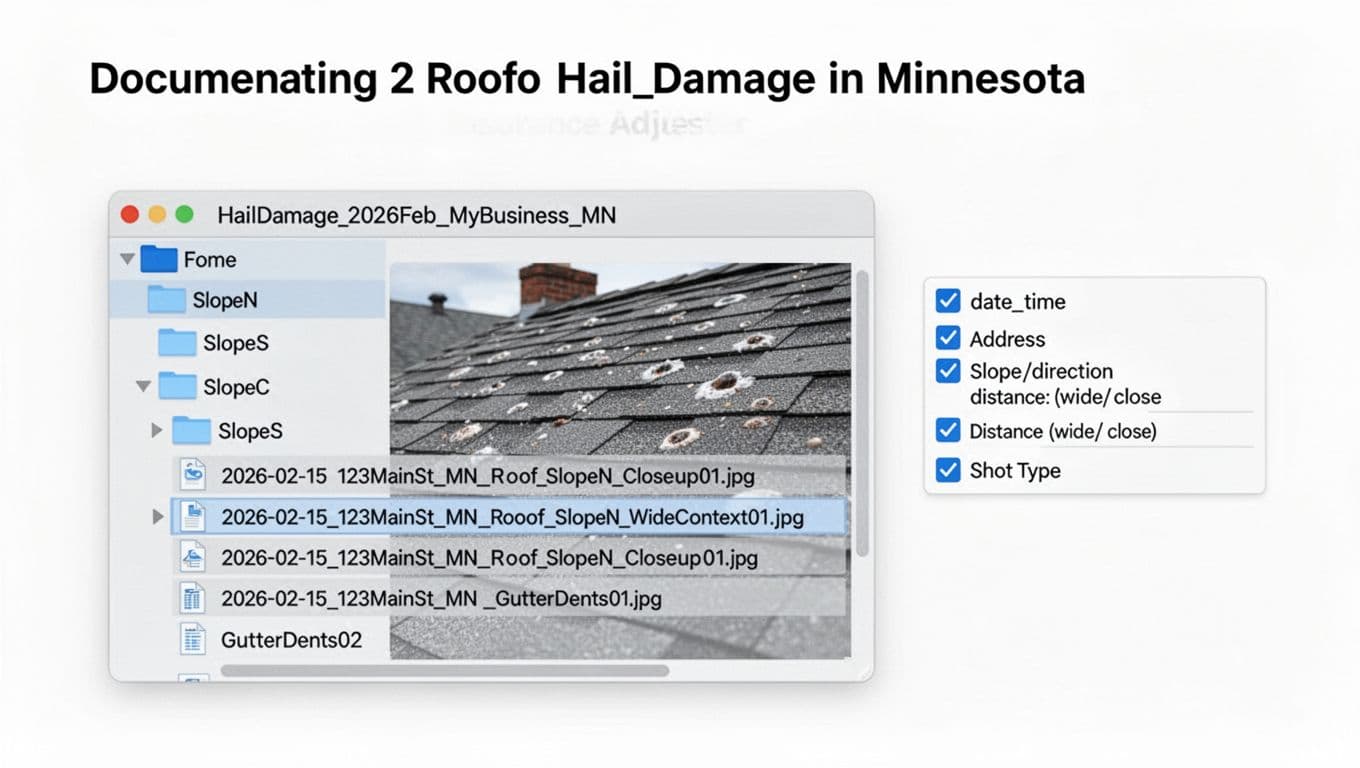
- Create one folder per property and one subfolder per roof area. Example structure: HailDamage_2026-02_YourBusiness_StPaulMN, then SlopeN, SlopeS, RoofTopUnits, Gutters, Interior. For high-access commercial roofs, add subfolders for drone footage or video documentation.
- Rename photos so each file “self-explains” without opening it. Use this pattern for time-stamped photos: YYYY-MM-DD_Address_CityST_Roof_SlopeDirection_ShotType_##.jpg, and include GPS tagging if your device supports it. For example, 2026-02-15_801TransferRd_StPaulMN_Roof_SlopeN_Closeup_01.jpg.
- Keep shot types consistent across the set. Use the same words every time: WideContext, WideGrid, CloseupScale, Oblique45, GutterDents, VentDents, Flashing, Drain, InteriorStain.
- Export a share-ready package before the insurance adjuster arrives. Save a copy to a cloud link and a USB. Then print a one-page photo index listing folders and what they show. If you want extra photo guidance, cross-check with photo and video tips for documenting roof damage.
A clean naming system can save hours of back-and-forth, because the insurance adjuster can verify slope and location fast.
FAQ
Will my phone’s metadata (EXIF) help an adjuster verify hail damage?
Yes, it can support timing and consistency when filing an insurance claim, but it won’t prove hail by itself. Keep date/time correct, avoid heavy edits, and don’t screenshot photos if you can share originals.
What if the roof looks “fine,” but we still think hail hit it?
That’s common, especially with shingle bruising that hides under granules. Focus on close-ups with scale, plus soft-metal dents. If you need examples of what shingle bruising looks like, see a hail damage shingle photo guide from a storm damage inspection.
What happens if I only take close-ups and skip wide shots?
The adjuster may not be able to match damage to a slope or confirm distribution. Wide context shots often make the close-ups usable, not the other way around.
Can I document hail damage without getting on the roof?
Yes. You can build a solid file with ground angles, ladder-safe eave shots, gutters, vents, and exterior elevations. Then schedule an inspection with a professional roofing contractor for roof-surface photos.
What if the adjuster says it’s “wear and tear”?
Ask what photo angles or locations they need to verify impact versus aging and avoid claim denial. Also keep your file organized and factual. If concerns persist over your deductible or claim economics, consider a public adjuster for an alternative perspective on how the deductible impacts approval. For claim-side expectations, review hail claim approval tips.
Clear roof hail damage photos are like a good map: they show where you are, what you saw, and how you got there. Pair them with a roof inspection report on local weather conditions for strong supporting evidence. If your documentation points to functional damage or active leaks, treat it as commercial roof needs repair and move quickly, considering Minnesota right to repair laws and temporary repairs, because Minnesota weather rarely waits. Work with an insurance adjuster on roof replacement through the insurance claim process.
Need a roof inspection in Saint Paul or the Twin Cities? Call Sellers Roofing Company at +1-651-703-2336 or schedule a free estimate. We are a black-owned, NMSDC-certified MBE roofing contractor with 9+ years experience.