Last updated: 2026-08-01 by Ted Sellers, Owner
In the first hour after a hailstorm, focus on safety, fast documentation of hail damage and storm damage, and stopping interior damage. Stay off the roof, do quick indoor checks for leaks, and photograph hail, exterior impacts, and any interior water. Then start a paper trail (time, weather, notes) and call a local commercial roofer for a same-day inspection, plus your insurer to begin a claim if needed. The goal is to prepare for a professional roof inspection by the end of this 60-minute window.
When This Applies
This 60-minute plan is for Saint Paul commercial properties
Use this plan if you own or manage a commercial building in Saint Paul (or nearby) and you suspect a hail damage roof problem after a storm, even if the roof “looks fine” from the parking lot. Hail damage can hide issues that need prompt attention.
This is especially useful for:
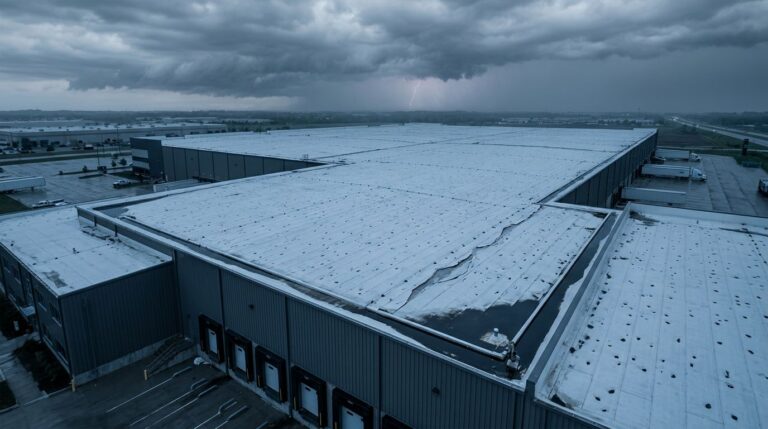
- Low-slope systems (TPO, EPDM, modified bitumen, built-up roofs) where punctures, seam splits, and crushed insulation may not show from the ground.
- Buildings with rooftop HVAC, skylights, vents, or many penetrations, since hail often damages flashing and curbs first.
- Sites with tenants, inventory, or sensitive equipment, where a small leak can turn into a big business interruption.
If you want a quick path to the next step after the first hour, plan on lining up a professional inspection with a local roofing contractor that can document conditions properly.
When this plan does not apply (or needs changes)
If any of these are true, skip parts of the plan and call for help:
- Active electrical hazards (sparking, a wet panel, downed power lines) or significant structural damage; call emergency services immediately.
- You have a steep roof, icy conditions, or high wind gusts that make exterior checks unsafe. Perform a visual inspection from the ground level instead.
- The storm involved tornado-level winds, storm damage, and debris impacts, where falling hazards are still present.
If there’s an immediate life-safety risk
Treat it like an emergency. Secure people first, then property. Photos can wait if someone could get hurt. Stick to a safe visual inspection from the ground level to avoid risks.
Step-by-Step
0 to 10 minutes: stabilize people and prevent further damage
- Move employees and tenants away from skylights, exterior doors, and windows until you’re sure glass and frames are intact.
- Do a fast interior walk-through of the top floor, stairwells, and mechanical rooms. Look for signs of roof leaks like new drips, ceiling water stains, wet ceiling tiles, bubbling paint, or puddles.
- If water is entering, place containers and plastic sheeting to protect floors, stock, and electronics. Take a quick photo before you move anything that proves the water path.
If you see water near power
- Keep people away. If safe, shut off power to the affected area and call an electrician or your facility contact.
10 to 30 minutes: document the damage like an insurance adjuster will
- Start a simple event log on your phone: storm date, approximate time, hail size estimate, wind direction, and where you first saw signs.
- Photograph hailstones before they melt. Put a coin or tape measure next to them, then take several angles.
- Take wide exterior shots from the ground on all sides of the building. Include the roof edge, parapet caps, gutters, downspouts, and rooftop units where visible.
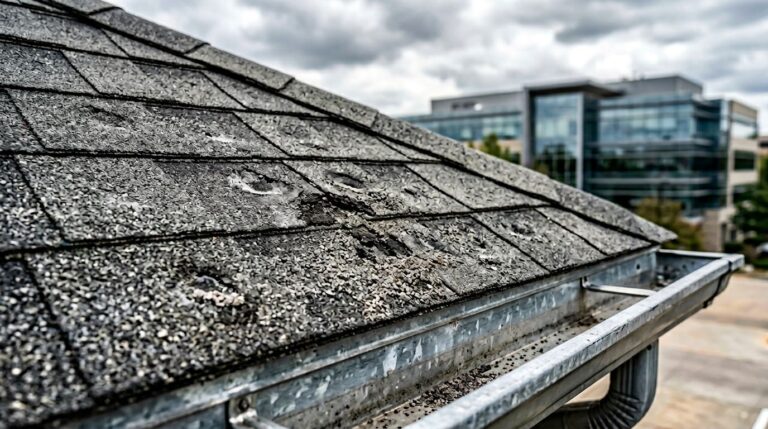
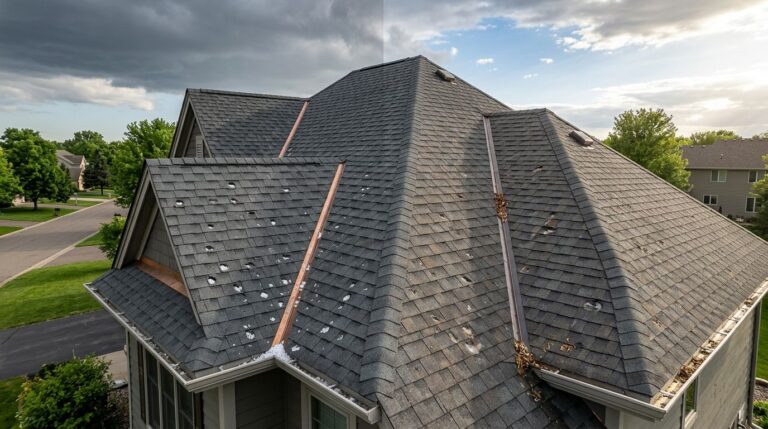
- Capture “proof of impact” photos: dented gutters, missing shingles, dented metal (fascia, coping), cracked skylight domes, damaged screens, and spatter marks on walls or HVAC housings.
To see the types of images insurers commonly expect, review a neutral guide like NRCIA’s hail damage roof inspection for insurance.
Photos that matter most for a commercial roof
- Take interior photos that connect cause to effect: wet insulation falling from a ceiling tile, water staining near a roof penetration line, damp wall tops, and any affected inventory.
30 to 45 minutes: ground level inspection without climbing
- Walk the perimeter and look up. You’re checking for displaced coping, hanging metal, damaged signs, loose gutter runs, granule loss, damage to flashing and vents, and impact marks on roofing materials or rooftop equipment.
- Check drains and downspouts at ground level. If you see granules, membrane bits, pieces of asphalt shingles, or unusual debris, photograph it before cleanup.
- If you have safe access to a higher vantage point (a parking ramp, adjacent window, or a secured platform), take a slow video pan of the roof surface from a distance. Don’t step onto the roof to “get a better shot.”
What to avoid, even if you’re tempted
- Don’t puncture, lift, or peel roof materials to “see underneath.” That can create new leaks and complicate a claim.
- Don’t pressure wash, sweep aggressively, or clear evidence off the roof edge. Hail often leaves subtle patterns that matter later.
45 to 60 minutes: line up the right next calls and protect your claim
- Call a professional roofer for an inspection and documentation visit, ideally the same day. If your building is already showing leaks, ask about commercial roof leak detection in Saint Paul so you fix the right area, not just the nearest stain.
- Notify your insurance carrier and start a claim if you have visible impacts, interior water, or widespread hail indicators. Ask what they want submitted first (photos, a repair estimate, emergency mitigation invoices).
- If temporary protection is needed (emergency roof repair, roof tarping, or a short-term patch), only authorize minimal, documented emergency measures. Take before and after photos of the problem area first, keep receipts, and save any removed materials if possible.
- Create a “storm folder” right away (digital is fine): photos, videos, your event log, receipts, and every email or call note.
How to think about repair versus replacement, early on
- If your contractor flags widespread bruising, punctures, or compromised seams, you may be heading toward commercial roof replacement rather than spot fixes. If the damage is localized, you might only need targeted commercial flat roof repair. Either way, fast documentation helps confirm whether your commercial roof needs repair now or can be scheduled.
For a practical step-by-step inspection overview (what to look for and how damage can present), this walkthrough is also helpful: roof hail damage inspection steps.
FAQ
Should I ever get on the roof right after hail?
No, not in the first hour. Wet membranes, hidden punctures, damaged skylights, and risks like damaging the roof deck or falling through compromised areas make falls more likely. If a roof must be accessed, it should be by trained personnel with proper fall protection and a clear safety plan.
What if there’s no leak, but I suspect a hail damage roof issue?
Still document and schedule an inspection. Hail can bruise membranes, split seams, and dent flashing without an immediate interior leak. Those weak points can open later during freeze-thaw cycles and heavy rain. A professional may recommend an attic inspection or moisture scan to detect hidden issues early, even if ceilings show no signs yet.
How long can hidden damage take to show up?
Weeks to months, especially on low-slope roofs where water travels before it drops inside. Tools like a moisture scan can help pros identify these problems before they worsen.
Should I trust contractors who show up right after the storm (storm chasers)?
No. Storm chasers often pressure for quick work with high-pressure sales and subpar repairs. Take time to vet licensed, insured professionals with local references and proven hail damage experience.
Can I do a quick patch myself to “stop future leaks”?
Avoid non-emergency patching before documentation. Unapproved materials can void warranties, trap moisture, or create a dispute about what damage is storm-related versus self-inflicted. If water is actively entering, do only the minimum to protect the interior and record everything.
What signs suggest I’ll need more than commercial flat roof repair?
Widespread seam splits, punctures across multiple sections, crushed insulation (soft spots), repeated leaks in different areas, or extensive damage to flashing and rooftop units can push the scope toward a full replacement strategy. Insurance may cover repairs or replacement based on actual cash value (depreciated cost) or replacement cost value (full new materials), so accurate documentation is key.
What should I tell tenants right away?
Tell them what you know, what you’re doing next, and how to report changes. Ask them to report ceiling stains, dripping, or musty smells immediately, and to avoid moving ceiling tiles or accessing rooftop areas.
A hailstorm doesn’t just hit the roof, it tests your response. Move people to safety, document like it’s evidence (because it is), and bring in a qualified pro before small impacts turn into expensive downtime. With a clear 60-minute plan, you protect your building, your tenants, and your roofing decision while setting up for a successful insurance claim.
Need a roof inspection in Saint Paul or the Twin Cities? Call Sellers Roofing Company at +1-651-703-2336 or schedule a free estimate. We are a black-owned, NMSDC-certified MBE roofing contractor with 9+ years experience.