Last updated: 2026-08-01 by Ted Sellers, Owner
Yes. High winds can loosen or flex the roof system enough to crack, split, or pull fasteners through the decking even when shingles stay in place. On commercial buildings, pressure changes at edges and corners often hurt the deck first. You may notice soft spots, leaks, or lifted tabs before you ever see missing shingles.
That matters because the deck is the layer that gives the roof its shape and holding strength. If it moves or weakens, surface repairs may miss the real problem.
When This Applies
Which commercial roofs fit this problem
This applies to offices, retail centers, churches, schools, apartment buildings, and mixed-use properties with shingled roof sections. Many commercial buildings have steep-slope entries, mansards, or accent roofs, even when the main roof is low-slope.
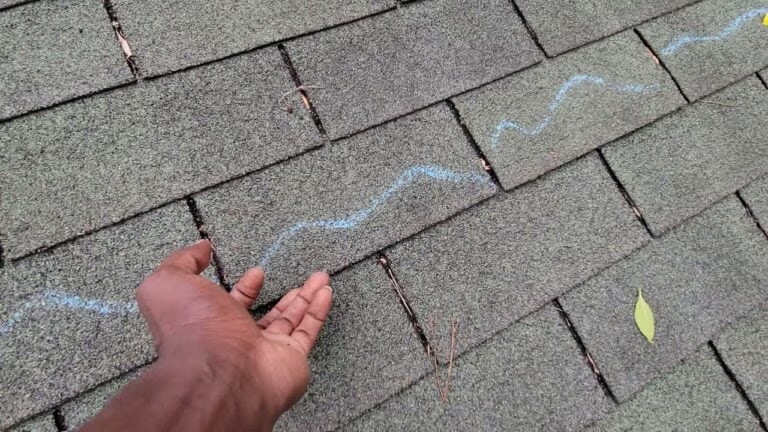
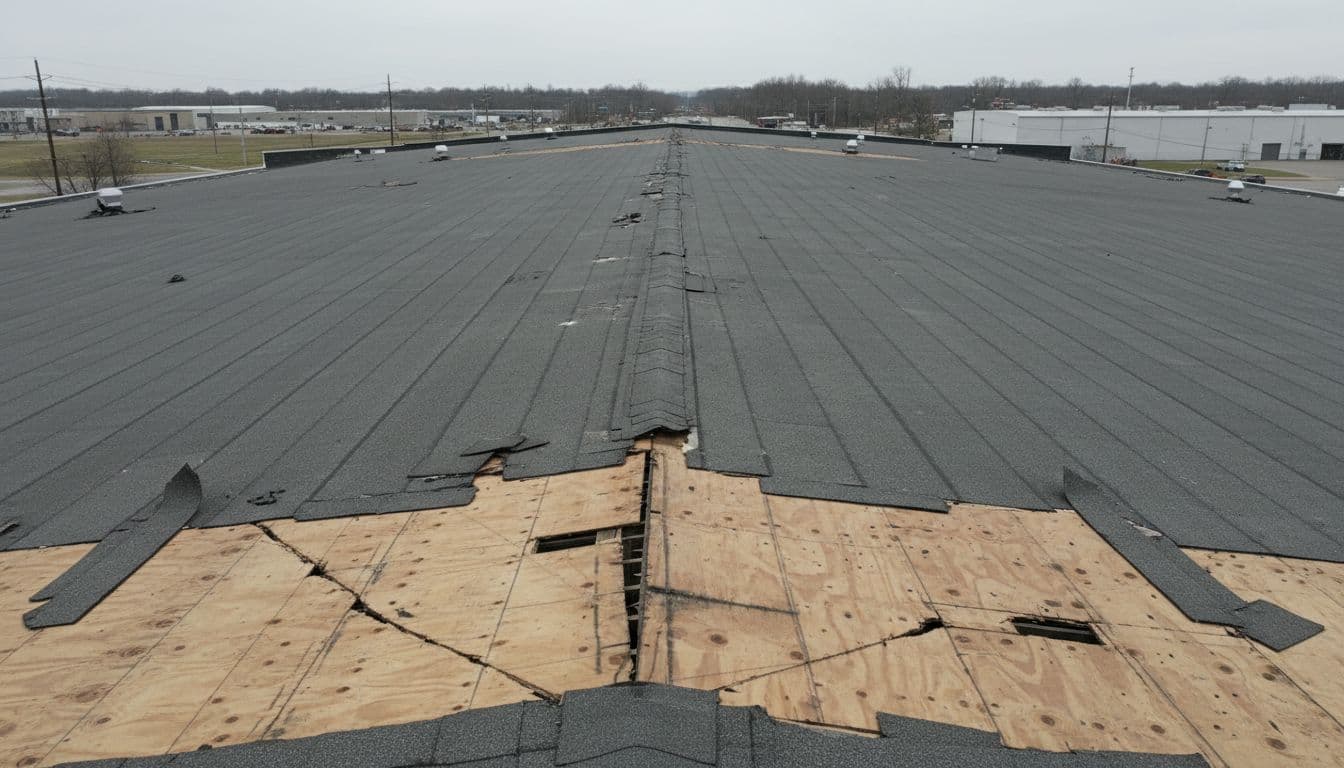
It also applies after a wind event when the roof looks mostly intact from the ground, yet new symptoms appear. You might see creased shingles, lifted edges, fresh ceiling stains, damp insulation, or a roof area that feels soft underfoot. A wind-damaged roof deck can hide under a roof covering that still looks serviceable.
When the same concern does not fit
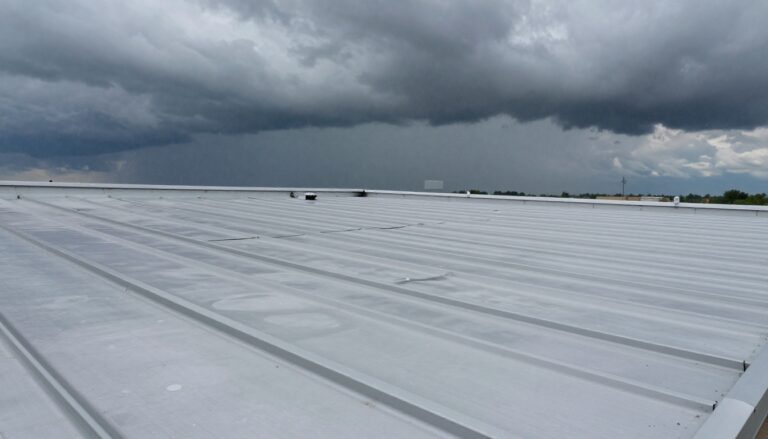
If your building only has TPO, EPDM, PVC, or modified bitumen, the shingle part does not apply. The hidden deck issue still can, but the visible signs are different. On those roofs, crews look for seam lift, punctures, edge metal movement, and trapped moisture instead of missing shingles.
The main edge cases on mixed roof systems
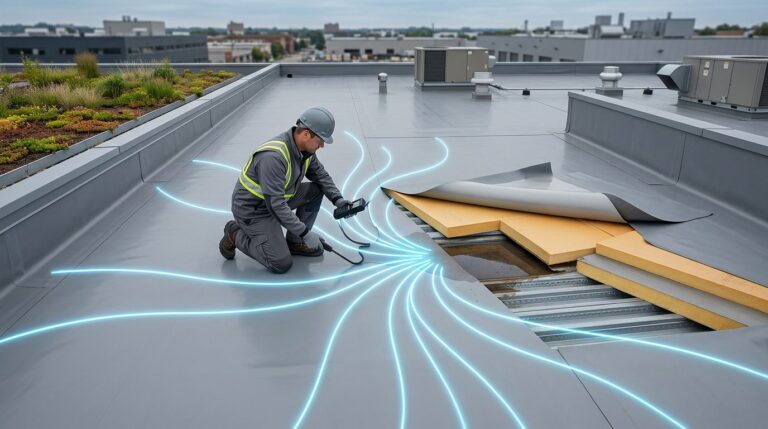
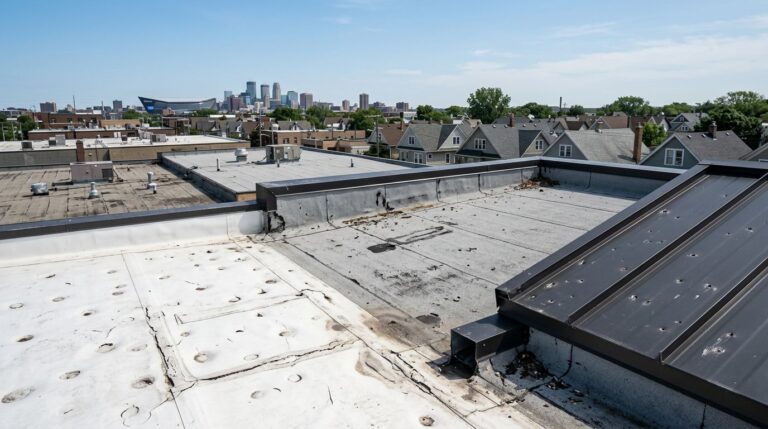
Mixed roof systems confuse a lot of owners. A leak near a shingled entry may start on a low-slope section several feet away. Because of that, commercial roof leak detection often matters before anyone settles on the repair plan.
In other words, the question is not only “Did shingles blow off?” The better question is whether wind changed the roof’s holding strength, deck condition, or water path.
Why wind can hurt decking before shingles go missing
What happens under the roof surface
Wind does more than strip material off the roof. It creates uplift pressure that can bend the roof assembly in short bursts. When that pressure repeats across the same area, shingles may lift and settle back down while the deck below takes the stress.
That hidden movement can widen fastener holes, crack panel joints, or separate decking at unsupported edges. On older roofs, the deck may already have some weakness from age or past moisture. A strong gust can turn a marginal area into an active failure without leaving a dramatic bare patch behind.
Why corners, edges, and older fasteners fail first
Corners and perimeter zones usually take the hardest hit. So do roof areas near parapets, rooftop units, and height changes where wind flow becomes more turbulent. If the deck is damp, thin, or poorly fastened, it loses holding power faster.
A roof can also show no missing shingles because the tabs were never fully torn away. They may lift, crease, and drop back into place. From the parking lot, the roof looks calm. Up close, the deck may already be split or soft.
Step-by-Step
How to confirm the deck is the real problem
- Start inside the building. Look for new stains, wet ceiling tile, damp insulation, or leaks near exterior walls and corners. Note when the water appears. If it shows up during wind-driven rain, that pattern often points to uplift-related damage instead of ordinary aging.
- Document the roof before permanent work starts. Take wide photos, close photos, interior photos, and recent weather notes. If water is entering the building, temporary dry-in work is reasonable. Keep it limited to damage-stopping work, and save every receipt, labor ticket, and field note.
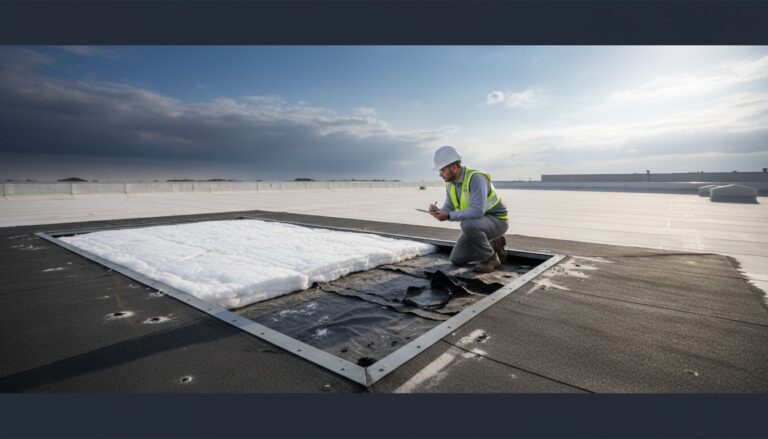
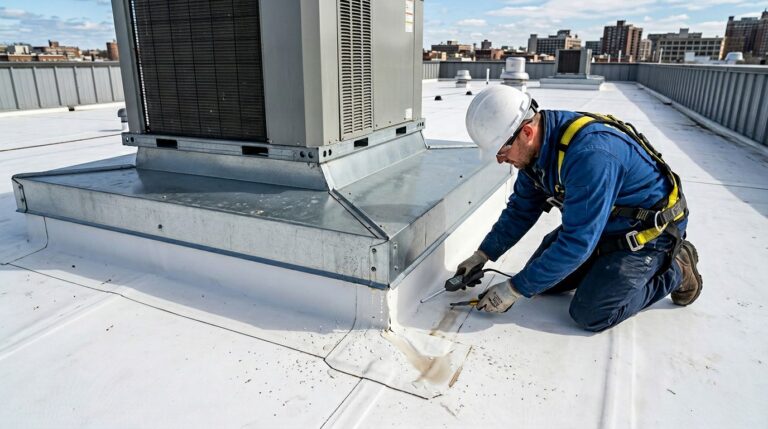
- Get a controlled inspection. Ask Saint Paul commercial roofing experts to lift selected shingles or open small test areas rather than tear off broad sections right away. The goal is to confirm cracked decking, pulled fasteners, broken joints, or wet materials without erasing the evidence.
- Separate fresh wind damage from old wear. A useful inspection report should tell you what is new, what is long-term deterioration, and what repair scope matches each condition. That distinction matters for claims. Carriers often focus on age or past patches, but the real issue is what caused the present failure.
- Match the repair to the actual spread of damage. A small failed area may need localized deck replacement and reroofing. If wet insulation extends across nearby low-slope sections, or if several areas took the same wind hit, the commercial roof needs repair on a wider scope than the first leak suggests.
- Hold permanent decisions until the scope is clear. If tear-off later exposes more covered damage, photos, moisture readings, test cuts, and code notes can support a supplement. That does not pad a claim. It corrects a scope that missed hidden damage tied to the same wind event.
What repair and claim decisions usually look like
When a limited repair is enough
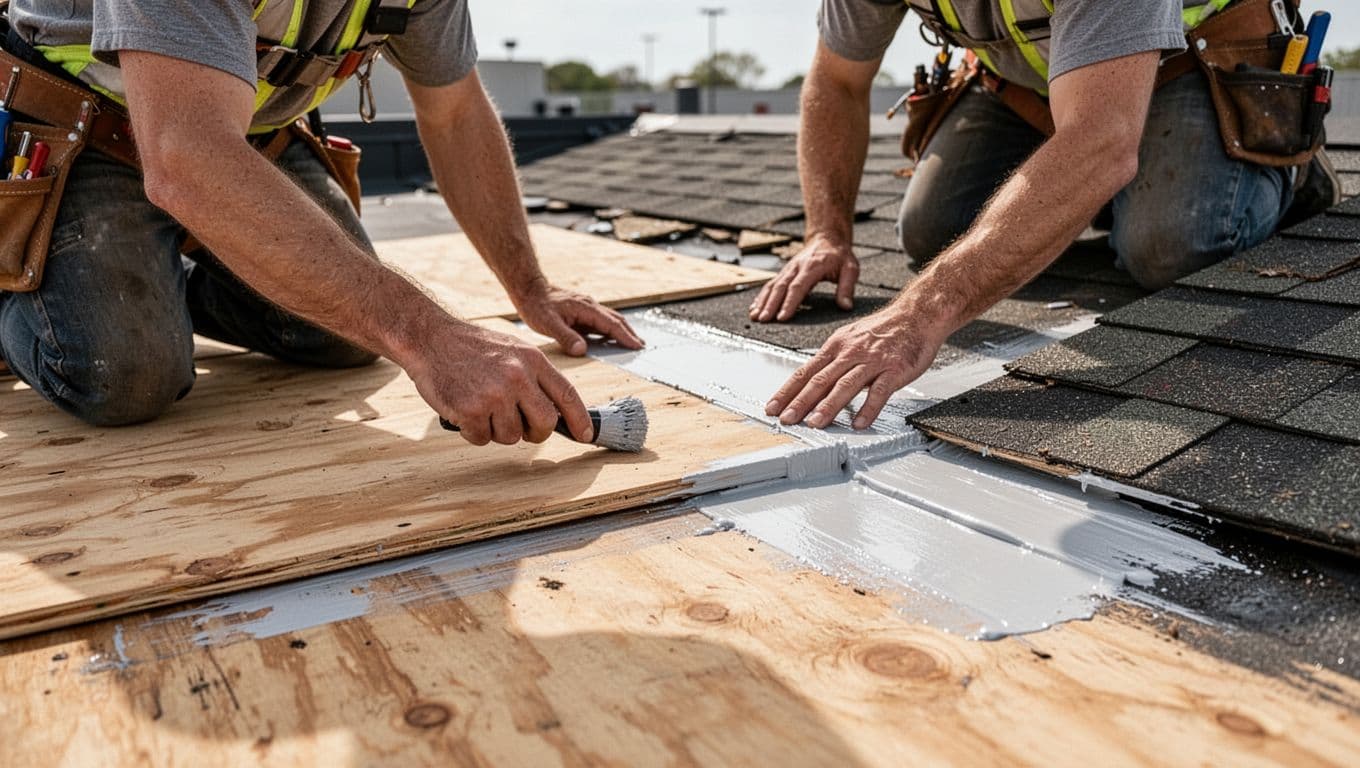
A targeted repair can work when the damaged deck area is small, the surrounding roof still has service life, and nearby insulation is dry. In that case, a crew may replace a few deck panels, re-secure adjacent materials, and reinstall the roof covering over that section.
On mixed systems, this may mean localized shingle work on one slope and a small commercial flat roof repair on the connected low-slope area. The key is proof. If the moisture spread is narrow and the fasteners still hold in the surrounding field, a local fix often makes sense.
When deck damage points to a larger project
Patching stops making sense when the roof has widespread wet insulation, failed seams on connected low-slope areas, deck panels that no longer hold fasteners, or repeated leaks after each storm. At that point, the visible surface problem is only part of the bill. The structure below it has lost reliability.
Why claims often turn on cause, scope, and code
Insurance disputes usually come down to causation, not roof age by itself. Previous repairs do not wipe out coverage for fresh wind openings in a different area. At the same time, carriers often deny old rot, neglected maintenance, and elective upgrades.
That is why a report should separate old wear from fresh damage. It should also define the proper scope. A small failure may support repair. Widespread moisture, membrane shrinkage, or broad deck damage may support commercial roof replacement instead. If the first estimate misses hidden covered work or code-required items, a supplement can revise the claim with better proof. Partial approval is often better than accepting a full denial when only some areas tie back to old problems.
Conclusion
The practical takeaway
High winds can damage roof decking without leaving obvious missing shingles behind. For commercial owners, that hidden damage is easy to miss and expensive to ignore.
The safest path is simple. Document early, keep emergency work temporary, and get a focused inspection that separates fresh wind damage from old wear. When the deck has lost strength, surface appearance is a poor guide.
FAQ
Can wind damage roof decking even if there is no interior leak yet?
Yes. Early deck movement may not leak right away. You may first notice lifted tabs, soft spots, creaking underfoot, or small changes at flashing and edges. The next hard rain often turns that hidden damage into an active leak.
Will insurance pay if the shingles still look intact?
Sometimes, yes. Missing shingles help, but they are not the only proof.
When partial approval is common
If photos, test cuts, and moisture readings show fresh wind damage to the deck, the carrier may pay for that area while still excluding unrelated old wear. Many claim disputes turn on weak documentation, not the lack of a dramatic roof blow-off.
Should I tarp or patch the roof before the adjuster arrives?
If water is entering the building, stop the spread right away. Most policies expect reasonable mitigation.
What temporary work usually makes sense
Tarps, a small patch, interior water control, and protection of stock or equipment are usually reasonable. Large tear-off, permanent replacement, or discarding wet materials before inspection can make the claim harder to prove.
What if tear-off reveals wet insulation far beyond the first damaged area?
Pause and document it. Hidden damage found during tear-off is a common reason to update the claim scope. Take photos in place, keep samples if possible, and send the new findings before permanent work moves too far ahead.
How fast should I act after a wind storm?
Move the same day if leaks are active. Even without visible water, schedule inspection soon. Delay gives later weather, foot traffic, and freeze-thaw cycles more time to widen the damage and blur the cause.
Need a roof inspection in Saint Paul or the Twin Cities? Call Sellers Roofing Company at +1-651-703-2336 or schedule a free estimate. We are a black-owned, NMSDC-certified MBE roofing contractor with 9+ years experience.