Last updated: 2026-08-01 by Ted Sellers, Owner
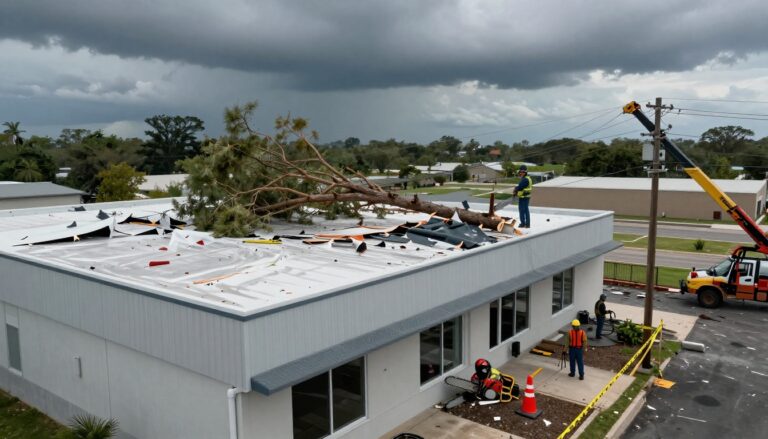
Yes. Hail can damage exposed-fastener metal roofs in Minnesota, especially at fasteners, neoprene washers, panel laps, and flashing. Some dents are only cosmetic. However, split washers, backed-out screws, bent seams, coating loss, and punctures are functional damage that can lead to leaks, rust, and shorter roof life.
When This Applies
Which buildings and roof layouts are most exposed
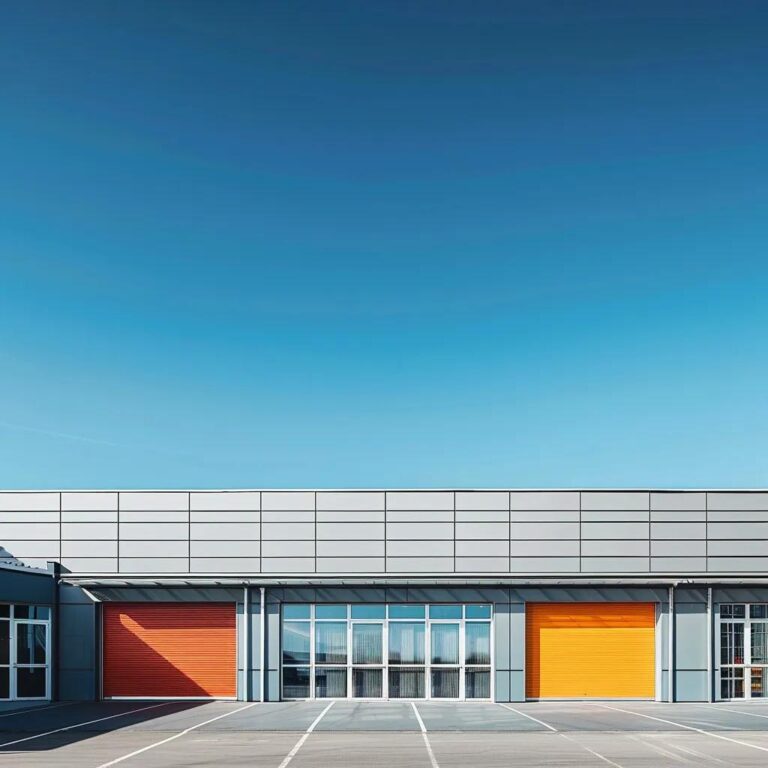
This applies to warehouses, shops, office buildings, and service buildings with through-fastened metal panels. These roofs take direct hits at screw heads and panel overlaps, so the weak spots often fail before the panel itself does.
Risk rises on large open sites with little wind break and on older roofs where washers have dried out after years of sun and cold. A basic overview of exposed-fastener metal roofing helps explain why panel attachment matters so much after a storm.
When dents are cosmetic, and when they mean trouble
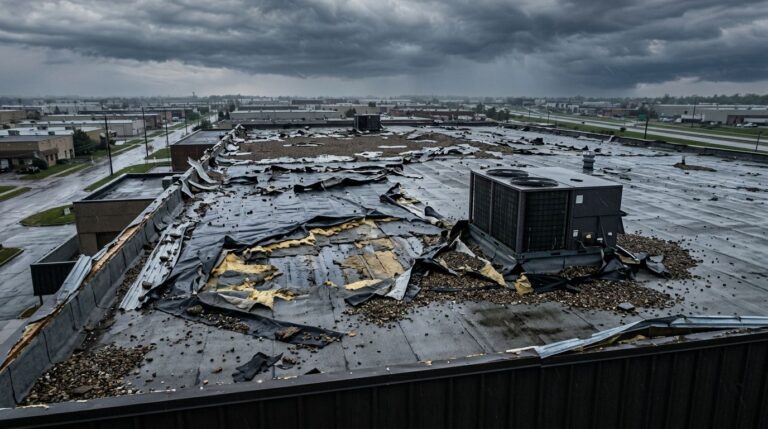
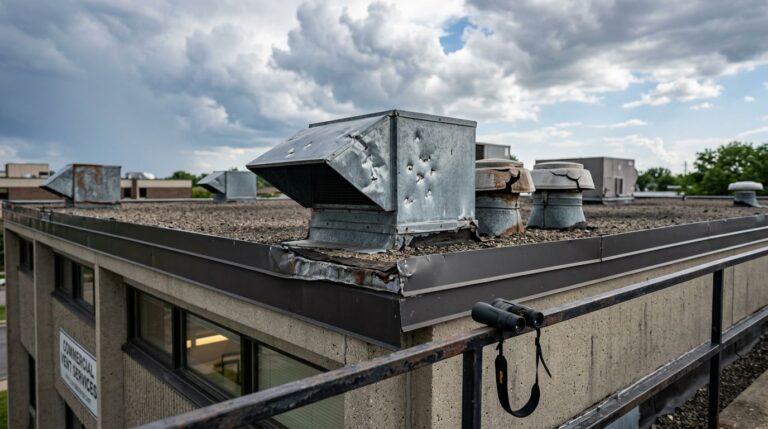
Small shallow dents in the flat of a panel may only affect appearance. Trouble starts when hail deforms metal around fasteners, cracks protective coating, loosens screws, or bends flashing at curbs and edges. Damage near trims, eave lines, and penetrations deserves extra attention because accessory metal is often thinner than the field panels. Minnesota freeze-thaw cycles can widen those small defects, so what looks minor in July can leak by October. As this commercial metal roof hail overview explains, even durable metal roofs aren’t hail-proof.
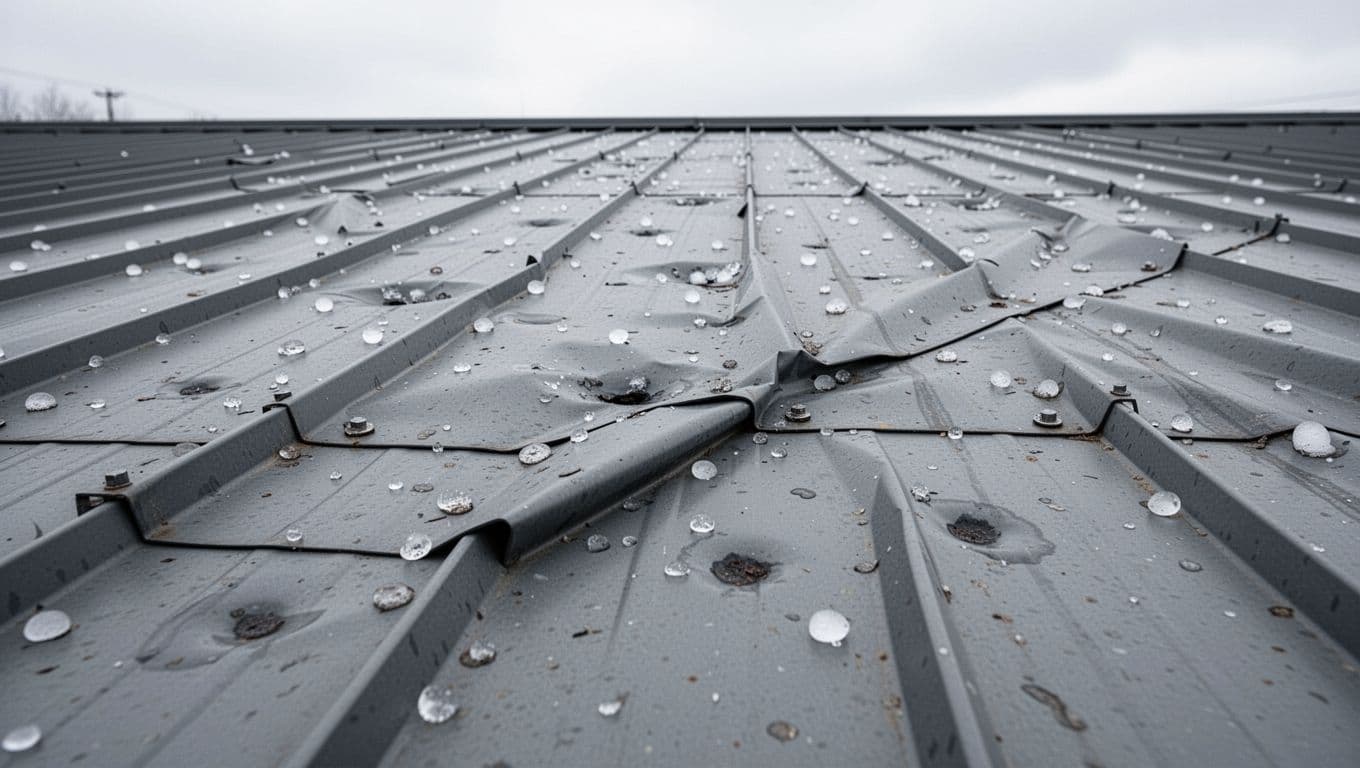
On exposed-fastener roofs, the fastener assembly often fails before the panel does.
When this doesn’t apply, or applies less
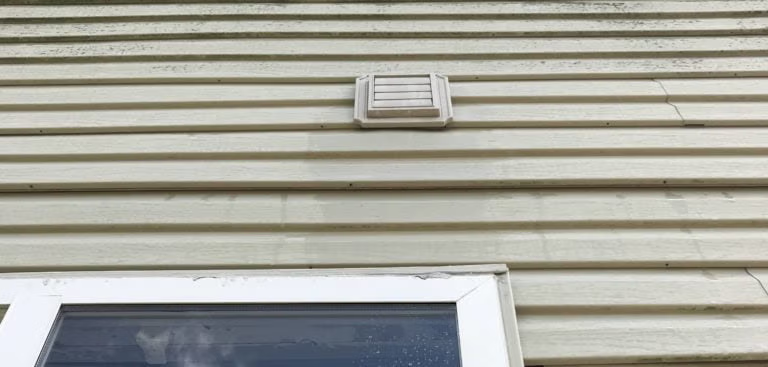
This fits exposed-fastener systems best. Standing-seam roofs with concealed clips often react differently, and small soft hail may leave only trace marks. It also applies less when the roof is newer, heavy-gauge metal, and shielded by nearby structures. Still, if rooftop units, parapet edges, or wall flashings took direct hits, the risk stays real.
Step-by-Step
Use a methodical inspection, because metal roof hail damage is easy to miss when you only look for big dents.
1. Check the site from the ground and inside the building
Start with photos from the parking lot, downspouts, wall metal, rooftop equipment, and any fresh interior water marks. Note the storm date, hail size, and wind direction. If you can, save a few hail stones in a bag and document damage to cars, gutters, or condensers nearby. This first pass helps match roof damage to the storm, which matters for claims and repair planning.
If the roof is wet, icy, or steep
Keep people off it. A safe inspection later costs less than an injury today.
2. Inspect the fasteners, washers, laps, and flashing
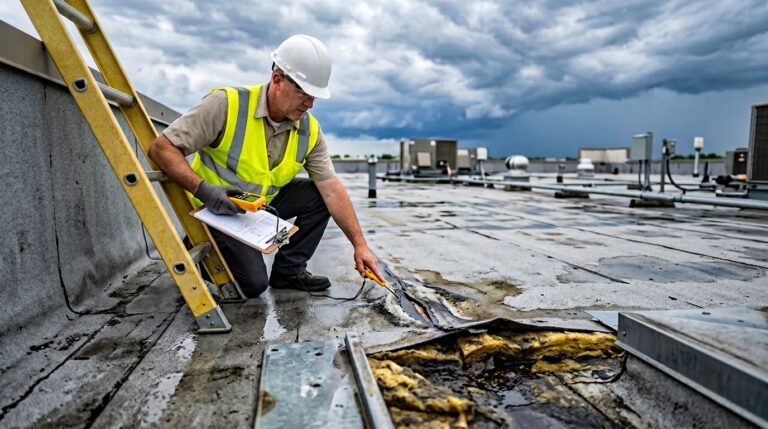
On the roof, focus on screw heads, neoprene washers, panel sidelaps, ridge or eave trim, and penetrations. Look for backed-out screws, split washers, chipped paint, sharp dings, and metal that has stretched around a fastener hole.
Also check for fresh scratches that removed factory finish, because exposed metal can rust once moisture sits on it. This is where metal roof hail damage turns from an appearance issue into a leak path. If screws back out or flashing bends open, your commercial roof needs repair even when the dents seem minor.
3. Look for hidden leaks and mixed-roof damage
Water doesn’t always enter where you see the dent. On commercial buildings, it can travel under laps, into insulation, and then show up far from the strike zone. Look at the underside of the deck, around screw lines, and near rooftop penetrations for new staining or damp insulation. If you suspect hidden moisture, professional leak detection for metal roofs can find the source before stains spread through ceilings or inventory.
Buildings with both metal and membrane roofs
Hail-damaged edge metal can also open the door to nearby membrane leaks. In those cases, the job may include commercial flat roof repair, not only panel work.
4. Compare repair costs with remaining roof life
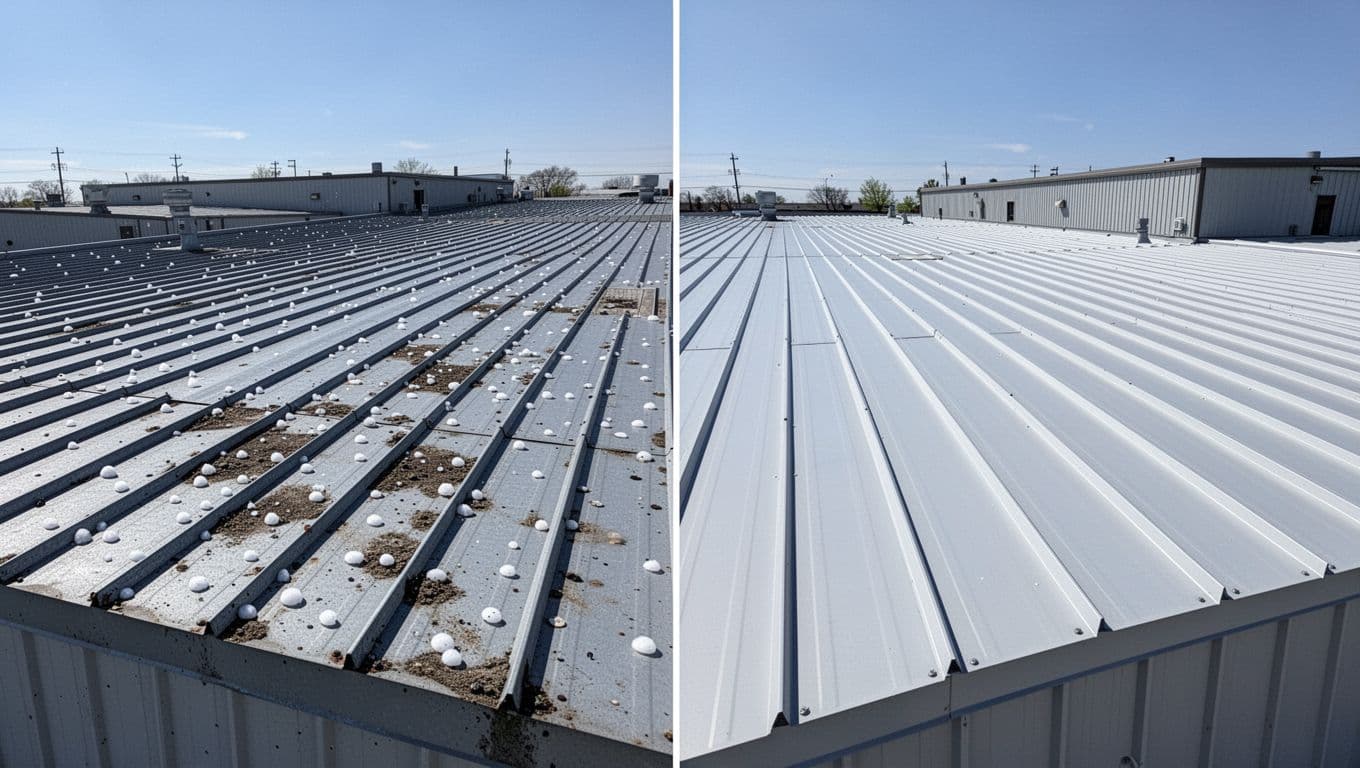
Isolated damage usually calls for targeted repairs, new fasteners, washer replacement, flashing work, or selected panel swaps. Widespread denting at laps, repeated leaks, coating loss, and rust around hundreds of screws point toward commercial roof replacement. If crews keep returning to the same leak area, repair money can start chasing failure instead of fixing it. A contractor who handles commercial roof replacement after hail storms can map the damage and show whether spot repairs still make financial sense.
FAQ about hail damage on exposed-fastener metal roofs
Will insurance pay for hail dents on an exposed-fastener metal roof?
Maybe. Policies often cover functional damage more easily than appearance-only dents. Good photos, storm dates, and a written inspection improve your position with the adjuster.
Cosmetic-only claims can be harder
A carrier may agree the roof was hit, yet still deny replacement if the roof still sheds water.
Can hail loosen screws without puncturing the panel?
Yes. Hail can jar fasteners, split washers, and distort the metal around the hole. That small movement can be enough to start a slow leak later.
How soon should I act after a Minnesota hailstorm?
Act fast, even if you don’t see water inside. Early documentation is easier, and repairs are simpler before more rain or freeze-thaw cycles widen the damage.
Can coatings fix hail damage on exposed-fastener metal roofs?
Sometimes, but only after the roof is sound. Coatings can help seal minor weathering and extend life, yet they won’t fix bent flashing, torn laps, or failed fasteners.
What if the roof doesn’t leak yet?
You still may have a problem. Hidden moisture, coating loss, and fastener damage often show up later, after heat swings and snow load put more stress on the roof.
Bottom line for Minnesota owners
Hail can damage exposed-fastener metal roofs in ways that matter, even when the panels still look mostly intact. On these systems, screws, washers, laps, and flashing are usually the first parts to fail.
If a recent storm hit your property, don’t judge the roof from the ground alone. Catching metal roof hail damage early can stop a small repair from turning into a much larger loss.
Need a roof inspection in Saint Paul or the Twin Cities? Call Sellers Roofing Company at +1-651-703-2336 or schedule a free estimate. We are a black-owned, NMSDC-certified MBE roofing contractor with 9+ years experience.