Last updated: 2026-08-01 by Ted Sellers, Owner
Short answer: To detect a TPO roof leak at termination bars, start by tracing interior stains to the nearest roof edge or parapet. Then inspect the termination line for cracked sealant, loose fasteners, membrane shrinkage, and wall gaps. Confirm hidden moisture with infrared or electronic testing, because water often travels inside the roof assembly before it shows indoors.
When This Applies
Where termination-bar leaks usually show up
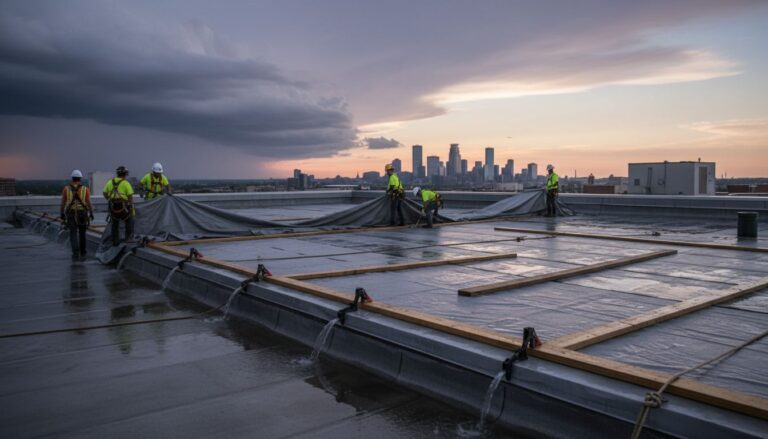
This applies to commercial buildings with TPO edge details where the membrane ends at a parapet wall, curb, or rising wall and a termination bar clamps it down. In those areas, a tiny break can act like a “zipper gap” for wind-driven rain.
A termination-bar leak is likely when:
- You see ceiling staining near exterior walls or along a perimeter corridor.
- Leaks worsen during windy storms, even without heavy rainfall.
- Drips appear hours after rain stops, because water is trapped in insulation.
- Your commercial roof needs repair but seams and penetrations look fine.
Termination bars also get stressed by movement. Freeze-thaw cycles, wall movement, and vibration can slowly open sealant lines. For quick context on what termination bars are designed to do, see IKO’s termination bar product details.
A termination bar rarely “fails all at once.” Most leaks start as small sealant splits, then grow with wind and temperature swings.
If you want a professional confirmation without guessing, schedule commercial roof leak detection in Saint Paul. It’s often cheaper than repeated patch attempts.
When termination bars are not the real source
Some leaks only look like perimeter problems. Water can enter at a rooftop unit, then travel to the edge.
Edge cases that mimic termination-bar leaks
- Clogged drains and ponding: Water backs up and finds the easiest exit.
- Wet wall assemblies: Masonry or coping leaks can show up as “roof” leaks.
- Condensation: Cold parapet areas can sweat and stain interiors.
If your leak line matches a wall crack or coping joint, treat the wall as suspect too.
Step-by-Step
Before you climb: narrow the suspect area fast
- Map the interior signs. Mark ceiling tiles, wall staining, and wet spots, then note wind direction and rainfall timing.
- Estimate the roof-side target. From inside, project the leak area to the nearest parapet or edge detail. Water often travels sideways on low-slope roofs.
- Check for “pattern clues.” If leaks appear only during wind, suspect the termination line, coping, or edge metal first.
Inspect the termination bar line like a failure chain
- Do a slow visual pass along the bar. Look for sealant cracks, gaps behind the bar, lifted membrane, or rust trails at fasteners.
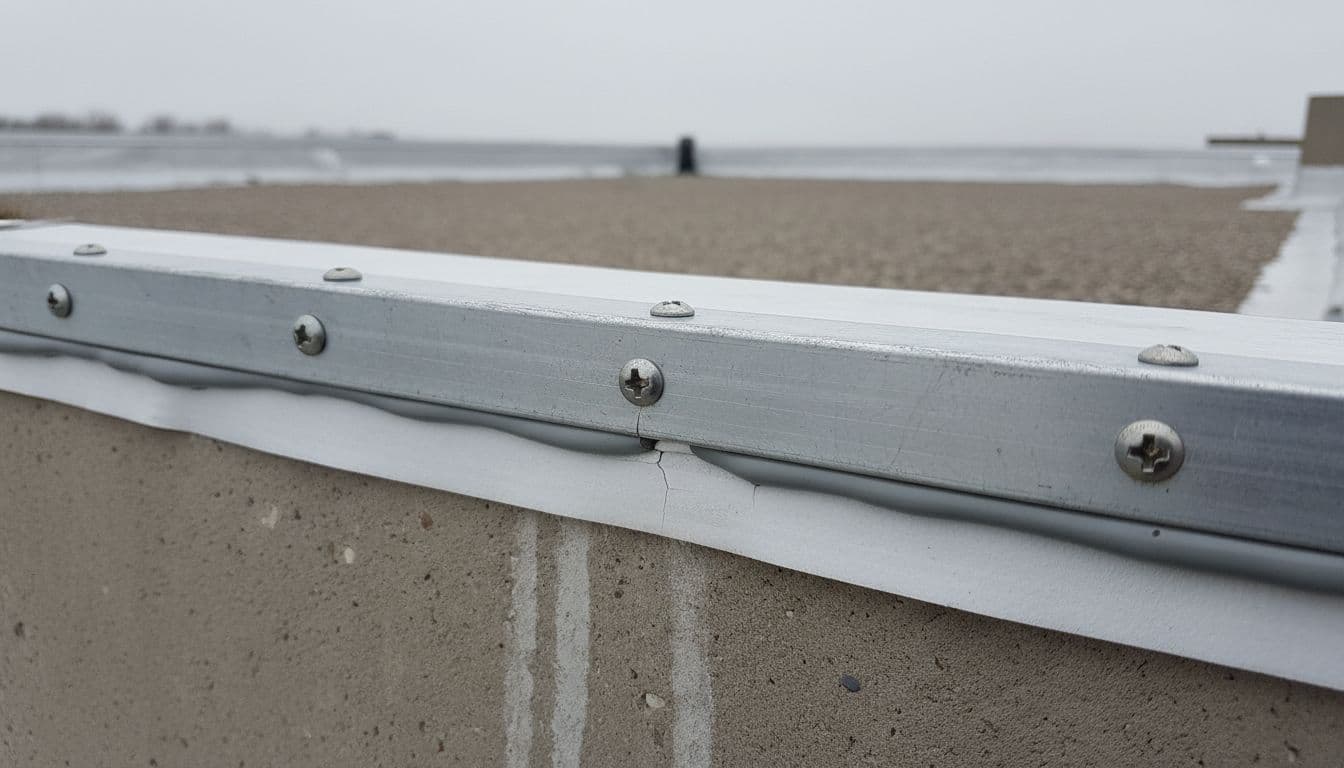
- Probe for loose fasteners and “spin-outs.” Use gentle hand pressure first. A fastener that spins, backs out, or sinks can’t clamp the membrane evenly.
- Look for membrane shrinkage at corners and ends. TPO can pull slightly over time. That creates tension where the bar ends, especially at inside corners.
- Inspect the bar terminations and lap joints. The weakest spots are often where bars meet, change direction, or stop short at a corner.
Confirm water is actually coming from that termination
- Check the wall side, not just the roof side. If safe and accessible, inspect coping joints, counterflashing, and wall cracks above the termination. A wall leak can dump water behind the bar.
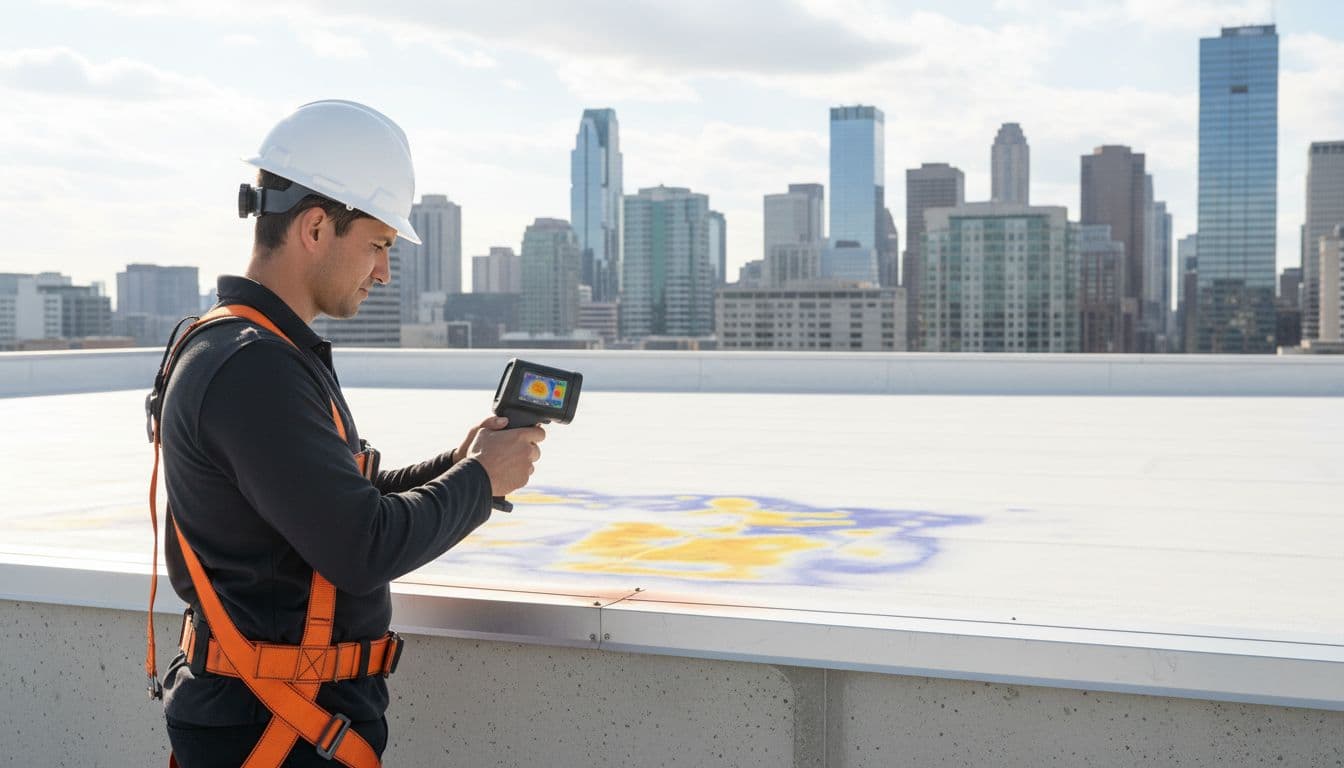
- Use infrared after a sunny window (or controlled conditions). Wet insulation often holds heat differently than dry areas, which helps you see the “trail” back to the entry point.

- Use electronic leak detection for pin-pointing. If the roof is a good candidate, low-voltage testing can confirm the breach location when visual clues disagree.
- Only then pick the repair level. A minor sealant split might be a targeted fix, while widespread fastener failure can require a larger commercial flat roof repair scope. If moisture is widespread or the roof is near end-of-life, start budgeting for commercial roof replacement instead of patching forever.
For broader context on how leaks develop across commercial roofs (not just edges), this rundown of common commercial roof leak causes helps explain why symptoms and sources don’t always match.
FAQ: Termination-Bar Leaks on TPO Roofs
Can I just re-caulk the termination bar and call it good?
Re-caulking works only when the bar is still tight and the membrane is stable. If fasteners spin out, the bar can’t clamp evenly, so sealant becomes a temporary bandage. Also, if water is entering from coping joints above, caulk at the bar won’t stop it.
What if the leak shows up far from the roof edge?
That’s common. Water can travel through insulation or along the deck flutes before dropping inside. In that case, a termination-bar gap might still be the source, but you need testing to confirm the path. Otherwise, you risk repairing the wrong area.
When distance is a red flag
If the leak is deep in the building, suspect rooftop units, drains, or field seams too.
Do termination bars fail more often in cold climates like Minnesota?
They can. Thermal movement and freeze-thaw cycles stress sealant lines and fasteners. Wind-driven rain also pushes water into tiny openings. Regular inspections after winter and spring storms catch small splits before they become a recurring TPO roof leak.
What happens if I ignore a small termination-bar leak?
Small leaks rarely stay small. Wet insulation loses R-value, so energy costs rise. Meanwhile, trapped moisture can corrode decks and damage interiors. After enough saturation, repairs shift from a simple edge fix to larger tear-outs, or even a forced replacement schedule.
How do I know if repairs are turning into a replacement problem?
If you’re paying for repeat leak calls, patching multiple sections, or finding widespread wet insulation, the roof may be past “spot-fix” mode. At that point, treat it like an asset decision, not an emergency. A qualified team of Saint Paul commercial roofing experts can document conditions and give options that match your building’s risk and budget.
Final takeaway for building owners
Termination bars are small parts with big consequences. Detecting a termination-bar leak means following the water’s story, not the stain’s location. Start with tight visual checks, then confirm with testing when the clues conflict. If the same area keeps leaking, assume the commercial roof needs repair beyond sealant, and plan the next step before damage spreads.
Need a roof inspection in Saint Paul or the Twin Cities? Call Sellers Roofing Company at +1-651-703-2336 or schedule a free estimate. We are a black-owned, NMSDC-certified MBE roofing contractor with 9+ years experience.