Last updated: 2026-08-01 by Ted Sellers, Owner
There is no single percentage that fits every roof, but widespread granule loss usually changes the answer fast. Small, scattered bare spots can often be repaired or watched, while large areas of exposed asphalt, repeat leaks, brittle shingles, and worn edges usually point to replacement. On a commercial building, the right call depends on how far the wear has spread and whether water is already getting through.
When This Applies
Which commercial roofs this question fits
This question matters most on commercial buildings with asphalt shingles, granulated cap sheets, or other roof surfaces that rely on a protective top layer. That includes sloped office additions, canopies, dormers, and some low-slope systems with mineral surfacing.
If your building has TPO, EPDM, or another smooth membrane, granule loss is not the main issue. In that case, seams, punctures, flashing, and wet insulation deserve the closer look. A good starting point is often commercial roof maintenance tips, because routine checks catch surface wear before it turns into a larger problem.
When granule loss does not mean replacement
A roof does not need replacement just because you see a few bare spots. Light wear around vents, valleys, or drain paths can happen on older roofs that still shed water well. A thin layer of loose granules in gutters can also appear after a hard storm.
The better question is whether the top surface still protects the roof underneath. Technical guidance on granules on roof systems makes the same point, surface appearance matters, but it does not tell the whole story.
A few loose granules after a storm
If the loss is minor and the roof is still flexible, the roof may need monitoring, not replacement. That is especially true when the bare spots are isolated and the rest of the roof still looks sound.
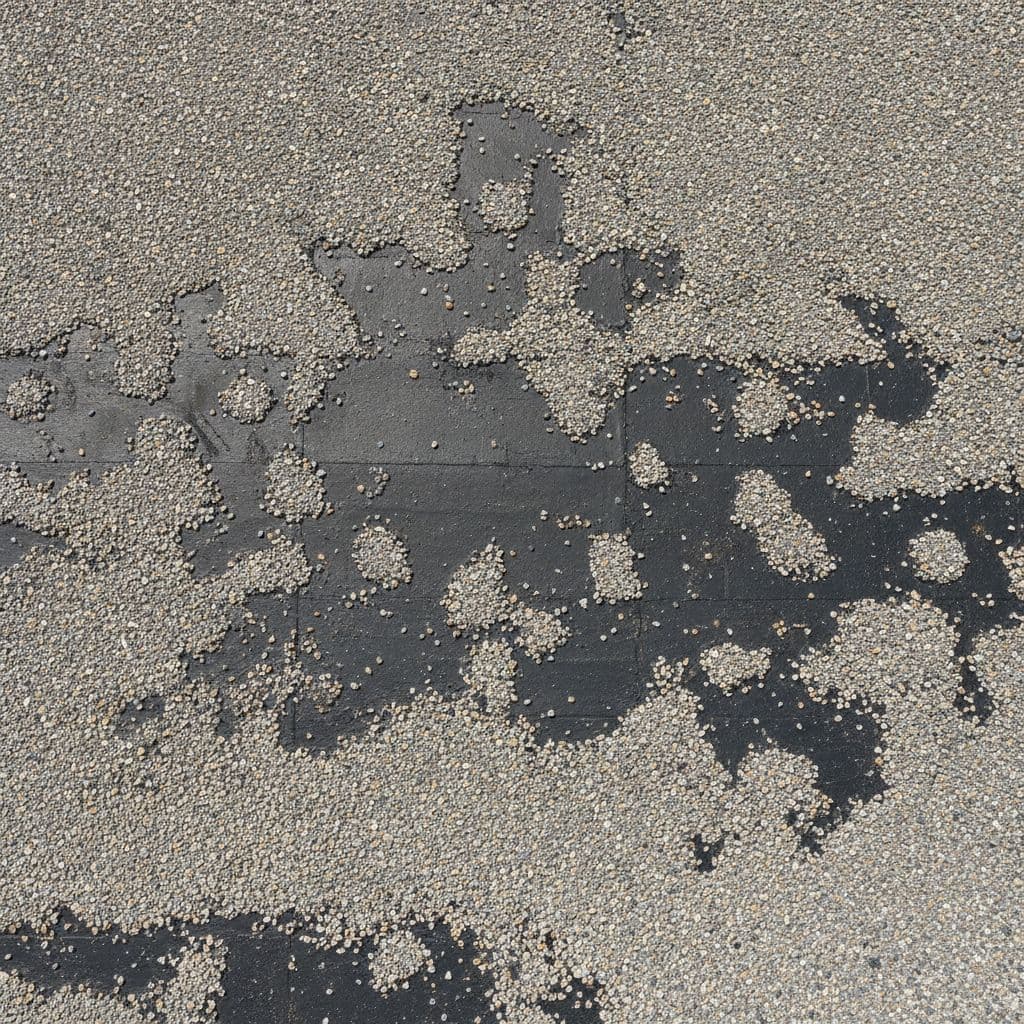
Wide bald spots with exposed asphalt
When many shingles or sections look stripped, the roof loses its UV shield. At that stage, age and weather begin to work faster. The roof may still look intact from the ground, but it is already weakening.
If you can see exposed asphalt across large areas, the roof has moved past simple wear.
What changes the answer
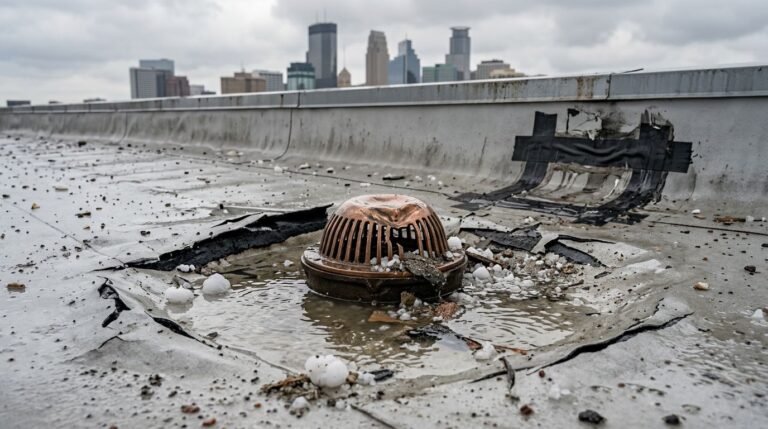
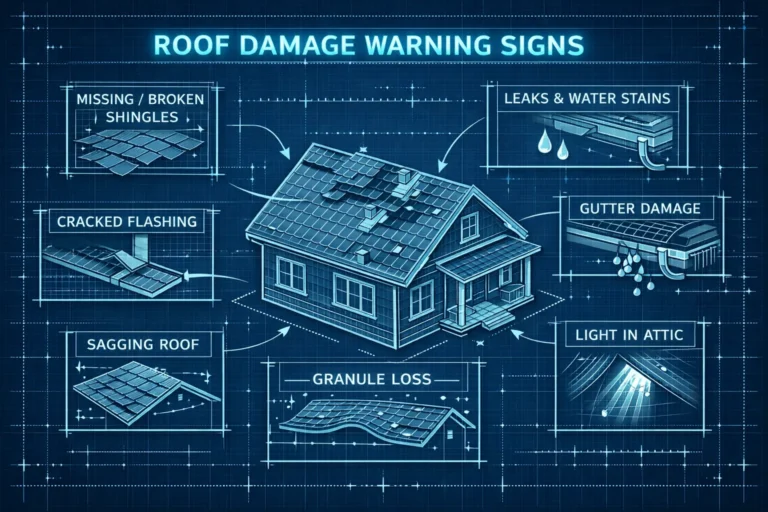
The decision shifts when the granule loss is tied to leaks, brittleness, curling edges, cracked sealant, or repeated patching. Wet insulation, staining inside the building, or soft spots under foot traffic also matter. On a mixed roof, one section may need commercial flat roof repair while another section needs a different fix.
If the damage is widespread, the building’s commercial roof needs repair now, and waiting can turn a repair job into a full replacement. That is where a careful inspection matters more than a guess.
Step-by-Step
1. Measure where the granule loss is happening
Start with the roof itself, then check the gutters, downspouts, valleys, and areas around penetrations. A little wear in one place tells a different story than bare patches spread across the field.
Take dated photos and note whether the loss is local or wide. If the problem seems tied to active leaks, commercial roof leak detection services can help trace where water is entering before you commit to a bigger project.
2. Check what lies under the granules
Granules protect the asphalt or surface layer from sun and heat. Once they are gone, the roof ages faster. Look for exposed asphalt, cracking, blistering, soft spots, and curled edges. Also check whether the bare areas are random or concentrated in one high-wear zone.
A roof with a few thin spots may still be serviceable. A roof with large bare sections is a different matter. At that point, the question is no longer about appearance. It is about how much life is left in the surface.
3. Separate cosmetic wear from functional failure
Cosmetic loss changes how the roof looks. Functional loss changes how the roof performs. That difference matters.
If the roof still sheds water, has no interior stains, and the damage stays localized, repair may be enough. If water is getting in, if the deck feels soft, or if the same spots keep failing, the roof is telling you it cannot keep up anymore. In that case, a commercial roof replacement can cost less over time than repeated patching.
If the roof still sheds water
A small repair, partial replacement, or a targeted coating might make sense when the rest of the surface is still in good shape. This is where signs your roof needs repair, not replacement becomes useful, because it helps you compare the visible damage with the actual roof condition.
If water is already getting in
Leaks change the math. Once moisture reaches insulation or the deck, the damage is no longer just on the surface. The repair plan has to cover the source, the spread, and the hidden wet areas too.
4. Compare repair, section replacement, and full replacement
The right fix depends on scope. One damaged section can often be repaired. Several worn areas may justify section replacement. Wide, aging, brittle surfaces often point to full replacement.
This is where the phrase commercial roof replacement becomes more than a sales term. It is a practical choice when the roof no longer has enough protective surface left to justify patching. If the rest of the system still has life, targeted work may be smarter. If the roof is failing in patterns, replacement usually wins.
5. Get a written inspection before you spend big
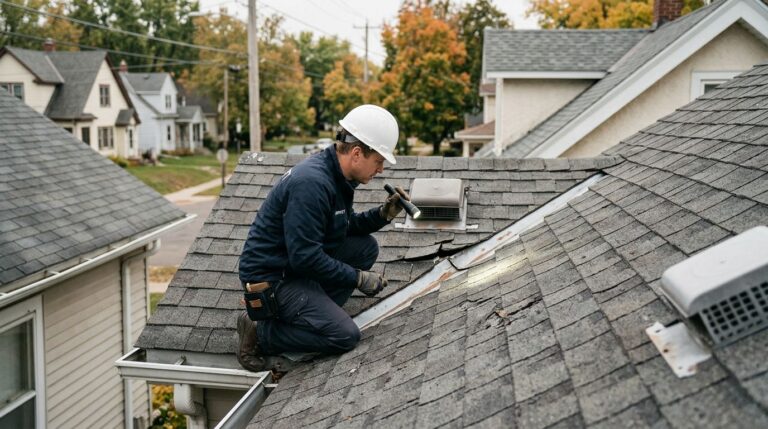
Ask for a report that separates old wear from fresh damage. A good inspector should note where the granules are missing, how deep the wear goes, whether seams or flashing are involved, and whether the roof still has repair value. Photos and measurements matter more than a quick opinion.
That report helps you decide whether the building needs a small fix, a section job, or a full tear-off. It also keeps the conversation grounded in facts instead of guesswork.
FAQ
How much granule loss is normal?
Some granule loss is normal on older roofs, especially after storms or seasons of heavy sun. What matters is the pattern. A light dusting in gutters or a few worn spots is different from broad bare patches across several roof areas.
A roof with steady, even wear may still have usable life. Once the loss becomes heavy and uneven, the roof usually needs closer review.
Does granule loss in gutters mean the roof is failing?
Not by itself. Granules end up in gutters as roofs age, and a storm can loosen more than usual. The key is whether the roof surface still has enough protection left.
If you keep finding more granules after every rain, the roof is probably shedding its protective layer faster than it should. That is a sign to inspect sooner, not later.
Can hail strip enough granules to require replacement?
Yes. Hail can knock off granules fast, especially on older shingles or granular-surfaced roofs. The real issue is not the hail mark alone. It is the amount of exposed surface, the spread of the damage, and whether leaks started after the storm.
If hail damage also cracked sealant, split flashing, or loosened seams, the roof may have crossed from surface wear into structural failure.
Is partial replacement enough for a roof with heavy granule loss?
Sometimes. If only one section is worn out and the rest of the roof is stable, a partial replacement can make sense. That works best when the new section matches the old one and the surrounding roof still has service life left.
If the damage is spread across the field, patching one area often just delays the larger job. In that case, replacement is usually the cleaner decision.
How do I know if the loss is old wear or recent damage?
A trained inspector looks at the pattern, the age of the roof, the condition of the sealant, and the way the damage lines up with weather or roof traffic. Fresh loss often looks sharper and more concentrated. Older wear is usually more even and more weathered.
H4 When the records are thin
If you do not have good maintenance logs or past photos, the inspection needs to be more detailed. Interior leak notes, service records, and weather dates can help separate old deterioration from a newer event.
Conclusion
There is no magic percentage that tells you a roof is done. The real warning sign is widespread granule loss that exposes the surface underneath, especially when leaks, brittleness, or repeated repairs show up too.
A roof with a few worn patches may still be worth repairing. A roof with broad bare areas, active water entry, or failing seams usually points to commercial roof replacement instead of another patch. The best decision comes from a clear inspection, a good photo record, and a scope that matches the roof you actually have.
Need a roof inspection in Saint Paul or the Twin Cities? Call Sellers Roofing Company at +1-651-703-2336 or schedule a free estimate. We are a black-owned, NMSDC-certified MBE roofing contractor with 9+ years experience.