Last updated: 2026-08-01 by Ted Sellers, Owner
Yes. In Minnesota, an ice dam can trap meltwater uphill of a skylight, then push that water under shingles, flashing, or a membrane curb. The leak may show at the skylight frame, drywall, or several feet away. Condensation can look similar, so the source needs to be traced before permanent repairs begin.
A skylight is a break in the roof plane. Add snow, heat loss, and overnight refreeze, and that break becomes a weak point fast.
That is why winter leaks around skylights need more than a quick caulk line. The repair has to match the roof system, the leak path, and the weather pattern that caused it.
Key Takeaways
- Ice dams can cause skylight leaks by backing water up under roofing materials and flashing.
- Not every winter drip is an ice dam. Interior condensation and old flashing failures can look the same.
- On homes with asphalt shingles or metal roofing, damage often starts at the uphill side of the skylight.
- On a commercial flat roof, skylight leaks may involve curb flashing, membrane seams, and hidden wet insulation.
When This Applies
The roof types and weather patterns that fit
This applies to Minnesota homes and buildings with skylights, roof windows, or curb-mounted roof hatches. It is most common after heavy snow, a brief warm-up, then a hard freeze. That cycle is normal on Saint Paul roofing, Minneapolis roofing, and wider Twin Cities roofing projects.
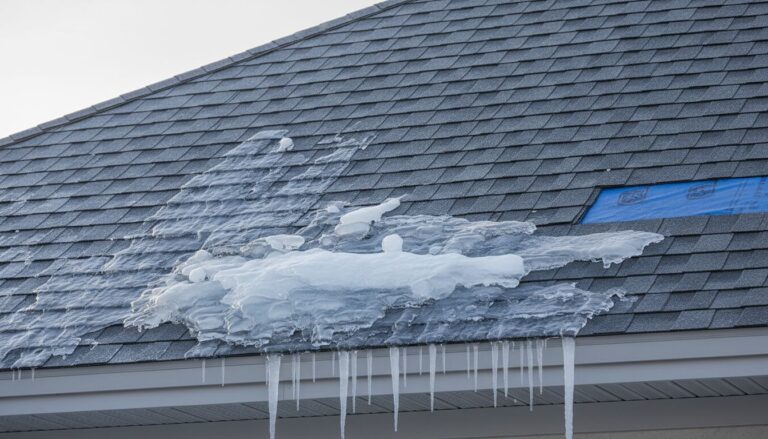
On sloped roofs, the classic setup is simple. Heat escapes through the roof deck, snow melts above the skylight, then the water refreezes lower on the roof. Once that frozen ridge builds, meltwater has nowhere to go except sideways or backward.
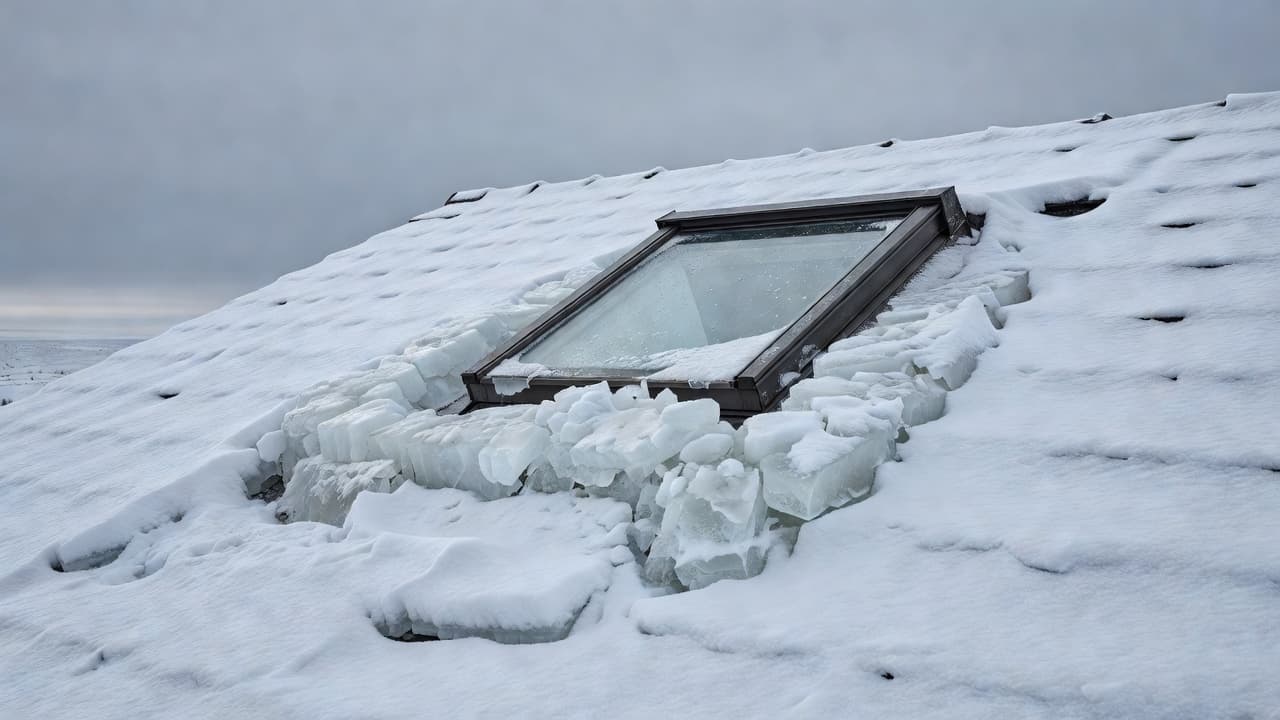
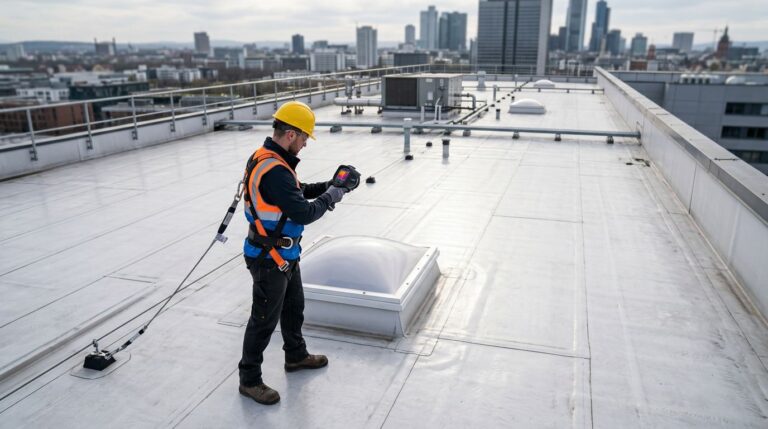
On a low-slope building, the pattern changes. A curb-mounted skylight over TPO roofing, EPDM, modified bitumen, or BUR may leak from backed-up meltwater, split curb flashing, or membrane movement. In that case, the skylight gets blamed first, but the failure may sit in the surrounding field.
When it probably is not an ice dam
If the skylight leaks during summer rain, the problem may be failed flashing, cracked sealant, or old roof defects. If water beads on the inside glass in cold weather, that may be condensation from indoor humidity, not roof entry.
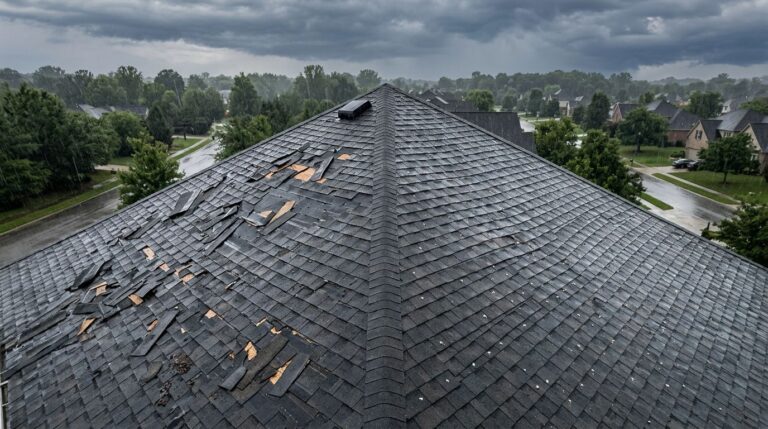
A drip that starts after a storm damage roof event or a hail damage roof event also needs a wider inspection. Ice and storm damage can exist at the same time.
Commercial skylights need a wider look
A skylight on a warehouse or office roof is not a small house detail scaled up. Water can travel through insulation, along deck flutes, or under membrane laps before it appears inside.
A ceiling stain marks the exit point, not always the entry point.
That is why a commercial roof inspection matters early.
Why Ice Dams Make Skylights Leak
Water backs up before it drips
Skylights interrupt drainage. That is the whole problem.
Snow melts on the warm part of the roof and runs downhill. If it hits an ice ridge below the skylight, or frozen buildup tight against the curb, the water ponds. Given enough time, it slips under shingles, under step flashing, or into small gaps at fasteners and corners.
On homes, the weak spots are usually uphill flashing, side step flashing, nail penetrations, and old sealant joints. On older units, the frame itself may still be sound while the surrounding roof detail has failed.
On a commercial flat roof, the leak path can be less obvious. Membranes do not fail like shingles. TPO roofing, EPDM, modified bitumen, and BUR tend to leak through open laps, curb flashings, punctures, or wet insulation that spreads the water farther than expected.
Why Minnesota sees this so often
This is cold-climate math. Snow loads sit longer, freeze-thaw cycles repeat, and uneven attic heat keeps feeding the melt. Older Minnesota roofing assemblies also tend to have mixed repairs, which can make the leak path harder to read.
That is why random patching wastes time. First you find the path, then you pick the fix.
Step-by-Step
If the leak is active right now
- Protect the interior first. Move furniture, cover inventory, and keep water away from lights and electrical panels. If the leak is active or the roof is unsafe, Call 651-703-2336 for 24/7 Emergency Roofing.
- Do only temporary dry-in work. A tarp, controlled sealing, and interior protection are reasonable. Full tear-off, broad caulking, or hammering at the ice can erase the evidence that shows whether the problem is fresh, old, or wider than it looks.
- Do not chip ice off the skylight with metal tools. That often cracks glazing, bends flashing, and turns a repair into a replacement. Proper ice dam removal is usually done with controlled steam and care around the skylight frame.
- Document the pattern. Save dated photos of the skylight, roof surface, ceiling stain, attic moisture, and weather conditions. If a roof insurance claim becomes part of the job later, that timeline matters.
Before permanent repairs are approved
- Trace the leak path, not only the stain. On sloped roofs, inspect uphill of the skylight first. On low-slope buildings, use moisture mapping and, if needed, commercial roof leak detection to find the breach location before repairs close the case too early.
- Match the scope to the roof system. A small flashing failure may call for residential roof repair or commercial roof repair. Widespread wet insulation, brittle shingles, or failing seams can push the job toward residential roof replacement or commercial roof replacement. On some low-slope roofs, commercial roof restoration or commercial roof coatings make sense, but they do not fix a bad skylight curb by themselves.
- Use a contractor who knows winter leak patterns in the Twin Cities. On Twin Cities roofing work, many owners ask about cold-climate skylight experience, union-built roofing, GAF certified status, and an active builder license such as MN License 803862. For larger buildings, Get a Free Commercial Roof Inspection before the final scope is approved.
Repair, Replacement, and Claim Decisions
Match the scope to the roof system, not the stain
A skylight leak does not always mean the skylight has failed. Sometimes the unit is fine and the roof around it is not.
On homes with asphalt shingles, targeted flashing work may stop the problem if the surrounding roof is still sound. If the shingles are brittle, the ice barrier is missing, or multiple roof sections are near the end of service life, a larger reroof can be the better answer. The same logic applies to metal roofing, where panel movement and trim details matter as much as the skylight itself.
On commercial buildings, curb flashing and membrane condition decide a lot. A localized split in EPDM or modified bitumen may stay in repair territory. If wet insulation spreads across connected sections of a commercial flat roof, the file can move toward replacement. The roof field may also be a candidate for restoration later, but only after the skylight detail is made watertight.
If the leak started after wind or hail, keep that documented separately. An old roof can still have new covered damage, and a winter leak does not cancel a valid storm-related claim.
Conclusion
Yes, ice dams can cause skylight leaks in Minnesota, and they do it by trapping meltwater where the roof should be draining. The water then finds the smallest weakness, usually flashing, laps, fasteners, or curb details.
The smart move is not guesswork. Protect the interior, keep repairs temporary, trace the leak path, and approve the final scope only after the cause is clear.
FAQ About Ice Dams and Skylights
Can a skylight leak only during a thaw?
Yes. That is common with ice-dam leaks. Snow by itself may not leak, but thawed water under pressure will.
What that points to
It usually points to backed-up meltwater, not random sealant failure.
Does ice dam removal fix the leak for good?
No. Ice removal stops pressure on the roof. It does not repair damaged flashing, underlayment, shingles, or membrane seams.
Will homeowners insurance cover damage from an ice dam?
Sometimes. Coverage depends on the policy language and the cause of loss. Interior damage may be covered if the roof opening is sudden and documented well.
What if the skylight sits on a flat commercial roof?
Then the leak may involve the curb, field membrane, or hidden moisture beyond the skylight. That is why low-slope systems often need leak tracing, not a surface patch.
Should maintenance staff try to seal the skylight themselves?
Only for temporary dry-in, and only if access is safe. Permanent repair done too early can remove the proof needed to set the right scope.
Need a roof inspection in Saint Paul or the Twin Cities? Call Sellers Roofing Company at +1-651-703-2336 or schedule a free estimate. We are a black-owned, NMSDC-certified MBE roofing contractor with 9+ years experience.