Last updated: 2026-09-28 by Ted Sellers, Owner
Coinsurance is a policy condition that can affect the payment calculation on a commercial roof claim. This guide explains why a roof loss may be covered while the payment still does not match the expected repair cost.
How Does Commercial Roof Coinsurance Affect a Minnesota Claim?
Commercial roof coinsurance can reduce an insurance payment when the property was insured below the policy’s required value, even if the roof loss is covered. Review the policy, statement of values, estimate, and calculations carefully before assuming a low payment reflects only the roof scope.
Commercial roof coinsurance cuts a covered Minnesota roof payment when the building limit falls below the policy’s required percentage of replacement value. The carrier multiplies the covered loss by the underinsurance ratio, then applies the deductible under the policy wording. A valid hail or wind claim can still be paid short.
It normally tests the building’s insured value, not simply the price of the damaged roof.
When This Applies
It applies to building coverage, not every roof problem
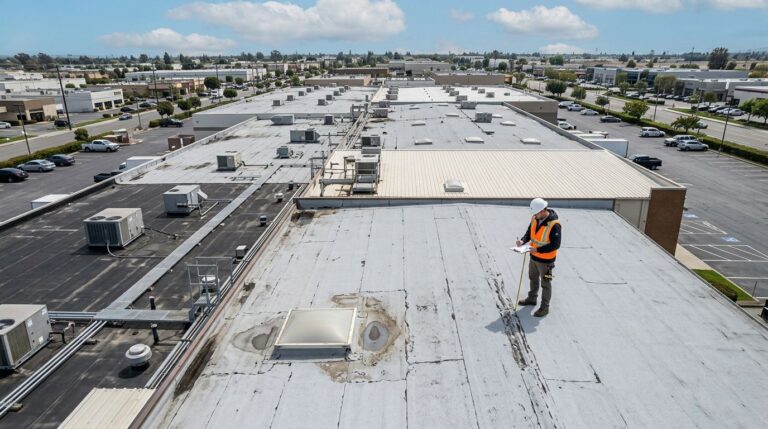
Coinsurance applies to commercial property owners with a coinsurance clause in their building policy. It often affects warehouses, offices, retail centers, multifamily buildings, churches, and mixed-use properties after a covered roof event.
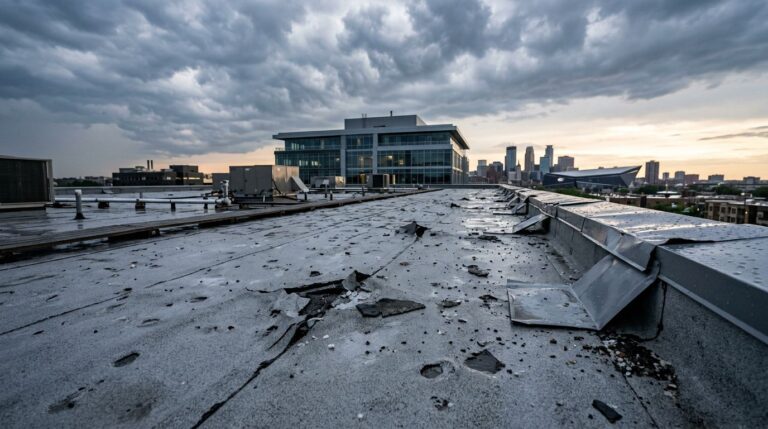
The clause matters after a hail-damaged roof, wind uplift, falling debris, or a sudden opening that allows water inside. It can apply to TPO roofing, EPDM, modified bitumen, BUR, metal roofing, and steep-slope asphalt shingles.
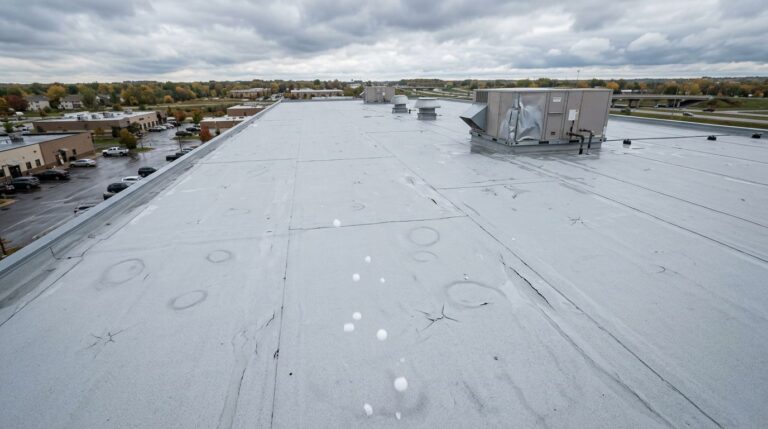
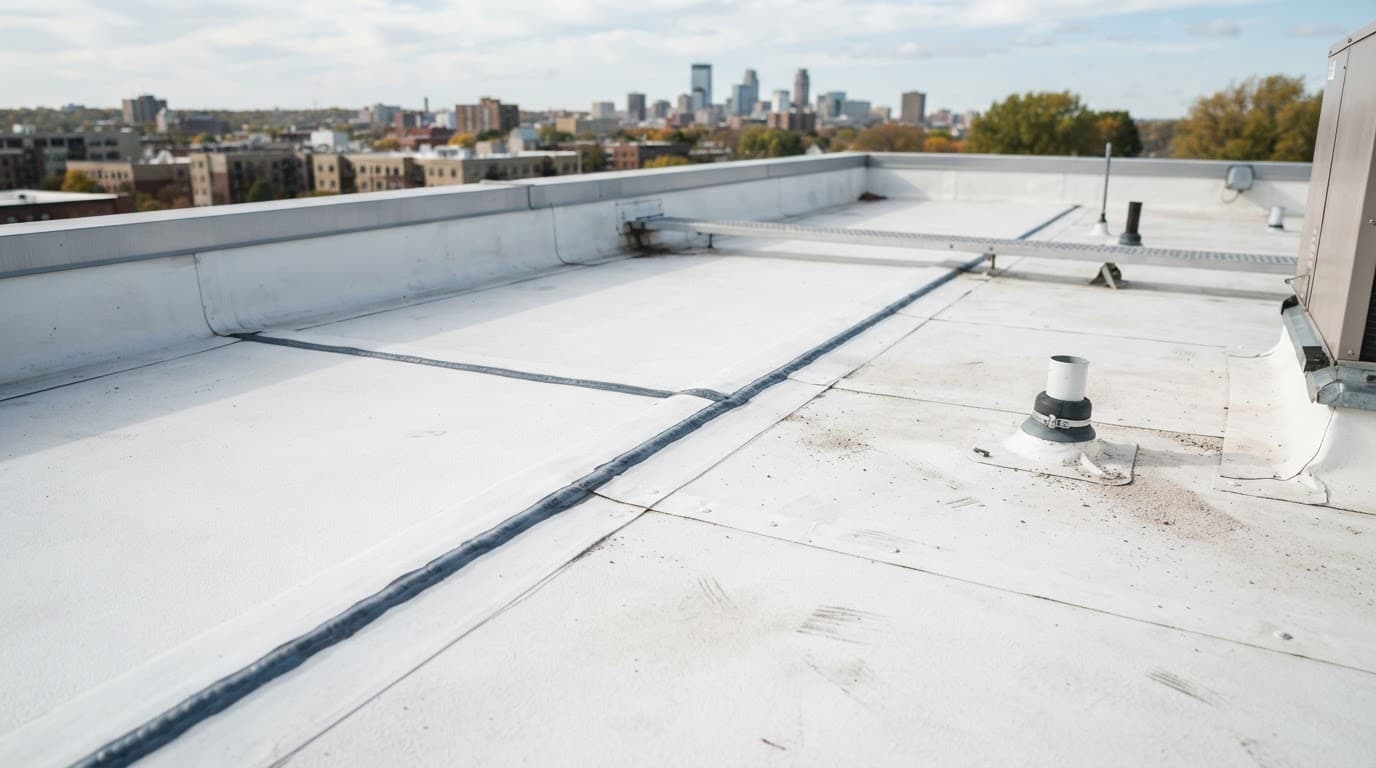
A commercial flat roof needs close review because water rarely stays at the entry point. It can travel below membrane laps, insulation boards, cover boards, and deck flutes before it reaches a ceiling tile.
When the clause may not reduce payment
Coinsurance does not turn old wear into a covered loss. A failed seam, chronic ponding, neglected drain, or long-term leak may be excluded before the insurer even calculates a coinsurance penalty.
Some policies use agreed-value provisions, blanket limits, stated amounts, or other endorsements that change the calculation. A blanket limit does not automatically remove coinsurance. Read the declarations page, coverage form, endorsements, and loss settlement language before assuming the clause applies.
How Commercial Roof Coinsurance Reduces a Roof Claim
The carrier compares the limit carried to the limit required
The usual calculation starts with the building’s replacement value at the time of loss. The carrier multiplies that value by the policy’s coinsurance percentage, often 80%, 90%, or 100%.
The basic formula is:
Payment before deductible = (Insurance carried / Insurance required) x covered loss
A Minnesota commercial property coinsurance example shows the same math. If an owner carries 50% of the building value when the policy requires 80%, the insurer pays 62.5% of the covered loss before the deductible.
Coinsurance does not decide whether hail or wind caused the damage. It decides how much of an otherwise covered loss the insurer will pay.
A 90% coinsurance example
A published 90% coinsurance calculation uses a $1 million building, a $600,000 policy limit, and a $300,000 covered loss.
| Claim factor | Amount |
|---|---|
| Building replacement value | $1,000,000 |
| Coinsurance requirement | 90% |
| Insurance required | $900,000 |
| Insurance carried | $600,000 |
| Covered roof loss | $300,000 |
| Payment before deductible | $200,000 |
| $5,000 deductible | $195,000 payment |
The insurer pays two-thirds of the covered loss because $600,000 is two-thirds of the required $900,000. Deductible timing can vary by policy wording, so confirm the order of calculation in the actual form.
Step-by-Step
Build a claim file that matches the actual roof condition
- Start the roof insurance claim promptly after a storm-damaged roof, but use plain facts. Photograph exterior damage, interior staining, damaged ceiling tiles, loose edge metal, and temporary protection. Save invoices for emergency dry-in work or ice dam removal. If water is entering or the roof is unsafe, Call 651-703-2336 for 24/7 Emergency Roofing.
- Read the declarations page before agreeing to a settlement. Confirm the building limit, coinsurance percentage, deductible, replacement-cost terms, ordinance coverage, and whether an agreed-value endorsement is active. A property coinsurance breakdown can help with the formula, but the policy language controls your claim.
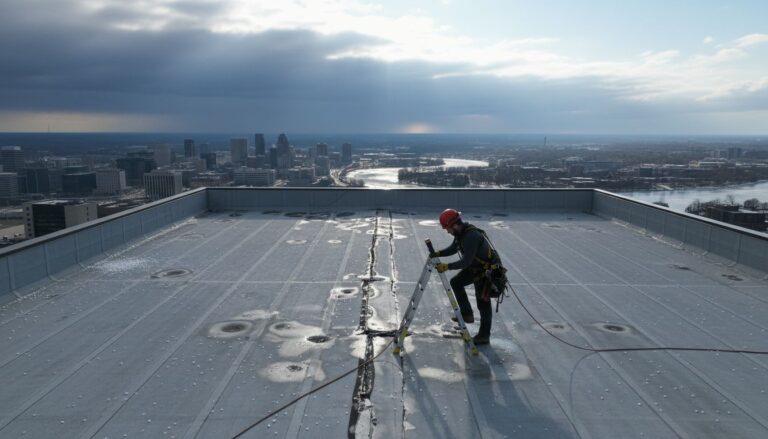
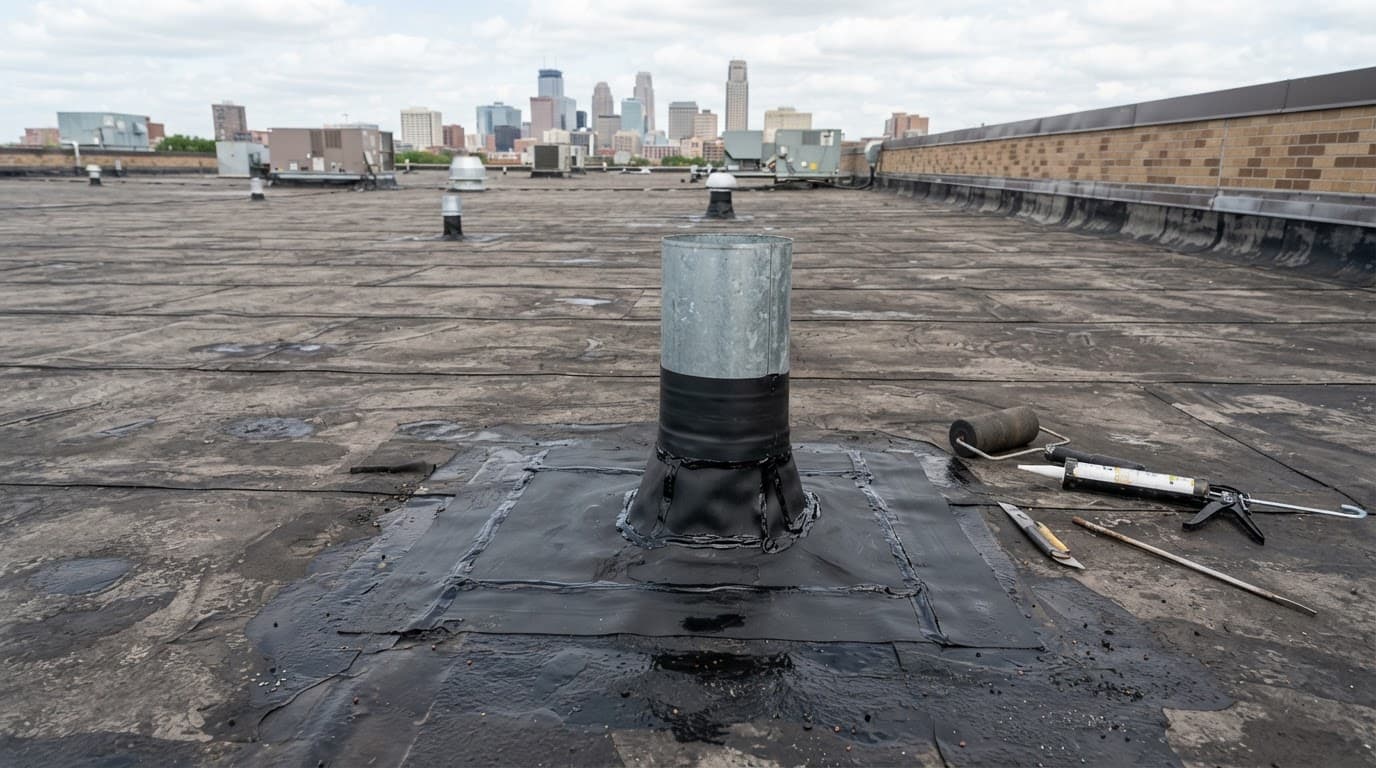
- Get a system-specific commercial roof inspection. On TPO roofing and EPDM, look for lifted seams, split flashings, open terminations, punctures, and saturated insulation. On modified bitumen and BUR, inspect laps, plies, blisters, and hidden moisture. If the entry point is unclear, commercial roof leak detection can trace water that moved away from the visible stain.
- Compare the insurer’s scope against the roof findings line by line. A surface patch may not address wet insulation, crushed cover board, damaged perimeter metal, or code-required details. Photos, moisture readings, test cuts, measurements, and removed-material photos can support a supplement when the first scope missed covered work.
- Match the permanent work to the actual damage. A localized opening may need commercial roof repair. Broad wet insulation, failed attachment, or repeated seam separation can support commercial roof replacement. Commercial roof restoration and commercial roof coatings can extend the life of a sound membrane, but they do not correct saturated insulation or an active storm opening.
- Use a contractor report that states cause, damage location, moisture spread, and repair scope. The same documentation standard applies to Saint Paul roofing, Minneapolis roofing, and Twin Cities roofing claims. Sellers Roofing Company holds MN License 803862 and works with IUPAT Local 96 crews. Union-built roofing and GAF certified credentials can support contractor vetting, but neither changes the coinsurance math.
The Claim Payment Starts With the Limit
A roof can be clearly damaged and still be underpaid if the building limit is too low. That is the hard edge of commercial roof coinsurance.
Document the storm event, trace the water path, and verify the building valuation before accepting a final scope. Minnesota roofing claims move more cleanly when the claim file separates fresh damage from old maintenance issues.
Frequently Asked Questions
Can coinsurance apply if only one roof section was damaged?
Yes. The damaged area may be small, but the clause usually compares coverage to the value of the insured building. A $40,000 roof repair can receive a reduced payment if the building was materially underinsured.
Can a blanket policy remove the coinsurance penalty?
Sometimes, but not always. Blanket coverage can change how limits apply across several buildings or locations. It may still contain coinsurance terms, valuation conditions, or reporting requirements. Review the exact policy form with your agent, broker, or coverage counsel.
What if the adjuster says the leak was old maintenance?
The carrier must distinguish old defects from fresh covered damage. A prior patch or aged seam does not erase a new wind tear, hail puncture, or damaged flashing in another area. Ask for the written basis of the decision and submit photos, moisture findings, and a cause-based contractor report.
Can hidden wet insulation change a repair claim into replacement?
It can. Water may travel far from the opening, especially on a low-slope roof. If test cuts or moisture mapping show widespread wet insulation, a limited patch may not restore the system. That can support a supplement for a broader commercial roof replacement scope.
Does commercial coinsurance apply to residential roof work?
Not usually. Residential roof repair and residential roof replacement follow the homeowner policy’s terms, not a commercial building form. Asphalt shingles or metal roofing do not make a claim commercial. A home with a business operation, rental use, or mixed occupancy may have different coverage rules.
For the larger documentation and claim process, read our Minnesota roof storm damage and insurance claims guide.
Need a roof inspection in Saint Paul or the Twin Cities? Call Sellers Roofing Company at +1-651-703-2336 or schedule a free estimate. We are a black-owned, NMSDC-certified MBE roofing contractor with 9+ years experience.