Last updated: 2026-09-28 by Ted Sellers, Owner
Roof age matters in an insurance claim, but it is not the same thing as the cause of damage. This article helps Minnesota property owners understand what insurers look for, which documents support the age of a roof, and why a known age does not automatically settle a storm-damage question.
How Do Insurers Determine Roof Age for Minnesota Claims?
Insurers commonly determine roof age from prior permits, invoices, inspection records, aerial imagery, prior claims, and available underwriting data. Roof age can affect depreciation and policy terms, but a documented hail or wind loss should still be evaluated on its own evidence and policy language.
Short answer: For Minnesota homeowners insurance claims involving an older roof, the insurance company uses permits, invoices, warranty registrations, prior claims, aerial images, and physical inspections. It compares the documented installation date and present condition against policy terms. A roof in the 15- to 25-year range may face closer underwriting, reduced claim payments, or renewal restrictions, but age alone doesn’t erase fresh storm damage from hail or wind.
The documented installation date can affect roof coverage in two ways: whether an insurer will renew or restrict coverage, and how it values a covered claim for the roof. Keep those questions separate from the start.
Key Takeaways
- Insurers determine roof age using permits, invoices, warranty records, prior claims, aerial images, and physical inspections; do not guess at the installation year.
- Roof age can affect renewal terms, coverage restrictions, depreciation, and whether the policy pays replacement cost value or actual cash value, but there is no single age cutoff for every Minnesota policy.
- An older roof or prior repair does not eliminate coverage for fresh hail, wind, or falling-tree damage; the key issue is whether the reported loss caused the observed condition.
- Photograph the roof, interior damage, weather timing, and emergency work before permanent repairs, then compare the insurer’s scope with system-specific inspection findings.
- If the insurer denies or limits the claim, request the photos, notes, estimate, engineering report, and policy language, and present focused evidence separating storm damage from wear and maintenance issues.
Roof Age Insurance Claims Minnesota: What Carriers Verify
Paper records usually carry the most weight
The strongest proof is a dated roofing contract, paid invoice, permit final, manufacturer warranty registration, or a prior insurance scope showing installation. A roof inspection and aerial imagery can support the timeline, especially when a property changed hands.
Insurers may also review a seller disclosure, MLS listing, mortgage appraisal, or prior claim history. If records conflict, an invoice from the roofing contractor that performed the work usually has more weight than a listing that says “newer roof.”
Older roofs are often moved to actual cash value coverage. The shift is documented in reporting on Minnesota insurance policy changes, but insurers don’t use a single useful lifespan cutoff. The policy form, carrier, roof material, prior losses, and inspection findings all matter.
Roof condition can confirm, or challenge, the stated age
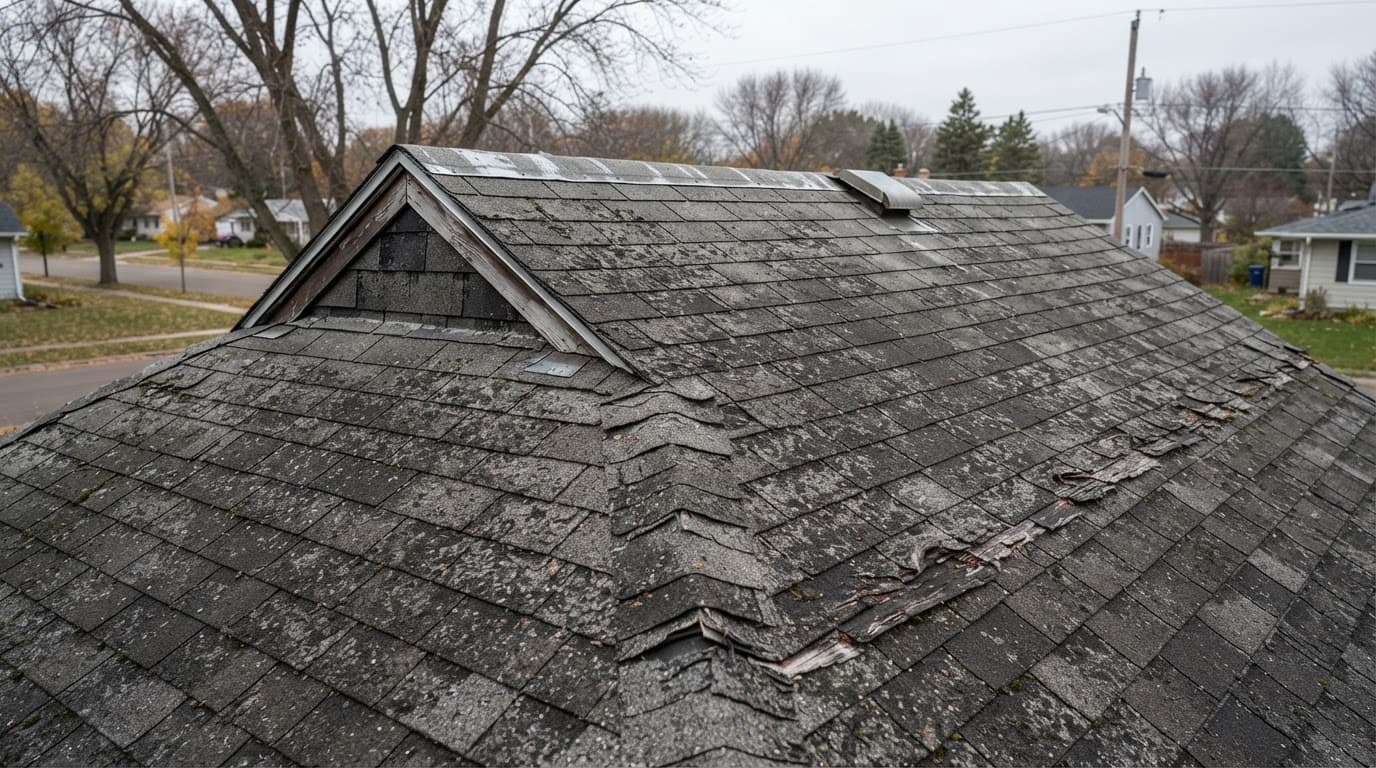
An insurance adjuster or underwriting inspector looks for signs that match the claimed installation date. On asphalt shingles, that includes granule loss, brittleness, curling, exposed fiberglass, nail pops, and prior repairs. Metal roofing is reviewed for corrosion, seam condition, fastener failure, coating loss, and functional impact damage.
Synthetic slate needs a different review. Wind damage often appears as lifted edges, slipped tiles, broken fastening points, cracked corners, bent flashing, and exposed underlayment. Those conditions are not the same as uniform aging.
An old roof can change policy terms, but it does not prove that a new storm did not damage the roof.
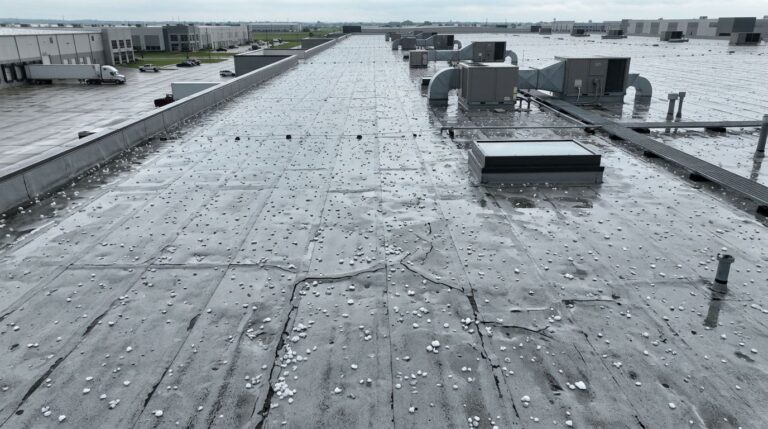
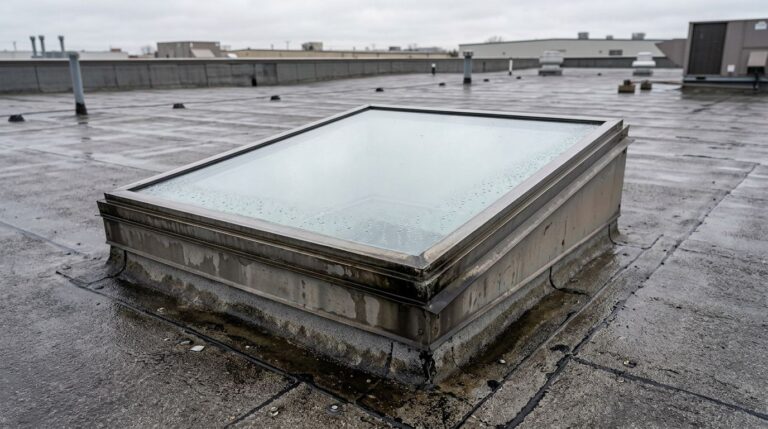
On a commercial flat roof, a visual estimate of age is less reliable. TPO roofing, EPDM, modified bitumen, and BUR systems need records, seam review, flashing inspection, and moisture testing.
When This Applies
Older roofs, renewal notices, and storm claims
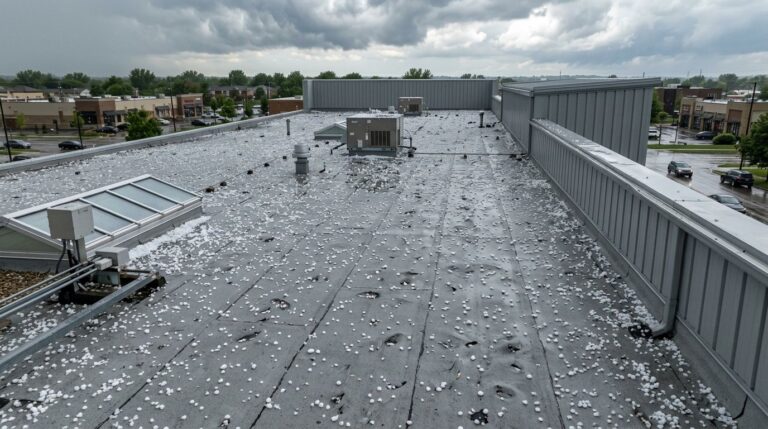
This applies to Minnesota homeowners, landlords, associations, and commercial property owners with an aging roof, insurance premium increases, a carrier’s request for a roof inspection, or non-renewal notices. It also applies after a roof with hail damage, a wind event, ice dams, or a falling-tree loss during severe weather.
A roof-age letter is not the same as an immediate cancellation. Minnesota homeowners insurance policies generally require advance notice for nonrenewal, reduced limits, or eliminated coverage, subject to statutory exceptions. Read the reason given, the effective date, and the relevant insurance policy endorsement before agreeing that a full roof replacement is required.
When age is not the real issue
A roof’s age does not turn ordinary wear into covered storm damage. Carriers can deny deterioration, chronic seepage, skipped maintenance, and long-term ponding.
The reverse is also true. A previous patch, aging shingles, or an older membrane does not remove coverage for a fresh wind tear, hail puncture, or damaged flashing elsewhere. The question is cause.
Ice dam removal may stop active water, but it does not establish what caused the interior damage. Photograph the ice, roof edge, attic conditions, stains, and weather timing before permanent repairs change the record.
Step-by-Step
1. Build one roof age file before reporting a claim
For a Minnesota claim, collect the contract, permit, warranty, paid invoice, inspection reports, maintenance records, and dated property photos. Add the policy declarations page and every roof-related endorsement.
If you bought the property recently, request documents from the seller, agent, closing file, or prior owner. Do not guess at the installation year. A wrong date can create an avoidable credibility dispute.
2. Document the damage before permanent work begins
Photograph each slope, roof penetration, flashing detail, gutter, downspout, and interior stain. Record the storm date, weather event, leak timing, and emergency expenses. Keep damaged shingles, tiles, metal, or membrane samples after they are photographed.
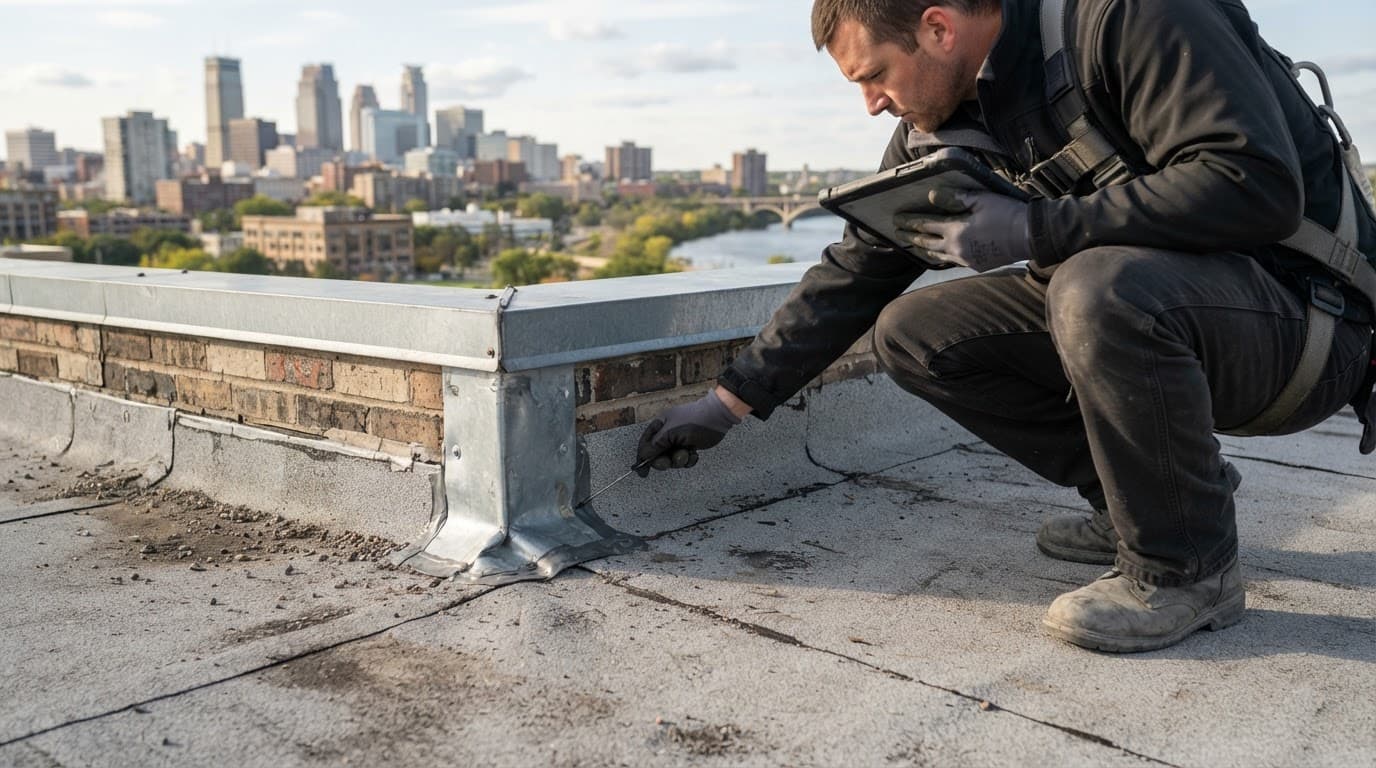
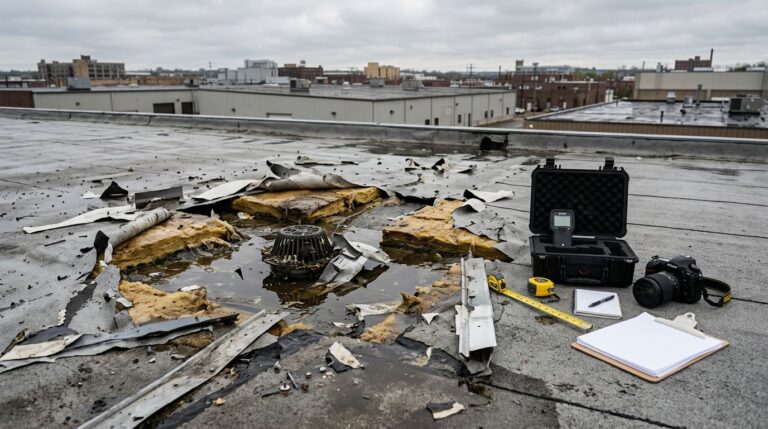
For a commercial roof inspection, identify the system before deciding on scope. A ceiling stain can be far from the opening. Water can move beneath insulation, membrane laps, and deck flutes before it appears indoors.
3. Compare the insurance scope with the roof findings
Request the insurance company’s line-item estimate, then compare it with the insurance adjuster’s scope. Check the replacement cost scope for material quantities, tear-off, flashing, underlayment, building codes and code-required items, insulation, permits, and disposal. Confirm how the deductible affects the proposed payment.
A localized failure may support commercial roof repair or residential roof repair. Wet insulation, broad seam failure, or failed attachment across connected areas can support commercial roof replacement or residential roof replacement instead. For a low-slope building, Get a Free Commercial Roof Inspection before approving a repair plan.
How an Older Roof Changes Claim Payment
Replacement cost value and actual cash value are not the same
An older roof may still qualify for roof coverage, but the valuation method controls how much the insurer pays. Roof depreciation and policy valuation can clarify why roof replacement costs create a major gap between the estimate and the available payment.
| Policy valuation | How payment is calculated |
|---|---|
| RCV | Pays the cost to repair or replace with like kind and quality, subject to deductibles, limits, and policy conditions. Recoverable depreciation may be released after completed work. |
| ACV | Pays the eligible repair or replacement amount less depreciation for the roof’s condition and service life, then applies the deductible. The withheld depreciation is usually not recoverable. |
A policy may also use a roof payment schedule, separate wind and hail deductible, cosmetic damage exclusion, or ACV endorsement. For Minnesota policies, review the insurance policy, not only the renewal premium.
The insurance adjuster inspects storm damage and age-related wear
Adjusters look for a damage pattern. On shingles, they may mark bruises, fractures, creases, displaced tabs, damaged soft metals, and collateral damage. On a commercial flat roof, they should inspect seams, perimeter edges, drains, curbs, penetrations, flashing, and insulation moisture.
Commercial roof restoration and commercial roof coatings can extend a sound aging system. They do not repair saturated insulation, open seams, or a fresh storm opening. Those conditions require a cause-based scope, not a surface treatment.
Challenging a Denial or Incomplete Scope
Ask for a reinspection with focused evidence
Do not answer a denial with a broad demand for a new roof. Request the insurance adjuster’s photos, notes, estimate, engineering report, and policy language used. Then submit a short response that identifies the missed condition, its location, and the evidence tying it to the reported event.
Insurance claims for older roofs in Minnesota often improve when the file separates old wear from fresh damage. A prior repair can be excluded, while a new wind opening, damaged flashing, or related interior loss remains covered.
If tear-off reveals wet insulation, rotted decking, code-required edge metal, or hidden membrane damage tied to the same loss, present those items as supplemental claims. This corrects missing covered work. It is not a way to add deferred maintenance or elective upgrades.
Match the inspector to the roof system
Request a roof inspection from someone familiar with the system, preferably an independent roofing contractor.
Twin Cities storm damage claims face the same local pressures: hail, wind, snow load, freeze-thaw movement, and ice dams. Sellers Roofing Company documents those facts with union-built roofing crews that include IUPAT Local 96 roofers. The company holds MN Builder Contractor License 803862 and GAF-certified manufacturer credentials.
If the insurance company disputes the water path, document the issue before the claim closes. commercial roof leak detection can locate concealed moisture before a surface-only inspection closes the file. If water is actively entering, Call 651-703-2336 for 24/7 Emergency Roofing. Homeowners can also Get a Free Residential Roof Estimate for a documented repair or replacement scope.
Conclusion
Keep age, condition, and cause separate
Documented roof age affects underwriting and depreciation, while roof coverage depends on the policy and valuation method. The roof condition and the storm evidence determine whether a particular loss is covered.
A clean file makes those distinctions hard to ignore. Records, photos, and system-specific inspection findings give you a stronger position than a verbal estimate or an assumed age.
Frequently Asked Questions
Can an insurer require a roof to be replaced without an active leak?
Yes. An insurer may set underwriting standards for the roof’s physical condition and installation date at renewal. That is separate from whether the roof currently leaks.
Does a coating change the roof’s installation date for insurance purposes?
Usually not. Commercial roof coatings may extend service life, but insurers often use the original roof installation date unless they approve a different classification.
What if records of my roof’s installation date are missing?
Use permits, aerial images, seller documents, prior claims, contractor records, and a written inspection. Explain any uncertainty instead of listing an unsupported installation year.
Can Class 4 shingles improve insurance options?
Sometimes. Impact-resistant shingles may qualify for discounts or broader eligibility, but each carrier sets its own underwriting rules and documentation requirements.
Will insurance pay for an ice dam claim on an old roof?
It depends on policy language and cause. Document the ice buildup, timing, water path, and mitigation work before permanent repairs remove the evidence.
See how roof age fits into the larger process in our Minnesota roof storm damage and insurance claims guide.
Need a roof inspection in Saint Paul or the Twin Cities? Call Sellers Roofing Company at +1-651-703-2336 or schedule a free estimate. We are a black-owned, NMSDC-certified MBE roofing contractor with 9+ years experience.